
Transitioning to a smart home setup can elevate your living space, but it also prompts practical questions about long-term operating expenses. If you are planning to outfit your Singapore home with a full suite of smart lights, understanding the impact on your monthly utility bill is essential. A standard setup of Philips Hue bulbs is remarkably energy-efficient, typically costing between S$5 and S$15 per month to run in a typical HDB flat or condominium. While these smart bulbs draw a small amount of standby electricity to remain connected to your wireless network, their active power consumption is exceptionally low compared to older lighting technologies.
Understanding Philips Hue Power Consumption
To accurately evaluate the operating costs of your smart lighting system, you must first understand how these bulbs consume electricity. Unlike traditional incandescent or standard LED bulbs, smart bulbs operate on a dual-energy model. They draw active power when illuminated to emit light, and they draw a tiny amount of standby power when turned off to keep their internal wireless communication modules active. This standby state allows the bulbs to remain connected to your smart home hub or mobile device via Zigbee, Bluetooth, or Matter protocols, ensuring they can respond instantly to your commands.
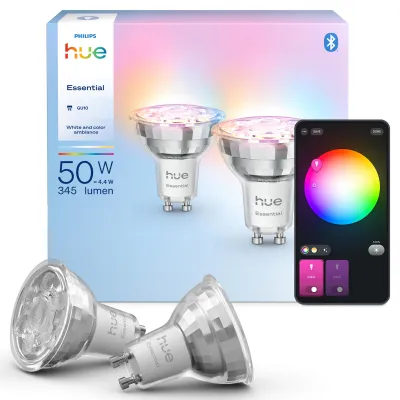
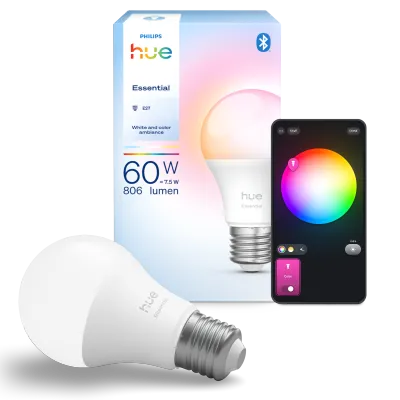
To find the exact active wattage of your specific Philips Hue models, you should inspect the physical base of the bulb, check the original retail packaging, or review the technical specifications listed in the official mobile application. For example, a standard Philips Hue White and Color Ambiance bulb typically features a maximum active power rating of 9 to 11 watts, whereas a basic white-only bulb may have a slightly lower maximum rating.
Products mentioned in this guide
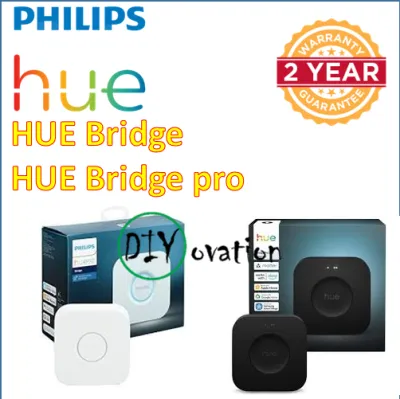
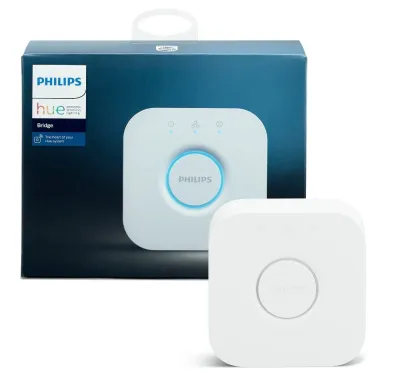
![[Clearance] PHILIPS Hue Play Light bar/ Double Pack/ TV Screen Background Color Control/ 16 million color](https://img.lazcdn.com/g/p/b0e5406b54662a90e3d72d0991f1a49c.jpg_400x400q80.jpg_.webp)
Prices are valid at publication and may change. Please refer to the product page for the latest price.
It is important to note that these bulbs only draw their maximum rated wattage when set to 100% brightness at specific color temperatures, such as bright daylight. When you dim the lights or select specific colors like deep red, blue, or warm amber, the actual active power draw drops significantly. This variable power consumption means your real-world energy usage is often much lower than the maximum ratings listed on the packaging.
Calculating Your Monthly Electricity Cost in Singapore
Estimating the exact monthly electricity cost for your home involves a straightforward mathematical formula. By converting your total wattage consumption into kilowatt-hours (kWh) and applying local utility rates, you can project your monthly lighting expenses with high accuracy. The standard energy consumption formula is:

(Total Wattage × Hours Used per Day × Days in Month) / 1000 = Monthly kWh
To translate this energy consumption into Singapore Dollars (SGD), you must multiply the resulting monthly kWh by your current electricity tariff. In Singapore, SP Group publishes the regulated electricity tariff quarterly, which includes the prevailing Goods and Services Tax (GST). If you have switched to an independent retailer under the Open Electricity Market (OEM), you should refer to your specific contract terms—such as a fixed-rate plan—to find your exact rate per kWh.
Let us look at a structural calculation example for a typical three-room HDB flat or mid-sized condominium utilizing a setup of 15 Philips Hue bulbs. Suppose each bulb draws an average of 9 watts when active, and your household uses these lights for an average of 6 hours per day over a 30-day billing cycle.
First, calculate the active energy consumption: (15 bulbs × 9W × 6 hours × 30 days) / 1000 = 24.3 kWh
Next, you must account for the standby power consumed during the remaining 18 hours of the day when the lights are turned off. Assuming a standard standby draw of 0.5 watts per bulb: (15 bulbs × 0.5W × 18 hours × 30 days) / 1000 = 4.05 kWh
Adding these two values together gives a total monthly consumption of 28.35 kWh for your entire smart lighting setup. If you apply an illustrative utility rate of S$0.32 per kWh (inclusive of GST), the calculation is: 28.35 kWh × S$0.32 = S$9.07
This calculation demonstrates that running a comprehensive smart lighting setup is highly affordable. Keep in mind that this formula provides an estimate specifically for your lighting fixtures; your actual monthly utility bill will vary based on your overall household energy consumption tiers, seasonal usage of high-draw appliances, and your specific electricity retailer plan.
Comparing Usage Scenarios: Light vs. Heavy Users
Your daily lifestyle and household habits play a direct role in determining your final monthly energy expenses. To help contextualize these costs, we can compare two common household profiles in Singapore using our 15-bulb setup and an illustrative tariff of S$0.32 per kWh.
The Evening User
This profile represents a typical working professional or couple who spend most of the day outside the home. They rely on their smart lights primarily in the mornings and evenings, averaging about 3 hours of active usage per day.
- Active consumption: (15 bulbs × 9W × 3 hours × 30 days) / 1000 = 12.15 kWh
- Standby consumption (21 hours): (15 bulbs × 0.5W × 21 hours × 30 days) / 1000 = 4.725 kWh
- Total monthly energy: 16.875 kWh
- Estimated monthly cost: S$5.40
The Work-From-Home User
This profile represents remote professionals, homemakers, or families who spend the majority of their time indoors, running their lights for an average of 10 hours per day.
- Active consumption: (15 bulbs × 9W × 10 hours × 30 days) / 1000 = 40.5 kWh
- Standby consumption (14 hours): (15 bulbs × 0.5W × 14 hours × 30 days) / 1000 = 3.15 kWh
- Total monthly energy: 43.65 kWh
- Estimated monthly cost: S$13.97
As these scenarios demonstrate, even a significant increase in daily usage only results in a modest cost difference of less than S$9 per month. Because modern LED technology is inherently efficient, smart lighting remains a very minor contributor to your overall household utility expenses. The financial impact of running these bulbs pale in comparison to major household appliances like air conditioning units, mechanical clothes dryers, or electric water heaters.
Smart Features and Standby Power: The Hidden Costs
The convenience of smart lighting relies on bulbs remaining in a constant state of readiness. To listen for wireless commands from your smartphone, motion sensors, or automated schedules, the internal microchips inside each bulb must draw a continuous stream of standby power. This standby draw is often referred to as a “phantom load” or “vampire draw.”
While a single bulb drawing roughly 0.2 to 0.5 watts of standby power seems entirely negligible, this consumption occurs 24 hours a day, 365 days a year. When multiplied across a larger home with 30 or 40 smart fixtures, this baseline standby power can contribute a few extra kilowatt-hours to your monthly bill. However, even in large installations, this standby cost rarely exceeds a couple of dollars per month.
A common mistake made by new smart home users is attempting to eliminate this standby draw by turning off their lights using traditional wall switches. Cutting the physical power supply to a smart bulb turns off its wireless receiver entirely. While this does reduce standby power consumption to zero, it completely disables all smart functionality. Your automated routines will fail to run, voice assistants will report the devices as unresponsive, and the bulbs will have to undergo a brief reconnection cycle every time the physical switch is flipped back on. To enjoy a seamless smart home experience, physical wall switches should remain in the “on” position, leaving control to dedicated smart accessories or software routines.
Practical Tips to Optimize Your Hue Setup for Efficiency
You can easily minimize both active and standby energy waste without compromising the comfort and convenience of your smart home. Implementing a few thoughtful adjustments within your smart lighting ecosystem can help keep your monthly running costs as low as possible.
First, leverage the inherent dimming capabilities of your smart bulbs. Running your lights at 50% or 70% brightness instead of 100% significantly reduces their active wattage draw. Because high-quality smart LEDs offer excellent light output, dimmed settings are often more than adequate for daily tasks and create a much warmer, more relaxing ambiance in your living room or bedroom.
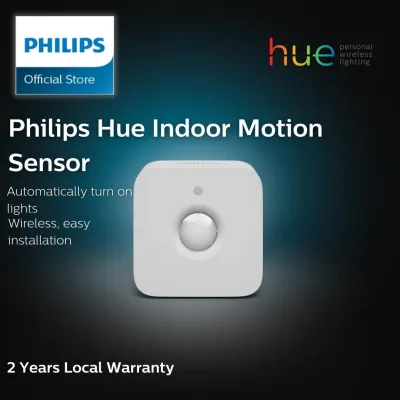
Second, integrate automation features to prevent lights from burning in unoccupied spaces. You can set up location-based geofencing within the mobile app to automatically turn off all lights when the last family member leaves your HDB or condominium. Additionally, installing wireless motion sensors in transitional zones—such as hallways, bathrooms, or bomb shelters—ensures that lights only turn on when physical presence is detected and shut off automatically after a set period of inactivity.
Finally, ensure your physical installation is safe and compliant with local standards. Before installing any new bulbs, always verify that your light fixtures do not exceed the recommended wattage limits and are fully compatible with Singapore’s standard 230-volt electrical grid. Never attempt to use traditional wall-mounted dimmer switches with smart bulbs, as the voltage fluctuations can damage the sensitive internal electronics. If your setup involves fixed electrical wiring, installing smart downlights in damp environments like bathrooms, or working at heights to mount heavy fixtures, always isolate the power at your main distribution board first. For any complex electrical work, it is highly recommended to engage a licensed electrical worker (LEW) to guarantee safety and compliance with local building codes.
Frequently Asked Questions (FAQ)
Do Philips Hue bulbs use electricity when turned off via the app?
Yes, when you turn off your bulbs using a mobile app, voice assistant, or smart switch, they enter a standby mode rather than shutting down completely. The bulbs continue to draw a minimal amount of electricity—typically between 0.2 and 0.5 watts—to keep their internal wireless receivers active and ready to respond to your next command. Shutting off the physical wall switch will stop all electricity draw entirely, but it will also disable all smart features and automated schedules.
Will a full house of smart bulbs trip my HDB electrical load?
No, a full-house setup of smart bulbs will not trip your HDB electrical load or exceed standard lighting circuit limits. Modern LED smart bulbs draw very little current compared to older halogen or incandescent lighting. Even a large installation of 30 active smart bulbs will typically draw less than 300 watts of power in total, which is a fraction of the capacity supported by standard Singapore residential circuits. However, always ensure your fixtures are installed safely and avoid overloading individual power outlets with high-draw appliances.
Community discussion
Share your experience or ask a question. Comments are reviewed before publication.