
Setting up incense offerings for the Hungry Ghost Festival (Zhong Yuan Jie) at home requires balancing traditional spatial hierarchy, respectful material choices, and strict fire safety practices. During the seventh lunar month, many households in Singapore pay respects to ancestors and wandering spirits. Arranging these offerings correctly preserves cultural sanctity while keeping your living space clean and secure.
Using traditional aromatic elements like 甘文烟 (Ganwenyan or Kemenyan) requires a clear understanding of where, when, and how to burn them safely indoors. By organizing your home altar systematically, selecting the right accessories, and following local safety guidelines, you can observe these meaningful rituals without compromising your home’s air quality or safety.
Preparing Your Home Altar Space
Selecting the right location for your Hungry Ghost Festival offerings is the first step in creating a respectful worship environment. A permanent or temporary altar should ideally be placed in a spacious, well-ventilated area of your living room or a dedicated prayer alcove. Avoid setting up altars in private or damp areas, such as bedrooms, kitchens, or spaces directly facing toilets, as this is considered highly disrespectful in traditional practice.
Products mentioned in this guide
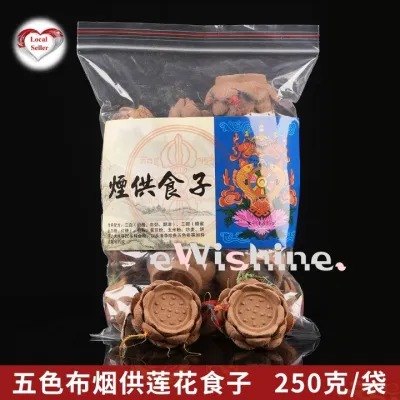
Prices are valid at publication and may change. Please refer to the product page for the latest price.
Before placing any offerings, clear the altar table of all daily clutter, dust, and unrelated household items. Wipe down the surface with a clean, damp cloth to establish a pristine foundation. A clean altar space not only reflects sincerity but also minimizes fire hazards by removing stray papers, plastics, or dust buildup that could easily ignite.
Understanding the spatial hierarchy of the seventh lunar month is crucial for a proper setup. Deities are always placed at the highest, central position of the altar, followed by ancestral tablets or photos on a slightly lower level or to the side. Wandering spirits, who are external to the household, should never be invited inside; offerings for them are traditionally set up temporarily outside the main gate, on the balcony facing outwards, or at designated ground-floor burning areas in HDB estates.
Choosing Incense and Offering Accessories
Selecting high-quality, culturally appropriate incense is essential for indoor worship. Traditional joss sticks and coils remain popular, but many Singaporean households also utilize 甘文烟 (Ganwenyan), a highly fragrant resin incense known for its deep, earthy aroma. Historically used for spiritual cleansing and marking sacred boundaries, Ganwenyan is available in convenient pre-formed cups, cones, or raw resin blocks that burn steadily on the altar.

Because Singaporean apartments can trap smoke, prioritizing low-smoke, micro-smoke, or eco-friendly incense variants is highly recommended. These modern alternatives use specialized wood blends and natural binders to significantly reduce airborne particulates while preserving the traditional scent. This choice helps protect the respiratory health of family members, particularly young children, the elderly, and pets.
To burn incense safely, you must pair it with the correct accessories. Choose a sturdy, heavy-bottomed incense burner made of non-flammable materials such as ceramic, brass, or stone. The burner should be wide enough to act as an ash catcher, preventing hot embers from falling onto the table. Placing a heat-resistant silicone mat or a wide metal tray beneath the entire burner setup adds an extra layer of protection against heat transfer.
Always check product packaging and labels before purchasing incense from local religious goods shops or online marketplaces. Look for specifications regarding estimated burn times, smoke output levels, and material purity. Avoid products with synthetic chemical fragrance additives, which can produce harsh, irritating smoke when burned in enclosed spaces.
Step-by-Step Arrangement of the Altar and Incense
Positioning the Incense Burner and Holders
Place your primary incense burner in a prominent, central position on the altar table, aligned directly with the deity statue or ancestral tablet. Ensure the burner is situated at least 15 centimeters away from the front edge of the table to prevent it from being accidentally knocked over by passing family members. If you are using a separate burner for Ganwenyan resin cups, position it slightly forward or to the side of the main joss stick burner, maintaining a clear separation between the two.
Arranging the Incense Sticks and Coils
When preparing to light your incense, ensure the holder or ash bed inside the burner is firm enough to support the sticks. Insert the unlit joss sticks securely into the ash, keeping them perfectly upright or tilted slightly backward away from the front of the altar. Space multiple sticks evenly rather than bunching them together, as crowded incense can create excessive heat and cause uneven, rapid burning. Light the tips using a lighter, gently fan or wave the flame out (never blow on it with your mouth, as this is considered disrespectful), and place them carefully into the holder.
Placing Accompanying Offerings
Arrange your food offerings, such as fresh fruits, traditional cakes (like huat kueh), and small cups of tea or rice wine, neatly in front of or flanking the incense burners. Keep a strict clearance zone of at least 20 centimeters between the burning incense tips and any flammable offerings, such as stacked joss paper, plastic packaging, or decorative fabric tassels. This physical barrier ensures that drifting sparks or falling ash cannot accidentally ignite nearby items.
Fire Safety and Ventilation in Singapore Homes
Adhering to the Singapore Civil Defence Force (SCDF) fire safety guidelines is a vital responsibility when burning incense indoors. Never leave active incense, candles, or burning Ganwenyan unattended on your home altar. If you must leave the room or go to bed before the incense has completely burned down, establish a strict “stop and extinguish” protocol by safely dipping the burning tips in water or burying them deep within the non-combustible ash.
Keep the entire altar setup far away from open windows where sudden gusts of wind could blow curtains, blinds, or hanging laundry into the path of the open flame. Similarly, position the altar away from direct drafts caused by air conditioning units or high-speed ceiling fans. Strong, direct airflow can scatter hot, lightweight ash across your living room, potentially landing on carpets, sofas, or wooden flooring.
Managing indoor air quality is equally important during the festival period. Encourage gentle cross-ventilation by opening windows slightly on opposite sides of the living area to allow smoke to escape naturally. Running an indoor air purifier equipped with a True HEPA filter and an activated carbon layer near the altar area can efficiently capture fine smoke particles and neutralize lingering odors, keeping your home clean and comfortable.
Post-Worship Cleanup and Altar Maintenance
Once the worship session is complete, wait until the incense remnants and ash have cooled down completely before attempting to clean the altar. Never discard warm ash directly into plastic trash bags, as hidden embers can smolder and ignite a fire hours later. Use a small metal scoop to gently remove excess ash from the burner, leaving a stable base of about two-thirds of the burner’s depth for future use.
Regularly wipe down the altar table and surrounding walls to prevent the buildup of oily soot residue. Burning resin-based incense like Ganwenyan can release natural oils that settle on nearby surfaces over time. A mild solution of warm water and gentle dish soap is highly effective for cleaning non-porous surfaces; however, always consult your altar manufacturer’s care instructions before applying liquids to delicate, varnished wood or gold-leaf detailing.
Singapore’s high relative humidity, which frequently exceeds 80%, can quickly degrade stored incense, causing it to damp damp, grow mold, or become difficult to light. Store your unused joss sticks, coils, and Ganwenyan blocks in airtight plastic containers or heavy-duty zip-lock bags. Keep these containers in a cool, dry cabinet away from direct sunlight to preserve their aromatic qualities and structural integrity for future use.
Frequently Asked Questions (FAQ)
Is it allowed to burn incense in HDB common corridors?
Under Town Council and SCDF regulations, residents are strongly discouraged from burning joss paper and large quantities of incense along HDB common corridors, stairwells, or lift lobbies. These actions can create severe smoke nuisances for neighbors, block emergency escape routes, and present a significant fire hazard. For large-scale offerings and joss paper burning, residents should always use the designated red or silver burning bins provided by the Town Council at the ground level of their HDB estates. Small, personal incense offerings placed in appropriate holders directly outside your front door are generally tolerated, provided they do not obstruct pathways or blow smoke directly into neighboring units.
How do I reduce smoke from incense offerings in a closed room?
To minimize smoke accumulation indoors, switch to certified micro-smoke or smokeless joss sticks, which produce up to 90% less visible smoke than traditional varieties. You can also opt for smaller or shorter incense sticks to reduce the overall burning time and material volume. If you enjoy the scent of Ganwenyan, burn only a small fraction of a resin block at a time rather than a whole cup. Finally, position a portable air purifier with a carbon filter close to the altar to capture emissions, and maintain a gentle, indirect airflow through the room to disperse any remaining haze safely.
Community discussion
Share your experience or ask a question. Comments are reviewed before publication.