
Setting up an altar for the Hungry Ghost Festival (Zhong Yuan Jie) requires careful attention to traditional hierarchy, especially when handling sacred items like Jade Emperor Money (玉皇钱). Properly arranging your altar ensures that offerings reach their intended recipients without disrupting spiritual order.
To arrange Jade Emperor Money correctly, you must place it on the highest physical tier of your altar, completely separated from offerings meant for ancestors or wandering spirits. Because this specific paper represents the supreme heavenly authority, placing it incorrectly can be seen as disrespectful to the deities who oversee the festival.
Understanding the spatial rules of Chinese folk religion allows you to perform these rituals with confidence. This guide details how to prepare your space, arrange your materials, and execute the ritual safely in a modern urban environment.
Products mentioned in this guide
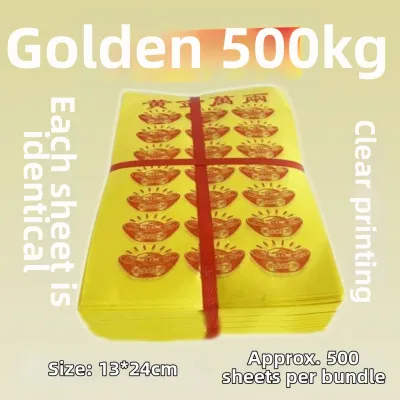
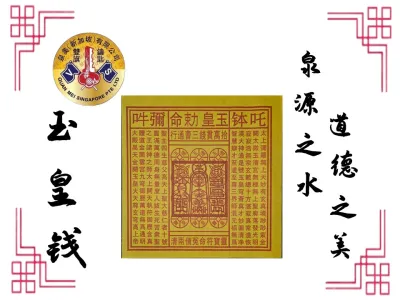
Prices are valid at publication and may change. Please refer to the product page for the latest price.
Understanding the Role of Jade Emperor Money in 7th Month Worship
Jade Emperor Money, locally known as Yu Huang Qian or Tian Gong Qian, is a highly specialized form of joss paper. It is easily distinguished by its large size, bright yellow or gold color, and elaborate designs that often feature the imperial seal, dragons, or the image of the Jade Emperor himself. Unlike standard paper money, it represents celestial currency issued by the highest heavenly court.
In the spiritual hierarchy of Chinese folk religion, the Jade Emperor (Tiangong) sits at the absolute pinnacle of the celestial bureaucracy. During the seventh lunar month, the gates of the underworld are opened, allowing spirits to roam the earthly realm. However, this entire process is overseen by heavenly deities who maintain order and protect the living. Offering Jade Emperor Money is a way to express gratitude to these supreme guardians for their protection during this spiritually sensitive period.
It is crucial to distinguish Jade Emperor Money from other types of ritual paper. While gold paper (Jin Zhi) is offered to ancestors and local deities, and silver paper (Yin Zhi) or hell bank notes are given to wandering spirits, Jade Emperor Money is strictly reserved for the supreme ruler of heaven. Mixing these items up or treating them as interchangeable violates the cosmological order that governs the festival.
By presenting Yu Huang Qian, households petition the heavens for peace, safety, and blessings. Recognizing this distinction is the first step in planning a respectful and orderly altar setup that honors the correct spiritual boundaries.
Preparing Your Altar and Materials
Before you begin arranging your offerings, you must prepare a suitable altar space that accommodates the spiritual hierarchy. A proper setup requires either a multi-tiered altar or distinct, separate tables. This physical separation ensures that heavenly deities, ancestors, and wandering spirits do not share the same level of offerings.

To prepare for the ritual, compile a complete checklist of necessary materials. You will need high-quality Jade Emperor Money, standard gold joss paper for ancestors, and silver paper or hell bank notes for wandering spirits. Additionally, gather incense sticks, red candles, and appropriate food offerings. Ensure you have separate incense burners for each tier to prevent cross-contamination of the prayers.
Safety is a paramount consideration when setting up any worship area, particularly in high-rise residential estates. Before lighting any candles or incense, clear all flammable items, such as plastic bags, decorative fabrics, and paper packaging, from the altar vicinity. If you are setting up your altar near a window or on a balcony, ensure that curtains are securely tied back and that wind drafts cannot knock over candles or blow loose joss paper away.
Verify that your candle holders and incense burners are made of sturdy, non-combustible materials like ceramic, brass, or heavy metal. Never leave lit candles or incense unattended, and keep a fire extinguisher or a bucket of water nearby as a basic safety precaution.
Step-by-Step Placement Guide for the Worship Setup
Arranging your altar systematically helps maintain the symbolic boundaries of the ritual. Follow these sequential steps to ensure every offering is positioned according to traditional custom.
Step 1: Establish the Highest Tier Designate the highest physical point of your altar exclusively for the Jade Emperor and supreme deities. If you are using a single flat table, you can create a raised platform in the center back using a sturdy box wrapped in clean red paper. Alternatively, you can set up a smaller, taller table behind your main altar table to serve as the celestial tier.
Step 2: Position the Jade Emperor Money Place the Jade Emperor Money centrally on this highest tier. You can stack the sheets neatly in a clean pile or fold them into traditional gold ingot shapes (yuan bao) to symbolize wealth and respect. The paper must sit prominently at the center of the upper tier, elevated above all other items, and it must never touch the ground or be placed near dirty objects.
Step 3: Arrange Lower-Tier Joss Papers Position your secondary joss papers on the lower levels of the setup. Place the gold paper meant for ancestors on the middle tier of your altar. If you are also offering silver paper or hell bank notes to wandering spirits, these must be placed on the lowest tier, on a separate table closer to the ground, or on a temporary outdoor setup. This physical separation keeps the offerings distinct.
Step 4: Align Offerings and Incense Position your incense burners and food offerings in front of their respective paper piles. For the Jade Emperor’s tier, offer clean, vegetarian items such as fresh fruits (like apples and oranges), cups of green tea, and sweet traditional cakes. Ensure that the incense burners are placed securely so the smoke path rises vertically and remains unobstructed by overhanging decorations.
Common Mistakes and Ritual Taboos to Avoid
To ensure your worship is respectful, you must avoid several critical errors that disrupt the traditional order of the Hungry Ghost Festival.
One of the most common mistakes is mixing different types of joss paper together. Never place Jade Emperor Money in the same stack or on the same level as silver paper, hell bank notes, or other spirit currency. Doing so is considered highly disrespectful, as it conflates the supreme ruler of heaven with underworld entities and wandering spirits.
Physical handling taboos must also be strictly observed. Never place Jade Emperor Money directly on the bare floor, step over it, or sit on it. If a sheet of paper becomes torn, soiled, or damaged, do not use it for the ritual; only clean, intact papers should be offered to the deities.
Another serious taboo is burning Jade Emperor Money with the intention of sending it to wandering spirits. This paper is celestial currency meant solely for the highest deities; attempting to offer it to spirits or ancestors is inappropriate and disrupts the spiritual hierarchy.
If you are ever uncertain about the specific deities your family worships, the correct layout of your ancestral altar, or local custom variations, pause the ritual. It is always best to stop and consult an elder, a feng shui practitioner, or a representative from a local temple to clarify the correct procedures before proceeding.
Proper Burning Sequence and Safety Practices
Concluding the ritual properly requires burning the joss paper in a specific, orderly sequence while adhering to strict safety protocols.
Always follow the traditional hierarchical burning sequence. Begin by burning the Jade Emperor Money first to pay respects to the supreme heavenly deities. Once this high-tier paper is completely consumed, you may proceed to burn the gold paper for your ancestors. Finally, burn the silver paper and hell bank notes intended for wandering spirits. This sequence respects the spiritual order of authority.
When burning joss paper in urban residential areas, safety must be your top priority. Always use designated metal burner bins equipped with secure mesh covers to prevent burning ash from escaping into the air. Keep a fire extinguisher, a bucket of water, or a damp cloth nearby to manage any stray embers immediately. Never leave the burning bin unattended while the fire is active.
In Singapore, residents are strongly encouraged to use the communal burning bins provided by town councils at HDB void decks and common areas, or to bring their offerings to local temples. These communal facilities are designed to handle high heat and contain smoke and ash safely, reducing environmental impact and minimizing fire hazards for the community. Always ensure that all embers inside the burner are completely extinguished and cool before leaving the site.
Frequently Asked Questions (FAQ)
Can I burn Jade Emperor Money in my HDB corridor?
Burning any form of joss paper, including Jade Emperor Money, inside HDB corridors, stairwells, or common walkways is highly discouraged and often violates local town council by-laws. The confined space of a corridor poses a severe fire hazard to neighboring units and creates heavy smoke accumulation that can trigger asthma or breathing difficulties for residents.
To ensure safety and maintain community harmony, always use the designated red or silver burning bins located at the void decks or common ground areas of your HDB estate. Alternatively, you can bring your offerings to local temples that provide safe, large-scale burning facilities.
Community discussion
Share your experience or ask a question. Comments are reviewed before publication.