
Verifying the authenticity of a vintage Singapore S$50 Orchid series banknote requires a methodical approach that combines physical inspection, tactile evaluation, and the use of basic numismatic tools. First issued in the late 1960s, the Orchid series represents a foundational era in Singapore’s financial history, making these notes highly sought-after cultural artifacts. Because of their high collector value, counterfeit reproductions—both vintage and modern digital prints—circulate in the secondary market, making pre-purchase verification essential.
To protect your investment, you must learn to distinguish the unique physical characteristics of genuine vintage currency from modern replicas. By focusing on verifiable security features rather than seller claims, you can confidently assess the value and authenticity of these historical pieces before finalizing any transaction.
Understanding the Orchid Series and Collector Market
The Orchid series, in circulation from 1967 to 1976, is Singapore’s first official banknote series. Each denomination features a prominent orchid species on the front, symbolizing the young nation’s growth, resilience, and unique identity. Today, these notes are no longer found in daily circulation, having transitioned into the realm of cultural artifacts, historical memorabilia, and high-end home decor displays.
Products mentioned in this guide
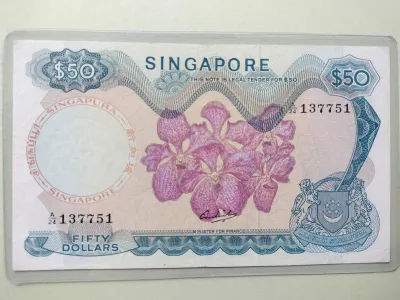
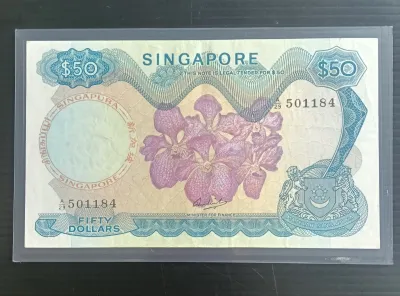
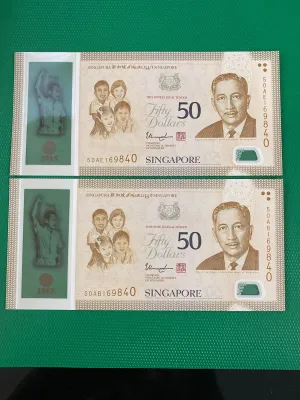
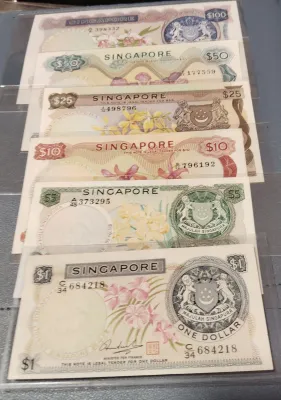
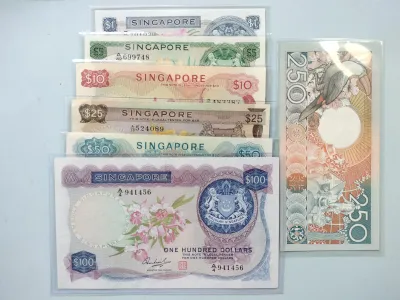
Prices are valid at publication and may change. Please refer to the product page for the latest price.
As the market for vintage Singapore currency grows, so does the risk of encountering counterfeit notes. Unlike modern polymer banknotes that feature complex holographic windows and advanced synthetic materials, vintage paper notes rely on older security technologies. This makes them more vulnerable to sophisticated color copying, high-resolution digital printing, and chemical aging techniques designed to deceive casual buyers.
To navigate this market safely, collectors must rely on objective, physical evidence rather than unverified seller claims or popular numismatic myths. Relying solely on a seller’s word or a generic certificate of authenticity can lead to costly mistakes, especially when purchasing through online marketplaces or private peer-to-peer transactions.
Visual and Tactile Security Features to Inspect
The first line of defense when authenticating a S$50 Orchid note is a close physical examination of the paper itself. Authentic vintage banknotes of this era were printed on specialized cotton-based paper rather than the wood-pulp paper used in standard commercial printing. This cotton paper has a distinct crispness, a unique tactile weight, and a slight surface texture that modern copy paper cannot easily replicate.

Next, pay close attention to the printing techniques employed during production. The primary designs on the S$50 Orchid note, including the portrait, the orchid itself, and the official text, were printed using intaglio, or raised-ink, printing. When you gently run your fingertips or a fingernail over these areas, you should feel a distinct physical texture and elevation. Counterfeit notes produced via flat offset printing or digital inkjet methods will feel completely smooth to the touch.
Under close visual inspection, the fine line patterns—often referred to as guilloche patterns—must appear incredibly sharp and continuous. Authentic security printing utilizes precise engraving plates that produce clean, unbroken lines. If the patterns look blurry, pixelated, or consist of tiny dots of cyan, magenta, yellow, and black under close inspection, the note is likely a modern digital reproduction.
Watermarks and security threads are also critical indicators of authenticity. When holding the note up to a direct light source, the watermark—which typically depicts a lion’s head—should be visible within the paper structure. This watermark is created by varying the thickness of the paper fibers during manufacturing, resulting in soft, multi-tonal transitions of light and shadow. If the watermark appears printed on the surface with ink or has harsh, sharp edges, it is highly suspicious.
Finally, evaluate the wear and aging patterns of the note. While natural wear, minor folds, and slight discoloration are common in vintage currency, they should align with the natural aging process of cotton paper. Be wary of notes that show artificial distressing, such as uniform tea staining, chemical washing, or artificial dirt applied to mask the bright, fluorescent properties of modern paper.
Tools and Professional Authentication Methods
While a basic visual check is helpful, using simple numismatic tools provides a much higher level of certainty. A standard 10x or 20x magnifying loupe is invaluable for inspecting the fine details of the engraving, the sharpness of the microprinting, and the structure of the ink on the paper fibers. Under magnification, authentic intaglio ink will look slightly raised and cleanly defined, whereas counterfeit ink may bleed or show digital dot patterns.
An ultraviolet (UV) light source is another essential tool for verifying vintage paper. Authentic banknote paper from the Orchid series does not contain optical brightening agents, meaning it will remain dull and dark under UV light. In contrast, modern commercial paper contains brighteners that glow intensely blue or white under UV exposure. Additionally, any modern adhesives or chemical treatments used to repair or alter the note will often fluoresce brightly under UV light.
For collectors seeking absolute certainty, consulting official numismatic reference books or archives is highly recommended. These resources provide exact specifications regarding the note’s dimensions, color variations, and signature combinations. Comparing your prospective purchase against a known authentic reference image or specification sheet can quickly highlight discrepancies in design placement or font styles.
When dealing with high-value transactions, the most reliable path is to seek evaluation from certified numismatists or professional third-party grading services. Organizations that specialize in paper money grading assess the note’s authenticity, grade its physical condition, and seal it in a tamper-evident protective holder. Purchasing a pre-graded note or making the transaction conditional on professional grading significantly reduces the risk of acquiring a counterfeit.
Evaluating Sellers and Purchase Channels
The venue through which you purchase a vintage S$50 Orchid note plays a major role in your overall transaction safety. Established auction houses and specialized numismatic dealers generally offer the highest level of security. These businesses employ in-house experts to verify their inventory and typically provide clear, legally binding authenticity guarantees and return policies.
In contrast, general online marketplaces and peer-to-peer classified platforms carry much higher risks. When browsing these platforms, look out for common red flags in seller behavior. Be cautious of sellers who refuse to provide high-resolution, close-up photos of both the front and back of the note, or those who avoid answering specific questions about the note’s provenance and physical characteristics.
Avoid transactions where the seller pressures you into making a quick decision or insists on using irreversible payment methods, such as direct bank transfers or cash-on-delivery without an opportunity to inspect the item first. A reputable seller should be willing to allow a reasonable inspection period or agree to meet at a secure, mutually agreed-upon location, such as an established coin shop, to verify the note before finalizing the sale.
What to Do If You Suspect a Counterfeit
If you suspect a S$50 Orchid note is counterfeit during an in-person inspection, the safest course of action is to halt the transaction immediately. Politely decline the purchase, state your concerns regarding its authenticity, and walk away. Do not attempt to confiscate the note or engage in a confrontation with the seller.
For online transactions where a suspected counterfeit has already been received, document all evidence thoroughly. Take high-resolution photographs of the note under various lighting conditions, save copies of the original listing, and preserve all written communications with the seller. This documentation will be vital when filing a dispute through the ecommerce platform’s buyer protection program or your payment provider.
In Singapore, the possession and distribution of counterfeit currency are serious legal offenses. If you have confirmed or strongly suspect that you have acquired a counterfeit note, you should report the matter to the Singapore Police Force. You can also contact the Monetary Authority of Singapore (MAS) for official guidance on how to surrender the suspected counterfeit note safely and legally.
Frequently Asked Questions (FAQ)
Is it legal to buy and sell vintage Singapore banknotes?
Yes, it is entirely legal to buy, sell, and collect vintage Singapore banknotes, including the Orchid series. While these notes may no longer be in active daily circulation, they remain legal tender at their face value or are traded as collectible cultural artifacts and historical memorabilia. However, they must be traded as genuine collector’s items; attempting to use them or pass them off as active currency for commercial transactions is subject to local financial regulations.
Can a heavily damaged Orchid series note still be authenticated?
Yes, a heavily damaged note can still be authenticated, though the process is significantly more complex. Severe tears, missing portions, heavy staining, or past tape repairs can obscure critical security features like the watermark or the intaglio print texture. In these situations, professional paper conservators or third-party grading services use specialized laboratory equipment, such as infrared imaging and fiber analysis, to verify the authenticity of the remaining paper and ink structure.
Community discussion
Share your experience or ask a question. Comments are reviewed before publication.