
Finding the perfect hanging height for a dining pendant light in a standard 2.6-metre HDB flat requires balancing visual appeal with practical clearance. With a ceiling height of 260 centimetres, every centimetre of vertical space is highly valuable. To prevent head bumps and maintain clear sightlines across the dinner table, the bottom of your light fixture should ideally sit between 75 and 90 centimetres above the tabletop. This leaves a total allowable drop length—encompassing both the suspension cord and the physical light fixture—of approximately 95 to 110 centimetres when paired with a standard 75-centimetre-high dining table.
Achieving this balance ensures your dining area feels open, well-lit, and comfortable. A light hung too low creates an intrusive physical barrier, while one hung too high can cause uncomfortable glare and lose its design impact. By understanding the physical dimensions of your space and applying a straightforward calculation, you can confidently select and install a fixture that enhances your home.
The Core Formula for Calculating Drop Length
To determine the exact drop length for your dining pendant light, you must work with a few fixed measurements. In a standard Singapore HDB flat, the ceiling height is typically 2.6 metres (260 centimetres) from the bare concrete floor. However, if you have installed a false ceiling to conceal wiring or air conditioning ducts, you must measure from the finished surface of the false ceiling to the floor, as this will reduce your overall vertical clearance.
Products mentioned in this guide
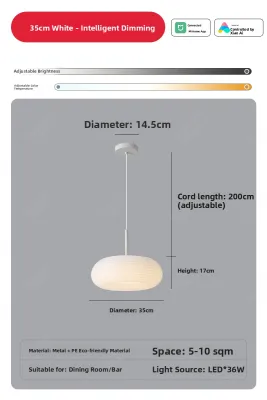
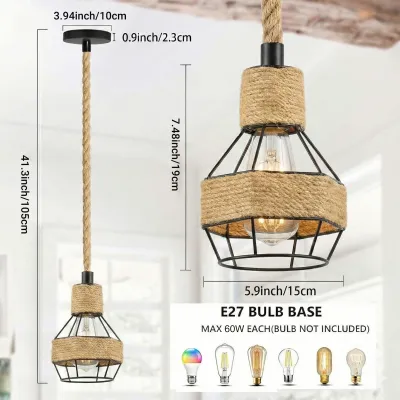
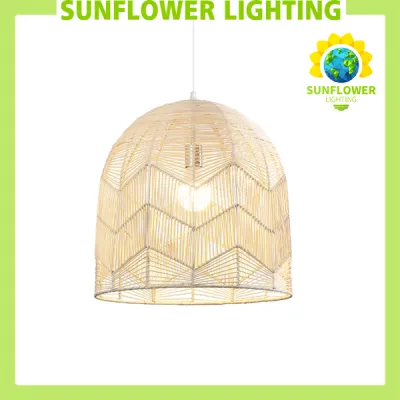
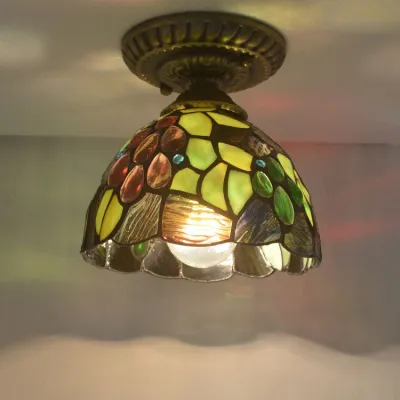
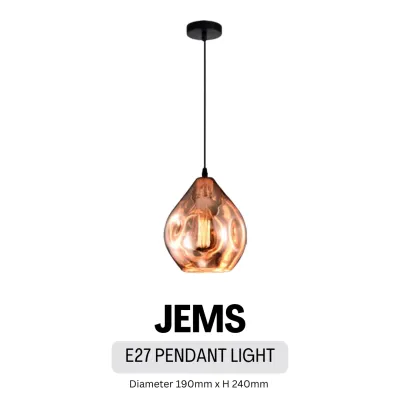
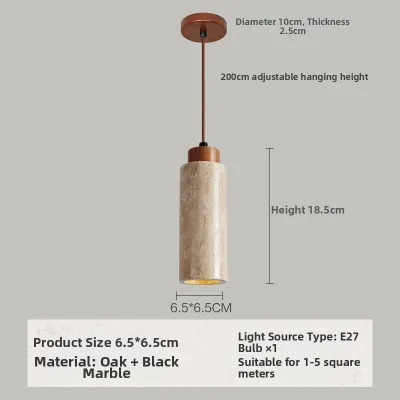
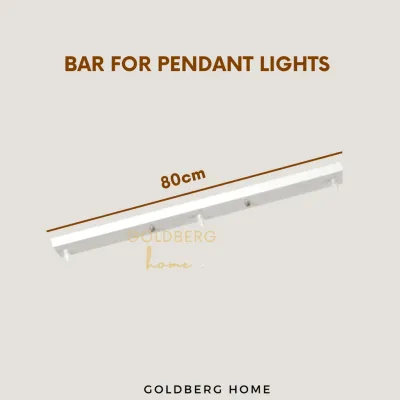
Prices are valid at publication and may change. Please refer to the product page for the latest price.
Next, measure the exact height of your dining table. Standard dining tables generally stand at 75 centimetres from the floor, but custom-built tables, bar counters, or low-profile designs can vary. Once you have these two dimensions, you can determine the remaining vertical space available for both the light fixture and the empty clearance gap above the table.
The core calculation to find your maximum allowable drop length is:
Maximum Drop Length = Ceiling Height – Table Height – Required Table Clearance
For example, if your HDB ceiling is exactly 260 centimetres high and your dining table is 75 centimetres high, you have 185 centimetres of vertical space remaining. If you decide on a comfortable clearance gap of 80 centimetres between the tabletop and the bottom of the light, your maximum drop length is 105 centimetres (185 cm – 80 cm). This 105-centimetre limit represents the combined height of the mounting canopy, the suspension cord or chain, and the physical body of the light fixture itself.
When shopping for a dining pendant light, always check the product specifications for the “fixture body height” versus the “maximum suspension length.” The fixture body height is the rigid, non-adjustable portion of the light, such as the metal frame or glass shade. Subtracting the fixture body height from your maximum drop length tells you exactly how much cord or chain slack you will need to accommodate during installation.
Establishing Safe Head Clearance Above the Table
Maintaining a safe and comfortable clearance between the tabletop and the bottom of your pendant light is crucial for daily usability. Standard interior design guidelines recommend a clearance gap of 75 to 90 centimetres. This range is wide enough to accommodate different physical statures, seating heights, and visual preferences while ensuring the light source remains effective.

To find the ideal clearance within this range, test the planned height against the tallest member of your household. Have them sit upright at the dining table and measure their seated eye level. The bottom rim of the pendant light should sit comfortably above their direct line of sight. This prevents the fixture from blocking eye contact across the table during meals and ensures no one has to duck or lean sideways to converse.
Another critical factor is glare protection. If your chosen dining pendant light features an exposed bulb or a highly reflective interior, hanging it too high can expose seated diners to direct, harsh light. Conversely, hanging it too low concentrates the light into a narrow pool, leaving the edges of the table in shadow. Aiming for a clearance of 80 to 85 centimetres usually provides an even spread of ambient light across the tabletop while keeping the bulb shielded from direct view.
Consider how your dining space is used outside of meal times. If your dining table doubles as a home office, a study desk, or a crafting station, you may require a slightly higher clearance to allow for a wider distribution of functional task light. Testing these scenarios with a temporary mockup, such as hanging a lightweight object or balloon from the ceiling, can help you visualize the physical presence of the light before making permanent adjustments.
Fine-Tuning for Fixture Height and Visual Weight
The physical dimensions and “visual weight” of your chosen dining pendant light play a significant role in how high or low it should hang. Visual weight refers to how heavy, solid, or dominant a fixture appears in a room. A large, dark metal dome has a high visual weight, whereas a delicate, clear glass globe or a slender linear profile has a much lighter visual presence.
For fixtures with high visual weight, it is generally best to hang them slightly higher within the recommended range, closer to the 90-centimetre clearance mark. This prevents the light from feeling physically oppressive or crowding the visual field in a 2.6-metre HDB space. On the other hand, lightweight, airy, or transparent fixtures can be hung closer to the 75-centimetre clearance mark without making the dining area feel cramped.
Multi-bulb fixtures or linear pendants require careful alignment. If you are installing a long linear light over a rectangular table, ensure the drop length is perfectly uniform across the entire length of the fixture. Any slight tilt will be highly noticeable against the horizontal plane of the tabletop. For round tables, a single central pendant or a clustered group of smaller pendants works best, keeping the focal point concentrated in the middle of the dining zone.
Prioritize purchasing dining pendant lights that feature adjustable suspension systems. Fixtures utilizing adjustable fabric cords, aircraft cables, or link chains allow you to make precise post-installation adjustments. This flexibility is invaluable if you decide to change your dining table in the future or find that the initial hanging height does not suit your daily habits.
Pre-Installation Checks for HDB Ceilings
Before finalizing your mounting height and proceeding with installation, you must verify the structural and electrical conditions of your HDB ceiling. Standard HDB ceilings are constructed from reinforced concrete, which provides a highly stable mounting surface but requires specific tools, such as a rotary hammer drill and appropriate masonry wall plugs, to secure the mounting bracket.
If your home has a false ceiling, you must ensure the pendant light is anchored directly to the structural concrete slab above or that the false ceiling frame has been adequately reinforced to support the weight. Heavy glass, solid brass, or multi-light metal pendants can put significant stress on plasterboard. Never mount a heavy fixture directly to unsupported plasterboard, as this poses a serious safety hazard.
Electrical safety is paramount during any lighting installation. Before touching any wiring, isolate the power supply by turning off the corresponding circuit breaker at your home’s main distribution board. Verify that the existing electrical wiring provides sufficient slack to connect to the fixture’s terminal block without being pulled taut. Check that the fixture’s voltage rating matches Singapore’s standard 230V supply, and verify the maximum wattage limit of the socket to prevent overheating.
While simple like-for-like fixture replacements can sometimes be managed as a DIY project if you have the proper tools and experience, complex installations require professional assistance. If your project involves running new concealed wiring, installing a new ceiling junction box, modifying a false ceiling, or working at heights that feel unsafe, always hire a licensed electrical worker. A qualified professional ensures all connections are secure, grounded, and compliant with local electrical safety standards.
Frequently Asked Questions (FAQ)
Can I use a flush mount instead if the 2.6m ceiling feels too low?
Yes, a flush mount or semi-flush mount light is an excellent alternative if you feel a traditional pendant light will overcrowd your 2.6-metre ceiling. Semi-flush mounts typically drop only 15 to 30 centimetres from the ceiling, providing excellent clearance while still offering a decorative element. This option is particularly useful if your dining table is frequently moved or if the dining area serves as a high-traffic walkway where head clearance is a constant concern.
How do I measure the drop length if the pendant light has a sloped ceiling adapter?
To measure the drop length with a sloped ceiling adapter, measure vertically from the highest pivot point where the canopy meets the ceiling down to the bottom rim of the fixture. Even if the ceiling is angled, the clearance above your flat dining table must remain consistent. Ensure the suspension cable or rod hangs perfectly plumb (vertical) to maintain structural stability and prevent the fixture from swaying.
What if my dining table is unusually tall or custom-built?
If you have a custom-built table, such as a counter-height table (typically 90 centimetres tall) or a bar-height table (typically 105 centimetres tall), you must adjust your calculations accordingly. A taller table significantly reduces the available space for your light fixture. Plug your actual table height into the core formula to find your maximum drop length, and consider choosing a low-profile or highly compact pendant light to maintain the necessary 75 to 90 centimetres of clearance above the tabletop.
Community discussion
Share your experience or ask a question. Comments are reviewed before publication.