
To estimate the monthly electricity cost of running a Nepro HP water heater in a Singapore HDB flat, you need to look at its rated power consumption, your household’s daily hot water usage, and the prevailing electricity tariff. Because heat pumps extract heat from the surrounding air rather than relying solely on direct electrical resistance, their actual power draw is significantly lower than traditional storage heaters. Calculating this cost involves a straightforward formula that adapts to your specific household habits and utility plan.
Identifying Your Nepro HP Power and Efficiency Ratings
To begin your calculation, locate the physical rating label on your Nepro HP unit or consult the manufacturer’s user manual. This label contains critical electrical specifications, including the rated power input in watts (W) or kilowatts (kW). It is important to distinguish between the active heating power—when the compressor is actively running to heat water—and the standby power, which is the minimal electricity used to keep the control panel and sensors active when water is not being heated.
Additionally, look for the Coefficient of Performance (COP) listed in the technical specifications. The COP indicates the efficiency of the heat pump; for instance, a COP of 3 theoretically means the unit produces three units of heat energy for every one unit of electrical energy consumed. In Singapore, you should also check if the unit features a Singapore Energy Label, which provides a standardized efficiency rating to help you understand its baseline performance relative to other water heating appliances.
Products mentioned in this guide
![[Bundle of 6] Nepro HP: 1.8kcal/ml Higher Protein Nutrition for Adults on Dialysis - Vanilla 220ml](https://img.lazcdn.com/g/ff/kf/Scf4667de50734a18b445ae761536226cD.png_400x400q80.png_.webp)
![[Carton of 30] Abbott Nepro HP 220ml [EXP: NOV26]](https://img.lazcdn.com/g/p/ce88b0ec232cfd5e45d0ae6194944978.png_400x400q80.png_.webp)
![[Bundle of 30] Nepro HP: 1.8kcal/ml Higher Protein Nutrition for Adults on Dialysis - Vanilla 220ml](https://img.lazcdn.com/g/ff/kf/S21896bf007b34cd6bcbe7dcc4acf4046X.png_400x400q80.png_.webp)
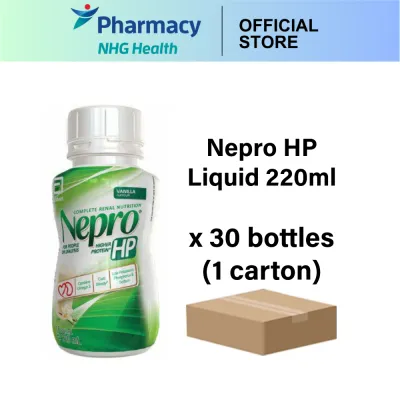
Prices are valid at publication and may change. Please refer to the product page for the latest price.
Calculating the Expected Monthly Energy Cost
Estimating the monthly utility impact of your Nepro HP requires a simple formula: multiply the unit’s active power draw by the number of hours it runs each day, multiply that by the days in the month, and then multiply by your current electricity tariff. The basic formula is:

Monthly Cost = (Power Input in kW × Daily Operating Hours × Days in Month) × Electricity Tariff (S$ per kWh)
To find your current electricity tariff, check your latest SP Group utility bill or your Open Electricity Market (OEM) retailer statement. Tariffs are expressed in Singapore dollars per kilowatt-hour (S$ per kWh) and can fluctuate quarterly or depend on your fixed-rate contract.
When estimating daily operating hours, do not assume the heat pump runs continuously for 24 hours. A heat pump only operates its compressor until the water in the storage tank reaches the set temperature. For a typical HDB household, the actual compressor run time depends heavily on the number of family members, the frequency of showers, and individual usage habits. A smaller household might only require the compressor to run for one to two hours cumulative per day, while a larger family will naturally require longer heating cycles.
HDB Installation Factors That Affect Heat Pump Efficiency
The physical layout and installation environment of your HDB flat play a major role in how efficiently your Nepro HP operates. Heat pumps rely on extracting heat from the surrounding air, which means they require adequate airflow and ventilation. Installing the unit in a confined space, such as a tightly closed bathroom or a cluttered service yard, can restrict air circulation, causing the compressor to work harder and consume more electricity.
Ambient temperature also directly impacts the unit’s COP. In Singapore’s warm, tropical climate, ambient air temperatures are naturally high, which generally aids heat pump efficiency. However, if the exhaust air—which is cooled during the heat extraction process—is not properly routed away from the intake, the unit may draw in its own cold exhaust, lowering the ambient temperature around the compressor and reducing efficiency.
Furthermore, consider the piping layout of your HDB flat. If the heat pump is installed in the service yard but services bathrooms located on the opposite side of the flat, the longer pipe runs can lead to heat loss as hot water travels through the walls. Insulating these hot water pipes is highly recommended to minimize thermal loss, ensuring that the heat pump does not have to cycle on more frequently just to maintain water temperature.
Optimizing Daily Usage to Manage Utility Bills
Managing your monthly utility bills with a Nepro HP is largely a matter of smart operation and regular maintenance. One of the most effective steps is setting an appropriate target water temperature. Setting the thermostat to an excessively high temperature forces the compressor to run longer and work harder; keeping it at a comfortable, moderate temperature (typically between 50°C and 55°C) provides plenty of hot water while keeping energy consumption low.
Regular maintenance is also essential for maintaining optimal airflow. Over time, dust and lint can accumulate on the air intake filters and evaporator coils, especially when installed in HDB service yards near laundry areas. Cleaning these filters periodically according to the manufacturer’s instructions ensures unrestricted airflow, allowing the heat pump to transfer heat efficiently without drawing extra power.
Finally, if you wish to use timers or smart plugs to control when the unit heats water, always verify compatibility with the manufacturer’s guidelines first. Some heat pumps have specific startup and shutdown sequences that should not be abruptly interrupted by cutting the main power supply. For fixed electrical wiring, damp environments like bathrooms, or installations at height, always isolate the power supply before performing any physical checks and consult a qualified professional or Licensed Electrical Worker (LEW) for any electrical modifications.
Frequently Asked Questions (FAQ)
Does a heat pump water heater use less electricity than a standard storage heater?
Yes, a heat pump water heater generally uses significantly less electricity than a standard storage heater. While a traditional storage heater relies on direct electrical resistance to heat water, a heat pump transfers heat from the surrounding air into the water, requiring electricity only to run the compressor and fan. However, the actual savings you experience in your HDB flat will depend on correct sizing, proper installation, adequate ventilation, and your household’s daily hot water consumption patterns.
Will running the Nepro HP trip my HDB main switch or exceed my power limit?
A heat pump water heater typically has a lower electrical demand than a traditional resistive storage heater, making it less likely to overload your electrical system. However, before installing any new high-draw appliance, you must verify your HDB flat’s main switch rating and approved electrical load limit. For any fixed wiring installations, especially in damp areas, always consult a Licensed Electrical Worker (LEW) to ensure safe load balancing, proper circuit breaker sizing, and compliance with local electrical safety standards.

Community discussion
Share your experience or ask a question. Comments are reviewed before publication.