
To select the correct led strip driver 24v, you must perform a simple calculation: multiply the total length of your LED strip by its rated power consumption per meter, then add a 25% safety margin. This calculation prevents overheating, eliminates light flickering, and ensures your low-voltage lighting system operates reliably for years.
Choosing an underpowered driver causes premature component failure, while choosing the wrong voltage can instantly destroy your lighting. By following a systematic approach to power calculation, electrical safety, and control compatibility, you can design a flawless installation for your home or commercial space.
Step 1: Determine Your LED Strip's Total Power Requirement
Before you can choose a power supply, you must determine exactly how much electrical power your linear lighting setup demands. Every flexible LED strip has a specific power consumption rating, which is typically measured in watts per meter (W/m) or watts per foot. You can find this specification printed on the product packaging, on the reel label, or within the manufacturer’s technical datasheet.
Products mentioned in this guide
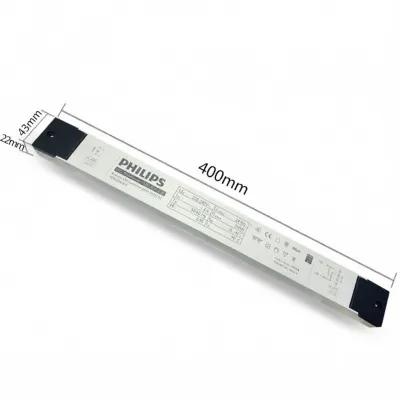
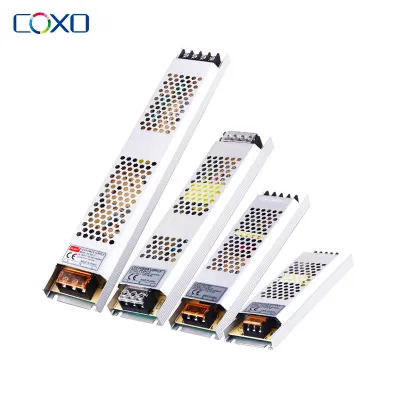
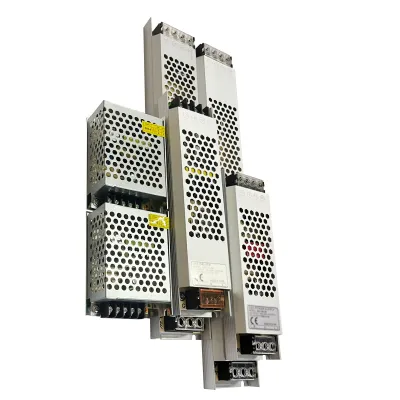
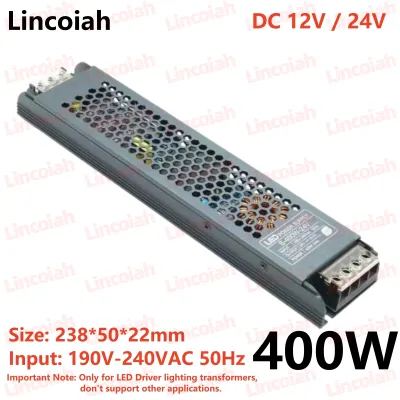
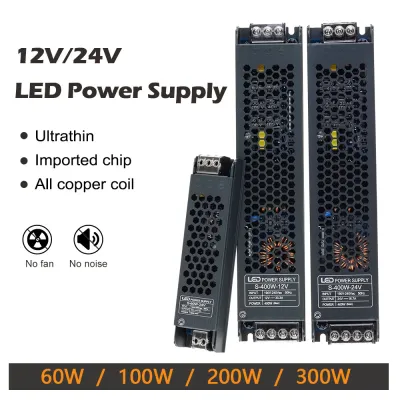
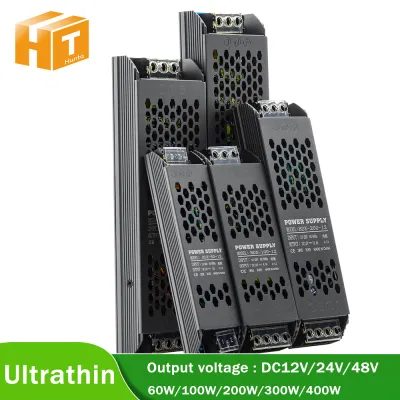
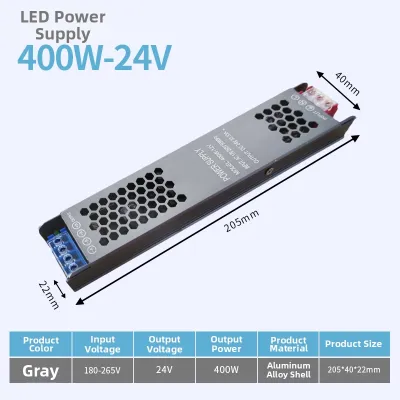
Prices are valid at publication and may change. Please refer to the product page for the latest price.
Next, measure the precise physical length of the LED strip you plan to install. If you are combining multiple cut segments or running parallel strips from a single power source, add the lengths of all segments together to get the total continuous length in meters.
Once you have these two figures, calculate the baseline power requirement using this formula:
Total Baseline Wattage = Total Length (meters) × Power Rating (W/m)
For example, if you plan to install a 5-meter run of LED tape light rated at 10W/m, your calculation is:
5 meters × 10W/m = 50 Watts
This 50W figure represents the absolute minimum power your LED strip will draw under full brightness. However, you must never purchase a driver rated for this exact baseline wattage, as doing so will overload the power supply.
Step 2: Apply the 80% Safety Rule for Your LED Strip Driver 24V
To ensure electrical safety and system longevity, you must apply the industry-standard “80% safety rule” (also known as derating the power supply). This rule dictates that a continuous-load power supply should never be run at more than 80% of its maximum rated capacity. Alternatively, you can calculate this by adding a 25% buffer to your baseline wattage.

Operating a driver at 100% capacity generates excessive internal heat. Over time, this thermal stress degrades the internal capacitors, triggers built-in thermal shutdown protections, and causes premature driver failure. Providing a power buffer allows the driver to run cooler, maintain higher efficiency, and handle minor voltage fluctuations in your mains supply.
To find the minimum required driver capacity, use either of these equivalent formulas:
- Required Driver Wattage = Total Baseline Wattage ÷ 0.8
- Required Driver Wattage = Total Baseline Wattage × 1.25
Using the previous example of a 50W baseline requirement, the calculation is:
50W ÷ 0.8 = 62.5 Watts
You must choose a driver rated for at least 62.5W. Because power supplies are manufactured in standard sizes, you will need to round up to the next commercially available driver capacity. Common standard sizes include 60W, 75W, 100W, 150W, 200W, and 320W. In this scenario, you should select a 75W or 100W driver.
Step 3: Convert Wattage to Amperage (If Required)
Some manufacturers label their drivers using current capacity in Amperes (Amps or A) rather than power capacity in Watts. If you are comparing power supplies or selecting a smart LED controller that specifies an amperage limit, you will need to convert your calculated wattage into Amps.
This conversion relies on Ohm’s Law, which defines the relationship between power, voltage, and current. Use the following formula:
Amperage (A) = Wattage (W) ÷ Voltage (V)
Because you are working with a 24V system, divide your target driver wattage by 24:
Required Amps = Required Driver Wattage ÷ 24V
Continuing with our 75W driver example, the calculation is:
75W ÷ 24V = 3.125 Amps
For this installation, you must source a 24V driver that can supply a minimum of 3.125A (often rounded to 3.2A or higher on product labels).
When matching components, remember the golden rule of low-voltage DC power supplies: the output voltage of the driver must match the rated voltage of the LED strip exactly (24V to 24V), while the wattage and amperage ratings on the driver must meet or exceed your calculated requirements.
Managing Voltage Drop in Longer 24V Runs
Voltage drop is a physical phenomenon where electrical voltage decreases as current travels along the thin copper traces of an LED strip. This resistance results in a gradual loss of brightness and color shifting toward the far end of the run. While 24V systems suffer far less from voltage drop than 12V systems, they are still subject to physical limitations.
Most standard 24V LED strips have a maximum continuous run length of 5 to 10 meters before voltage drop becomes visible. Always consult the manufacturer’s technical documentation to verify the maximum single-run limit for your specific product.
If your design requires a run that exceeds this maximum limit, you can manage the voltage drop using several practical wiring techniques:
- Dual-End Power Feeding: Connect power feed wires from a single driver to both the beginning and the end of the LED strip run. This balances the electrical pressure and ensures uniform brightness across the entire length.
- Parallel Wiring (Star Topology): Run separate, shorter lengths of LED strip back to a centralized driver. Each strip operates as an independent branch, reducing the load and resistance on any single run of copper tape.
- Multiple Drivers: Divide your installation into independent zones, with each zone powered by its own dedicated driver.
When using parallel wiring, remember that adding more strips increases the total wattage draw on that single driver. You must recalculate your total baseline wattage and apply the 80% safety rule to size the central driver correctly.
Matching the Driver with Dimmers and Smart Controls
Selecting the correct wattage is only half the battle; you must also ensure the driver is compatible with your intended control system. If you plan to adjust the brightness of your lights, you must purchase a driver explicitly labeled as “dimmable.” Using a standard, non-dimmable driver with a dimmer switch will cause rapid flickering, loud buzzing, or immediate hardware failure.
Different dimming technologies require matching driver internal designs. You must align your driver with your control interface:
- TRIAC (Phase-Cut) Dimming: This is the most common system for traditional wall dimmers. If you are using a standard rotary or push-button wall dimmer, you must select a mains-dimmable (TRIAC) 24V driver.
- 0-10V / 1-10V Dimming: Commonly used in commercial spaces and high-end residential automation, this system uses a separate low-voltage control signal to adjust brightness.
- PWM (Pulse Width Modulation) & Smart Controllers: If you are integrating your lighting with smart home platforms (such as Zigbee, Wi-Fi, or Bluetooth controllers), the smart receiver is typically installed between a standard non-dimmable driver and the LED strip. The controller handles the dimming via PWM.
Before starting any installation work, turn off the power at the main consumer unit or distribution board. For fixed-mains wiring, working in damp environments, or complex control integrations, always hire a licensed electrical worker or qualified professional to ensure compliance with local electrical safety standards.
Frequently Asked Questions (FAQ)
Can I use a 24V driver for a 12V LED strip?
No. You must never connect a 12V LED strip to a 24V driver. Doing so will supply double the rated voltage to the LEDs, causing them to overheat instantly, burn out, or potentially melt the flexible backing. Always match the driver’s output voltage to the LED strip’s rated voltage exactly.
What happens if my LED strip driver wattage is much higher than needed?
Using a driver with a wattage rating significantly higher than your calculated requirement is completely safe and highly recommended. The LED strip will only draw the current it needs to operate. An oversized driver will run cooler, operate more efficiently, and last longer because it is not working near its thermal limits.
Do I need an IP-rated waterproof driver for outdoor installations?
Yes. If your driver is installed in an outdoor area, balcony, bathroom, or any space exposed to high humidity and moisture, it must carry an appropriate Ingress Protection (IP) rating. Look for an IP65 or IP67 rated driver, which features a sealed, weather-resistant enclosure. Standard IP20 drivers are strictly for dry, well-ventilated indoor environments.
Community discussion
Share your experience or ask a question. Comments are reviewed before publication.