
Selecting the right ceiling light for a standard Housing & Development Board (HDB) flat in Singapore requires balancing illumination with physical space constraints. With a standard ceiling height of 2.6 metres, choosing a bulky or low-hanging light fixture can quickly make a room feel cramped and visually cluttered. Can Mei Jia LED ceiling lights offer a practical solution for these compact spaces, provided you select models with low-profile designs, appropriate diameters, and suitable lumen outputs. To make the best choice, you must evaluate the physical dimensions of your room, verify the technical specifications of the fixture, and ensure the light distribution matches the specific activities in your living room or bedroom.
Understanding HDB Ceiling Constraints and Lighting Needs
A standard HDB flat features a ceiling height of approximately 2.6 metres, but the actual clearance is often slightly lower. When you account for floor finishes such as thick ceramic tiles, laminate, or vinyl overlays, the floor-to-ceiling distance can easily decrease by several centimetres. If you plan to install a false ceiling for concealed wiring or aesthetic reasons, this clearance drops even further, sometimes leaving you with 2.4 metres or less of vertical space. Consequently, any light fixture that protrudes significantly from the ceiling will reduce the physical and visual headroom, making the space feel restrictive for taller occupants and disrupting the flow of air from ceiling fans.
To maintain an open and airy atmosphere, you must prioritize low-profile, surface-mounted LED fixtures. A slim light fixture sits close to the ceiling plane, drawing the eye upward and creating the illusion of a higher ceiling. This visual lightness is particularly important in multi-functional HDB spaces where the same room might host working, dining, and relaxation.
Products mentioned in this guide
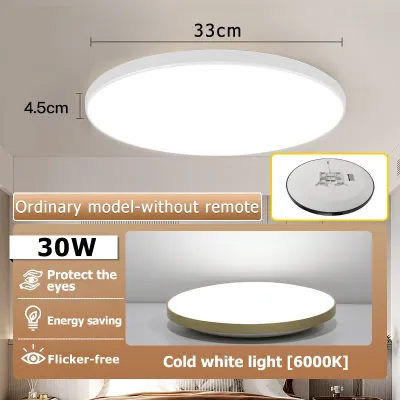
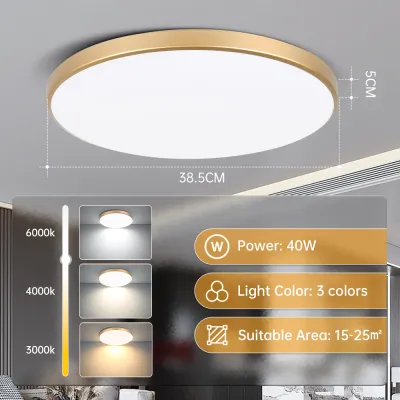
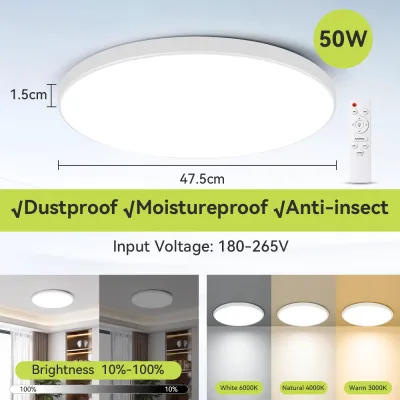
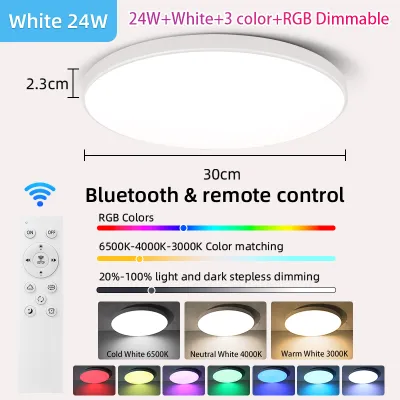
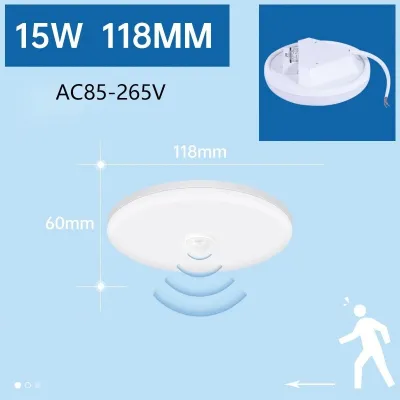
Prices are valid at publication and may change. Please refer to the product page for the latest price.
Furthermore, the primary function of each room dictates its baseline illumination needs. A living room requires bright, uniform light for social gatherings and daily tasks, whereas a bedroom benefits from softer, more localized illumination. Understanding these spatial and functional constraints before browsing online marketplaces ensures you select a fixture that enhances both the utility and comfort of your home.
Key Selection Criteria for Can Mei Jia Ceiling Lights
When evaluating Can Mei Jia LED ceiling lights on your preferred ecommerce platform, the first specification to check is the fixture’s thickness or profile. For a 2.6-metre ceiling, look for ultra-thin models that measure between 2 cm and 5 cm in depth. These slim profiles blend seamlessly with the ceiling surface, minimizing shadows around the edges of the fixture and maximizing the vertical clearance in high-traffic areas.

Next, you must match the fixture’s diameter to the physical dimensions of your room to maintain proper visual proportions. A light that is too small will look lost on a spacious ceiling, while an oversized fixture will overwhelm the room. As a general guideline for standard HDB bedrooms (typically around 9 to 12 square metres), a fixture diameter of 30 cm to 40 cm is usually appropriate. For larger living rooms or open-plan dining areas, look for diameters ranging from 40 cm to 60 cm to ensure the light source is proportional to the floor area.
Lumen output and color temperature are equally critical factors that you must verify on the product label. Lumens measure the actual brightness of the light, which is a more reliable metric than wattage for modern LED fixtures. For a standard HDB bedroom, a total output of 1,500 to 2,400 lumens is generally sufficient, while a living room may require 3,000 to 4,000 lumens or more, depending on the layout. Color temperature, measured in Kelvin (K), affects the mood of the space; warm white (2700K to 3000K) creates a cozy atmosphere, cool white (4000K) is excellent for task-oriented spaces, and daylight (6000K to 6500K) provides a bright, energizing light.
Finally, verify the dimming compatibility and driver specifications of the Can Mei Jia model you are considering. Many budget-friendly LED lights use non-dimmable drivers, which will flicker or buzz if connected to a traditional wall dimmer switch. If you want adjustable ambiance, look specifically for models labeled as dimmable, and check whether they require a compatible triac dimmer, a dedicated remote control, or a smart home integration. Additionally, ensure the integrated driver is rated for Singapore’s standard 230V voltage at 50Hz to prevent premature component failure.
Matching Can Mei Jia LED Light Features to HDB Rooms
Different areas of an HDB flat serve distinct purposes, meaning a single lighting style or brightness level is rarely suitable for the entire home. By matching the specific features of Can Mei Jia LED lights—such as adjustable color temperatures, wide beam angles, and glare-reducing diffusers—to the unique requirements of each room, you can create a balanced and comfortable lighting scheme throughout your flat.
Living Room Lighting Requirements
The living room is the central hub of an HDB flat, hosting activities ranging from family movie nights to working from home. To accommodate these diverse needs, prioritize Can Mei Jia models that offer high lumen output and a wide beam angle, typically 120 degrees or more, to ensure even light distribution across the entire space. This prevents dark corners and reduces the need for multiple secondary light sources, keeping the ceiling clean and uncluttered.
Consider selecting fixtures that feature adjustable color temperatures, often referred to as “3-color toggle” or “CCT-changeable” models. These lights allow you to switch between daylight, cool white, and warm white simply by toggling your existing wall switch or using an included remote control. This flexibility lets you use bright daylight for daytime tasks or cleaning, and then transition to a warm, relaxing glow in the evening.
Bedroom Lighting Requirements
In HDB bedrooms, the primary goal of lighting is to promote relaxation and rest. When choosing a Can Mei Jia fixture for this space, select models with built-in diffusers made of frosted acrylic or polycarbonate. These diffusers soften the light output, eliminating harsh glare and hot spots that can cause eye strain when you are lying in bed looking directly at the ceiling.
To enhance comfort, look for models that include a remote control or smart app compatibility. This allows you to adjust the brightness and color temperature from the comfort of your bed without needing to stand up to reach the wall switch. Opting for a model with a dedicated “night light” mode—which drops the brightness to a minimal level—is also highly beneficial for navigating the room safely in the dark without fully waking yourself up.
Installation, Safety, and Pre-Purchase Checks
Before purchasing any ceiling light, you must perform several critical safety and compatibility checks. First, verify that your existing electrical wiring and wall switches are compatible with the new fixture. If you are replacing an old fluorescent light or a heavy hanging chandelier, the mounting bracket and wiring configuration may differ significantly from a modern surface-mounted LED light. Always ensure the fixture carries recognized electrical safety certifications, such as the Singapore Safety Mark, which indicates the product has been tested and approved for safe local use.
Next, inspect the ceiling structure where the light will be mounted. Standard HDB ceilings are made of solid concrete, which requires a rotary hammer drill and appropriate masonry wall plugs to secure the mounting bracket safely. If you have a false ceiling installed, you must never mount a heavy fixture directly to the plasterboard; instead, you must locate the underlying metal or timber support joists or use specialized heavy-duty toggle anchors designed for hollow walls.
Electrical work carries inherent risks of shock, short circuits, and fire if performed incorrectly. Before attempting any installation or maintenance, you must isolate the power supply by switching off the main circuit breaker at your home’s distribution board (DB box)—simply turning off the wall switch is not sufficient. If you are unfamiliar with electrical wiring, working at heights, or drilling into concrete, stop your DIY efforts immediately. It is highly recommended to hire a licensed electrical worker (LEW) or an EMA-licensed electrician in Singapore to handle the installation, ensuring compliance with local safety standards and building regulations.
Frequently Asked Questions (FAQ)
Can I install a Can Mei Jia ceiling light on a false ceiling?
Yes, you can install these lightweight LED ceiling lights on a false ceiling, but you must take proper structural precautions. Because plasterboard has limited load-bearing capacity, you should check the weight of the fixture against the ceiling’s limits. For secure mounting, try to align the bracket with the internal metal or timber support joists. If that is not possible, you must use high-quality hollow-wall toggle anchors rather than standard plastic wall plugs to distribute the weight evenly and prevent the plasterboard from sagging or cracking over time.
How do I clean and maintain acrylic or polycarbonate light diffusers?
To keep your Can Mei Jia light diffuser looking clean and bright, turn off the power and wipe the surface gently with a dry or slightly damp microfiber cloth to remove dust. For deeper cleaning, use a mild, non-abrasive soap solution and warm water. Avoid using harsh chemical cleaners, alcohol, or solvent-based sprays, as these substances can react with the acrylic or polycarbonate material, causing it to become brittle, yellow, or cloudy over time, which permanently reduces the light transmission.
Community discussion
Share your experience or ask a question. Comments are reviewed before publication.