
Buying a cuckoo clock is an investment in both traditional horology and decorative art. To make an informed purchase, you must evaluate several critical specifications: the movement type, the quality of the wood carving, the authenticity of its origin, and the practical installation requirements of your home. Whether you prefer a traditional mechanical timepiece that requires manual winding or a low-maintenance quartz alternative, understanding these technical factors ensures your clock remains a functional, beautiful heirloom for generations.
Choosing the right clock involves balancing historical authenticity with your daily lifestyle. From the weight of the cast-iron pendulums to the intricate gears inside the wooden casing, every element affects how the clock operates, sounds, and fits into your living space. By focusing on verifiable quality indicators, you can confidently select a timepiece that matches your aesthetic preferences and maintenance willingness.
Choose Between Mechanical and Quartz Movements
The movement is the heart of any cuckoo clock, dictating how it operates, how it sounds, and the level of interaction it requires from you. Traditionalists generally prefer mechanical movements, which rely on a system of weights and a pendulum to keep time. These movements are divided into two primary categories: 1-day and 8-day mechanisms. A 1-day movement requires you to pull the chains to wind the clock every single day, making it an engaging daily ritual. The weights on these clocks are typically smaller and lighter. An 8-day movement, by contrast, only requires winding once a week, utilizing much heavier cast-iron weights to store enough potential energy for the longer cycle.
Products mentioned in this guide

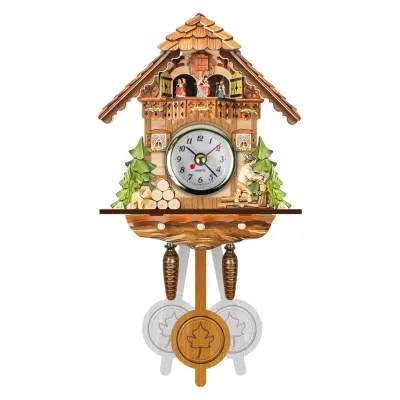



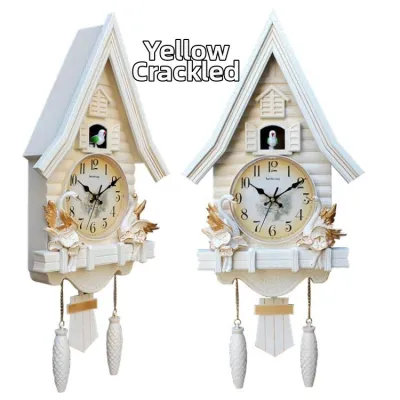

Prices are valid at publication and may change. Please refer to the product page for the latest price.
Quartz movements offer a modern, battery-operated alternative to traditional mechanics. Powered by standard 1.5V batteries (typically C-cell batteries), quartz cuckoo clocks require no manual winding. The weights and pendulum on a quartz clock are purely decorative, though the pendulum still swings to mimic the look of a traditional timepiece. Quartz models are highly accurate, require virtually no daily attention, and are often more budget-friendly. However, they lack the physical ticking sound, the mechanical complexity, and the historical value of a true weight-driven clock.
Long-term maintenance is another key differentiator between the two movement types. Mechanical movements are highly durable and can last for decades, but they require periodic servicing. Every five to seven years, a mechanical clock should be professionally cleaned and oiled to prevent friction and wear on the brass pivots and steel gears. Because these movements have been standardized for generations, replacement parts like chains, bellows, and gears are widely available from specialized clockmakers. Quartz movements, being sealed electronic units, cannot easily be serviced; if the electronic component fails, the entire movement must usually be replaced.
Evaluate Wood Carving and Craftsmanship
The artistic value of a cuckoo clock lies primarily in its wooden case and the quality of its carvings. Authentic, high-quality clocks feature hand-carved details, which you can distinguish from machine-stamped or molded plastic alternatives through close visual inspection. Hand-carving leaves subtle, unique tool marks, varying depths, and slight asymmetries that give the clock character. Machine-stamped or molded resin parts, by contrast, look perfectly uniform, flat, and lack the sharp, deep undercuts characteristic of skilled hand-chiseled work.

Traditional Black Forest clocks are constructed using linden wood (also known as basswood), which is favored by carvers for its dense, uniform grain and resistance to splitting. When evaluating a clock, check whether the housing and decorative elements are made of solid wood or cheap composite boards with thin veneers. Solid wood is highly durable and retains its structural integrity over time. In humid climates, such as Singapore’s, solid wood is particularly important; low-quality composite boards or poorly sealed veneers are highly susceptible to absorbing moisture, which leads to swelling, warping, and delamination.
Beyond the main case, inspect the smaller decorative components for quality. The clock dial, hands, and the cuckoo bird itself should ideally be made of wood rather than plastic. Examine the depth and symmetry of the carvings on the front frame, such as the leaves, vines, or animal figures. The cuckoo bird door should fit flush within its frame when closed and swing open smoothly without catching on the surrounding wood carvings when the mechanism is triggered.
Verify Authenticity and Build Quality
To ensure you are purchasing a genuine, high-quality timepiece rather than a cheap imitation, you must verify its manufacturing origin and internal components. The gold standard of authenticity for mechanical cuckoo clocks is the certificate issued by the Black Forest Clock Association (Verein die Schwarzwalduhr, or VDS). This black-and-gold seal guarantees that the clock was manufactured mechanically in the Black Forest region of Germany and meets strict quality and craftsmanship standards. Note that quartz clocks, regardless of where they are assembled, do not qualify for VDS certification because they do not use traditional mechanical movements.
Before finalizing your purchase, inspect the internal components of the clock by opening the access panel on the back of the case. High-quality mechanical clocks feature solid brass plates and steel gears that can withstand the constant tension of the heavy hanging weights. Avoid clocks that utilize plastic gears or plastic housing for the internal movement, as these materials wear down quickly under mechanical stress and are difficult to repair. The manufacturer’s name or trademark should be clearly engraved directly onto the metal movement plate inside the clock.
Traceability is another key indicator of build quality. Reputable manufacturers provide official documentation, including a physical warranty card, operating instructions, and a certificate of origin. Check the exterior of the clock case for physical labels or stamps indicating the manufacturer’s workshop. A lack of clear branding, missing documentation, or the use of generic “Made in Germany” stickers without a specific manufacturer’s name often points to mass-produced, lower-quality assembly.
Select Music, Automata, and Night Shut-Off Features
Supplementary features can greatly enhance your enjoyment of a cuckoo clock, but they also add mechanical complexity. Many clocks include a built-in mechanical music box that plays melodies on the hour or half-hour. When selecting a musical clock, check the specifications of the music box, particularly the number of tones or “teeth” on the musical comb (such as 18, 22, or 36 tones). A higher number of teeth produces a richer, more complex, and clearer sound. Typically, the music box is engineered to play its melody immediately after the cuckoo bird finishes its hourly calls.
Automata, or moving figures, add dynamic visual appeal to the clock’s performance. Common mechanical animations include rotating pairs of dancers, woodchoppers moving their axes, water wheels turning, or beer drinkers raising their mugs. These figures are mechanically linked to the clock’s gear train or the music box mechanism, synchronizing their movements perfectly with the music and chimes. Ensure these figures are made of painted wood or high-quality durable materials, and verify that their linkages move smoothly without jerking or stalling.
Because the cuckoo call and music play hourly, a reliable night shut-off feature is essential for maintaining a quiet sleeping environment. Manual shut-off systems use a physical lever located on the side or bottom of the clock case, allowing you to manually disable the sound before going to bed. Automatic night shut-off features are highly convenient; mechanical clocks with this feature use an internal lever system to silence the clock during set hours (typically from 9:00 PM to 8:00 AM). Quartz clocks often utilize a built-in light sensor that automatically silences the cuckoo and music as soon as the room goes dark.
Measure Wall Space and Installation Requirements
Before purchasing a cuckoo clock, you must carefully measure your intended wall space to accommodate the clock’s physical dimensions and operational clearance. The total drop length of a cuckoo clock is often much larger than the clock case itself. You must calculate the distance from the top ornament of the clock down to the lowest point of the fully extended chains and weights. For an 8-day mechanical clock, this total drop length can easily exceed 1.5 to 2 meters. If the chains cannot hang fully straight, the weights will hit the floor prematurely, stopping the clock movement.
Because cuckoo clocks are heavy suspended loads, secure wall mounting is a critical safety requirement. A mechanical clock, especially an 8-day model with heavy cast-iron weights, can weigh anywhere from 3 to 10 kilograms. In homes with concrete or masonry walls, you must drill a hole, insert a high-quality plastic wall plug (anchor), and drive in a heavy-duty screw angled upward at approximately 45 degrees. Do not attempt to hang a heavy mechanical clock using simple picture nails, adhesive hooks, or drywall anchors, as the constant downward pull of the weights can cause the mounting to fail.
Finally, consider the environmental conditions of the room. The pendulum requires sufficient lateral clearance to swing freely from side to side without brushing against the wall, nearby furniture, or decorative trim. Avoid hanging the clock in areas with high humidity, such as directly opposite a bathroom door or near open windows during rainy seasons. Keep the clock away from direct sunlight, which can dry out the wood and fade the hand-painted finish, and avoid placing it directly in the path of air conditioning vents, as rapid temperature fluctuations can affect the accuracy of the mechanical timing.
Frequently Asked Questions (FAQ)
Are all cuckoo clocks made in the Black Forest?
No, not all cuckoo clocks on the market are made in the Black Forest. While the Black Forest region of Germany is the historical birthplace and premier manufacturing hub for these timepieces, many modern clocks are mass-produced in other regions or countries, often utilizing quartz movements and synthetic materials. To ensure you are buying an authentic regional product, look for the official VDS (Black Forest Clock Association) certificate of authenticity, which is only awarded to mechanical clocks manufactured entirely within the Black Forest region using traditional methods.
How do I maintain the finish on a wooden cuckoo clock?
To maintain the finish on a wooden cuckoo clock, dust the exterior regularly using a soft, dry brush, such as a clean paint brush or a microfiber duster, which can safely reach into the deep crevices of the carvings. Avoid using liquid chemical cleaners, water, or damp cloths, as moisture can cause the linden wood to swell, warp, or lose its protective finish. If the wood begins to look dry over time, consult a professional clockmaker or refer to the manufacturer’s instructions regarding the safe application of a very light coat of specialized wood wax.
Community discussion
Share your experience or ask a question. Comments are reviewed before publication.