
To make a small apartment feel significantly larger, a decorative mirror must be chosen based on its reflective efficiency, frame profile, and strategic placement. In compact urban homes, such as typical HDB flats or modern condominiums, space is at a premium. A well-chosen mirror does not just sit on a wall; it acts as an active architectural element that doubles perceived depth and amplifies available light. Achieving this spatial illusion requires moving beyond basic aesthetics to evaluate specific design features, understand the physics of light reflection within your layout, and know how to identify reliable brands in the local market.
By focusing on structural integrity, moisture resistance for a tropical climate, and secure installation methods, you can transform a cramped room into an airy, open sanctuary. This guide outlines the essential design characteristics that maximize spatial illusion, provides a framework for evaluating local mirror retailers, and details the safety protocols required for secure wall mounting.
Design Features That Visually Expand Compact Spaces
The relationship between a mirror’s dimensions and the surrounding wall space dictates its spatial impact. In a small room, a tiny mirror can look lost and actually emphasize the room’s limitations by breaking up the wall surface. Conversely, a large-format mirror that covers a significant portion of a wall creates a seamless transition that tricks the eye into seeing an adjacent room. Aim for a scale that covers at least two-thirds of the width of the furniture below it, or opt for a tall vertical mirror that draws the eye upward toward the ceiling, emphasizing vertical volume.
Products mentioned in this guide
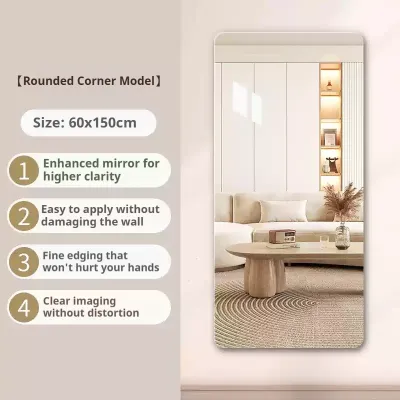
![SG [ READY STOCK ] HD Acrylic soft mirror attached to wall self-adhesive full body dressing mirror non perforated](https://img.lazcdn.com/g/p/10f5a09c2f952c5c8f6fe9a8d334827a.jpg_400x400q80.jpg_.webp)
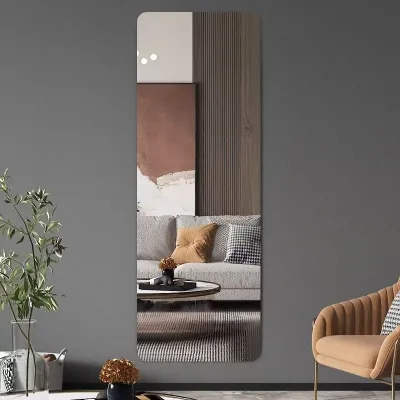
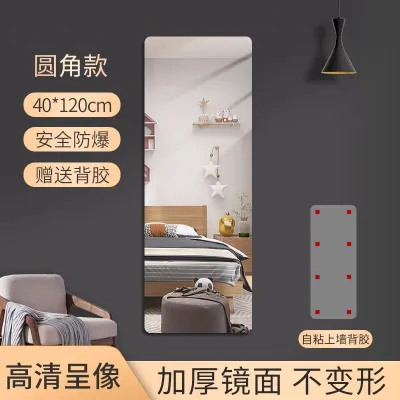
Prices are valid at publication and may change. Please refer to the product page for the latest price.
Heavy, ornate frames tend to crowd a small room by adding visual weight and casting deep shadows. For a spacious feel, thin metal frames, minimalist wooden borders, or completely frameless designs are highly effective. Light-colored frames—such as champagne gold, light oak, or matte white—blend into light-colored walls, reducing visual clutter. Frameless mirrors with polished or beveled edges allow the reflection to merge directly with the surrounding wall, maximizing the boundary-stretching effect and keeping the focus entirely on the reflected space.
High-quality glass is essential to prevent the funhouse-mirror distortion that cheap, thin glass often produces over large surfaces. Look for mirrors with a minimum glass thickness of 4mm to 6mm, which provides the structural rigidity needed for a perfectly flat, true reflection. The silvering backing must be applied evenly to ensure high reflectivity. The edge finishing also matters; beveled edges catch and refract light, adding a subtle decorative border without the bulk of a physical frame, while polished flat edges offer a clean, modern transition.
Shape also plays a critical role in how space is perceived. Round and arched mirrors soften the sharp, boxy angles common in compact apartment layouts, creating a sense of flow and organic movement. Rectangular mirrors, when hung horizontally, stretch the perceived width of a narrow room, making them ideal for dining alcoves or entryways. If you choose a multi-panel or windowpane mirror design, ensure the grid lines are thin and clean, as thick dividers can fragment the reflection and diminish the illusion of continuous space.
Strategic Placement for Maximum Spatial Illusion
The most effective way to brighten a compact apartment is to position your mirror directly opposite or adjacent to a primary light source, such as a balcony door or a living room window. This placement catches incoming daylight and bounces it deep into the darker corners of the home. By reflecting the outdoor view, the mirror acts as an additional window, breaking down the physical boundaries of the room and creating a sense of connection with the outside environment.

Because a mirror will reflect whatever is directly in front of it, placement must be highly deliberate. Avoid positioning a large mirror where it constantly reflects high-traffic, cluttered areas like open shoe racks, kitchen counters, or utility zones, as this will visually double the clutter and make the space feel more chaotic. Instead, direct the reflection toward an attractive focal point, such as a clean dining setup, a piece of wall art, or a minimalist indoor plant arrangement that adds depth and color.
For optimal spatial depth, mount the center of the mirror at eye level, which is typically around 140cm to 150cm from the floor. In rooms with lower ceilings, vertical orientation helps emphasize height, while horizontal orientation works best to widen narrow hallways or dining alcoves. If you are leaning a full-length mirror against a wall, secure it with a slight upward tilt to guide the eye upward, which visually lofts the ceiling and makes the entire room feel more grand.
Grouping smaller mirrors to form a gallery wall can be an artistic alternative to a single large mirror, but it requires careful execution. Keep the spacing tight and consistent—ideally between 5cm and 8cm apart—to prevent the arrangement from looking fragmented, which can disrupt the smooth flow of light. Using mirrors of the same frame style and color for a gallery wall maintains visual cohesion, ensuring the collection functions as a single, unified reflective element rather than a distracting cluster of individual pieces.
How to Evaluate and Select Reliable Mirror Brands
When shopping for mirrors in Singapore, the local tropical climate demands careful material selection. High humidity can cause cheap mirrors to develop black spots or edge corrosion, a process known as desilvering. To prevent this, look for brands that specify copper-free silver mirrors or those with a protective anti-oxidation backing layer. Check the product specifications for multi-layered backing paint, which shields the reflective silver layer from moisture and atmospheric wear.
A reliable brand will provide clear details about the construction of the frame and the integrated hanging hardware. Inspect the joints of wooden or metal frames to ensure there are no visible gaps, splinters, or structural weaknesses. For heavy decorative mirrors, the hanging mechanism must be robust; look for pre-installed D-rings, heavy-duty cleat hangers, or keyhole slots rather than simple wire loops, which can stretch, slip, or fail over time under the weight of thick glass.
Purchasing a large decorative mirror involves logistical considerations, especially when navigating delivery to high-rise apartments. Review the retailer’s return policy specifically regarding transit damage, as large glass items are vulnerable during delivery. Ensure the brand offers professional delivery services that include handling and unboxing checks. In terms of budget planning, high-quality decorative mirrors in Singapore typically range from S$150 for mid-sized minimalist designs to over S$600 for large, premium statement pieces with specialized moisture-resistant backings.
Before making a purchase, verify the brand’s customer service track record regarding replacements for defective items. A reputable brand should offer a clear warranty period—ideally at least 12 months—covering manufacturing defects, frame warping, and premature desilvering. Avoid retailers that do not provide detailed product specifications or those that use vague terms like “shatterproof” without explaining the actual material composition, such as the presence of a safety film backing that holds glass fragments together in the event of breakage.
Installation and Safety Checks for Wall-Mounted Mirrors
Before mounting any mirror, you must identify the construction of your wall. Most HDB flats and older apartments in Singapore feature solid concrete or brick walls, which require a masonry drill bit and heavy-duty plastic or metal wall plugs to secure screws. Modern condominiums and partitioned rooms often use drywall (gypsum board), which cannot support heavy mirrors without specialized toggle bolts or anchoring directly into the underlying timber or metal studs.
While small, lightweight mirrors can be a straightforward DIY project, large-format or heavy decorative mirrors present significant safety risks if improperly mounted. If a mirror weighs more than 15 kilograms, or if you are mounting it high on a wall or above a sofa or bed, it is highly recommended to hire a qualified local handyman or professional installation service. They have the specialized tools, such as stud finders and heavy-duty wall anchors, to ensure the mirror remains permanently secure.
If you plan to place a decorative mirror in a high-humidity zone like a bathroom, semi-outdoor balcony, or near an open kitchen, standard mirrors will degrade quickly. Ensure the mirror is explicitly rated for bathroom use or features sealed edges. You can also apply a specialized mirror edge sealer along the back and sides before installation to prevent moisture from penetrating the silver backing, ensuring the glass remains clear and free from dark spots for years to come.
Always perform a final safety check immediately after installation. Gently apply pressure to the sides of the mirror to ensure there is no wobbling, tilting, or slippage from the wall brackets. The mirror should sit flush against the wall surface to prevent dust and moisture from accumulating behind the frame. Regularly inspect the mounting hardware and the wall area around the anchors for any signs of cracking, sagging, or loosening, especially after periods of high humidity or minor structural settling.
Frequently Asked Questions (FAQ)
Can a decorative mirror be too large for a small apartment?
Yes, a mirror can overwhelm a compact room if its visual weight is too heavy or if it is poorly proportioned. While a large mirror is excellent for expanding space, one with a thick, dark, or heavily carved frame can make a small room feel cramped and cluttered. To avoid this, choose oversized mirrors with very thin, light-colored frames or frameless designs. This allows the reflective surface to dominate the visual field, maximizing the spatial illusion without adding unnecessary physical bulk to the wall.
How do I maintain the reflective quality of a large mirror?
To preserve the clarity of your mirror and prevent damage to the reflective backing, avoid spraying liquid cleaners directly onto the glass surface, as the liquid can run down and seep behind the edges, causing desilvering. Instead, spray a small amount of water or a specialized glass cleaner onto a microfiber cloth and gently wipe the surface. Avoid using abrasive pads, ammonia-based cleaners, or harsh chemicals that can scratch the glass or degrade the protective backing paint over time.
Community discussion
Share your experience or ask a question. Comments are reviewed before publication.