
Selecting a reliable azan prayer clock in Singapore requires looking beyond brand names to evaluate how a device calculates prayer times and maintains power. Because local prayer times are determined by specific astronomical calculations aligned with the Islamic Religious Council of Singapore (MUIS), a clock’s ability to be calibrated accurately is far more important than its brand label. A truly reliable clock must offer the flexibility to match these local timings precisely while ensuring uninterrupted operation throughout the day.
When shopping for an azan clock, buyers generally face a choice between basic pre-programmed digital models and advanced auto-calibrating or smart clocks. Basic models are highly affordable but often require manual adjustments to keep up with seasonal shifts in prayer times. Advanced models offer automated synchronization but come with a higher price tag and more complex setup procedures. Understanding these trade-offs is the first step toward finding a device that fits your household’s daily routine.
Rather than relying solely on brand marketing, consumers should carefully inspect product labels, technical specifications, and user manuals. Checking for features like manual minute offsets, robust battery backups, and localized time zone settings will help you identify a reliable clock. By focusing on these functional capabilities, you can ensure your chosen device remains accurate and dependable for daily use.
Products mentioned in this guide
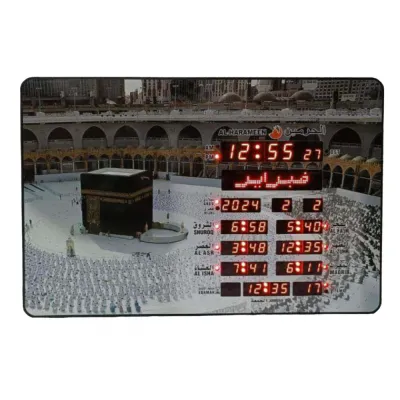
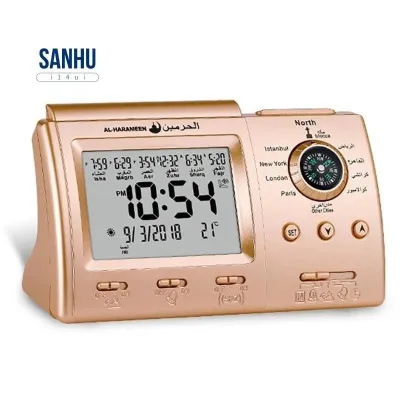
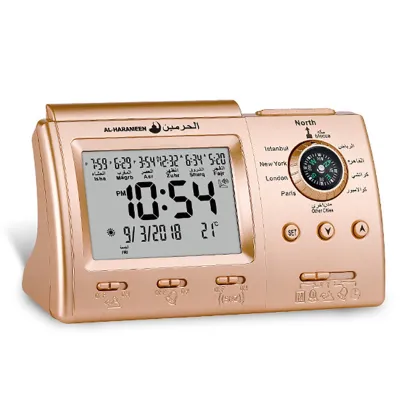
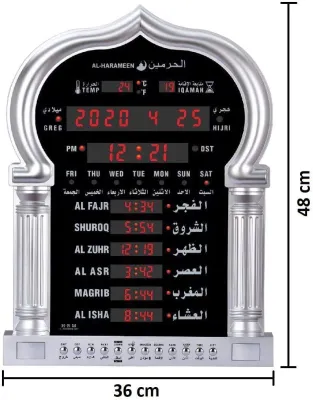
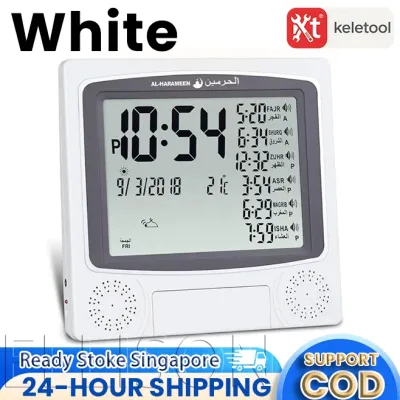
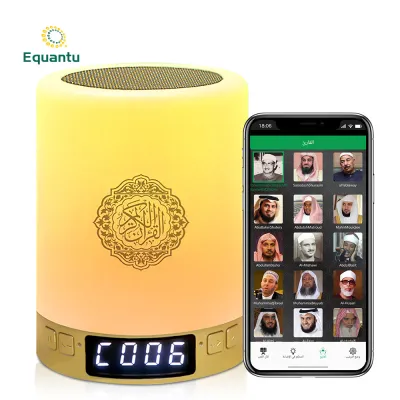
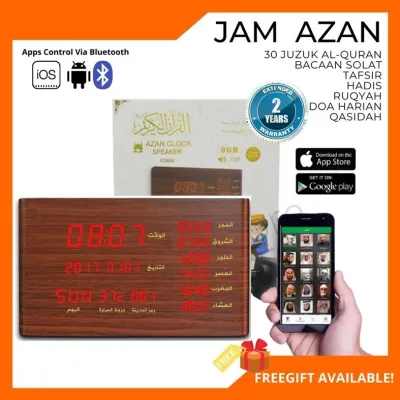
Prices are valid at publication and may change. Please refer to the product page for the latest price.
Core Features That Define Daily Reliability
The primary indicator of an azan clock’s reliability is its prayer time calculation method. Most digital prayer clocks use mathematical formulas based on geographic coordinates—specifically latitude and longitude—alongside specific angle conventions to estimate daily prayer times. In Singapore, these calculations must align with the parameters established by local religious authorities. A clock that does not allow you to adjust these calculation angles or input custom coordinates will quickly drift from the official local timetable, rendering its automated alarms inaccurate. To prevent this, look for models that allow you to fine-tune the calculation settings or manually offset the calculated times by a specific number of minutes for each prayer.
Power source stability is another critical factor that directly impacts daily performance. Many digital clocks rely on mains electricity via a plug-in power adapter. However, minor voltage fluctuations, household circuit trips, or simply unplugging the device to clean can reset a clock’s internal memory. Without a reliable battery backup system, a brief power interruption can cause the clock to lose its time settings, calendar data, and custom offsets. A dependable clock should feature a dedicated battery compartment—typically housing AA, AAA, or button-cell batteries—that keeps the internal quartz crystal running and preserves your settings during power outages.
The physical environment of a Singapore home also dictates the necessary display and audio features. Given the compact layout of typical local apartments, an azan clock must be highly readable without becoming a source of light pollution in the evening. Displays with adjustable brightness levels or automatic dimming functions are highly desirable, especially if the clock is placed in a bedroom. Furthermore, precise volume controls are essential. The clock should allow you to adjust the volume of the adhan call easily, or even mute specific prayers entirely, ensuring the device remains respectful of your household’s sleep schedules and neighboring residents.
Comparing Feature Sets Across Popular Azan Clock Types
Standard digital alarm clocks represent the most common type available on the market. These devices typically come pre-loaded with a database of major global cities, allowing users to select Singapore from a list to automatically configure the time zone and coordinates. While convenient, the pre-programmed data in these standard models may not always reflect the most current local calculations. In contrast, smart or GPS-enabled prayer clocks offer automatic location tracking and synchronize their timekeeping with global time servers or satellite signals. This advanced technology virtually eliminates manual time drift, though it requires a stable home wireless network or clear access to satellite signals to function correctly.

Audio quality is a major differentiator between entry-level and premium prayer clocks. Basic models often utilize simple piezo-electric speakers that can sound tinny, distorted, or harsh, particularly when the volume is turned up. More advanced models feature high-quality dynamic cone speakers that deliver a much clearer, richer, and more natural adhan recitation. Additionally, premium models often provide customizable audio options, such as a choice of different reciters, adjustable alarm durations, and the ability to play custom audio files or supplications before and after the prayer call.
The choice of screen technology also plays a significant role in how well the clock integrates into your home decor and lighting conditions. Light-emitting diode (LED) screens are bright, vibrant, and highly visible from across a large room or in complete darkness. However, they can be distracting at night if they lack a comprehensive dimming feature. Liquid crystal display (LCD) screens, on the other hand, rely on ambient light or a temporary backlight that activates only when a button is pressed. This makes LCD models much softer on the eyes and highly energy-efficient, though they can be difficult to read from sharp viewing angles or in dimly lit rooms.
Evaluating Durability and Long-Term Value
Assessing the physical build quality of an azan clock is essential for ensuring it survives years of daily use. High-quality models are typically constructed from robust ABS plastic that resists yellowing, cracking, and impact damage. When evaluating a clock in person or reviewing product specifications, pay close attention to the responsiveness of the buttons. Mushy, stiff, or poorly aligned buttons can make the initial setup and subsequent adjustments highly frustrating. Additionally, inspect the quality of the included power adapter. In Singapore, it is highly recommended to verify that the power adapter carries recognized safety certifications, such as the Safety Mark, to ensure it has been tested for electrical safety and thermal stability under continuous operation.
Warranty coverage and the availability of local after-sales support are strong indicators of a clock’s long-term value. Because these are specialized electronic devices, finding replacement parts or troubleshooting technical issues can be incredibly difficult if the product is purchased from unverified overseas sellers on online marketplaces. Prioritizing local retailers who offer a clear warranty period provides peace of mind. A local warranty ensures that if the clock experiences a hardware failure, display glitch, or speaker defect, you can easily obtain a replacement or professional repair services without incurring high shipping costs.
When deciding how much to spend, it is important to balance the upfront cost in S$ against the long-term convenience of the device. A basic digital prayer clock may cost between S$30 and S$50, making it an attractive budget-friendly option. However, if this budget model requires frequent manual adjustments to correct time drift or align with local timetables, the ongoing effort can quickly become a hassle. Investing S$80 to S$150 or more in a high-quality model with automated calibration, superior speaker quality, and precise manual offset features often represents better long-term value, as it minimizes maintenance and ensures reliable daily performance.
Decision Framework: Choosing the Right Model for Your Home
To choose the right azan clock for your household, you must evaluate your budget, technical comfort level, and willingness to perform regular maintenance.
- Basic Digital Models: These are best suited for budget-conscious users who prefer a straightforward, traditional setup. If you plan to place the clock in an easily accessible area—such as a living room shelf—and do not mind spending a few minutes each month adjusting the time offsets to match the official local timetable, a standard digital model offers excellent utility and simplicity.
- Advanced and Auto-Calibrating Models: These are ideal for busy households, frequent travelers, or anyone who prefers a "set-and-forget" device. If you want to ensure absolute accuracy with zero ongoing maintenance, investing in a model that automatically synchronizes its time and updates its prayer calculations is highly recommended.
- Verification Step: Regardless of the model type you choose, always verify that the clock allows for manual minute adjustments (offsets) for each of the five daily prayers before finalizing your purchase. Because local calculation methods can vary slightly from global standards, the ability to add or subtract minutes manually is the single most important feature for ensuring local accuracy in Singapore.
- When Standalone Clocks Do Not Fit: If your household requires complex smart home integration—such as syncing the adhan call with multi-room smart speakers, triggering smart lighting scenes, or integrating with home automation platforms—a standard standalone prayer clock may not be suitable. In these scenarios, dedicated smart home routines or specialized software integrations on your existing smart devices will provide a more cohesive solution.
Setup and Calibration Checks for Singapore
Once you have selected and unboxed your azan clock, performing a few essential setup checks will ensure it functions correctly within the local context. First, access the clock’s settings menu to input the correct geographic parameters. If the clock uses pre-programmed city codes, select the code for Singapore. If the clock requires manual coordinate entry, input Singapore’s approximate latitude (1.35° N) and longitude (103.82° E), and ensure the time zone is set to GMT+8. Accurate coordinate and time zone entry is vital for the clock’s internal astronomical algorithms to calculate prayer times correctly.
Next, locate the daylight saving time (DST) setting in the clock’s menu and ensure it is completely disabled. Many imported clocks have DST enabled by default or programmed to activate automatically based on North American or European calendars. Because Singapore does not observe daylight saving time, leaving this feature active will cause the clock’s time and prayer alarms to suddenly shift by one hour during certain times of the year, leading to confusion and missed prayers.
Finally, adjust the audio settings to suit your home environment and daily routine. Position the clock in a central location where the adhan can be heard clearly by family members, but take care to adjust the volume so that it does not disturb neighbors, particularly during the early morning Fajr prayer. Many clocks offer a night-mode feature or allow you to mute specific prayer alarms individually. Utilizing these features helps maintain a peaceful household while ensuring you remain connected to your daily prayer schedule.
Frequently Asked Questions (FAQ)
Why is my azan clock playing the wrong prayer times?
An azan clock playing incorrect prayer times is usually caused by incorrect geographic settings, an active daylight saving time (DST) feature, or a mismatch in the calculation method. To resolve this, first verify that the clock’s time zone is set to GMT+8 and that the DST function is turned off. Next, check that the correct city code or coordinates for Singapore are entered. Finally, compare the clock’s displayed times with the official local timetable; if there is a minor discrepancy of a few minutes, use the clock’s manual offset feature to adjust each prayer time individually until they align perfectly.
How do I maintain the battery backup on my prayer clock?
Maintaining the battery backup is essential for preserving your clock’s settings and timekeeping during power fluctuations. Start by opening the battery compartment, typically located on the back or bottom of the device, to inspect for any signs of corrosion or dust accumulation. Refer to the user manual to identify the exact battery type required, which is commonly AA, AAA, or a specific lithium button cell. It is highly recommended to replace these backup batteries once a year, even if the clock is continuously plugged into mains power, to prevent old batteries from leaking and permanently damaging the clock’s internal circuitry.
Community discussion
Share your experience or ask a question. Comments are reviewed before publication.