
When establishing a daily Great Compassion Mantra (Da Bei Zhou) recitation practice, the physical components of your altar serve as vital anchors for your mindfulness and devotion. Among these components, the water offering cup holds a position of profound spiritual and practical significance. Choosing the right water cup for Great Compassion Mantra practice (大悲咒水杯) is not merely an aesthetic decision; it is an act of cultivation that reflects your internal respect, sincerity, and clarity of mind. The ideal vessel is a dedicated, pristine cup made from high-quality materials like clear glass, dense ceramic, or polished brass, designed to preserve the physical purity of the water while harmonizing with your home altar.
For practitioners living in modern urban environments, such as Singapore’s HDB flats, this choice also requires careful attention to spatial constraints, maintenance routines, and safety protocols. By understanding the traditional guidelines and practical realities of altar upkeep, you can select a cup that elevates your daily practice and transforms a simple physical offering into a powerful meditative ritual.
The Role of Water Offerings in Great Compassion Mantra Practice
In Buddhist teachings, water is never offered to satisfy the thirst of a deity; rather, it is a profound symbolic teaching tool. Water represents the ultimate virtues of purity, clarity, and equality. It is completely transparent, reflecting everything exactly as it is without distortion. When you gaze upon a pure cup of water on your altar, you are reminded to cultivate a mind that is equally clear, calm, and undisturbed by the chaotic waves of daily life.
Products mentioned in this guide
Prices are valid at publication and may change. Please refer to the product page for the latest price.
Reciting the Great Compassion Mantra is an active practice of invoking the boundless compassion of Avalokiteshvara (Guanyin Bodhisattva). This practice requires deep concentration, mental clarity, and a sincere heart. The physical cleanliness of both the water and the cup you use directly mirrors and supports this mental state. A dusty or stained cup can introduce subtle distractions and represent a lack of mindfulness, whereas a beautifully maintained vessel fosters an atmosphere of focused reverence.
Furthermore, the act of offering water every morning is an essential exercise in letting go of greed and self-centeredness. Because water is basic yet essential to all life, offering it freely teaches us to cultivate generosity without attachment. By selecting a dedicated, high-quality cup for this daily ritual, you establish a sacred boundary between your secular routine and your spiritual practice, signaling that this time of recitation is worthy of your highest respect.
Essential Criteria for Choosing Your Water Cup
To select a cup that truly supports your practice, you must evaluate several key dimensions: material composition, color symbolism, and functional design. These criteria ensure that your vessel is not only visually appropriate but also durable, safe, and easy to maintain over years of daily use.

Material and Purity
The material of your offering cup carries both practical and symbolic weight. Traditional guidelines strongly favor natural, high-quality materials such as clear glass, fine porcelain or ceramic, and pure metals like copper or brass. Glass is highly valued for its absolute transparency, which allows you to verify the water’s purity at a single glance. Ceramic and porcelain offer a classic, grounded aesthetic, often finished with high-temperature glazes that prevent water absorption and staining. Pure metals like brass or copper represent preciousness and durability, though they require active maintenance to prevent oxidation.
Regardless of the material you choose, the cup must be completely free of chips, cracks, or structural defects. In Buddhist tradition, placing a damaged or broken item on the altar is considered highly disrespectful and is believed to symbolize fragmented intentions or incomplete spiritual results. If a cup becomes chipped, it should be retired from the altar immediately and replaced. Additionally, you should avoid cheap plastic cups entirely. Plastic degrades rapidly under ambient light, scratches easily, absorbs mineral odors, and lacks the dignity and weight required for a dedicated sacred practice.
Color and Transparency
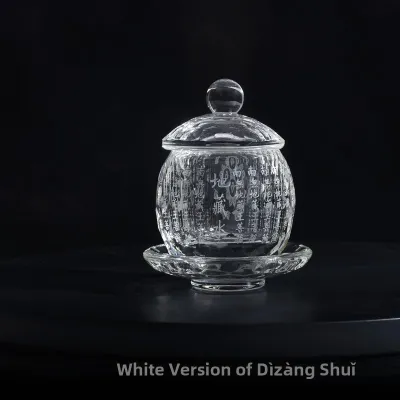
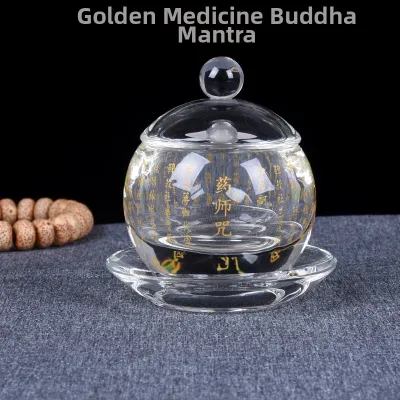
The visual appearance of your cup influences the energetic atmosphere of your altar. Clear, transparent glass is universally recommended because it symbolizes a mind completely free from defilement—open, honest, and pure. When light passes through a clear glass cup filled with water, it illuminates the entire altar space, creating a bright and uplifting focus point for your recitation.
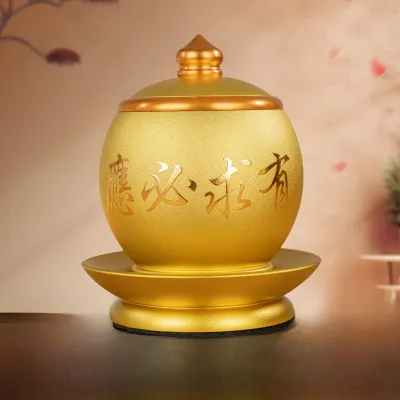
If you prefer opaque materials, traditional auspicious colors such as imperial yellow, saffron, and gold are highly appropriate. These colors are deeply associated with the warmth, wisdom, and precious nature of the Dharma. Conversely, you should generally avoid solid black, deep blood red, or overly dark, muddy colors unless they are specifically prescribed by a qualified teacher within your particular lineage. These darker shades can introduce a heavy, somber visual weight that may conflict with the peaceful, compassionate energy of the Great Compassion Mantra.
Lids and Engravings
A functional lid is an incredibly valuable feature for any daily offering cup. Throughout the day, open water cups on an altar are highly susceptible to falling dust, incense ash, and small insects. A matching lid preserves the physical cleanliness of the water, ensuring that your offering remains pure and respectful from the moment it is placed until it is removed.
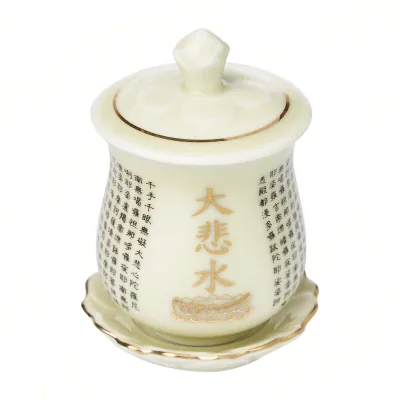
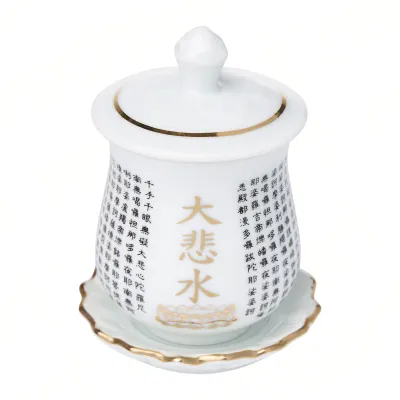
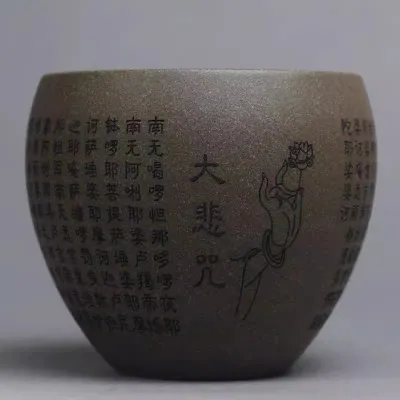
Sutra-engraved cups, particularly those featuring the text of the Great Compassion Mantra, are highly popular among practitioners. Having the sacred characters physically etched or printed on the cup serves as a powerful visual anchor, reminding you of the Bodhisattva’s vows during your daily routine. However, plain, unadorned cups are entirely acceptable. The ultimate spiritual efficacy of the water is activated by your sincere recitation and mental focus, not merely by the physical text on the vessel. If you do choose an engraved cup, ensure the characters are rendered clearly, spelt correctly, and positioned respectfully on the sides of the cup rather than on the very bottom.
Recommended Types of Altar Cups (大悲咒水杯) for Buddhist Practice
When shopping for a water cup, you will find several distinct categories. Each type offers unique advantages and trade-offs that make it suitable for different practitioners and altar configurations.
Clear Glass Offering Cups
Clear glass cups are the most accessible and widely used options on modern altars. Their primary advantage is their complete transparency, which provides immediate visual confirmation of the water’s cleanliness. They are highly affordable, easy to wash, and do not react chemically with water or mild cleaning agents.
The main trade-off with glass is its fragility. Glass is highly susceptible to thermal shock if washed in boiling water, and it can easily shatter if dropped on hard tiled floors—a common flooring material in Singaporean homes. Handling a glass vessel requires a high degree of mindfulness, which in itself can be integrated as a part of your meditative practice, teaching you to move with grace, deliberation, and care.
Ceramic and Gilt Cups
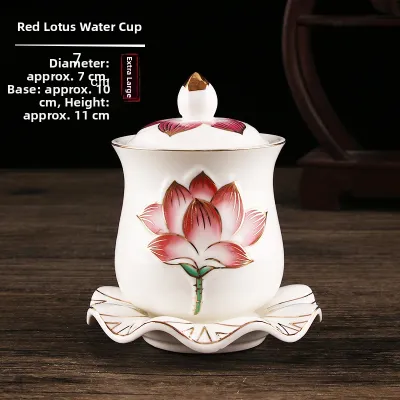
Ceramic and porcelain cups carry a rich historical heritage in East Asian Buddhist art. They are significantly more robust than glass, offering a pleasing physical weight that makes them highly stable and resistant to accidental tipping. High-fired ceramic glazes are non-porous, preventing the buildup of bacteria and making them exceptionally easy to sanitize.
Gilt ceramic cups, which feature a polished gold-leaf or metallic gold finish, provide a regal, traditional appearance that pairs beautifully with brass incense burners and flower vases. The primary challenge with opaque ceramic cups is that you cannot see through the walls. This means you must be extra diligent during cleaning, as mineral deposits or algae can build up unnoticed on the inner bottom if the cup is not scrubbed thoroughly.
Sutra-Engraved Cups
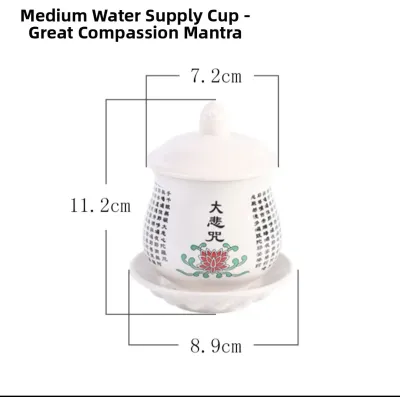
Sutra-engraved cups are specifically designed for mantra practitioners. These vessels are typically made from high-grade borosilicate glass or fine white porcelain, with the complete text of the Great Compassion Mantra beautifully etched, frosted, or printed on the exterior.
The physical presence of the mantra text acts as a constant, silent recitation on your altar, radiating compassionate energy throughout your living space. When selecting an engraved cup, verify that the print quality is highly durable and resistant to fading. You must avoid using abrasive scrubbing pads on the printed areas during washing, as scratched or peeling sacred text is considered disrespectful.
Comparison of Water Cup Types
To help you decide which type best suits your lifestyle and altar setup, consider the following comparative overview:
| Cup Type | Transparency | Durability | Maintenance | Best Use Case |
|---|---|---|---|---|
| Clear Glass | High (Excellent visibility of water purity) | Low (Fragile; prone to chipping or cracking) | Easy (Dish soap and warm water; shows water spots easily) | Modern, minimalist altars; practitioners prioritizing absolute visual clarity |
| Ceramic & Gilt | None (Opaque; conceals water level) | Medium to High (Sturdy; gilt finishes can wear over time) | Moderate (Requires thorough internal scrubbing; avoid abrasive cleaners on gilt) | Traditional altars; matching existing ceramic or brass altar ware |
| Sutra-Engraved | Variable (Available in glass or ceramic) | Medium (Text or etching requires gentle handling) | Careful (Must protect the printed or etched sacred text from scratching) | Dedicated Great Compassion Mantra practitioners seeking a strong visual anchor |
Sizing, Placement, and Altar Compatibility
Integrating your water cup into your home altar requires careful planning, especially when dealing with the compact layout of modern apartments or HDB flats in Singapore.
Sizing and Proportion Offering cups are deliberately smaller than standard drinking glasses, typically ranging in capacity from 50ml to 150ml. The offering is entirely symbolic; it is not meant to quench a physical thirst but to represent a pure, balanced mind. Therefore, the size of the cup must be proportional to your main Buddha or Bodhisattva statue. A massive, oversized cup placed next to a small, delicate statue of Guanyin creates a jarring visual imbalance that disrupts the serene harmony of the altar. Choose a cup size that sits comfortably in front of the statue without dominating the space.
Space Planning for Compact Altars In Singapore’s urban housing, altar space is often limited. A cluttered altar can feel chaotic and counterproductive to meditation. If you have a small altar table or a wall-mounted shrine, opt for a single, beautifully crafted cup rather than a crowded set of multiple cups. Keeping the layout clean, spacious, and highly organized allows the mind to settle more easily during practice. Ensure there is sufficient clearance above the cup so you can lift the lid and remove the vessel easily without bumping into other altar items.
Safety and Electrical Precautions Safety is a paramount consideration for any home altar. The water cup must be placed in a highly stable position where it cannot be easily knocked over by a passing sleeve, a draft, or household pets.
- Distance from Open Flames: Position your water cup safely away from open flames, such as oil lamps or wax candles. A sudden spill of water into a hot oil lamp can cause dangerous splattering, smoke, and immediate fire hazards.
- Electrical Safety: If your altar features electrical lights, LED candles, or electronic chanting players, ensure the water cup is placed at a safe distance. A water spill coming into contact with live electrical cords, plugs, or multi-way adaptors can cause short circuits, electrical shocks, or fires.
- Cable Management: Ensure all electrical cords are routed neatly behind the altar and never directly underneath or in front of the water cup. In Singapore, always verify that your electrical altar appliances carry the Enterprise Singapore Safety Mark to ensure they meet local electrical safety standards.
Daily Maintenance and Respectful Cleaning
To maintain both the physical hygiene and the spiritual purity of your water offering, you must establish a consistent, respectful daily maintenance routine.
The Daily Routine Establish a habit of offering fresh, clean water every morning. The water you offer should be of drinking quality—ideally filtered or boiled tap water—reflecting the highest level of respect. The cup should be removed from the altar in the evening or early the next morning before the fresh offering is made. Never leave stagnant water sitting on your altar for multiple days. In tropical climates like Singapore, stagnant water can quickly attract mosquitoes (raising dengue concerns) and symbolises spiritual stagnation.
Dedicated Cleaning Tools To maintain a clear boundary between the sacred and the secular, you must use dedicated cleaning tools exclusively for your altar ware.
- Separate Sponge and Cloth: Keep a designated sponge, soft brush, and microfiber cloth solely for washing and drying your altar cups. Never use the same sponge that you use to wash greasy kitchen plates, pots, or pet bowls.
- Storage: Store these dedicated cleaning tools in a clean, separate container or a designated drawer near your altar, ensuring they do not come into contact with everyday household grime.
Drying and Polishing After washing your cup with warm water, dry it thoroughly. For glass and gilt cups, use a clean, dry microfiber cloth to gently polish the surface. This prevents the buildup of unsightly water spots or mineral deposits (limescale) caused by tap water. Avoid using harsh chemical detergents, bleach, or abrasive scouring powders, which can scratch glass, strip gold gilt, or leave chemical residues that ruin the purity of the offering. Plain warm water, or a mild natural soap rinsed thoroughly, is more than sufficient for daily cleaning.
Frequently Asked Questions (FAQ)
Can I use a regular drinking glass from my kitchen for water offerings?
While a clean, previously unused kitchen glass can be used in a temporary pinch, it is highly recommended to purchase a dedicated cup solely for your altar. Using a common household glass that has been used for everyday beverages blurs the boundary between the sacred and the ordinary. Dedicating a specific, beautiful vessel solely to your Great Compassion Mantra practice reinforces your psychological commitment and respect for the practice. Once a cup has been placed on the altar for offerings, it should remain dedicated to that purpose and never be returned to ordinary kitchen use.
How many water cups should I place on the altar for the Great Compassion Mantra?
There is no single, rigid rule governing the exact number of cups, as different Buddhist traditions follow different customs. Some practitioners offer a single cup to represent the single-minded focus on the Dharma and the unity of mind. Others offer three cups (representing the Triple Gem: Buddha, Dharma, and Sangha) or seven cups (a common practice in Tibetan traditions). For daily Great Compassion Mantra practice, a single, central water cup is highly common and practical, especially for compact altars in Singaporean apartments. The most important factor is your sincerity and the physical space available, rather than a strict numerical count.
What should I do with the water after the offering is removed?
Because the water has been offered on the altar and blessed through your recitation of the Great Compassion Mantra, it is considered sacred and spiritually charged. You should never pour it down the toilet, into a dirty kitchen sink, or down a waste drain. Instead, you can drink the water to receive its blessings, share it with family members who are unwell, or pour it onto clean soil, potted plants, or garden beds around your home. This ensures the blessed water returns to nature in a respectful, life-giving manner.
Community discussion
Share your experience or ask a question. Comments are reviewed before publication.