
A 2.6-meter ceiling height in a standard Singapore Housing & Development Board (HDB) flat leaves little room for vertical experimentation. To introduce the organic texture of a wooden ceiling light without making your living space feel cramped, you must prioritize low-profile fixtures that preserve vertical clearance. Selecting a flush mount or a shallow semi-flush mount ensures that the fixture does not intrude into your daily movement zones or create a heavy, oppressive shadow overhead.
By focusing on slim profiles, light-colored timber finishes, and smart light distribution, you can enjoy the natural aesthetic of wood while maintaining an open, airy atmosphere. Achieving this balance requires a clear understanding of spatial clearance, fixture dimensions, and proper installation practices tailored to compact urban interiors.
Understanding Ceiling Clearance and Light Profiles
In a standard HDB flat with a 2.6m ceiling, every centimeter of vertical space is highly valuable. Once you account for floor finishes like thick screed, vinyl, or tiles, the actual floor-to-ceiling height may drop slightly below the official 2.6m mark. Standard door frames typically stand at 2.1m, leaving only about 50cm of flexible overhead space for lighting fixtures before they begin to interfere with visual lines or tall furniture.
Products mentioned in this guide
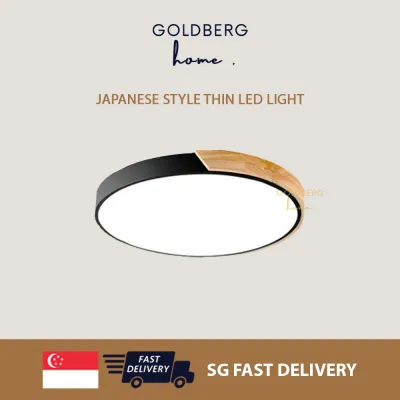
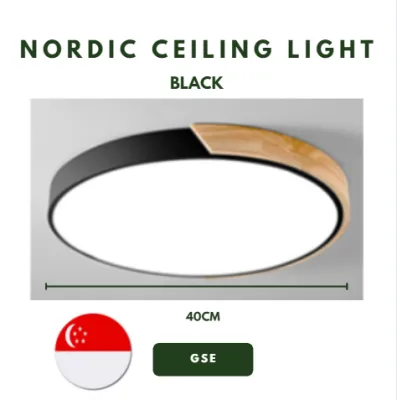
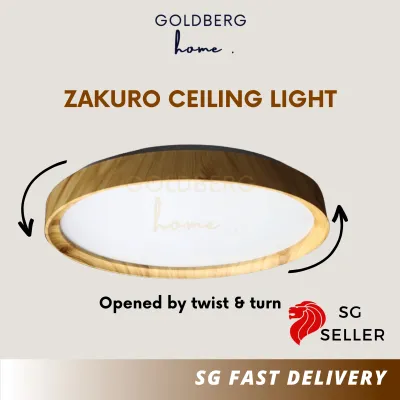
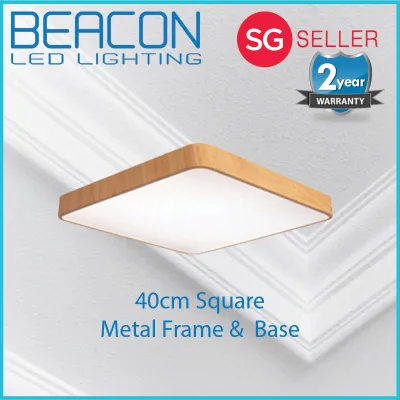
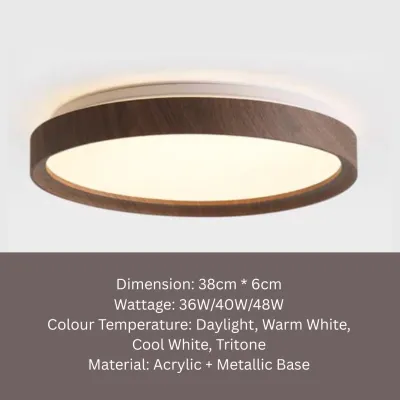
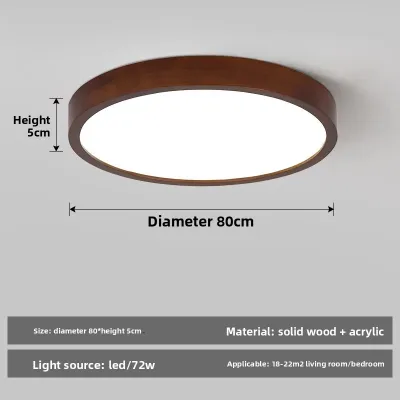
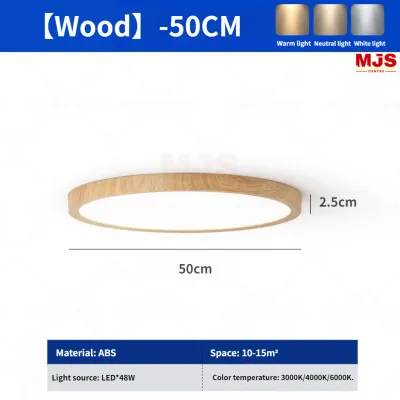
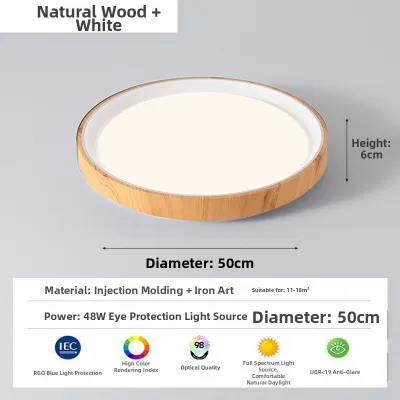
Prices are valid at publication and may change. Please refer to the product page for the latest price.
Maintaining a safe clearance height is essential for both comfort and safety. As a general rule, the bottom of any ceiling light in a high-traffic area should remain at least 2.1m to 2.2m above the finished floor. This ensures that tall occupants and guests can walk freely without the risk of head-bumping or feeling visually crowded by a low-hanging fixture.
The mounting style of your wooden ceiling light directly dictates how much of this vertical clearance is preserved. Flush mount fixtures sit directly against the ceiling surface, making them the most space-efficient option for low ceilings. Semi-flush mounts drop slightly below the ceiling on a short stem, allowing some light to escape upward, while pendant lights hang from cords or chains and are generally unsuitable for open walking paths in low-ceiling rooms.
Bulky, multi-tiered wooden fixtures or designs with long, non-adjustable drops should be avoided in 2.6m spaces. These heavy designs consume valuable headroom and cast large, dark shadows that visually lower the ceiling even further.
Key Dimensions and Proportions for Low Ceilings
To keep your wooden ceiling light in proportion with your room, you must consider both the diameter and the depth of the fixture. A light that is too wide will overwhelm a small bedroom or living room, while a fixture that is too deep will physically restrict movement. For a standard HDB bedroom or living area, keeping the fixture’s total depth under 15cm is highly recommended to maintain an open feel.

When determining the ideal diameter, a simple guideline is to match the fixture size to the room’s overall footprint. For smaller rooms or corridors, a wooden light with a diameter of 30cm to 40cm is usually sufficient. For larger living areas, you can scale up to 50cm or 60cm, provided the fixture maintains an ultra-slim profile that hugs the ceiling closely.
The visual weight of the wood itself also plays a significant role in how large the fixture appears. Dark, heavy timbers like walnut or mahogany can make a ceiling feel lower because they draw the eye downward and create a stark contrast against light-colored ceilings. Opting for lighter wood finishes, such as oak, ash, or rubberwood, helps the fixture blend more naturally with the surrounding space.
Additionally, choosing designs with slim wooden frames, open slats, or integrated acrylic diffusers can significantly reduce the visual bulk of the light. These design elements allow light to pass through more freely, preventing the fixture from looking like a solid, heavy block suspended overhead.
Mounting Styles and Spatial Illusions
Flush mount wooden ceiling lights are the ideal choice for low-ceiling HDB corridors, entryways, and bedrooms. Because they mount directly to the concrete ceiling slab, they provide even, widespread illumination without taking up any usable vertical space. Modern flush mounts often feature slim wooden rings surrounding a flat LED diffuser, offering a clean, minimalist look that complements contemporary Scandinavian or Japandi interiors.
For living areas where you might want a bit more design character, a semi-flush mount can work well, provided you verify the exact drop length before purchasing. Look for semi-flush fixtures with a total drop of no more than 20cm from the ceiling to the lowest point of the light. This minor gap allows a portion of the light to bounce off the ceiling, which can help soften shadows and make the room feel slightly taller.
Using uplighting or diffused lighting designs is a highly effective way to create the illusion of height in a low-ceiling room. When light is directed upward or outward across the ceiling surface, it eliminates dark corners and draws the eye upward, making the ceiling feel more expansive. Avoid fixtures that only project light straight down in a narrow beam, as this creates a “cave effect” that makes the room feel smaller and more enclosed.
Technical Checks and Installation Safety
Before purchasing any wooden ceiling light, it is crucial to verify the technical specifications and installation requirements for your HDB flat. Solid wood fixtures can be significantly heavier than their plastic or aluminum counterparts. You must ensure that the existing ceiling junction box is rated to support the weight of the fixture, especially if you are opting for a solid timber design rather than a lightweight wood veneer.
Electrical safety is another critical consideration when dealing with wooden lighting fixtures. Ensure the light is compatible with Singapore’s standard 230V electrical system and carries appropriate safety certifications, such as the Enterprise Singapore SAFETY Mark. Check the lamp holder types and verify that the fixture has adequate heat dissipation, as wood is a natural insulator and trapped heat can degrade LED components or pose a safety hazard over time.
For any installation work, always isolate the power at the main distribution board before touching any wiring. If the installation requires drilling new holes into the concrete ceiling slab or running new wiring, you must comply with HDB renovation guidelines. It is highly recommended to engage a licensed electrical worker or a qualified professional to handle the installation safely and ensure all connections are secure.
Common Mistakes to Avoid in Low-Ceiling Lighting
One of the most common mistakes homeowners make is failing to measure the actual clearance from the bottom of the fixture to the floor before buying. It is easy to fall in love with a beautiful wooden light in a spacious showroom, only to realize during installation that it hangs low enough to interfere with daily movement or block the path of wardrobe doors.
Another frequent error is choosing dark, dense wood grains that absorb light rather than reflecting it. In a compact HDB flat, dark fixtures can make the ceiling feel lower and the entire room feel dimmer. If you prefer darker wood tones, ensure the fixture features a highly efficient, bright diffuser or open elements that compensate for the light-absorbing qualities of the dark timber.
Finally, avoid installing complex, multi-armed wooden chandeliers or elaborate geometric fixtures in narrow HDB corridors or small bedrooms. These intricate designs clutter the ceiling plane and create visual noise, which instantly makes a small space feel more confined. Keep complex designs reserved for dedicated zones like the dining area, and stick to clean, simple lines for general circulation spaces.
Frequently Asked Questions (FAQ)
Can I use a wooden pendant light over my HDB dining table?
Yes, a wooden pendant light can be used safely over an HDB dining table even with a 2.6m ceiling. Because the dining table is a stationary zone where people do not walk, the risk of head-bumping is eliminated. To ensure a comfortable dining experience, maintain a clearance of 75cm to 90cm between the bottom of the pendant light and the tabletop, and ensure the fixture does not block the line of sight across the table.
How do I clean a wooden flush mount ceiling light safely?
To clean a wooden flush mount ceiling light safely, always turn off the power at the wall switch first and allow the fixture to cool completely. Use a dry, soft microfiber cloth or a static duster to remove surface dust from the wooden frame and diffuser. Avoid using wet cloths, harsh chemical cleaners, or excessive moisture, as water can penetrate the wood grain, causing it to warp, swell, or discolor over time. Always refer to the manufacturer’s specific care instructions for any specialized finishes.

Community discussion
Share your experience or ask a question. Comments are reviewed before publication.