
Selecting the right circular ceiling light for a standard Housing & Development Board (HDB) flat requires balancing aesthetic appeal with the physical realities of a 2.6-meter ceiling height. In these standard Singaporean apartments, vertical clearance is at a premium. A fixture that is too thick or casts harsh, concentrated shadows can make a room feel cramped and visually oppressive. To achieve a spacious, modern look, homeowners must prioritize ultra-slim circular profiles, high-quality diffusion materials, and certified electrical safety. By focusing on low-profile designs that sit close to the concrete slab, you can maximize headroom while ensuring even, glare-free illumination across your living spaces, bedrooms, and kitchens.
Understanding the 2.6m Ceiling Constraint in HDB Flats
The 2.6-meter ceiling height is the standard baseline for most modern HDB flats. When you factor in floor finishes like vinyl, tiles, or screed, the actual clearance can be slightly less. Hanging pendant lights or bulky, multi-tiered fixtures in these spaces often disrupts the visual line of sight and can even pose a physical hazard for taller occupants. Circular ceiling lights, particularly flush-mount and ultra-slim models, are highly effective solutions because they hug the ceiling plane, preserving precious vertical space and creating an illusion of height.
Ultra-slim circular fixtures—often measuring less than 5 centimeters in thickness—are particularly well-suited for low-clearance rooms. Unlike traditional dome lights that protrude significantly, these slim profiles blend seamlessly into the ceiling surface. This minimal protrusion prevents the ceiling from feeling like it is pressing down on the room. When selecting a fixture, look for edge-lit LED technology, which allows the light source to be distributed along the perimeter of the frame, resulting in an incredibly thin profile without sacrificing brightness.
Products mentioned in this guide
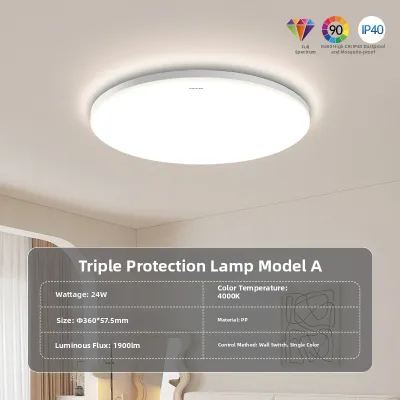
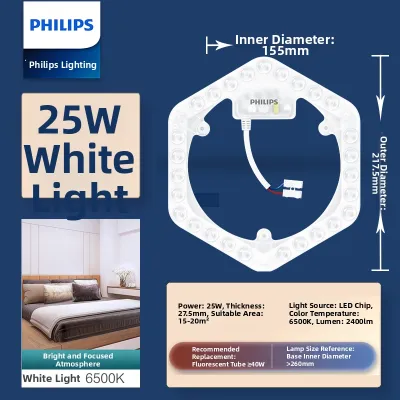
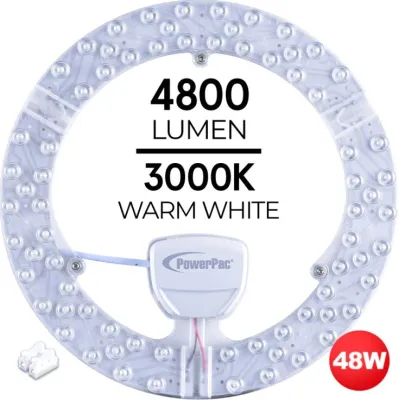
Prices are valid at publication and may change. Please refer to the product page for the latest price.
Glare management is another critical factor in low-ceiling environments. Because the light source is closer to eye level, unshielded or poorly diffused LEDs can cause significant eye strain and discomfort. High-quality circular lights utilize advanced acrylic or polycarbonate diffusers that scatter light evenly across a wide angle. This wide-angle distribution minimizes harsh hotspots directly beneath the fixture and helps bounce light off the surrounding walls, softening the overall ambiance of the room.
The visual weight of a circular design must also be balanced against the dimensions of standard HDB rooms. A circular shape naturally draws the eye upward and outward, softening the sharp rectangular lines of typical flat layouts. However, a circular light that is too small can look lost, while one that is excessively large can overwhelm the space. Choosing a clean, rimless circular design or one with a very thin bezel helps reduce its visual footprint, making the room feel more open and cohesive.
Core Criteria for Evaluating Circular Light Brands
When shopping for circular ceiling lights in Singapore, safety must be your absolute priority. Because these fixtures connect directly to your home’s electrical grid, you should only consider brands that carry the Enterprise Singapore Safety Mark. This certification ensures that the fixture has undergone rigorous testing for electrical safety, insulation, and fire resistance under local voltage conditions (typically 220V to 240V at 50Hz). Avoid unbranded or parallel-imported fixtures from online marketplaces that lack this mark, as they may pose a fire hazard or fail prematurely due to voltage fluctuations.

Warranty terms and local after-sales support are strong indicators of a brand’s reliability. Reputable lighting brands typically offer a minimum of one to two years of local warranty, with some premium brands extending this to three or five years for the integrated LED driver. Having a physical service center or an authorized distributor in Singapore is invaluable if you encounter driver failures or require replacement parts. Before purchasing, verify whether the warranty covers on-site replacement or if you must bring the fixture to a service center yourself.
Evaluating the price-to-warranty ratio helps you determine the true long-term value of a fixture. While budget-friendly circular lights priced under S$50 on ecommerce platforms may seem attractive initially, they often feature lower-grade drivers that degrade quickly in Singapore’s humid climate. Investing slightly more—typically between S$80 and S$250 depending on size and smart features—in a brand that offers a robust warranty and replaceable drivers can save you significant money and hassle on frequent replacements and electrician fees.
Optical quality is another essential benchmark for evaluating brands. Look for manufacturers that specify the Color Rendering Index (CRI) of their fixtures, aiming for a CRI of 80 or higher (ideally Ra 90+) to ensure colors in your home appear natural and vibrant. Additionally, high-quality brands design their fixtures with flicker-free drivers. Invisible high-frequency flickering, common in cheap LED lights, can cause headaches, eye strain, and fatigue over prolonged exposure, making flicker-free certification a key health and comfort consideration.
Sizing and Brightness Matrix for HDB Rooms
To achieve optimal illumination, you must match the lumen output of your circular ceiling light to the specific square footage and function of each HDB room. Lumens measure the total amount of visible light emitted by a source. For general living areas where family members gather, a brighter environment is usually preferred, requiring approximately 30 to 40 lumens per square foot. In contrast, bedrooms benefit from a softer, more relaxed atmosphere, where 20 to 30 lumens per square foot is generally sufficient.
The physical diameter of the circular fixture should also scale with the room’s proportions to maintain visual balance. For smaller spaces like HDB bathrooms, utility yards, or hallways (typically under 6 square meters), a compact circular light with a diameter of 20 to 30 centimeters is ideal. For standard bedrooms (around 9 to 12 square meters), a medium-sized fixture measuring 35 to 45 centimeters in diameter provides excellent coverage. For spacious living rooms (15 square meters or larger), look for larger circular fixtures spanning 50 to 60 centimeters to ensure the light reaches every corner.
Room aesthetics and finishes also play a significant role in how light behaves. If your HDB flat features dark accent walls, dark wood flooring, or heavy cabinetry, these surfaces will absorb more light, requiring you to select a fixture with a higher lumen output than standard calculations suggest. Conversely, rooms with light-colored walls, polished tiles, and ample natural light during the day can comfortably utilize lower-wattage fixtures. Always consider the reflective properties of your interior design when planning your lighting layout.
Standard vs. Smart Circular Fixtures: Feature Trade-offs
Choosing between standard and smart circular ceiling lights depends largely on your lifestyle, budget, and willingness to manage smart home ecosystems. Standard circular lights operate via a traditional wall switch and typically offer a single color temperature (such as warm white, cool white, or daylight). Some standard models feature three-tone toggling, where flicking the wall switch off and on cycles through different color temperatures. While highly reliable and simple to use, standard fixtures lack advanced dimming capabilities unless paired with a compatible wall dimmer switch.
Smart circular fixtures offer unparalleled convenience by allowing you to adjust brightness and color temperature continuously via a smartphone app, remote control, or voice commands. This flexibility is perfect for multi-functional HDB spaces, such as a living room that doubles as a home office during the day and a cozy movie theater at night. However, smart lights require a continuous power supply to remain connected to your home network. If someone accidentally turns off the physical wall switch, the smart features will become offline and unresponsive.
Before purchasing a smart circular fixture, it is crucial to understand the electrical wiring of your HDB flat. Many advanced smart switches and fixtures require a neutral wire to power their internal wireless modules. While newer BTO (Build-To-Order) flats may come with neutral wiring at the switch boxes, older HDB resale blocks often utilize a no-neutral single-live wire system. If your chosen smart fixture requires a neutral wire and your home lacks one, you will need to hire an electrician to pull neutral wires from the ceiling junction box, which increases installation costs.
You must also weigh the long-term reliability of integrated LED smart modules against replaceable smart bulbs. Most ultra-slim circular ceiling lights feature integrated LED boards rather than traditional bulb sockets. While integrated designs offer superior heat dissipation, a slimmer profile, and more even light distribution, they cannot be easily repaired if a single component fails. If the smart driver or LED board breaks down after the warranty period, you will likely need to replace the entire fixture, whereas a bulb-based system only requires swapping out a single bulb.
Installation Boundaries and Electrical Safety
Installing a circular ceiling light in an HDB flat involves working with mains electricity, which carries inherent risks of electrical shock and fire if handled incorrectly. Standard HDB concrete ceilings feature built-in metal junction boxes where the electrical wiring terminates. These boxes are designed to support standard ceiling fixtures, but they have strict weight limits. While lightweight plastic or aluminum circular lights weighing under 3 kilograms are perfectly safe to mount directly, heavier glass or metal fixtures require secure anchoring into the concrete slab using appropriate masonry wall plugs.
It is vital to recognize the boundaries of safe DIY installation. While replacing an existing light fixture on a like-for-like basis is a task some handy homeowners choose to undertake, any work involving new wiring points, extending electrical circuits, or modifying the distribution board must be performed by an Energy Market Authority (EMA) licensed electrician. Attempting complex electrical work without proper training and tools can void your home insurance, violate HDB renovation guidelines, and compromise the safety of your household.
Proper grounding is a critical safety step that must never be overlooked during installation. Ensure that the green-and-yellow earth wire from your HDB’s ceiling junction box is securely connected to the grounding terminal of the circular fixture, especially if the light has a metal chassis. Additionally, before commencing any physical work or even removing the cover of an old fixture, always isolate the power at the main distribution board (DB box) by switching off the corresponding circuit breaker, and verify that the line is dead using a reliable voltage tester.
Frequently Asked Questions (FAQ)
Can I install a circular ceiling light on an HDB false ceiling?
Yes, you can install a circular ceiling light on an HDB false ceiling, but you must verify the weight of the fixture and the structural integrity of the suspended ceiling. Lightweight circular lights (typically under 2 kilograms) can be safely secured directly to the plasterboard using specialized heavy-duty plasterboard toggle bolts or spring anchors. For heavier fixtures, you must locate the metal support channels of the false ceiling grid to secure the mounting bracket, or use long threaded rods to anchor the fixture directly into the structural concrete slab above the false ceiling.
How do I clean and maintain integrated LED circular fixtures?
To clean and maintain your integrated LED circular ceiling light safely, always turn off the wall switch and isolate the power, allowing the fixture to cool completely before touching it. Use a dry, non-abrasive microfiber cloth to gently wipe away dust and insect debris from the exterior of the acrylic diffuser. Avoid using harsh chemical sprays, alcohol-based cleaners, or abrasive scouring pads, as these can scratch or degrade the plastic diffuser, leading to yellowing or uneven light transmission over time. If the interior of the diffuser has accumulated dust, carefully remove the cover according to the manufacturer’s instructions to wipe it clean.

Community discussion
Share your experience or ask a question. Comments are reviewed before publication.