
Selecting the right lighting for your home requires balancing two primary metrics: color temperature, which determines the warmth or coolness of the light, and brightness, which dictates how well-lit the space is. When choosing Philips LED bulbs, matching these specifications to the specific function of each room ensures both comfort and utility. By evaluating the activities performed in each space, you can create a cohesive lighting plan that enhances your home’s atmosphere while meeting practical needs.
Understanding Kelvin and Lumens for Home Lighting
To make an informed decision when purchasing Philips LED bulbs, it is essential to understand the technical specifications listed on the packaging. The two most critical measurements you will encounter are Kelvin and lumens, which describe the appearance and intensity of the light respectively.
Color temperature is measured on the Kelvin (K) scale, which typically ranges from 2000K to 6500K for residential lighting. Lower Kelvin numbers represent warm, yellowish light that mimics the cozy glow of traditional candlelight or incandescent bulbs. As the Kelvin rating increases, the light transitions through a neutral white and eventually into a cool, bluish-white daylight.
Products mentioned in this guide
Prices are valid at publication and may change. Please refer to the product page for the latest price.
Brightness, on the other hand, is measured in lumens (lm), which quantify the total amount of visible light emitted by a source. Historically, consumers relied on wattage to estimate brightness, but this metric only measures electrical power consumption. Because modern LED technology is highly energy-efficient, a low-wattage LED bulb can produce the same light output as a high-wattage incandescent bulb, making lumens the only reliable way to compare brightness.
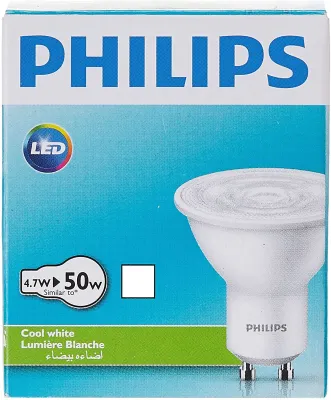
When examining a Philips LED bulb box, look for the prominent lumen rating to determine how bright the bulb will be. The packaging will also display the color temperature, often accompanied by descriptive terms such as “Warm White” or “Cool Daylight.” Additionally, you will find an equivalent wattage rating, which helps you transition from older bulb types to modern, energy-saving alternatives.
Matching Color Temperature to Room Function
Selecting the appropriate color temperature is a matter of aligning the psychological and functional needs of a room with the visual characteristics of the light. Different activities require different visual environments to promote either relaxation or alertness.

Warm white light, ranging from 2700K to 3000K, is highly recommended for areas dedicated to comfort and winding down. This soft, golden glow helps create a welcoming and intimate atmosphere, making it ideal for bedrooms, living rooms, and dining areas. It complements natural wood textures and warm paint tones, enhancing the overall sense of coziness.
Cool white (around 4000K) and cool daylight (6500K) are better suited for task-oriented spaces where clarity and focus are paramount. These higher color temperatures simulate natural daylight, which can help reduce eye strain during detailed tasks. Home offices, kitchens, utility rooms, and bathrooms benefit significantly from these crisper, more stimulating light ranges.
In modern open-plan homes, managing transitions between different color temperatures requires careful planning. If your kitchen, dining, and living areas share a single open space, using vastly different Kelvin ratings in close proximity can create a jarring visual contrast. To maintain visual consistency across sightlines, consider using a uniform warm-white or neutral-white base for your primary ambient lighting, and then use localized task lighting to add cooler light only where it is actively needed.
Calculating the Right Brightness for Each Room
Determining the correct brightness for a room involves calculating the total lumen output required to illuminate the space adequately. This calculation depends on the physical size of the room and the specific activities that take place within it.
A practical method for estimating your lighting needs is to calculate the required lumens per square meter, a measurement known as lux. For general ambient lighting in areas like hallways or living rooms, a lower density of approximately 100 to 150 lumens per square meter is usually sufficient. For task-heavy areas, such as kitchen countertops or study desks, you should aim for a much higher concentration of 300 to 500 lumens per square meter.
To apply this to your home, multiply the square footage or square meter area of your room by the recommended lumen density for its primary function. For instance, a medium-sized bedroom of 12 square meters requiring soft ambient light might need a total of 1,200 to 1,800 lumens distributed across all light fixtures. This total can be split among multiple bulbs to avoid harsh glare from a single source.
Keep in mind that perceived brightness is highly subjective and influenced by your home’s interior design. Rooms with dark wall colors, matte finishes, or heavy fabric furnishings absorb more light, meaning you may need higher-lumen bulbs to achieve the desired level of illumination. Conversely, spaces with white walls, glossy surfaces, and large windows that let in natural light will require fewer lumens to feel bright and airy.
Room-by-Room Lighting Plan and Bulb Selection
Creating an effective lighting plan involves synthesizing color temperature and brightness recommendations into actionable choices for each specific room in your home.
In the living room, versatility is key because the space is used for hosting guests, watching television, and relaxing. A layered lighting strategy works best here, combining a warm white (2700K–3000K) ambient base with adjustable accent lights. You can use a central ceiling fixture with moderate brightness, supplemented by lower-lumen Philips LED bulbs in floor lamps or wall sconces to create a cozy, glare-free environment in the evenings.
The kitchen requires a hybrid approach to accommodate both food preparation and social gathering. For general movement, a neutral white (3000K–4000K) ceiling light provides a clean, modern look. For safety and precision when chopping or cooking, install high-lumen, cool white (4000K) task lighting directly under cabinets or over the kitchen island to illuminate work surfaces clearly.
For the bedroom, the primary goal is to support healthy sleep patterns by keeping the lighting soft and warm. Select low-lumen Philips LED bulbs in the 2700K range for bedside tables and reading lamps. This warm spectrum mimics natural evening light, helping your body prepare for rest, whereas high-lumen, cool daylight bulbs should be avoided in the bedroom as they can disrupt your circadian rhythm.
In the bathroom, bright and accurate lighting is essential for daily grooming routines such as shaving or applying makeup. A neutral to cool white bulb (4000K) is ideal because it provides excellent clarity and represents skin tones naturally. Ensure that mirror-side fixtures are positioned to cast light evenly across your face, avoiding harsh downward shadows from overhead lights. Because bathrooms are damp environments, always ensure that any installed fixtures and bulbs are rated for damp locations, and consult a qualified professional for any fixed electrical wiring.
Checking Compatibility and Installation Requirements
Before purchasing your selected Philips LED bulbs, it is crucial to verify that they are physically and electrically compatible with your existing home fixtures to ensure safe and reliable operation.
Start by identifying the base type of your current fixtures. Common interfaces include screw-type bases like E27 and E14, as well as twist-and-lock GU10 bases typically used for spotlights. Additionally, measure the physical dimensions of the bulb compartment in your fixtures; some high-lumen LED bulbs are larger than traditional incandescents and may not fit inside enclosed glass globes or tight decorative shades.
Electrical safety and certification must also be verified. Ensure the bulbs are rated for the standard Singapore voltage of 230V at 50Hz. Always check the maximum wattage rating printed on your light fixture; while LED bulbs draw far less power than older bulb types, exceeding the fixture’s physical or thermal limits can lead to overheating and damage.
If your home utilizes dimmer switches, you must purchase Philips LED models that are explicitly labeled as “dimmable” on the packaging. Installing a non-dimmable LED bulb on a dimming circuit can cause persistent flickering, buzzing, or premature bulb failure. For any complex installations, work at height, or modifications to fixed electrical wiring, always isolate the power at the main distribution board and engage a qualified professional to complete the work safely.
Frequently Asked Questions (FAQ)
Can I mix different color temperatures in the same room?
You can mix color temperatures, but it should be done with a clear design purpose to avoid a chaotic visual effect. The best practice is to keep your primary ambient light sources, such as recessed ceiling downlights, at a consistent Kelvin rating. You can then use different temperatures for localized accent or task lighting, such as a cooler light for a reading desk and a warmer light for a decorative corner lamp, ensuring they do not directly clash in the same field of view.
Are smart bulbs better for adjusting color temperature?
Smart bulbs, such as the tunable white options from the Philips smart lighting range, are highly beneficial for multi-purpose rooms. They allow you to adjust both the brightness and the color temperature of a single bulb throughout the day, transitioning from a cool, energizing light for daytime work to a warm, dim glow for evening relaxation. These bulbs require a stable home Wi-Fi connection or a compatible smart hub to enable control via mobile apps or voice assistants.

Community discussion
Share your experience or ask a question. Comments are reviewed before publication.