
Selecting the right dimmable ceiling light for a standard 2.6-metre HDB flat ceiling requires balancing usable headroom, light distribution, and electrical compatibility. In a home with a 2.6m ceiling height, choosing an overly thick or poorly diffused light fixture can make rooms feel cramped and introduce uncomfortable glare. The most effective solution is to prioritize ultra-slim, flush-mount, or low-profile surface-mounted LED fixtures that sit close to the ceiling plane. By combining a slim physical profile with a high-quality diffuser and a compatible dimming system, you can maintain an open, airy atmosphere while gaining precise control over your home’s ambiance.
Assessing the 2.6m Ceiling Constraint and Headroom
A ceiling height of 2.6 metres is standard across most modern Housing & Development Board (HDB) flats in Singapore. While this height is highly functional, it imposes strict physical limits on the vertical profile of your light fixtures. In high-traffic areas such as living rooms, dining spaces, and walkways, maintaining adequate clearance is essential for safety and comfort. Ideally, you want to preserve at least 2.3 metres of clear headroom beneath any ceiling-mounted object to prevent taller occupants or guests from feeling restricted, and to avoid accidental contact when moving furniture or raising hands.
The visual weight of a light fixture also plays a significant role in how spacious a room feels. Bulky, deep-set, or highly ornate designs draw the eye upward and create a heavy visual anchor, which can make a compact room feel significantly smaller and more enclosed. When shopping for a dimmable ceiling light, always check the product specifications for the overall height or thickness of the fixture. For a 2.6m ceiling, look for fixtures with a total profile thickness of 5 centimetres or less. Additionally, verify the mounting clearance and bezel thickness; a bezel-free or ultra-thin bezel design helps the fixture blend seamlessly into the ceiling surface, minimizing its visual impact.
Products mentioned in this guide
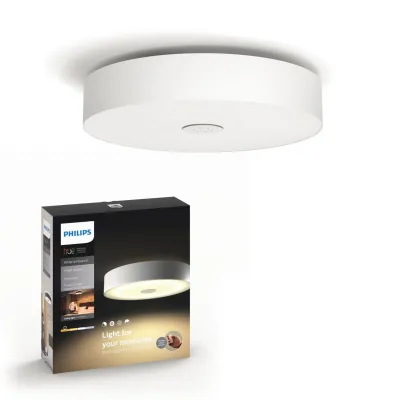
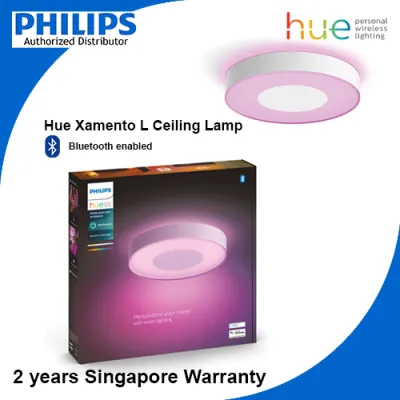
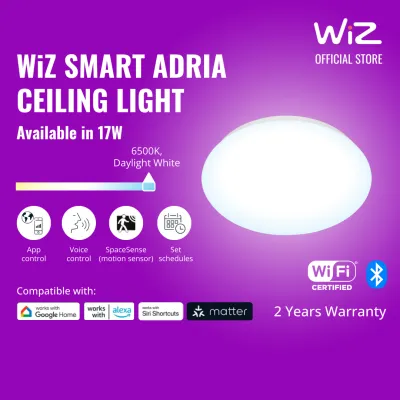
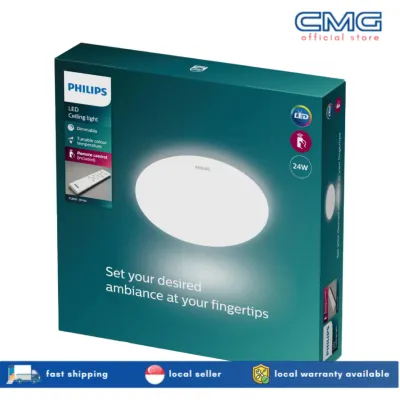
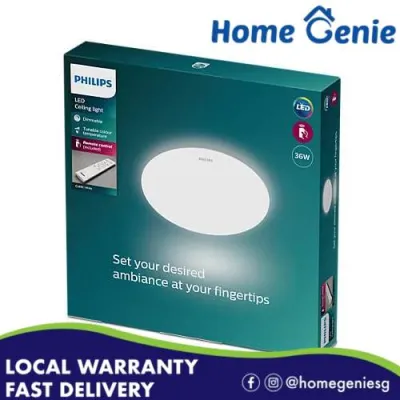
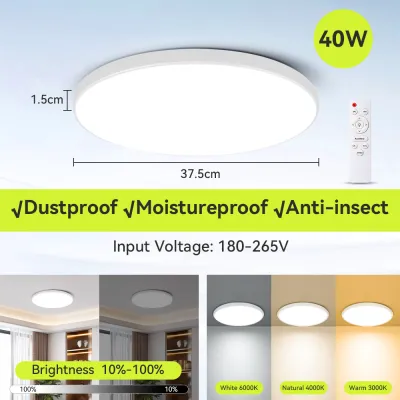
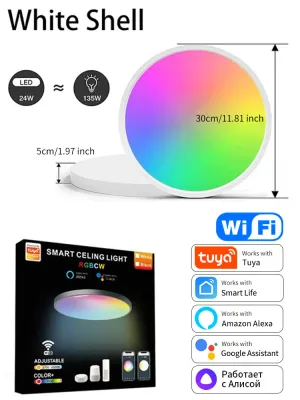
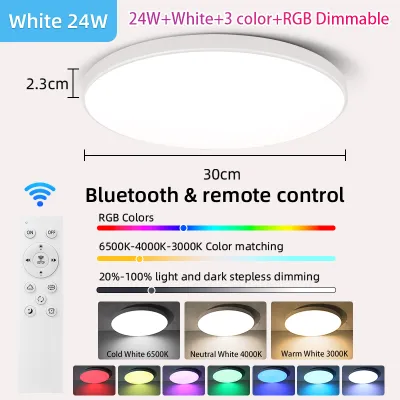
Prices are valid at publication and may change. Please refer to the product page for the latest price.
Essential Features for Low-Profile Dimmable Lights
To maximize the perception of space in an HDB flat, you must carefully evaluate the physical and optical design of your lighting fixtures. Flush-mount or ultra-slim surface-mounted designs are generally superior to semi-flush or recessed options for this specific ceiling height. While recessed downlights are popular, installing them typically requires a false ceiling, which lowers the overall room height by 10 to 15 centimetres, reducing your vertical space to 2.45 metres or less. Surface-mounted ultra-slim LED panels allow you to enjoy the full 2.6-metre height while achieving a clean, modern aesthetic.

Because the light source on a 2.6m ceiling sits closer to your horizontal line of sight than it would in a high-ceilinged house, glare control is critical. Direct exposure to exposed LED chips can cause eye strain and discomfort. Look for fixtures equipped with high-quality frosted PMMA (acrylic) or polycarbonate diffusers that scatter light evenly across the room. Side-lit LED technology is particularly effective, as it bounces light inward toward a light guide plate before projecting it downward, resulting in a soft, uniform glow. Indirect lighting mechanisms, which direct a portion of the light upward or outward to bounce off the ceiling, can also make the ceiling appear higher and more expansive.
When assessing dimming capabilities, look for fixtures that offer a wide dimming range, ideally from 10% (or lower) up to 100%. Step-less adjustment allows for smooth transitions without noticeable jumps in brightness. Many modern dimmable ceiling lights also feature color temperature tuning (CCT), allowing you to shift from a crisp 6500K daylight for daytime tasks to a warm 3000K or 2700K warm white for a relaxing evening atmosphere. Ensure these adjustments can be made smoothly without causing visible flicker.
Sizing and Layout Strategies for Different HDB Rooms
Proportional sizing is key to ensuring your dimmable ceiling light complements your room layout rather than dominating it. In open-plan living and dining areas, a single, centrally located fixture must be sized appropriately to provide adequate general illumination. For a typical HDB living room, a circular fixture with a diameter of 40 to 50 centimetres is generally proportionate, provided its thickness remains under 5 centimetres. In smaller spaces like bedrooms, study rooms, or corridors, scale down the fixture size to a diameter of 30 to 40 centimetres to maintain visual balance.
Instead of relying solely on one large, high-wattage central fixture, consider a distributed lighting strategy. Placing multiple smaller, low-profile dimmable lights or combining a central slim fixture with strategically positioned track lights can create a more balanced, shadow-free environment. This approach is especially useful in L-shaped living areas or rooms with deep corners. Distributed lighting allows you to dim specific zones independently, tailoring the light levels to activities like watching television, reading, or hosting guests.
Your room’s surface finishes also influence how light behaves. Light-colored walls and matte finishes reflect light softly, helping to distribute illumination more evenly and making the room feel larger. Conversely, dark walls or highly reflective, glossy flooring can create harsh hotspots and glare. When planning your lighting layout, adjust your light output expectations and dimming configurations to account for these surface reflections, ensuring the overall effect remains comfortable and visually cohesive.
Electrical Compatibility and Installation Checks
Before purchasing any dimmable ceiling light, you must verify its compatibility with your home’s electrical system. LED dimming is highly sensitive to the type of dimmer switch used. Traditional dimmer switches designed for incandescent bulbs (often leading-edge dimmers) are generally incompatible with modern LED drivers, leading to issues like persistent flickering, buzzing noises, or even premature driver failure. Most dimmable LED fixtures require trailing-edge (electronic low voltage) dimmers or specialized smart dimming systems that communicate via Wi-Fi, Bluetooth, or Zigbee protocols. Always check the manufacturer’s specifications to match the light fixture’s driver requirements with an approved dimmer switch model.
Physical installation requires a thorough inspection of your existing ceiling junction box. Verify that the junction box is securely anchored to the concrete ceiling slab and can support the weight of the new fixture. While ultra-slim LED panels are generally lightweight, ensuring structural integrity is a fundamental safety requirement. Additionally, confirm that the local voltage matches the fixture’s operating specifications (typically 220V-240V in Singapore) and that the fixture carries the appropriate electrical safety certifications, such as the Safety Mark, to ensure compliance with local safety standards.
Working with electrical wiring carries inherent risks. For any installation involving fixed wiring, working at heights, or mounting heavy fixtures, always isolate the power at the main distribution board (DB box) before commencing work. Never rely solely on the wall switch to turn off the power. If your installation requires running new cables, modifying existing circuits, or installing a new dimmer switch where none existed, stop your DIY efforts and consult a licensed electrical worker. A qualified professional ensures that all wiring is safe, compliant, and properly grounded, protecting your home from electrical hazards.
Frequently Asked Questions (FAQ)
Can I use a pendant light instead of a flush mount in an HDB flat?
Yes, but only under specific conditions where the fixture does not obstruct walkways. In an HDB flat with a 2.6m ceiling, a pendant light should generally not be hung in high-traffic areas where people walk directly underneath, as the drop length will compromise headroom. Instead, reserve pendant lights for localized task lighting over fixed furniture, such as directly above a dining table or a kitchen island. In these positions, the table or island acts as a natural barrier, preventing anyone from walking into the low-hanging fixture while creating a cozy, focused pool of light.
Do I need a special dimmer switch for LED ceiling lights?
Yes, standard incandescent dimmer switches are usually incompatible with LED ceiling lights. LEDs operate on direct current (DC) and rely on electronic drivers to regulate power, whereas traditional dimmers work by cutting off portions of the alternating current (AC) voltage wave. Using an incompatible dimmer can cause the light to flicker, buzz, or fail to dim smoothly. To avoid these issues, you must use a trailing-edge dimmer designed specifically for LEDs, or opt for a smart ceiling light that utilizes integrated wireless dimming controlled via an app or a dedicated smart remote. Always consult the light fixture’s manual for a list of compatible dimmer models.

Community discussion
Share your experience or ask a question. Comments are reviewed before publication.