
Finding an energy-efficient rechargeable solar flood light in Singapore requires looking beyond basic wattage ratings. Because Singapore experiences high humidity, intense tropical heat, and sudden monsoon downpours, true energy efficiency is a combination of high-conversion solar panels, heat-tolerant battery chemistry, and smart power-management features. By focusing on luminous efficacy (lumens per watt) and selecting durable components, you can secure reliable outdoor illumination without adding a single cent to your monthly electricity bill.
As Singapore continues to emphasize sustainability and green building initiatives, residential and commercial property owners are increasingly turning to off-grid solar solutions. Transitioning to solar-powered flood lights not only reduces carbon footprints but also eliminates the need for complex trenching, conduit laying, and electrical wiring in outdoor spaces. However, the local market is flooded with various models, making it essential to understand how different technical specifications interact with our unique tropical environment.
To make an informed decision, you must evaluate how each component performs under real-world conditions. From the type of solar cells used to the internal battery chemistry, every specification plays a critical role in determining how much light you get for the solar energy harvested.
Products mentioned in this guide
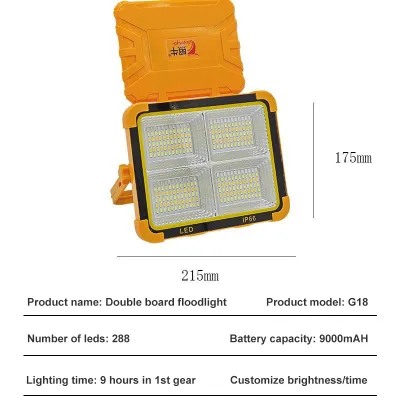
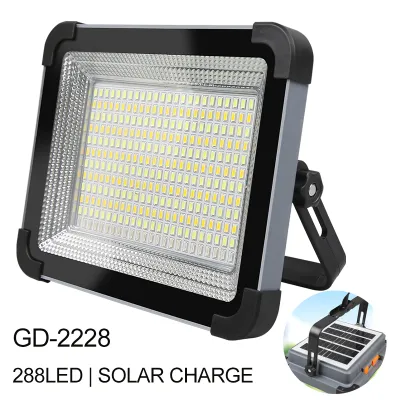
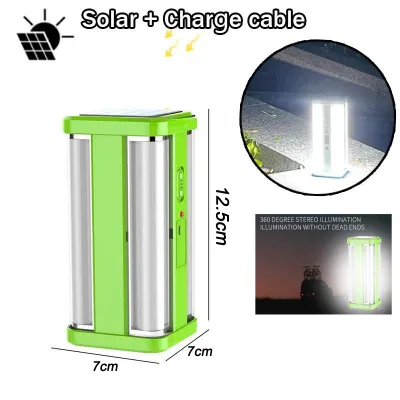
Prices are valid at publication and may change. Please refer to the product page for the latest price.
Decoding Specifications for Brightness and Battery Life
Traditional lighting relied on wattage as a proxy for brightness, but in solar LED systems, wattage typically refers to the power consumption of the LED chip or the rated output of the solar panel. To evaluate true energy efficiency, you must look at the luminous efficacy, measured in lumens per watt (lm/W). A highly efficient flood light delivers more lumens (brightness) while drawing fewer watts from the battery. When comparing models, prioritize those that explicitly state their lumen output and efficacy, ensuring you do not buy a high-wattage fixture that wastes energy as heat.
For general security lighting in a residential driveway, a light output of 1,000 to 2,000 lumens is usually sufficient, while larger commercial yards may require 5,000 lumens or more. Understanding your specific spatial requirements prevents you from over-specifying, which leads to unnecessary battery drain and higher upfront costs.
The battery is the heart of any rechargeable flood light, storing the energy harvested during the day for nighttime use. Most modern solar lights use either Lithium-ion (Li-ion) or Lithium Iron Phosphate (LiFePO4) batteries. LiFePO4 batteries are highly recommended for Singapore’s tropical climate. They offer superior thermal stability, meaning they can withstand high operating temperatures without degrading rapidly or posing safety risks.
Furthermore, LiFePO4 batteries typically support 2,000 to 3,000 charge-discharge cycles before their capacity drops significantly, compared to the 300 to 500 cycles typical of standard Li-ion batteries. This longevity directly translates to long-term cost savings and reduced electronic waste. Additionally, LiFePO4 batteries feature a flat discharge curve, providing consistent brightness until the battery is fully depleted, rather than dimming gradually as the charge drops.
Solar panels convert sunlight into electrical energy, and their efficiency determines how quickly your battery charges. The two primary types available are monocrystalline and polycrystalline panels. Monocrystalline panels are made from a single pure silicon crystal, giving them a uniform dark appearance and a higher energy conversion efficiency, usually ranging from 18% to 22%.
Polycrystalline panels, recognizable by their speckled blue appearance, are less expensive but have lower efficiency, typically around 13% to 16%. In Singapore, where urban shading from high-rise buildings and frequent cloud cover can limit direct sunlight, investing in highly efficient monocrystalline panels is crucial to ensure the battery charges fully within a limited timeframe. It is also worth noting that solar panels have a temperature coefficient; as ambient temperatures rise, their efficiency slightly decreases. High-quality monocrystalline panels tend to handle these temperature fluctuations better than cheaper alternatives.
Verifying Climate Durability and Safety Standards
Outdoor fixtures in Singapore must endure intense tropical storms and high humidity. The Ingress Protection (IP) rating indicates how well the fixture resists solids and liquids. The first digit measures dust protection (0 to 6), and the second measures water protection (0 to 9). For a solar flood light, look for a minimum rating of IP65, which protects against dust and low-pressure water jets from any angle.

For areas highly exposed to driving rain, an IP66 or IP67 rating provides superior protection, ensuring that moisture does not seep into the casing and cause short circuits or corrode the internal electronics. Additionally, verify that the housing materials are UV-resistant; high-quality polycarbonate or tempered glass covers will not yellow or crack under prolonged exposure to intense sunlight.
Solar flood lights are constantly exposed to direct sunlight, which can raise internal temperatures to extreme levels. Excessive heat degrades LED chips, reducing their brightness and lifespan, and can severely compromise battery health. High-quality brands design their flood lights with robust thermal management systems, such as aluminum alloy housings featuring integrated heat-dissipating fins.
These fins increase the surface area, allowing heat to escape more efficiently. Avoid cheap, fully enclosed plastic housings, as they trap heat and accelerate the degradation of internal components. Proper thermal management ensures that the LED junction temperature remains within safe limits, preserving both brightness and color accuracy over time.
Because solar flood lights contain high-capacity lithium batteries, safety is paramount. While the light itself operates on low-voltage direct current (DC), any hybrid charging adapters or external power supplies that connect to Singapore’s 230V grid must comply with local safety regulations. Look for recognized safety marks and certifications on the battery packs and charging accessories.
Ensure the battery management system (BMS) includes built-in protections against overcharging, over-discharging, short circuits, and thermal runaway to prevent fire hazards. A robust BMS not only protects your property but also extends the battery’s operational life by preventing damaging voltage extremes.
Optimizing Placement for Maximum Solar Charging
To achieve the rated runtime and brightness, the solar panel must receive adequate direct sunlight. Singapore’s dense urban landscape, characterized by high-rise flats, condominiums, and mature trees, can create significant shading. Before installation, observe the chosen site throughout the day to identify potential obstructions. Even partial shading on a small portion of a solar panel can drastically reduce its overall power output, preventing the battery from reaching a full charge. You can use simple smartphone apps or digital compasses to track the sun’s path and identify the most sun-drenched spots on your property.
Since Singapore is located just 1.3 degrees north of the equator, the sun passes almost directly overhead throughout the year, shifting slightly north or south depending on the season. To maximize solar absorption, panels should be installed horizontally or with a very slight tilt of about 5 to 15 degrees. This slight angle is essential not just for sunlight capture, but also to allow rainwater to run off freely, washing away accumulated dust and preventing water pooling, which can degrade the panel’s surface over time. Facing the panel slightly south or north is less critical here than in higher latitudes, but a slight tilt is mandatory for self-cleaning.
Many high-quality solar flood lights feature a split design, where the solar panel and the LED light fixture are separate units connected by a heavy-duty extension cable. This configuration offers immense flexibility. You can mount the flood light in a shaded area, such as under a porch, carport, or deep awning, while positioning the solar panel on a rooftop or an unshaded wall where it can receive unobstructed sunlight.
When choosing a split-design model, verify that the connecting cable and its connectors are fully weatherproofed and UV-resistant. Be mindful of the cable length; excessively long cables can introduce voltage drops, which reduce the charging efficiency of the system. Stick to the manufacturer-supplied cable length whenever possible.
Building Your Shortlist: Features That Conserve Power
To maximize energy efficiency, look for flood lights equipped with smart sensors. Passive Infrared (PIR) motion sensors allow the light to remain off or at a low ambient brightness level (e.g., 10%) until motion is detected, at which point it switches to 100% brightness. Dusk-to-dawn photocells automatically turn the light on at sunset and off at sunrise. These sensors prevent the light from operating during daylight hours or wasting battery power on empty spaces, significantly extending the overall runtime.
While some models use microwave sensors, PIR sensors are often preferred for outdoor residential use as they are less prone to false triggers from moving tree branches or wind-blown debris. This ensures that the light only draws full power when actual human or vehicular activity is present.
Not every outdoor space requires maximum brightness all night long. Highly efficient models offer adjustable brightness levels, programmable timers, or multiple operating modes. For instance, you might set the light to run at 100% brightness for the first four hours of the evening when activity is high, and then automatically dim to 30% or switch to motion-sensor mode for the remainder of the night.
Some advanced models feature intelligent power management systems that automatically adjust the brightness based on the remaining battery capacity, ensuring the light stays on until dawn even after a cloudy day. Remote controls or smart app integration can make adjusting these settings convenient.
A long warranty is a strong indicator of a brand’s confidence in its product’s durability. When compiling your shortlist, check the warranty terms specifically for the battery and the solar panel, as these components are most prone to degradation. Look for brands that offer local after-sales service and support in Singapore. Having a local distributor or service center makes it much easier to claim warranties, source replacement parts, or get professional assistance if a component fails. Avoid buying unbranded products from overseas online marketplaces that offer no warranty or require you to ship defective items back at your own expense.
Installation Boundaries and Routine Maintenance
While installing a small solar flood light on a garden fence is a straightforward DIY task, mounting heavy fixtures at significant heights requires caution. Always prioritize safety. If the installation involves working at height, drilling into structural concrete, or integrating hybrid wiring that connects to your home’s main electrical panel, stop and hire a qualified professional or a licensed electrical worker (LEW).
Ensure all mounting brackets are securely anchored to withstand strong winds during monsoon seasons, and always isolate any electrical power sources before beginning work. Wind loads can be surprisingly high on exposed rooftops or balconies, so using high-quality stainless steel fasteners is highly recommended to prevent rust and structural failure.
Over time, Singapore’s humid air, urban dust, construction debris, and bird droppings can form a film over the solar panel. This accumulation blocks sunlight and can reduce charging efficiency by 20% or more. During periods of transboundary haze, the accumulation of fine particulate matter can be particularly severe.
To maintain peak performance, establish a routine cleaning schedule. Wipe the panel surface gently with a soft, damp cloth and mild soap if necessary. Avoid using abrasive sponges or harsh chemical cleaners, which can scratch the tempered glass or damage the anti-reflective coating.
Even high-quality LiFePO4 batteries will eventually experience capacity loss after several years of continuous use. Monitor your flood light’s performance regularly. If you notice a significant drop in runtime—such as the light turning off after only a few hours of operation despite sunny days—it is time to inspect the system.
Check all cable connections for corrosion or loose fittings. If the connections are secure, the battery may have reached the end of its lifespan and will need to be replaced according to the manufacturer’s instructions. If you plan to store the light unused for an extended period, charge the battery to about 50% and store it in a cool, dry place to preserve its health.
Frequently Asked Questions (FAQ)
Can solar flood lights work effectively during the monsoon season?
Yes, but their performance will be temporarily reduced. During Singapore’s monsoon seasons, prolonged cloud cover and heavy rain limit the amount of direct sunlight reaching the solar panel. While modern monocrystalline panels can still generate electricity from ambient, diffused light on overcast days, the charging rate will be much slower.
As a result, the battery may not fully charge, leading to shorter runtimes at night. To mitigate this, choose models with large battery capacities and adjustable power-saving modes to stretch the stored energy over consecutive cloudy days.
Do I need to replace the built-in battery eventually?
Yes, all rechargeable batteries have a finite lifespan. Over several years of daily charge and discharge cycles, the battery’s ability to hold a charge will naturally decline. When shopping for a solar flood light, check whether the battery is user-replaceable or permanently sealed inside the housing.
Models with user-swappable battery compartments allow you to easily replace the old battery pack with a new one, extending the overall lifespan of the fixture. Sealed models, while often offering superior water resistance, may require replacing the entire unit once the battery fails.
Community discussion
Share your experience or ask a question. Comments are reviewed before publication.