
Selecting the right lights for ceiling installations in a standard Housing & Development Board (HDB) flat requires a careful balance of aesthetics, functionality, and spatial awareness. With a typical ceiling height of 2.6 meters, HDB homeowners face unique vertical constraints that make fixture selection a critical decision during renovations. Choosing an inappropriate fixture can make a room feel cramped, obstruct daily movement, or create harsh, uncomfortable glare.
Flush mount ceiling lights have emerged as the practical standard for modern HDB flats. By sitting directly against the concrete slab, these low-profile fixtures maximize vertical clearance while providing broad, even illumination. This guide outlines how to navigate the technical specifications, evaluate local retail options, match fixtures to specific room requirements, and ensure a safe, compliant installation that enhances your living space.
Why Flush Mount Designs Work Best for Standard HDB Ceilings
The standard 2.6-meter ceiling height in HDB flats presents a distinct architectural environment. When you factor in the height of average occupants, doors, and tall furniture wardrobes, the remaining vertical clearance is highly valuable. Hanging fixtures like pendants, track lights on long stems, or elaborate chandeliers can easily protrude 40 to 60 centimeters or more from the ceiling. This leaves less than 2.2 meters of clearance, which can make a room feel claustrophobic and pose a physical hazard when changing bedsheets, moving furniture, or simply walking through high-traffic areas.
Products mentioned in this guide
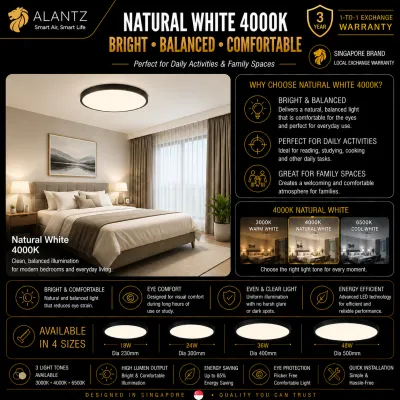
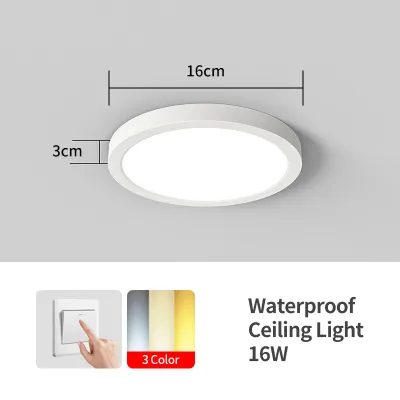
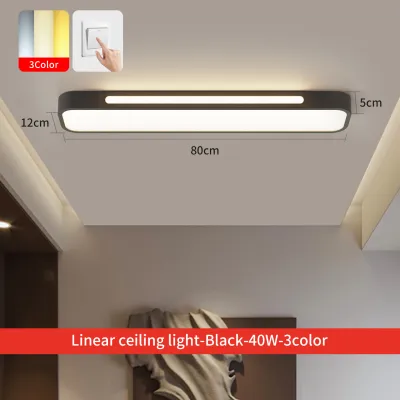
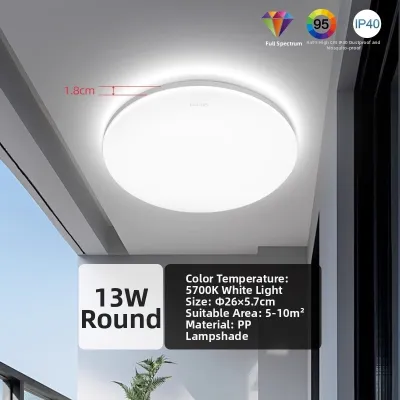
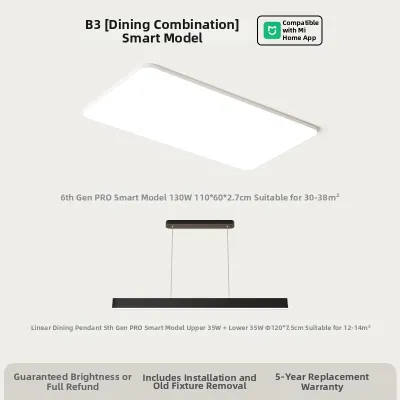
Prices are valid at publication and may change. Please refer to the product page for the latest price.
In contrast, flush mount designs sit flat against the ceiling surface, typically protruding only 5 to 10 centimeters. This minimal profile preserves almost the entire vertical volume of the room, keeping the visual plane clean and unobstructed. By maximizing the distance between the light source and the floor, flush mounts help distribute light more widely and evenly across the room, reducing dark corners and shadows.
From a design perspective, low-profile lights for ceiling spaces contribute to a sense of spaciousness, which is particularly beneficial in compact HDB layouts. In open-concept living and dining areas, bulky hanging fixtures can segment the space visually, making it feel smaller. Flush mount fixtures blend seamlessly into the ceiling, allowing the eye to travel uninterrupted across the room. This minimalist aesthetic complements modern interior styles, such as Scandinavian, industrial, or contemporary designs, without competing with other decorative elements.
Essential Specifications to Check When Buying Lights for Ceiling
When shopping for flush mount ceiling lights, relying solely on visual appeal can lead to poor lighting performance or installation issues. Homeowners must verify several technical specifications to ensure the fixture is compatible with their space and electrical setup.

First, measure the physical dimensions of the fixture, focusing on both diameter and profile height. For a standard HDB bedroom of about 9 to 12 square meters, a fixture diameter of 30 to 40 centimeters is generally appropriate. For larger living rooms, a diameter of 50 centimeters or more may be necessary to ensure the light looks proportional to the space. Keep the profile height under 8 centimeters to maintain optimal headroom.
Second, evaluate the lumen output rather than just the wattage. Wattage indicates energy consumption, whereas lumens measure the actual brightness emitted. Modern LED technology is highly efficient, meaning a low-wattage LED can produce high lumen output. For general ambient lighting in an HDB living room, aim for a total of 3,000 to 4,000 lumens. Bedrooms typically require a softer ambiance, making 1,500 to 2,500 lumens sufficient. Choosing high-efficiency LEDs also minimizes heat generation, which is crucial for extending the lifespan of the fixture’s internal driver.
Third, consider the Correlated Color Temperature (CCT), which dictates the color appearance of the light. CCT is measured in Kelvin (K). Warm white (2700K to 3000K) creates a cozy, relaxing atmosphere suitable for bedrooms and dining areas. Cool white (4000K) offers a balanced, neutral light that is ideal for living rooms, study areas, and general tasks. Daylight (6000K to 6500K) provides a bright, bluish-white light that enhances visibility in kitchens and bathrooms. Many modern flush mounts feature tri-color technology, allowing you to toggle between these three temperatures using your standard wall switch.
Finally, pay attention to the beam angle and diffusion materials. A wide beam angle of 120 degrees or more is essential for flush mounts to ensure the light spreads evenly across the ceiling and walls. The diffuser—the cover that sits over the LED chips—should be made of high-quality PMMA (acrylic) or polycarbonate. A quality diffuser softens the light, eliminates visible “hot spots” from individual LED chips, and reduces direct glare, protecting your eyes from strain during daily activities.
How to Evaluate Lighting Brands and Retailers in Singapore
Navigating the lighting market in Singapore requires a systematic approach to ensure you purchase reliable, safe, and durable products. Because flush mount lights are long-term fixtures, evaluating the credibility of the brand and the retailer is just as important as checking the specifications.
Begin by assessing the brand’s local warranty terms and after-sales support. Reliable brands typically offer a warranty of at least one to two years, which should cover both the LED light source and the electronic driver. The driver is the component most prone to failure due to voltage fluctuations, so a comprehensive warranty provides peace of mind. Ensure the brand has a physical presence or an authorized distributor in Singapore with a clear process for handling warranty claims and replacements.
Electrical safety is a paramount consideration. In Singapore, electrical accessories and controlled goods must carry the Enterprise Singapore Safety Mark. When evaluating flush mount lights, verify that the LED driver or the complete fixture has been tested and certified with this safety label. This certification ensures the product complies with local safety standards, is rated for Singapore’s 230V/50Hz electrical grid, and has adequate insulation to prevent electrical shocks or fire hazards.
When choosing where to buy, compare specialized lighting showrooms with general online marketplaces. Visiting a physical showroom in established lighting districts allows you to inspect the build quality firsthand. You can observe the actual color rendering, test the dimming functionality, and feel the materials used in the chassis and diffuser. Online platforms offer convenience and often lower prices, but they carry risks of counterfeit products, transit damage, or non-compliant electrical components. If buying online, stick to official brand stores or highly rated local sellers who provide clear return policies and local warranty support.
Lastly, examine the physical build quality of the fixture. The base plate, which mounts directly to the ceiling, should ideally be constructed from aluminum or powder-coated steel rather than thin plastic. Metal bases act as effective heat sinks, drawing heat away from the LED chips and extending their operational life. The diffuser should fit tightly against the base with secure clips or a twist-lock mechanism to prevent dust, moisture, and small insects from entering the fixture over time.
Matching Light Output and Design to Different HDB Rooms
Every room in an HDB flat serves a different purpose, and your choice of flush mount ceiling lights should reflect these functional differences. Tailoring the light output, color temperature, and design to each space ensures both comfort and utility.
In the living and dining areas, the ceiling light serves as the primary source of ambient illumination. Because these spaces are used for hosting, relaxing, and sometimes working, versatility is key. A large, high-lumen flush mount with tri-color switching or dimming capabilities allows you to adjust the light to suit the activity. To avoid a flat, institutional feel, avoid relying solely on a single central light. Layer your lighting by pairing the flush mount with warm cove lighting, track lights, or floor lamps to create depth and a welcoming atmosphere.
For bedrooms, the primary goal is to foster a restful environment. Select a flush mount with excellent glare reduction and a warm color temperature. Avoid overly bright fixtures that can disrupt your circadian rhythm before sleep. Many homeowners prefer fixtures with a dedicated “night light” or ultra-low dimming mode, which provides just enough illumination for safe movement at night without waking others.
Kitchens and service yards are highly functional task areas that require clear, bright visibility. Here, choose a flush mount with a high Color Rendering Index (CRI) of 80 or above. A high CRI ensures that food colors, textures, and clothing stains are represented accurately under the light. Because kitchens are prone to grease and steam, and service yards are exposed to humidity, select fixtures with a sealed design that prevents airborne particles and moisture from degrading the internal electronics.
Bathrooms present the most challenging environment due to high humidity and direct water splashing. Standard indoor flush mounts are not suitable for these spaces. You must verify the Ingress Protection (IP) rating of the fixture. A minimum rating of IP44 is required for bathroom ceilings, indicating protection against solid objects larger than 1mm and splashing water from any direction. Ensure the fixture housing is made of corrosion-resistant materials like high-grade plastics or treated metals to withstand the damp conditions.
Installation Safety and Electrical Compliance for HDB Flats
Installing new ceiling lights involves working with mains electricity and structural surfaces, making safety and compliance top priorities. Understanding the boundaries of DIY work and when to engage a professional is essential for protecting your home and family.
Before purchasing any fixture, inspect your existing ceiling wiring and junction box. Older HDB flats may have wiring configurations or mounting points that do not align with modern flush mount brackets. Ensure the existing wiring insulation is intact and not brittle. If you are replacing an old fluorescent fixture, the new LED flush mount will connect directly to the existing wiring points, but you must ensure the mounting surface is clean and level.
HDB ceilings are constructed from solid reinforced concrete, which provides a highly stable mounting surface but requires specific tools for installation. Because flush mount lights must be secured tightly to the ceiling, you will need a rotary hammer drill to create holes in the concrete. Always use high-quality concrete expansion anchors (wall plugs) and screws that match the weight of the fixture. Never rely on standard plastic drywall plugs, as they can slip out of concrete over time, causing the fixture to fall.
For all fixed electrical wiring installations in Singapore, it is highly recommended—and in many cases legally required—to hire a licensed electrical worker (LEW) or a qualified electrician. While a simple, direct replacement of an existing light fixture can sometimes be performed by a competent homeowner, any work involving new wiring runs, modifying circuits, or installing complex smart switches must be handled by a licensed professional. A professional ensures that the circuit is properly grounded, connections are secure, and the installation complies with the Singapore Standard SS 638 (Code of Practice for Electrical Installations).
Finally, observe strict safety boundaries during installation. Never drill into the ceiling without first mapping out or identifying potential paths of concealed electrical conduits. HDB slabs contain embedded conduits, and drilling into one can cause severe electrical shock, short circuits, or localized power outages. Always isolate the power supply at the main distribution board (DB box) by switching off the relevant circuit breaker before touching any wires or attempting an installation. Verify that the power is truly off using a reliable voltage tester before proceeding.
Frequently Asked Questions (FAQ)
Can I install a flush mount light on a false ceiling?
Yes, you can install a flush mount light on a false ceiling, but you must account for the structural limitations of the materials used. Gypsum boards and calcium silicate boards commonly used in HDB false ceilings do not have the structural strength to support heavy fixtures directly. For lightweight flush mounts weighing under 2 kilograms, you can use specialized spring clips or hollow-wall toggle bolts that distribute the weight across a larger surface area of the board. For heavier fixtures, the light must be anchored directly to the concrete ceiling slab above using threaded rods, or the false ceiling framework must be reinforced with timber or metal supports during its construction. Always consult your renovation contractor or a qualified electrician to evaluate the load-bearing capacity before mounting.
Are smart flush mount ceiling lights worth the investment?
Smart flush mount ceiling lights offer significant convenience and versatility, making them a worthwhile consideration for many HDB homeowners. They allow you to adjust brightness, tune color temperatures from warm to cool, and set automated schedules using a smartphone app or voice commands. This is particularly useful in multi-purpose rooms, such as a living room that doubles as a home office. However, smart lights require a stable home Wi-Fi or Zigbee network to function reliably and represent a higher initial cost in S$ compared to standard fixtures. If you prefer a simpler setup without network dependencies, a standard tri-color flush mount controlled by a regular wall switch offers a highly reliable and cost-effective alternative.
How do I clean and maintain flush mount ceiling lights safely?
To clean and maintain your flush mount ceiling lights safely, always begin by turning off the power at both the wall switch and the main circuit breaker. Use a sturdy step ladder to reach the fixture comfortably, avoiding the temptation to stand on unstable furniture. For routine cleaning, gently wipe the exterior of the diffuser with a dry or slightly damp microfiber cloth to remove dust and cobwebs. Avoid using harsh chemical solvents, glass cleaners, or abrasive scrubbing pads on acrylic or polycarbonate diffusers, as these can scratch, cloud, or yellow the material over time. Periodically, remove the diffuser cover according to the manufacturer’s instructions to clear out any dust, debris, or trapped insects that have accumulated inside the light tray, ensuring optimal light output and hygiene.

Community discussion
Share your experience or ask a question. Comments are reviewed before publication.