
To bring the crisp, refreshing aroma of apples into a Singapore home, selecting the right apple fragrance oil requires understanding how different scent profiles interact with the local tropical climate and specific home diffusion systems. Whether living in a compact HDB flat or a spacious condominium, the high humidity and frequent use of air conditioning significantly influence how scents disperse and linger. Finding a high-quality oil involves evaluating the formulation, matching it to your specific diffuser type, and verifying safety standards to ensure a pleasant, consistent, and safe aromatic experience.
By focusing on the composition of the oil and the mechanics of your diffusion device, you can create an inviting indoor environment that remains fresh throughout the day. This guide outlines the essential steps to identify authentic apple scent profiles, match them to your home setup, and maintain your equipment for optimal performance.
Understanding Apple Scent Profiles and Blends
Apple fragrances are incredibly versatile, ranging from sharp and invigorating to warm and comforting. Identifying the specific profile that matches your personal preference and the functional needs of your room is the first step toward creating the perfect home atmosphere.
Products mentioned in this guide
![[KIRONA SCENT] Green Apple Pure Essential Oil (10ml) | Use with Nebulizers Candle Burners Electric Diffusers | Fruits Scent](https://img.lazcdn.com/g/p/3bf54cc7a0eb1b512176d16b2c15f8f3.png_400x400q80.png_.webp)
Prices are valid at publication and may change. Please refer to the product page for the latest price.
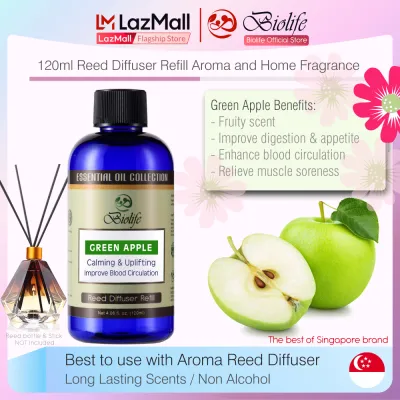
Crisp green apple profiles, often reminiscent of Granny Smith apples, offer a sharp, tart, and highly uplifting aroma. This profile is exceptionally effective in Singapore’s warm, humid weather because the bright, clean notes cut through heavy, stagnant air, making living spaces feel instantly revitalized. It is an excellent choice for daytime diffusion in study areas, home offices, or kitchens where a sense of cleanliness and energy is desired.
Sweet red apple profiles, such as those mimicking McIntosh or Fuji varieties, deliver a softer, juicier, and more traditional sweetness. This aroma is ideal for creating a welcoming, cozy atmosphere in living rooms, entryways, or dining spaces. The gentle sweetness of red apple helps soften the transition from the busy outdoors to a relaxing home environment, making it a popular choice for late afternoon and early evening use.
Spiced or baked apple variations introduce warm, rich notes of cinnamon, nutmeg, clove, and vanilla. These heavier, gourmand scents are particularly suited for air-conditioned bedrooms or evening relaxation, where the cooler ambient temperature allows the complex, warm notes to unfold beautifully without feeling overly cloying. During festive seasons, these blends are highly sought after to evoke a sense of warmth and comfort.
Complementary notes play a significant role in how the primary apple aroma behaves in a space. Citrus additions like lemon, lime, or bergamot add a sparkling, effervescent quality to green apple, enhancing its clean feel. Woody base notes, such as cedarwood, pine, or sandalwood, ground the sweetness of red apple, giving the fragrance a sophisticated, earthy depth that lingers longer in the air. Vanilla, caramel, or honey notes transform simple apple scents into rich, dessert-like experiences, while light floral undertones like jasmine or freesia can soften the fruitiness, creating a delicate, spa-like ambiance.
When choosing between single-note fragrance oils and complex blended oils, consider the type of sensory experience you prefer. Single-note apple fragrance oils provide a straightforward, highly recognizable scent that is excellent for custom blending at home or for those who prefer uncomplicated, clean aromas. In contrast, complex blended oils combine apple with multiple layers of top, middle, and base notes, offering an evolving sensory journey where the initial bright apple scent gradually gives way to deeper, warmer undertones over several hours of diffusion.
Key Selection Criteria for Home Diffusers
Matching your chosen apple fragrance oil with the correct diffusion technology is crucial for achieving the desired scent throw and protecting your equipment from premature wear or damage.

Ultrasonic diffusers are the most common scenting devices found in Singapore homes. These devices use water and ultrasonic vibrations to break down the oil and water into a fine, cool mist. For these systems, water-soluble fragrance oils or oils with a light, highly dispersible carrier base are essential. If an oil is too viscous or heavy, it will not mix properly with the water, leading to poor scent dispersion and a greasy residue that can clog the ultrasonic plate, eventually causing the motor to fail.
Nebulizing diffusers operate without water, using cold air pressure to atomize pure fragrance oil directly into the air. Because they do not dilute the oil, they deliver a highly concentrated scent throw, making them ideal for larger living areas or open-concept homes. However, nebulizers require low-viscosity oils to function correctly. Heavy carrier oils, such as thick vegetable oils or dense synthetic solvents, can easily clog the delicate micro-tubes of a nebulizer, potentially damaging the pump mechanism.
Heat-based and burner diffusers, including traditional tealight burners and electric wax or oil warmers, use heat to evaporate the fragrance. While these systems can handle slightly thicker oils, excessive heat can alter the chemical structure of the fragrance oil. This often causes the delicate, volatile top notes of the apple scent to burn off too quickly, leaving behind a scorched or flat aroma rather than a fresh, crisp fruit scent.
Evaluating the viscosity and carrier base of a fragrance oil is a vital step before purchase. Common carriers include dipropylene glycol (DPG), isopropyl myristate (IPM), or light natural oils like fractionated coconut oil. DPG and IPM are widely preferred in commercial fragrance formulations because they help bind the scent molecules, control the evaporation rate, and maintain a consistent viscosity that is compatible with most consumer diffusers.
Concentration levels dictate how many drops of oil are required for an effective scent throw. For a standard 100ml ultrasonic diffuser in a typical Singapore bedroom of approximately 10 to 12 square meters, starting with 3 to 5 drops of a high-quality, concentrated oil is generally sufficient. For larger, open-concept HDB living rooms, you may need to increase this to 8 to 10 drops, or opt for a multi-directional ultrasonic model to ensure even coverage. Always start with a lower amount to assess the scent strength before adding more, as over-saturation can lead to an overwhelming atmosphere.
Always review the manufacturer guidelines for your specific diffusion device. Pay close attention to maximum fill lines, recommended continuous run times, and any explicit warnings against using certain types of synthetic oils or alcohol-based formulations, which can degrade plastic components over time.
Evaluating Quality and Authenticity
Navigating the fragrance oil market requires a discerning eye, as product labels can sometimes be misleading. Understanding what goes into a high-quality oil ensures you bring a safe and pleasant product into your living space.
A critical starting point for consumers is understanding that there is no such thing as a pure, steam-distilled “apple essential oil.” Unlike lavender or eucalyptus, apples have a high water content and do not yield essential oils through traditional extraction methods. Therefore, any product labeled as “100% pure apple essential oil” is mislabeled. Authentic apple scents are created using synthetic fragrance compounds, natural isolates (compounds extracted from other plants that mimic apple notes), or a blend of natural essential oils formulated to replicate an apple profile.
Reading ingredient labels carefully helps you distinguish between different types of formulations. High-quality manufacturers are transparent about their ingredients, clearly stating whether the product is a synthetic fragrance oil, a natural isolate blend, or a mixture of essential oils and safe synthetic aroma chemicals. Avoid products that use vague terms like “perfume” or “scent” without any further classification or safety information.
The gold standard for fragrance safety is compliance with the International Fragrance Association (IFRA) standards. IFRA sets strict limits on the usage levels of specific fragrance ingredients to prevent skin sensitization and respiratory irritation. Look for brands that explicitly state their oils are IFRA-compliant or provide access to a Safety Data Sheet (SDS). This is especially important in Singapore, where many homes are kept closed and air-conditioned, concentrating the airborne particles.
Be cautious of extremely cheap fragrance oils sold in bulk on online marketplaces. While prices vary, high-quality, IFRA-compliant apple fragrance oils in Singapore typically range from S$15 to S$35 for a 10ml to 30ml bottle. Products priced significantly below this range may contain low-grade solvents like phthalates, which are used to extend shelf life but can release undesirable compounds when diffused. Other red flags include a lack of manufacturer contact details, missing country of origin, and packaging that does not protect the oil from light. High-quality fragrance oils are almost always packaged in dark amber or cobalt blue glass bottles to prevent UV light from degrading the delicate scent compounds.
Safe Usage and Maintenance for Diffusers
To ensure a consistent scent experience and prolong the lifespan of your diffusion equipment, establishing a regular cleaning and maintenance routine is essential.
Over time, oil residues can build up on the ultrasonic plate or inside the reservoir of your diffuser, leading to a rancid smell or reduced mist output. For ultrasonic diffusers, empty any remaining water and wipe the reservoir with a soft microfiber cloth after every few uses. Once a week, clean the unit by filling it halfway with clean water and a teaspoon of white vinegar, running it for five minutes, and then rinsing it thoroughly. This removes mineral scale from tap water and dissolves stubborn oil buildup without damaging the delicate components.
While a crisp apple aroma is delightful, continuous exposure to concentrated fragrances can lead to olfactory fatigue, where your nose becomes desensitized to the scent, or mild physical discomforts like headaches. To prevent this, ensure your room has adequate ventilation, especially if you are diffusing in a closed, air-conditioned space. Utilize the timer or intermittent settings on your diffuser—such as 30 minutes on and 30 minutes off—to maintain a pleasant, subtle background aroma without saturating the air.
Always operate your diffuser on a flat, water-resistant surface away from electrical outlets, sensitive wood furniture, and out of reach of children and pets. If you notice any unusual signs during operation—such as the device becoming excessively hot to the touch, emitting strange buzzing noises, leaking water from the base, or producing a burning smell—stop use immediately. Unplug the unit from the wall outlet and consult the manufacturer’s troubleshooting guide or contact their customer service. Never attempt to disassemble the electrical components yourself.
Frequently Asked Questions (FAQ)
Can I use apple fragrance oil in a standard humidifier?
It is generally not recommended to use fragrance oils in a standard household humidifier unless the manufacturer explicitly states it is compatible. Standard humidifiers are designed solely to disperse moisture and are typically constructed from plastics that cannot withstand the corrosive nature of concentrated fragrance oils. Adding oils directly to the water tank of a standard humidifier can cause the plastic to crack, warp, or melt over time. Furthermore, the internal mechanisms of a humidifier can easily become clogged by the oil, leading to motor failure and voiding the manufacturer’s warranty. If you wish to humidify and scent your air simultaneously, look for specialized dual-purpose units or stick to dedicated aroma diffusers.
How long does an apple scent typically last in a room?
The longevity of an apple scent in a room depends on several environmental factors, including room size, ceiling height, airflow, and the type of diffuser used. In a typical Singapore home with closed windows and active air conditioning, a standard diffusion session can leave a lingering scent for two to four hours after the device is turned off. However, if windows are open to let in the tropical breeze, the increased air exchange will disperse the scent much faster, reducing its noticeable duration. To maintain a consistent fragrance level without overwhelming the space, utilize your diffuser’s mist output controls and built-in timer settings to release the scent in controlled, periodic intervals throughout the day.
Community discussion
Share your experience or ask a question. Comments are reviewed before publication.