
Selecting high-quality Laoshan sandalwood incense sticks and compatible burners in Singapore requires balancing aromatic authenticity with home safety. True Laoshan sandalwood is prized for its warm, creamy, and woody aroma, making it a preferred choice for meditation, relaxation, and daily space clearing. However, navigating the local market involves distinguishing genuine natural incense from synthetic alternatives, while also choosing a burner that suits Singapore’s typical residential layouts. By understanding the physical characteristics of authentic incense, matching stick dimensions to the correct burner, and sourcing from reputable local vendors, you can establish a safe and deeply satisfying aromatic practice in your living space.
How to Evaluate Laoshan Incense Quality and Authenticity
To evaluate the quality of Laoshan incense, you must first understand its traditional aromatic profile. Genuine Laoshan sandalwood, historically sourced from mature trees and processed using traditional methods, is characterized by a deep, mellow, and sweet woody scent with distinct milky or creamy undertones. Unlike synthetic fragrances that present an immediate, sharp, and perfume-like intensity, authentic Laoshan incense releases a subtle, evolving aroma that lingers gently in the air without causing throat irritation. The scent should feel smooth and grounding, rather than harsh or overly sweet.
Visual and tactile inspections offer reliable clues before you even light a stick. High-quality natural incense sticks typically feature a slightly rough, matte surface texture and a consistent, natural wood-tone color ranging from light tan to deep reddish-brown. If a stick appears perfectly smooth, glossy, or dyed in unusually bright colors, it may contain synthetic binders or artificial colorants. Feel the density of the stick; natural incense made with traditional binders, such as natural tabu powder, feels firm and does not crumble easily under light finger pressure.
Products mentioned in this guide
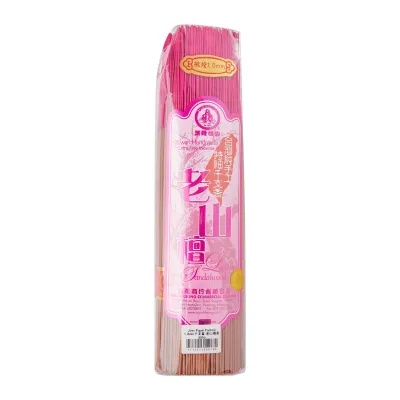
Prices are valid at publication and may change. Please refer to the product page for the latest price.
Conducting a test burn is one of the most effective ways to verify quality. Observe the burn time and the behavior of the ash. A standard-length natural stick typically burns steadily for approximately 35 to 50 minutes in a draft-free room. The ash of high-quality, pure sandalwood incense is usually light grey or white, and it should hold its shape briefly before falling away cleanly. If the ash is pitch black, clumps excessively, or leaves a greasy residue on the burner, this often indicates the presence of chemical combustion accelerants or low-grade synthetic oils.
Always scrutinize product packaging and labels for ingredient transparency. Reputable manufacturers list their ingredients clearly, specifying the percentage of natural Laoshan sandalwood powder and the type of natural binder used. Be cautious of vague labels that simply state “fragrance,” “perfume,” or “incense powder” without detailing the botanical sources. A complete lack of ingredient disclosure, combined with a strong chemical scent emanating from the unlit box, is a primary red flag indicating synthetic formulation.
How to Match the Right Burner to Your Incense and Space
Choosing a compatible burner is essential for both safety and performance. The first technical detail to verify is the holder’s hole diameter relative to your incense stick’s thickness. Standard thin incense sticks require a holder with a precisely sized aperture to keep them upright. If the hole is too wide, the stick will lean at an angle, causing hot ash to fall outside the protective base or causing the stick to contact flammable surfaces. Conversely, forcing a thick stick into a narrow hole can crack the incense or concentrate heat at the base, potentially damaging the holder.

The material of the burner dictates its durability, heat retention, and aesthetic integration into your home. Ceramic burners are highly favored for their excellent heat resistance and classic appeal, though they require careful handling to prevent chipping. Metal burners, such as brass or bronze, offer exceptional durability and a heavy, stable base, but they can become hot to the touch during extended use. Wooden burners, often designed as long boxes with fireproof felt linings, provide a rustic look and safely contain ash, but they must be checked regularly to ensure the protective lining remains intact. Stone burners, made from soapstone or marble, offer superb weight and stability but can be porous and absorb oils over time.
Consider the ash-catching capacity and physical footprint based on where you plan to burn the incense. For a dedicated home altar, a larger bowl-style burner filled with clean incense ash or white sand allows you to stand multiple sticks upright safely. For a compact work desk or a small meditation corner, a minimalist horizontal incense boat or a closed box burner is more practical. Ensure the length of the ash catcher exceeds the length of the incense stick by at least two to three centimeters to capture every falling ember, preventing scorch marks on your furniture.
Base stability and surface protection are critical safety factors. Always select a burner with a low center of gravity and a wide, flat base that cannot be easily tipped over by drafts, pets, or accidental bumps. Even heat-resistant burners can transfer warmth to the surface beneath them. To protect delicate wooden tables, varnished shelves, or stone countertops, place a heat-resistant pad, a ceramic tile, or a thick cork coaster underneath the burner to act as a thermal barrier.
Where to Source and Verify Authentic Options in Singapore
Navigating the retail landscape in Singapore requires knowing where to find genuine aromatherapy products. Specialized aromatherapy boutiques and dedicated incense merchants are excellent starting points, as they often source directly from reputable traditional workshops. Traditional Chinese medicine halls, particularly established establishments in heritage districts like Chinatown, frequently stock high-grade sandalwood products used for wellness and ceremonial purposes. When shopping on local online marketplaces or ecommerce platforms, prioritize verified storefronts, official brand stores, or sellers with high ratings and transparent customer feedback.
To verify authenticity, cross-reference the packaging details and origin labels. Authentic Laoshan incense often carries specific manufacturer seals, holographic stickers, or batch numbers that can be verified on the producer’s official website. Look for clear indications of origin, such as “Laoshan Sandalwood” along with the manufacturer’s address and contact information. Avoid products with generic packaging that lacks brand identification, contact details, or clear country-of-origin markings.
When interacting with sellers, do not hesitate to ask specific questions about their inventory. Inquire about the sourcing transparency—such as where the raw sandalwood was harvested and processed—and how the products are stored. Ask about the batch freshness; incense that has been stored in damp, poorly ventilated warehouses may lose its aromatic profile or develop mold. A knowledgeable and reputable seller should be able to explain the grade of the sandalwood, the ratio of wood powder to binder, and the recommended usage scenarios for their products.
Be vigilant against common counterfeit tactics prevalent in the market. The most obvious indicator of a counterfeit or low-grade product is an unusually low price. Genuine Laoshan sandalwood is a finite, premium natural resource; if a seller offers a large bundle of sticks at a price that seems too low, it is highly likely to be a synthetic imitation or a low-grade wood pre-scented with artificial oils. Other warning signs include missing origin documentation, generic plastic packaging without brand labeling, and sellers who cannot provide clear answers regarding the ingredients or manufacturing process.
Safe Burning Practices and Burner Maintenance for Daily Use
Safe burning practices are paramount, especially in Singapore’s typical high-density residential environments like HDB flats and condominiums. Proper ventilation is essential to maintain indoor air quality. While you want to avoid direct, strong drafts that can cause the incense to burn too quickly or unevenly, you must ensure a steady flow of fresh air. Keep a window slightly open in the room where you are burning incense to allow smoke to disperse naturally, preventing the accumulation of particulate matter in enclosed spaces.
Maintain a safe clearance zone around your burner at all times. Place the burner on a stable, level surface far away from flammable materials such as curtains, paper, books, and soft furnishings. Ensure the burning stick is positioned out of reach of children and pets, and away from high-traffic areas where it could be easily knocked over. Never leave burning incense unattended; if you must leave the room or the house, extinguish the stick completely before doing so.
Regular maintenance of your burner preserves its material integrity and ensures a clean burn every time. For bowl-style burners, sift the accumulated ash periodically to remove unburnt stick stubs and debris, which can create unpleasant odors during subsequent burns. For ceramic, metal, or stone burners, wipe away oily resin buildup using a soft, damp cloth and mild soapy water, drying the burner thoroughly afterward. Avoid using harsh chemical cleaners or abrasive pads that could scratch the surface or strip away protective finishes.
Knowing how to handle partially burned incense is also useful. If you need to extinguish a stick early, gently press the burning tip against a heat-resistant surface, or snip the glowing ember off with scissors onto a metal tray. Avoid dipping the stick in water unless absolutely necessary, as excess moisture will ruin the remaining incense. Store the partially burned stick in a dry, dark place, separate from your fresh inventory, so it remains ready for future use.
Frequently Asked Questions (FAQ)
How to Store Incense Sticks to Preserve Their Scent in a Humid Climate
Singapore’s tropical climate, characterized by high relative humidity and warm temperatures, can quickly degrade the quality of natural incense. To preserve the delicate aromatic oils of Laoshan sandalwood, store your sticks in a cool, dry place away from direct sunlight and fluctuating temperatures. While traditional breathable paper packaging is excellent for short-term use, long-term storage in a humid environment requires airtight containers. Glass tubes, heavy-duty plastic containers, or metal tins with tight-fitting lids are ideal for keeping moisture out. If incense absorbs too much moisture, it may become difficult to light, burn unevenly, or develop a musty smell. If you notice mild dampness, you can attempt to salvage the sticks by placing them in a sealed container with food-grade silica gel packets for a few days; however, if mold has developed, the sticks must be discarded immediately to prevent inhaling harmful spores.
Can Standard Burners Accommodate Thicker Incense Variants?
Standard incense burners are typically designed for slim sticks, usually measuring between 1.5mm and 2.1mm in diameter. Before purchasing thicker variants, such as hand-rolled sticks, always measure the stick’s diameter against your burner’s hole specifications. Forcing a thick stick into a standard holder can cause the stick to snap, or worse, create localized heat concentration that can crack ceramic or glass holders. If your burner is incompatible, do not attempt to shave down the base of the incense, as this can cause it to burn unevenly or fall out of the holder. Instead, utilize alternative holding methods. A bowl burner filled with clean ash, sand, or small brass beads allows you to insert sticks of any thickness securely. Alternatively, you can purchase adjustable multi-hole burner inserts or adapter accessories designed to accommodate various stick diameters safely.

Community discussion
Share your experience or ask a question. Comments are reviewed before publication.