
Finding a high-quality custom M led letter sign in Singapore requires looking beyond basic aesthetic appeal. Whether you are designing a bold commercial storefront for a shophouse in Chinatown, setting up an eye-catching display in an Orchard Road retail outlet, or adding a personalized decorative piece to a residential space, the structural complexity of a single letter demands precise fabrication. The market offers a wide range of options, from budget-friendly online imports to premium, bespoke fabrications. To secure a sign that is both durable and visually striking, you must evaluate the core material specifications, structural design choices, and local safety compliances that define a premium build.
Selecting the right fabrication partner involves understanding how different materials handle the tropical climate of Singapore, how electrical components comply with local safety regulations, and how complex letter shapes are constructed. This guide details the essential technical standards, material choices, and vetting procedures to help you identify the best custom LED letter sign brands for your project.
Core Quality Indicators for Custom LED Letter Sign Makers
When evaluating custom LED sign manufacturers, the quality of the internal LED chips is the most critical factor determining the sign’s lifespan and visual performance. Premium fabricators use high-efficiency surface-mounted device (SMD) LED chips, typically SMD 2835 or SMD 5050, which offer superior luminous efficacy and thermal management. Color consistency is maintained by sourcing chips from a single production batch, classified by tight MacAdam ellipse steps (ideally SDCM < 3). This prevents noticeable color variations across the letter's surface. Furthermore, look for chips with documented LM-80 test reports, which certify that the LEDs will resist lumen depreciation and color shifting over years of continuous operation.
Products mentioned in this guide
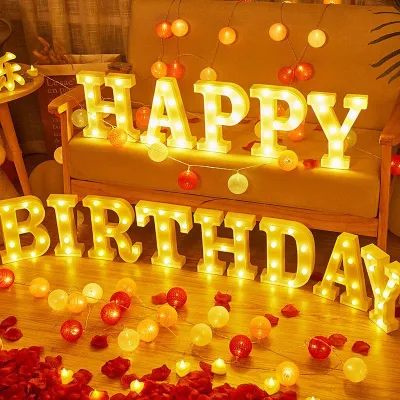
![[SG Seller] Marquee LED alphabet letters light for birthday wedding party decorations](https://img.lazcdn.com/g/p/3ab74a1e4aa74a90256b5a01430ec1a8.jpg_400x400q80.jpg_.webp)
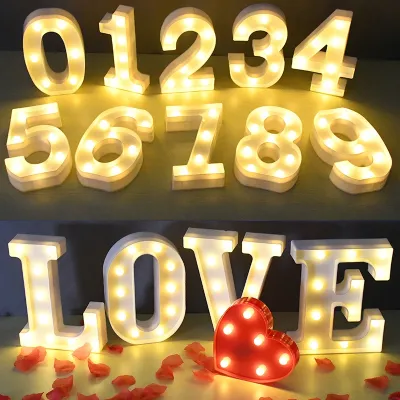
![[Local Seller] LED Light Alphabet Letters Wedding Party Proposal Display Letter PLASTIC](https://img.lazcdn.com/g/p/7e563877ab43b67cc6da87c7e2bb940e.jpg_400x400q80.jpg_.webp)
![[SG Instock] MARRY ME I love U LED Letter Marquee Fairy Light Photo Clip Balloons Proposal Wedding Surprise Decorations](https://img.lazcdn.com/g/p/16f6437e7dc2a703a3a17226c543b2d3.jpg_400x400q80.jpg_.webp)
Prices are valid at publication and may change. Please refer to the product page for the latest price.
The backing material provides the structural foundation for the entire letter sign, directly influencing its durability and resistance to warping. High-quality single-letter signs utilize cast polymethyl methacrylate (PMMA) acrylic rather than cheaper extruded acrylic. For a standalone letter, the backing sheet should have a minimum thickness of 5mm to 8mm, depending on the overall height. This thickness prevents the backing from flexing or cracking under wind loads or during installation. For larger or industrial-style letters, marine-grade stainless steel (Grade 316) or powder-coated aluminum is preferred for the backing and side returns, ensuring the structure remains completely rigid.
Edge finishing is a reliable indicator of a fabricator’s attention to detail and craftsmanship. For acrylic signs, look for flame-polished or diamond-polished edges that are perfectly smooth and optically clear. This level of polishing ensures that light is transmitted cleanly without internal reflections or scattering. For metal-backed or metal-return letters, the joints must be seamlessly laser-welded and ground smooth. Poorly finished edges not only look unprofessional but also create tiny gaps where light can leak out, and where dust, moisture, and insects can accumulate over time, eventually degrading the internal electronics.
A manufacturer’s confidence in their craftsmanship is reflected in the warranty terms they provide. A standard, low-cost sign often comes with a basic 3-month or 6-month warranty, or no warranty at all. In contrast, reputable custom sign makers in Singapore offer a comprehensive warranty of 12 to 36 months. This warranty should explicitly cover both the LED light sources (against premature burnout or color shifting) and the physical housing (against yellowing, cracking, or joint separation). Additionally, ensure the warranty covers the external power supply unit, which is often the most vulnerable component in an LED lighting system.
Material and Lighting Choices for an M LED Letter Sign
Front-Lit versus Back-Lit Designs
Choosing between front-lit and back-lit (halo-lit) designs changes the visual impact and legibility of an M led letter sign. Front-lit letters feature a translucent acrylic face that diffuses light directly forward, producing a bright, high-contrast image that is easily readable from long distances, making it ideal for retail storefronts. Back-lit letters are constructed with an opaque metal or acrylic face and a clear or frosted back plate. The light projects backward onto the mounting wall, creating a soft, sophisticated halo effect around the silhouette of the letter. Halo lighting is highly favored for corporate offices and upscale indoor environments where a subtle, premium aesthetic is desired.

Flexible LED Neon versus Traditional Glass Neon
For custom shapes, flexible LED neon has largely replaced traditional glass neon due to its safety, durability, and energy efficiency. Flexible LED neon consists of a dense strip of LEDs encased in a flexible, light-diffusing silicone or PVC sleeve. Silicone sleeves are highly superior to PVC, as they offer excellent UV resistance, do not yellow or become brittle when exposed to sunlight, and can withstand higher operating temperatures. Traditional glass neon, while offering a classic retro look, operates on extremely high voltages (often 5,000V to 15,000V), is highly fragile, and contains hazardous mercury vapor, making it less practical for modern commercial or residential installations.
The Craftsmanship Challenge of the Letter 'M'
The letter ‘M’ presents unique fabrication challenges due to its sharp inner angles, multiple vertices, and parallel vertical lines. In flexible LED neon signs, bending the silicone sleeve around the tight inner corners of an ‘M’ without pinching the internal copper PCB is exceptionally difficult. If bent too sharply, the internal circuitry can crack, leading to dead sections or localized dimming. Premium fabricators overcome this by using advanced CNC routing to cut precise channels into the acrylic backing, and then carefully cutting and micro-soldering separate neon segments at the vertices. This technique ensures that the illumination remains perfectly uniform into the very tips of the sharp angles, avoiding the dark spots common in low-quality signs.
Face Material Selection Checklist
When selecting the face material for a front-lit letter, the choice of acrylic determines how effectively the light is diffused. Use this checklist to guide your selection:
- Cast Acrylic (PMMA): Always specify cast acrylic over extruded acrylic for superior clarity, impact resistance, and clean laser-cutting edges.
- Frosted Satin Finish: Choose a frosted or satin-finish acrylic face to eliminate hot spots (visible dots from individual LED chips) and ensure a smooth, even glow across the entire letter surface.
- Light Diffusion Sheets: For deep letter returns (depths over 50mm), ensure the fabricator uses specialized light-diffusion acrylic sheets, which are chemically formulated to distribute light evenly with minimal lumen loss.
- Color-Matching Acrylic: If your brand requires a specific corporate color, select solid-colored acrylic sheets rather than applying translucent vinyl film over clear acrylic, as vinyl can peel or bubble over time when exposed to heat.
Electrical Safety and Installation Standards in Singapore
All custom LED letter signs operating in Singapore must be compatible with the standard electrical grid of 230V at 50Hz. Because LED chips operate on low-voltage direct current (typically 12V or 24V DC), the sign must be powered by an external step-down transformer or LED driver. It is crucial to verify that this power supply unit carries the local Safety Mark certification, which is administered by Enterprise Singapore. The Safety Mark indicates that the electrical appliance has been rigorously tested and certified to meet Singapore’s stringent safety standards, significantly reducing the risk of short circuits, electrical fires, or electrocution.
+------------------+--------------------------------------------------------+
| IP Rating Level  | Recommended Installation Environment                   |
+------------------+--------------------------------------------------------+
| IP20             | Indoor dry areas only (offices, retail interiors)       |
| IP65             | Covered outdoor areas, high-humidity indoor zones      |
| IP67 / IP68      | Fully exposed outdoor facades, heavy monsoon exposure  |
+------------------+--------------------------------------------------------+
Singapore’s tropical climate, characterized by high relative humidity and sudden, heavy downpours, demands careful selection of Ingress Protection (IP) ratings. For indoor installations in air-conditioned environments, an IP20 rating is generally sufficient. However, if the sign is installed in a high-humidity area, such as a covered patio, bathroom, or near an entryway, an IP65 rating is highly recommended to protect the electronics from condensation. For fully exposed outdoor facades, you must specify an IP67 or IP68 rating. These signs feature completely encapsulated LED strips, waterproof silicone sealants, and sealed cable glands to prevent water ingress during intense tropical monsoons.
The boundary between a simple DIY installation and a professional electrical setup depends on the wiring configuration. Low-voltage, plug-and-play signs that use a pre-wired AC adapter can be safely mounted and plugged into a standard wall socket by the user. However, if the sign involves fixed mains wiring, concealed cabling behind drywall, or integration into a commercial building’s main electrical distribution board, the work must be performed by a Licensed Electrical Worker (LEW) registered with the Energy Market Authority (EMA). Attempting to hardwire a sign without a license is not only illegal in Singapore but also voids property insurance and poses severe safety hazards.
Proper weight distribution and mounting hardware are essential to ensure the sign remains securely attached to the wall. This is especially true for larger, heavy metal-backed letters or signs mounted on typical Singaporean concrete walls (common in HDB flats and commercial units). Fabricators should provide a 1:1 scale paper mounting template and specify the correct expansion anchors, rawlplugs, or threaded rods required for the specific wall material. For back-lit signs, the mounting hardware must include non-corrosive aluminum or stainless steel standoffs, which hold the letter at a consistent distance (typically 15mm to 30mm) from the wall to allow the halo light to diffuse evenly.
How to Vet Makers and Verify Craftsmanship Before Ordering
Before committing to a custom single-letter order, you should request physical material samples or, if possible, visit the fabricator’s showroom in Singapore. When inspecting samples, pay close attention to the uniformity of the light; there should be no visible dark patches or bright hot spots along the length of the letter. Examine the weight and rigidity of the sample; a high-quality sign should feel solid and well-constructed, with no loose components or flexing backing boards. Touching the polished edges of the acrylic or the welded corners of the metal returns will immediately reveal the precision of the maker’s finishing tools.
A thorough review of a fabricator’s portfolio can reveal their capability to handle complex structural designs. Ask the maker to show high-resolution, close-up photographs of completed projects, specifically looking for letters with sharp angles like ‘M’, ‘W’, or ‘K’. Examine how the internal wiring is routed; in a premium sign, all wiring should be completely concealed within the letter housing or routed neatly through the back of the sign, leaving no visible loose cables. The joints where the acrylic faces meet the side returns should be tight and seamless, with no visible adhesive squeeze-out or gaps that could allow light leakage.
When contacting potential brands, prepare a list of specific technical and operational questions to gauge their professionalism and service quality. Key questions to ask include:
- What is the exact brand and model of the LED chips and drivers you intend to use?
- Will the power adapter carry the Enterprise Singapore Safety Mark, and can you provide the certificate number?
- What is the standard production lead time, and do you provide a digital 2D or 3D design proof for approval before fabrication begins?
- What are the terms of your after-sales support, and how quickly can a technician be dispatched if a component fails?
Finally, do not rely solely on the testimonials published on the maker’s own website. Search for independent customer reviews on third-party business directories, local forums, and social media platforms. Look for detailed feedback regarding the brand’s long-term reliability, their responsiveness to warranty claims, and the durability of their signs under Singapore’s environmental conditions. A brand with a proven track record of supplying signs to well-known local businesses, shopping malls, or public exhibitions is highly likely to deliver the craftsmanship and safety standards required for a premium, long-lasting custom LED letter sign.
Frequently Asked Questions (FAQ)
Can a custom LED letter sign withstand Singapore's outdoor humidity?
Yes, a custom LED letter sign can easily withstand Singapore’s high humidity and heavy rainfall, provided it is engineered with the correct specifications. For outdoor installations, you must ensure the sign carries an IP65 rating (for covered outdoor areas) or an IP67/IP68 rating (for fully exposed locations). The backing and returns should be constructed from rust-proof materials such as marine-grade stainless steel or powder-coated aluminum, and the face must use UV-resistant cast acrylic to prevent yellowing over time. All internal electronics and connections must be fully sealed with waterproof silicone encapsulation.
Do single-letter LED signs require professional electrical installation?
Whether you need a professional installer depends on the sign’s power configuration. If the sign is a low-voltage (12V or 24V) plug-and-play system that connects to a standard wall outlet via a certified power adapter, you can safely mount and install it yourself. However, if the installation requires hardwiring the sign directly into the building’s mains power supply, running cables through concrete walls, or mounting heavy structural letters at significant heights, you must hire a Licensed Electrical Worker (LEW) in Singapore to ensure compliance with local electrical safety regulations.
How should I clean and maintain an acrylic or flexible neon letter sign?
To maintain the appearance and longevity of your LED sign, clean the acrylic face regularly using a soft, dry, lint-free microfiber cloth to remove dust. For light smudges, you can slightly dampen the cloth with water or a specialized acrylic cleaner; never use glass cleaners, alcohol-based solvents, or abrasive scrubbing pads, as these will scratch and dull the acrylic surface. Before cleaning, always turn off the power supply. Periodically inspect the power cables, mounting brackets, and the LED driver for any signs of wear, moisture accumulation, or loose connections.
Community discussion
Share your experience or ask a question. Comments are reviewed before publication.