
Selecting the right ceiling light for a standard Housing & Development Board (HDB) flat in Singapore requires a careful balance of physical dimensions, visual weight, and functional output. With a standard ceiling height of 2.6 metres, choosing a fixture that protrudes too far downward can make living spaces feel restricted and visually cluttered.
For these compact vertical clearances, ultra-slim, flush-mount, and edge-lit Rayco ceiling light designs are highly effective choices. These low-profile fixtures sit close to the concrete ceiling slab, preserving precious headroom while distributing light evenly across the room. By selecting designs that prioritize a minimal vertical footprint, homeowners can maintain an open, airy atmosphere without sacrificing illumination quality.
Understanding the 2.6m Ceiling Constraint
In Singapore, standard HDB flats built in recent decades typically feature a floor-to-ceiling height of approximately 2.6 metres. This vertical limitation directly dictates the maximum allowable drop of any overhead light fixture. To maintain a safe and comfortable living environment, a minimum clearance of 2.1 to 2.3 metres from the floor to the bottom of the light fixture is generally recommended.
Products mentioned in this guide
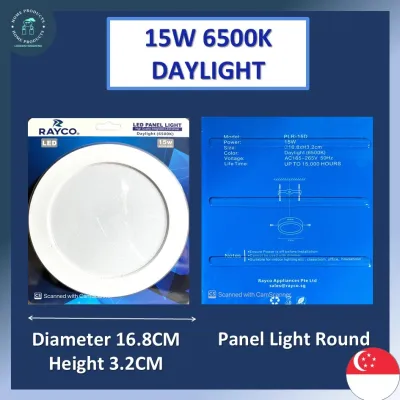
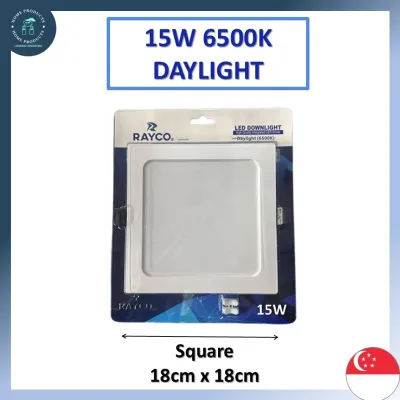
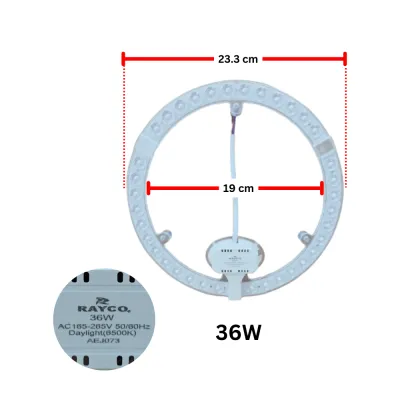
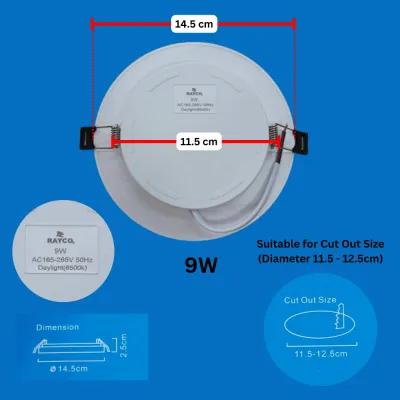
Prices are valid at publication and may change. Please refer to the product page for the latest price.
This clearance ensures that tall occupants and guests can walk freely without the risk of bumping into the fixture, and it also prevents the light from feeling oppressively close to eye level. When a fixture extends too far down, it can create an uncomfortable sense of physical intrusion, particularly in high-traffic areas like corridors and living rooms.
Bulky, multi-tiered, or deeply suspended designs, such as traditional chandeliers or low-hanging pendant lights, are generally unsuitable for these spaces. When a fixture cuts into the vertical volume of the room, it draws the eyes downward and creates a heavy visual anchor. This visual clutter makes compact living rooms and bedrooms feel significantly smaller and more confined than they actually are.
Furthermore, positioning a light source closer to eye level increases the risk of direct glare. In a low-ceiling environment, exposed bulbs or poorly shielded fixtures can cause significant visual discomfort. Opting for designs with integrated diffusers or indirect lighting paths helps soften the light output, ensuring that the illumination is comfortable for daily activities while minimizing harsh, direct glare.
Identifying Suitable Rayco Light Profiles for Low Clearances
When browsing the Rayco product range, the physical profile of the fixture should be your primary consideration. Homeowners should look for terms like “ultra-slim,” “low-profile,” or “flush-mount” on product labels and specifications. Many modern LED ceiling lights feature depths of less than 5 centimetres.

These ultra-slim designs blend seamlessly with the ceiling plane, minimizing physical protrusion and keeping the overhead space completely clear. By sitting flush against the concrete slab, they draw minimal attention to the ceiling height itself.
Edge-lit and indirect lighting designs are particularly beneficial for low-clearance HDB flats. Unlike direct downlights that cast sharp, conical shadows, edge-lit panels guide light horizontally across a light guide plate before diffusing it downward. This creates a highly uniform distribution of light that softens shadows at the corners of the room.
By illuminating the ceiling and upper walls more evenly, these designs create a subtle visual illusion of a higher, more open ceiling. The lack of harsh contrast between the light fixture and the surrounding ceiling surface helps the boundaries of the room recede visually.
Comparing surface-mounted slim panels against traditional dome fixtures reveals distinct spatial advantages. Traditional dome lights, while functional, often feature a curved, bulbous shape that protrudes 10 to 15 centimetres or more from the ceiling. This curved profile can act as a prominent visual obstacle in a small room.
In contrast, flat, surface-mounted slim panels present a clean, geometric silhouette that aligns parallel to the ceiling slab. This design preserves maximum vertical space and contributes to a modern, minimalist aesthetic that complements contemporary HDB interior designs.
Verifying Visual and Functional Specifications
Selecting the right light profile is only the first step; you must also verify the physical and electrical specifications of the fixture to ensure a proper fit. Start by checking the fixture’s diameter against the dimensions of your room. A light that is too small will look lost and fail to provide adequate illumination, while a fixture that is too large can overpower the ceiling and make the room feel unbalanced.
For a standard HDB bedroom of about 9 to 12 square metres, a fixture diameter of 30 to 40 centimetres is generally proportional. A larger living room may require a diameter of 50 centimetres or more, or multiple smaller fixtures spaced strategically to ensure even light coverage without a single, massive focal point.
Color temperature is another critical factor that influences spatial perception and mood. Most modern ceiling lights offer options such as warm white (around 3000K), cool white (around 4000K), and daylight (around 6500K). While color temperature is a matter of personal preference, cooler temperatures can make a space feel brighter and more expansive during active hours, whereas warm white creates a cozy, intimate atmosphere suitable for evening relaxation.
Many Rayco models feature tri-color toggles, allowing you to switch between these temperatures using a standard wall switch or remote control. This flexibility lets you adapt the room’s ambiance to different times of day and activities.
You must also verify the lumen output and wattage limits of the fixture. Because slim housings have less internal volume for heat dissipation, it is vital to choose high-efficiency LED fixtures that deliver sufficient brightness (measured in lumens) without drawing excessive wattage that generates heat.
Ensure the fixture is compatible with Singapore’s standard 220V-240V electrical supply and carries recognized safety certifications, such as the Safety Mark. This certification indicates the product has been tested to meet local electrical safety standards, reducing the risk of short circuits or electrical hazards in your home.
Navigating Installation and Electrical Safety in HDB Flats
Installing a new ceiling light on an HDB concrete slab requires careful preparation and adherence to safety protocols. Before purchasing or mounting any fixture, inspect the condition of the existing ceiling junction box and wiring. HDB flats often use concrete ceiling slabs where wiring is routed through internal conduits or surface-mounted plastic trunking.
Ensure that the mounting bracket of the new light aligns with the existing screw holes of the junction box, or prepare to drill new holes using appropriate masonry drill bits and concrete wall plugs.
Weight verification is a critical safety step. Even slim ceiling lights can have some weight if they feature metal frames or glass diffusers. Always check the weight of the fixture against the load-bearing capacity of your mounting hardware and the concrete anchors. Using incorrect or loose anchors in a concrete ceiling can lead to structural failure, causing the fixture to fall.
It is essential to establish clear boundaries between simple DIY tasks and those requiring professional assistance. While replacing an existing light fixture on a like-for-like basis can sometimes be performed by a competent homeowner, any modification to the fixed electrical wiring, installation of new wiring points, or working at significant heights should be handled by a licensed professional.
In Singapore, electrical work must comply with local regulations, and hiring an Energy Market Authority (EMA) licensed electrician ensures that the installation is safe, grounded, and compliant with the electrical code. Always isolate the power at the main distribution board (DB box) before attempting any electrical inspection, cleaning, or installation work to prevent accidental shocks.
Frequently Asked Questions (FAQ)
Can I use a semi-flush mount Rayco light in a 2.6m HDB bedroom?
Yes, but you must carefully evaluate the fixture’s total drop length and the layout of the bedroom. A semi-flush mount light typically hangs down by 15 to 25 centimetres, which is deeper than a true flush-mount fixture. If you plan to place the light directly over a bed, ensure there is ample clearance so that occupants do not accidentally hit the fixture when sitting up or changing sheets.
Additionally, consider the visual weight of the design. A semi-flush mount with a delicate, open frame will feel much lighter and less intrusive than a solid, dark-colored fixture. Always measure the exact distance from the ceiling to the lowest point of the light before making a purchase to ensure it fits your specific room layout.
How do I clean an ultra-slim ceiling light without damaging it?
Cleaning an ultra-slim ceiling light requires a gentle, safety-first approach to protect both the fixture and yourself. Always turn off the wall switch and isolate the power at the main distribution board before starting. Use a sturdy stepladder to reach the fixture safely, avoiding any unstable furniture.
For regular maintenance, use a dry, soft microfiber cloth or an electrostatic duster to gently wipe away dust from the exterior housing and diffuser. Avoid using wet cloths, liquid sprays, or harsh chemical cleaners near the electrical seams, joints, or LED driver compartments, as moisture ingress can damage the internal circuitry and pose an electrical hazard. If the diffuser is removable and heavily soiled, detach it completely, wash it with mild soapy water, dry it thoroughly, and ensure it is completely dry before reattaching it to the powered fixture.

Community discussion
Share your experience or ask a question. Comments are reviewed before publication.