
Singapore’s tropical climate, characterized by high humidity, intense sunshine, and sudden heavy downpours, presents a unique set of challenges for outdoor lighting. Solar LED motion sensor lights offer an energy-efficient, wire-free solution for illuminating dark pathways, landed property driveways, and balcony spaces. However, navigating the vast array of brands available on local e-commerce platforms can be overwhelming. To find a reliable solar lighting system that survives the local elements, buyers must look beyond superficial marketing claims and focus on verifiable technical specifications, local warranty support, and seller credibility. This guide provides a comprehensive framework to help you evaluate and select the right solar LED motion sensor light brands for your Singapore home.
Evaluating Solar Lighting Brands for Local Reliability
When shopping for solar-powered outdoor lights, brand reliability is closely tied to local after-sales support and material transparency. Many generic brands sold online are treated as disposable commodities; if a unit stops charging after a few months of heavy rain, buyers are often left without recourse. A trustworthy brand should offer a clear, localized warranty policy—ideally at least six months to a year—backed by an authorized distributor or a responsive customer service channel within Singapore. This ensures that if you encounter a manufacturing defect or premature battery failure, you can easily secure a replacement without paying exorbitant return shipping fees.
Furthermore, reliable brands demonstrate transparency by providing detailed specifications for replacement parts. Solar lights rely on rechargeable batteries that naturally degrade over several years of continuous charge-discharge cycles. Brands that design their products with accessible battery compartments—allowing users to replace standard lithium-ion cells (such as 18650 or LiFePO4 batteries)—offer significantly better long-term value than those with sealed, non-replaceable units. Additionally, check if the brand sells individual components, such as detachable solar panels or extension cables, which allow you to mount the panel in direct sunlight while keeping the light fixture under a shaded porch or corridor.
Products mentioned in this guide
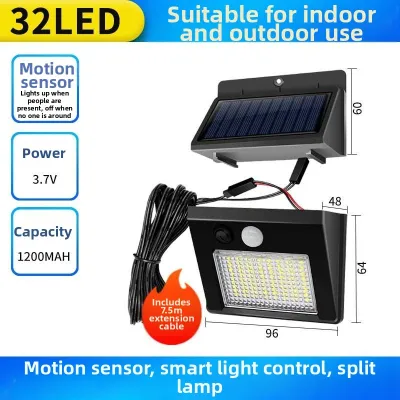
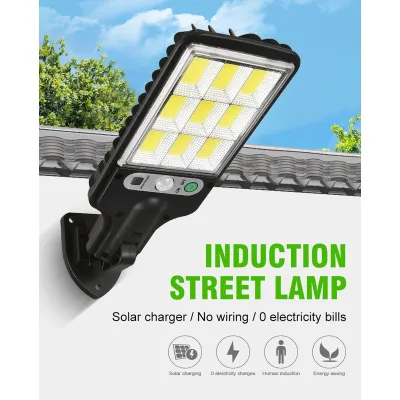
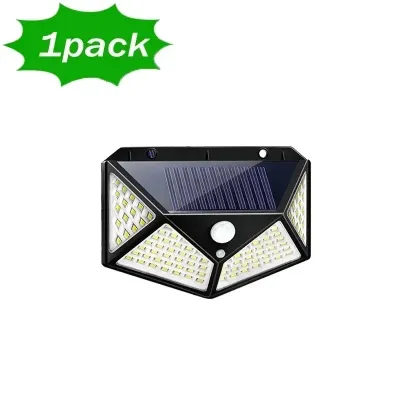
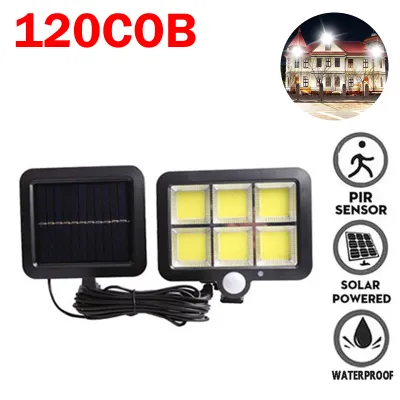
Prices are valid at publication and may change. Please refer to the product page for the latest price.
Material quality is another critical indicator of brand reliability. Singapore’s high UV index can cause cheap, non-UV-stabilized plastics to become brittle, discolor, and crack within a year of exposure. Look for brands that explicitly state the use of UV-resistant ABS plastic, polycarbonate, or rust-resistant aluminum alloys in their product descriptions. A brand that invests in high-quality housing materials is far more likely to have sealed the internal electronics properly against moisture, ensuring the light continues to function safely through consecutive monsoon seasons.
Essential Specifications to Verify on Product Labels
To ensure your chosen solar LED motion sensor light can withstand Singapore’s weather and adequately illuminate your space, you must learn to read and verify the technical specifications on the product packaging or official spec sheets. The first and most critical rating to check is the Ingress Protection (IP) rating. For outdoor fixtures exposed to unsheltered rain, an IP65 rating is the absolute minimum, indicating protection against dust and low-pressure water jets from any angle. If the light will be installed in a highly exposed area prone to pooling water or severe wind-driven rain, look for an IP67-rated brand, which protects against temporary immersion.

Next, match the lumen output and color temperature to your specific installation environment. Lumens measure the total amount of visible light emitted by a source. For public housing corridors or small balcony spaces, a soft light of 100 to 300 lumens is usually sufficient to provide safety without causing glare or disturbing neighbors. For larger landed property driveways, backyards, or perimeter walls, you may require a more powerful fixture emitting 500 to 1,000 lumens. Color temperature, measured in Kelvin (K), is a matter of preference but affects spatial perception: warm white (3000K) creates a welcoming, low-glare ambiance suitable for residential entryways, while cool white (6000K) offers high-contrast, crisp visibility ideal for security and task lighting.
The performance of a solar light during overcast periods depends heavily on solar panel efficiency and battery capacity. Look for brands that utilize monocrystalline silicon solar panels, which boast conversion efficiencies of 15% to 22%, making them far more effective at gathering energy on cloudy days than cheaper polycrystalline panels (which typically range from 11% to 14%). Pair this with a battery capacity that matches the light’s power consumption. A battery capacity of 2,000mAh to 4,400mAh is standard for mid-sized motion sensor lights, providing enough stored energy to power the LEDs through several consecutive rainy days when solar charging is minimal.
Finally, evaluate the motion sensor’s specifications. Most reliable brands use Passive Infrared (PIR) sensors, which detect changes in heat signatures to trigger the light. Check the detection range (typically 5 to 8 meters) and the detection angle (usually 120 to 180 degrees). If you are installing the light near a high-traffic public walkway or a street, look for brands that offer adjustable sensitivity or multiple operating modes (such as a dim standby mode that brightens only upon motion detection) to prevent constant false triggers that rapidly drain the battery.
Finding Trustworthy Sellers on E-Commerce Platforms
With hundreds of sellers offering solar LED lights online, identifying a trustworthy source is essential to avoid counterfeit, poorly constructed, or unsupported products. When browsing local e-commerce platforms, prioritize official flagship stores or authorized local distributors. These sellers are directly vetted by the platforms and are held to higher standards regarding product authenticity, shipping times, and customer service. They are also the most likely to honor product warranties and provide genuine replacement parts if needed.
Before making a purchase, take the time to evaluate seller ratings and read customer reviews critically. Look for detailed reviews written by local buyers in Singapore, as they often include photos or videos of the product installed in similar housing environments (such as HDB corridors or landed patios). Pay close attention to negative reviews that mention rapid battery degradation, water leakage, or unresponsive customer service, as these are common pain points with low-quality solar lights. Be wary of listings with thousands of generic, five-star reviews that lack specific details, as these can sometimes be artificially inflated.
While online marketplaces offer convenience and competitive pricing, visiting a physical hardware store or lighting showroom in Singapore has distinct advantages. Established hardware shops in areas like Jalan Besar, Geylang, or heartland industrial estates allow you to physically handle the product, assess the weight and build quality of the plastics and metals, and test the motion sensor’s responsiveness in person. Furthermore, physical store owners can offer immediate, face-to-face troubleshooting advice and direct over-the-counter exchanges if a unit is found to be defective out of the box, saving you the hassle of mailing items back and forth.
Safe Installation Boundaries and When to Call a Professional
Installing solar LED motion sensor lights is generally a straightforward DIY project because they do not require connection to the main electrical grid. However, achieving optimal performance and maintaining structural safety requires adhering to specific installation guidelines. Always follow the manufacturer’s instructions regarding mounting height, which is typically between 2 and 2.5 meters. This height maximizes the PIR sensor’s detection field while keeping the light fixture accessible enough for occasional cleaning or battery replacement.
Solar panel orientation is another critical factor for maximizing solar exposure in Singapore. Because Singapore is located just north of the equator, the sun’s path shifts slightly throughout the year. To ensure consistent year-round charging, mount the solar panel facing either true south or true north, with a slight tilt of 10 to 15 degrees. This tilt is crucial not only for capturing sunlight but also for allowing rainwater to wash away accumulated dust, leaves, and bird droppings, which can block sunlight and reduce charging efficiency.
While mounting a light on a wooden fence or a soft brick wall is simple, drilling into concrete exterior walls, structural pillars, or public housing corridor walls requires specialized tools and careful consideration. In Singapore, drilling into structural columns or common property walls of HDB flats is strictly regulated and often prohibited to prevent damage to the building’s structural integrity or shared utility lines. For these environments, consider non-destructive mounting alternatives such as heavy-duty outdoor mounting tape, magnetic brackets, or zip ties, provided they can securely hold the weight of the fixture.
If you plan to integrate your solar motion sensor lights with existing wired outdoor lighting systems, smart home hubs, or automated security networks, you must recognize the limits of DIY work. Any modification to your home’s fixed electrical wiring must be performed by a licensed electrical worker (LEW) in compliance with Singapore’s SS 638 electrical standards. Before any electrical work begins, ensure the power supply is completely isolated at the main distribution board. Attempting to wire solar hybrid systems or high-voltage outdoor fixtures without professional training poses severe risks of electrical shock, short circuits, and fire hazards.
Building and Comparing Your Final Brand Shortlist
To make an informed purchasing decision, compile a structured comparison matrix of your candidate brands based on verified technical data rather than marketing slogans. Create a table or spreadsheet listing the key parameters that matter most for your specific installation site. Include columns for the brand and model name, IP rating, battery capacity (mAh), solar panel type (monocrystalline vs polycrystalline), warranty duration, and price in S$. This visual comparison will quickly highlight which brands offer the best balance of durability, performance, and local support.
Set a realistic budget for your solar lighting project. While it may be tempting to opt for ultra-cheap options priced under S$10, these units often use low-grade batteries and lack adequate weatherproofing, leading to frequent replacements that cost more in the long run. A realistic budget for a reliable, mid-range solar LED motion sensor light in Singapore ranges from S$20 to S$60 per unit. Within this price range, you can expect robust UV-resistant housing, a high-efficiency monocrystalline panel, a reliable PIR sensor, and a local warranty of at least six months.
Before finalizing your purchase, run through a pre-purchase checklist to ensure the selected model fits your physical environment. Confirm that the intended mounting location receives at least four to six hours of direct, unobstructed sunlight daily. If the area is shaded by trees, awnings, or neighboring buildings, ensure the brand you choose offers a split-design model with a separate solar panel and a long connecting cable. Finally, verify that the light’s physical dimensions and mounting bracket design are compatible with your wall or fence structure, ensuring a secure and lasting installation.
Frequently Asked Questions (FAQ)
Do solar motion sensor lights work during the rainy season?
Yes, high-quality solar motion sensor lights can continue to function during Singapore’s rainy and monsoon seasons, provided they are equipped with efficient components. To ensure reliable performance during prolonged overcast periods, look for brands that feature monocrystalline solar panels, which have a higher energy conversion rate under low-light conditions. Additionally, verify that the battery capacity is large enough (at least 2,000mAh) to store several days’ worth of reserve power. Selecting a model with multiple operating modes—such as a pure motion-activation mode that keeps the light completely off until motion is detected—will conserve battery life and ensure the light triggers when needed, even after consecutive days of heavy rain.
Can I install solar lights on my public housing corridor or common area?
Before installing any solar LED motion sensor lights in public housing corridors, stairwells, or common areas, you must consult your local Town Council guidelines and HDB regulations. Common corridors are shared public spaces, and unauthorized fixtures can pose safety hazards, obstruct escape routes during emergencies, or violate fire safety regulations. If permitted, ensure the light is mounted securely and does not project excessive glare directly into your neighbors’ windows, which can cause light pollution and disputes. Opting for low-lumen, warm-white fixtures with adjustable motion sensors can help keep the illumination localized to your immediate doorway while respecting the comfort of your neighbors.
How do I maintain the solar panels to ensure optimal charging?
Regular maintenance is essential to keep your solar panels operating at peak efficiency in Singapore’s humid and dusty environment. Over time, a thin film of dust, soot from nearby traffic, and bird droppings can accumulate on the panel’s surface, blocking sunlight and significantly reducing charging capacity. Every few months, gently wipe the solar panel with a soft, damp microfiber cloth and plain water. Avoid using abrasive scrubbing pads, harsh chemical cleaners, or high-pressure water sprays, as these can scratch the protective coating or compromise the waterproof seals. If you observe any physical cracks, water condensation inside the lens, or loose wiring during cleaning, stop using the fixture and contact the manufacturer or distributor for advice.
Community discussion
Share your experience or ask a question. Comments are reviewed before publication.