
Selecting the ideal Soundtech table lamp for studying and reading requires a careful balance of optical performance, physical adjustability, and spatial compatibility. While a basic desk light simply illuminates a surface, a high-quality study lamp must protect your eyes from fatigue, fit seamlessly onto your workspace, and adapt to different tasks throughout the day. By evaluating key technical specifications such as color rendering, flicker mitigation, and dimming capabilities, you can identify the specific model that supports long hours of focused concentration.
To find the best option within the Soundtech range, you must look beyond aesthetic designs and focus on how the lamp controls light distribution. The right model is one that offers adjustable color temperatures to match your circadian rhythm, smooth dimming to control contrast, and a highly adjustable arm to direct light precisely where it is needed. Understanding these core factors allows you to make an informed decision that enhances both your productivity and your long-term visual health.
Core Lighting Needs for Desk Study and Reading
Prolonged reading and studying demand a high level of visual concentration, making proper desk illumination a necessity rather than a luxury. When you spend hours reviewing small text, writing notes, or typing on a screen, inadequate lighting forces your eyes to work harder, leading to fatigue, headaches, and blurred vision. A quality study lamp must deliver sufficient illuminance—the measure of light falling on a surface—and distribute it uniformly across your entire workspace to prevent high-contrast dark spots.
Products mentioned in this guide
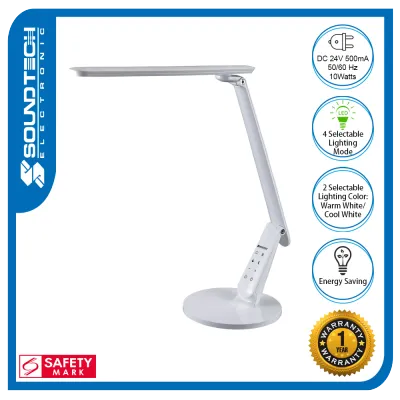
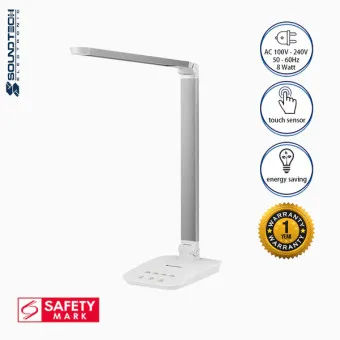
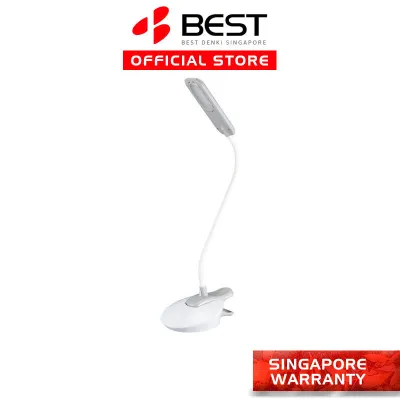

Prices are valid at publication and may change. Please refer to the product page for the latest price.
Uniform light distribution is critical because your eyes naturally adjust to the brightest point in their field of view. If your desk has a bright hotspot directly under the lamp head surrounded by deep shadows, your pupils must constantly dilate and constrict as your gaze shifts across the desk. This continuous adjustment quickly tires the fine muscles of the eye, which is why a wide, even beam pattern is highly preferred over a narrow, spotlight-style beam.
Control over glare is another essential factor when choosing a desk lamp for study sessions. Direct glare occurs when light shines straight from the bulb into your eyes, while indirect or reflective glare bounces off glossy textbook pages, tablet screens, or polished desk surfaces. High-quality table lamps utilize recessed light sources, specialized frosted diffusers, or honeycomb filters to scatter the light rays, softening the output and redirecting harsh angles away from your line of sight.
When browsing the Soundtech range, you should look for specific performance indicators printed on the product packaging or listed in the technical specifications. Pay close attention to the rated lumen output, which indicates the total amount of light emitted, and check if the manufacturer specifies the lux levels at a standard reading distance (usually 30 to 40 centimeters). Understanding these baseline metrics ensures you select a fixture engineered for active visual tasks rather than simple ambient decoration.
Evaluating Soundtech Table Lamps for Eye Comfort
Evaluating a table lamp’s impact on eye comfort requires looking closely at the underlying electrical and optical components. One of the most common culprits behind modern eye strain is light flicker, which refers to rapid, repeated changes in light intensity. Although high-frequency flicker is often invisible to the naked eye, your brain still processes these rapid fluctuations, which can trigger tension headaches and physical eye fatigue during long study sessions.

To ensure a comfortable reading experience, check the product details for explicit mentions of flicker-free technology or stable direct-current (DC) driver circuits. High-quality LED desk lamps utilize advanced electronic drivers that smooth out alternating current, delivering a steady, continuous stream of light. If a product description does not explicitly state that it is flicker-free, you can perform a quick check by viewing the illuminated lamp through your smartphone camera; visible scrolling bands on the screen often indicate high-frequency flicker.
Blue light emission is another critical factor, particularly if your study routine extends into the late evening or night. While cool, blue-rich light (around 5000K to 6500K) mimics natural daylight and helps boost alertness and cognitive performance during the day, exposure to it at night can suppress melatonin production and disrupt your sleep cycle. For night studying, look for lamps that allow you to adjust the color temperature down to a warm white or soft yellow range (around 2700K to 3000K), which is much gentler on the eyes and supports a natural wind-down process before sleep.
The Color Rendering Index (CRI) is a vital specification that measures how accurately a light source reveals the true colors of objects compared to natural daylight. Measured on a scale up to 100, a high CRI (typically 80 or above, with 90+ being excellent) is essential for students who study colored diagrams, medical illustrations, art, or design work. When evaluating Soundtech models, check the official specifications for the CRI value (often labeled as Ra) to ensure that text and colors remain vivid, sharp, and easy to distinguish.
Adjustability and Ergonomics for Your Workspace
A study lamp should adapt to your body and your desk setup, not the other way around. Physical adjustability is crucial for positioning the light source precisely where you need it, preventing you from hunching over or adopting awkward postures to read. Fixed-neck lamps offer limited flexibility, whereas models featuring flexible silicone goosenecks or multi-jointed articulated arms allow you to raise, lower, rotate, and tilt the lamp head to suit your height and seating position.
The choice between physical designs often depends on your desk depth and the presence of other equipment, such as computer monitors or laptop stands. An articulated arm with multiple tension-adjustable joints is highly beneficial for deep desks, as it lets you extend the light over your reading materials and pull it back when not in use. A flexible gooseneck, on the other hand, provides smooth, silent adjustments in any direction, making it a reliable and durable option for simpler, compact study spaces.
Light adjustability is just as important as physical flexibility, as your illumination needs change depending on the time of day and the task at hand. Stepless dimming—which allows you to smoothly adjust the brightness level from a dim glow to full power—is superior to preset brightness steps, as it lets you dial in the exact amount of light required. Combining adjustable brightness with color temperature control allows you to create a customized lighting profile, such as high-brightness cool light for intense mathematical problem-solving or low-brightness warm light for reading a novel.
Before making a purchase, take a moment to evaluate the control interface of the lamp to ensure it aligns with your preferences. Touch-sensitive control panels located on the base are common in modern desk lamps, offering a sleek look and easy operation with a simple tap. Ensure the controls are intuitive and responsive, particularly if you frequently adjust the settings during late-night study sessions when a physical, tactile button or a backlit panel might be easier to locate in the dark.
Matching Soundtech Models to Your Specific Desk Setup
Selecting the best Soundtech table lamp requires matching the physical footprint of the device to the available real estate on your desk. If you study at a small or heavily cluttered desk, a lamp with a large, heavy base can consume valuable space needed for books, notebooks, and laptops. In such scenarios, look for compact models with streamlined bases or explore clamp-on alternatives that secure directly to the edge of the desk, keeping the entire surface clear for your study materials.
Electrical compatibility is another vital consideration, especially when purchasing lighting fixtures in Singapore. You must verify that the chosen Soundtech model is designed to operate safely on Singapore’s standard 230V voltage at a frequency of 50Hz. Additionally, ensure the power cord comes equipped with a certified Type G three-pin plug, or uses an officially approved, safety-certified power adapter that meets local regulatory standards to prevent electrical hazards or short circuits.
Many modern desk lamps come equipped with secondary features designed to enhance convenience, such as integrated digital clocks, study timers, USB charging ports, or wireless charging pads built into the base. While these add-ons can reduce cable clutter on your desk, they should be viewed as secondary conveniences rather than primary selling points. Always prioritize the core lighting quality, eye-safety features, and structural durability of the lamp over high-tech extras that do not contribute directly to visual comfort.
Setup and Maintenance Tips for Optimal Performance
To get the most out of your Soundtech table lamp, correct positioning is essential to minimize shadows and glare. If you are right-handed, place the lamp on the left side of your desk; if you are left-handed, place it on the right. This simple arrangement prevents your writing hand from casting a shadow across your paper as you write, ensuring a clean, unobstructed field of view.
Additionally, angle the lamp head so that the light source is shielded from your direct line of sight and does not reflect off your computer monitor or tablet screen. The ideal position is slightly below eye level and tilted slightly away from you, casting a broad pool of light across your workspace without shining directly into your eyes.
Maintaining your lamp is straightforward but necessary to preserve its performance and safety over time. Always unplug the device from the wall outlet before cleaning to eliminate any risk of electrical shock. Use a dry or slightly damp microfiber cloth to gently wipe away dust from the lamp head, diffuser, and base, avoiding harsh chemical cleaners or abrasive pads that could scratch the optical surfaces or damage the finish.
For models featuring articulated arms or mechanical hinges, periodically check the joints to ensure they remain firm and capable of holding the lamp head in place. If the joints begin to sag over time, refer to the manufacturer’s instruction manual to see if they can be gently tightened using a standard screwdriver or hex key, taking care not to overtighten and damage the plastic or metal threads.
Frequently Asked Questions (FAQ)
Do Soundtech table lamps allow bulb replacements?
Many modern Soundtech LED table lamps are designed with integrated LED modules rather than traditional socketed bases. These integrated light sources are engineered to last for tens of thousands of hours of continuous use, meaning you will likely never need to replace them during the lifetime of the product. However, if your specific model uses a standard screw-in base (such as an E27 or E14 socket), you can replace the bulb yourself; always verify the maximum wattage limit, base type, and physical dimensions specified in the product manual before purchasing a replacement bulb.
Is it safe to leave the desk lamp on all night while studying?
Modern LED desk lamps are generally very safe to leave on for extended periods because LEDs emit minimal heat compared to older incandescent or halogen bulbs. However, for optimal safety and energy efficiency, you should avoid leaving any electrical appliance running unattended for long periods. Ensure there is adequate ventilation around the lamp head and power adapter, keep the fixture clear of flammable materials like papers or curtains, and utilize built-in auto-off timers if your model supports them to manage energy usage during overnight study sessions.
Community discussion
Share your experience or ask a question. Comments are reviewed before publication.