
Finding the ideal aroma nebulizer for your home in Singapore requires looking beyond aesthetic appeal. Unlike standard water-based diffusers, a cold-air nebulizer uses pressurized air to atomize pure essential oils into a dry, highly concentrated mist. This process delivers a potent scent throw without adding extra moisture to the air, making it highly effective for local indoor environments.
To choose the right brand, you must evaluate how a device’s technical specifications, material quality, and local safety compliance align with your household’s layout and daily routines. By focusing on these practical performance factors, you can select a reliable device that enhances your living space while managing long-term operating costs.
Defining the "Best" Nebulizer Brand for Your Specific Home Needs
Selecting the right nebulizer brand starts with assessing the physical layout of your home. Brands design their air pumps to cover specific volume ranges, typically measured in square meters or square feet. A compact model engineered for a small study or bedroom will struggle to scent an open-concept living and dining area in a typical HDB flat or condominium, while a high-capacity commercial-grade unit will quickly overwhelm a small, enclosed space.
Products mentioned in this guide
![[KIRONA SCENT] Zen Aroma Nebulizer | Free 10ml Pure Essential Oil | Aromatherapy Diffuser | Waterless & Wireless | Compact for Work and Study Desk Bedrooms Bathroom | Hotel & Shopping Mall Fragrances](https://img.lazcdn.com/g/p/dd423b2626f24f6202aa463c697a356b.png_400x400q80.png_.webp)
![[KIRONA SCENT] Bullet Aroma Nebulizer | Titanium Black | Compact & Portable | 9 LED Lights | Free Pure Essential Oil](https://img.lazcdn.com/g/p/561b86de3ab0ce9aee7fb83689720058.jpg_400x400q80.jpg_.webp)
![[KIRONA SCENT] Titan Aroma Nebulizer | Space Black | Wireless & Waterless | For Car Home Office](https://img.lazcdn.com/g/p/8988731608b40fa29d2e586fb18a9c62.jpg_400x400q80.jpg_.webp)
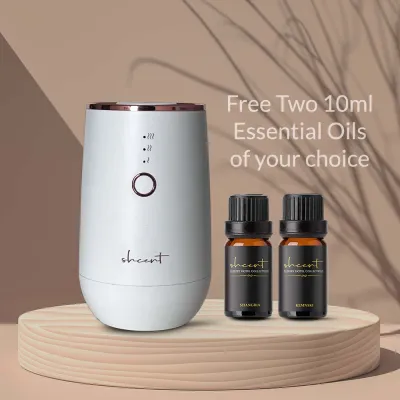
![[NEW Launch] shcent Aether Aroma Nebulizer Diffuser | Waterless | Rechargeable | Quiet | Ambient Night Light | For Home | Bundled with two 10ml Hotel Essential Oil](https://img.lazcdn.com/g/p/117a69963009c4e1a3febf9df023d4ba.png_400x400q80.png_.webp)
Prices are valid at publication and may change. Please refer to the product page for the latest price.
Noise tolerance is another critical factor when comparing brands. Because cold-air nebulizers rely on an internal mechanical air pump to create the pressure needed for atomization, they naturally produce a subtle hum and vibration. Brands that prioritize bedroom use often incorporate sound-dampening casings, rubberized base feet, or isolated pump mounts to keep operating noise to a minimum. If you are sensitive to sound, especially during sleep, checking these design features is essential.
Scent intensity preferences and room ventilation also dictate which brand features you need. In well-ventilated spaces with open windows or active ceiling fans, a nebulizer with a robust, continuous output is necessary to maintain a consistent aroma. Conversely, in enclosed, air-conditioned rooms, you will require a brand that offers highly adjustable, low-intensity settings to prevent the scent from becoming uncomfortably strong and causing olfactory fatigue.
Key Specifications to Check Before Choosing a Brand
Before purchasing any nebulizer, examine the construction materials of the reservoir and nozzle assembly. High-quality brands utilize borosilicate glass or specialized, chemically inert metals for the parts that come into direct contact with essential oils. Standard plastics can degrade rapidly when exposed to concentrated essential oils, particularly citrus-based varieties, leading to chemical leaching, structural cracking, and premature device failure.

Adjustable diffusion intervals and timer settings are vital for controlling both scent levels and oil consumption. Look for brands that offer customizable duty cycles, which allow you to program the device to diffuse for a set number of seconds (such as 10 or 30 seconds) followed by a designated rest period. Built-in auto-off timers are equally important, ensuring the device does not run indefinitely if you leave the house or fall asleep.
Consider the reservoir capacity and how easily the nozzle assembly detaches for cleaning. Standard home nebulizers typically accommodate oil bottles ranging from 10ml to 100ml. A design that allows you to screw the oil bottle directly into the nebulizing head minimizes spills and makes switching between different scents straightforward, whereas built-in wells require more effort to empty and clean.
Finally, review the manufacturer-stated decibel (dB) ratings in the technical specifications. While actual noise levels depend on the surface where the device is placed, a rating below 35 to 40 decibels is generally recommended for quiet environments like bedrooms. Brands that do not publish their decibel ratings or pump specifications should be approached with caution, as they may use louder, lower-grade utility pumps.
Electrical Safety and Plug Compatibility for Singapore Homes
Electrical safety is a paramount consideration for any appliance operating continuously in your home. Singapore’s domestic electrical system operates at a standard voltage of 230V AC at a frequency of 50Hz. Ensure the nebulizer brand you select natively supports this voltage range without requiring an external step-down transformer, which can be bulky, inefficient, and potentially hazardous.
The power adapter supplied with the device must feature a native Type G three-pin plug, which is the standard configuration for local wall sockets. If the nebulizer is powered via a USB connection, verify that you are using a high-quality, certified USB wall adapter. Avoid relying on cheap, unbranded travel adapters or multi-plug adaptors to bridge incompatible foreign plugs, as these connections can loosen over time and pose fire risks.
When purchasing locally, look for the Enterprise Singapore Safety Mark on the power adapter or the device itself. This mark indicates that the electrical component has been tested and certified to meet local safety standards. Imported models purchased directly from overseas sellers often lack this certification and may feature non-compliant wiring or grounding, making them unsafe for long-term unsupervised use.
Confirming Your Choice: Nebulizers vs. Standard Diffusers
To ensure a cold-air nebulizer is the correct device for your home, it is helpful to compare its performance characteristics against other common aromatherapy methods. The table below outlines the key differences in operation, environmental impact, and resource consumption.
| Feature | Cold-Air Nebulizers | Ultrasonic Diffusers | Heat Diffusers |
|---|---|---|---|
| Scent Throw | Strong, rapid, and highly concentrated | Moderate, localized, and lighter | Mild, subtle, and highly localized |
| Humidity Impact | None; diffuses dry, pure oil particles | Increases humidity via water mist | None; relies on gentle warmth |
| Oil Consumption | Higher; uses undiluted essential oils | Lower; oils are diluted in water | Moderate; oils evaporate slowly |
| Water Requirement | None; direct oil bottle connection | Requires regular filling with clean water | None; uses oil directly or with a carrier |
Because nebulizers do not require water to disperse the aroma, they do not add moisture to your indoor environment. In Singapore’s naturally humid climate, adding extra moisture via an ultrasonic diffuser can elevate indoor humidity levels, potentially encouraging the growth of mold, mildew, and dust mites in carpets or upholstery. This makes the dry mist of a nebulizer a highly practical choice for maintaining a comfortable, mold-free home.
However, because nebulizers disperse undiluted essential oils, they consume oil at a faster rate than water-based alternatives. This results in a more potent and pure aromatic experience, but it also means your ongoing expenditure on premium essential oils will be higher. Understanding this trade-off is crucial before committing to a high-performance nebulizing system.
Evaluating Long-Term Value and Local Brand Support
When calculating the true cost of owning a nebulizer, look beyond the initial purchase price to evaluate the efficiency of the brand’s pump mechanism. High-efficiency pumps are designed to atomize oils into incredibly fine micro-droplets, maximizing the scent coverage per drop. A poorly engineered pump may consume oil rapidly while producing an uneven mist, leading to high monthly oil costs.
Assess the local availability of replacement parts before finalizing your choice. The glass reservoirs and delicate micro-tubes inside a nebulizer are fragile and can easily break or become permanently clogged over months of use. Choosing a brand with an active local distributor ensures you can easily purchase replacement glass chambers, nozzles, or seals without waiting weeks for international shipping.
Local warranty coverage and repair services offer significant protection for your investment. A reputable brand sold through authorized local channels typically provides a one-year warranty that covers pump failures or electrical defects. If you purchase an unsupported import, resolving a mechanical issue often requires shipping the unit back to an overseas manufacturer at your own expense, which can quickly exceed the cost of buying a new device.
Where to Buy and How to Verify Brand Authenticity
To ensure you receive a genuine product backed by a valid local warranty, prioritize purchasing from official brand boutiques, authorized department stores, or verified flagship stores on reputable ecommerce platforms. Buying directly from these channels guarantees that the device is configured for local electrical standards and includes all necessary safety certifications.
Be cautious of unauthorized third-party listings on online marketplaces that offer steep discounts. These products are frequently grey-market imports that lack local warranty coverage, or worse, they may be counterfeit units manufactured with substandard plastics and low-grade pumps. If a price seems unusually low compared to the official retail price, it is highly likely the product is unsupported or non-compliant.
At the point of purchase, verify the seller’s return policy and the process for registering your warranty. Legitimate local distributors will provide clear instructions on how to register the device online using a unique serial number. Keep your physical receipt or digital invoice safe, as this is typically required to claim warranty service or repairs in the future.
Routine Maintenance to Protect Your Investment
Regular maintenance is essential to keep your nebulizer operating efficiently and to prevent the delicate internal components from failing. Over time, essential oils can leave behind a sticky resin residue that clogs the micro-nozzles and restricts the airflow. To prevent this, establish a weekly cleaning routine using high-proof isopropyl alcohol or specialized ethanol cleaner.
To clean the system, empty any remaining essential oil from the reservoir, pour in a small amount of isopropyl alcohol, and run the device in a well-ventilated room for approximately five to ten minutes. This process dissolves the accumulated oil residue inside the micro-tubes and flushes it out of the nozzle. Allow all components to air dry completely before refilling the reservoir with essential oil.
If the mist output decreases significantly or stops entirely, the micro-nozzles may be blocked by dust or dried oil. You can gently clear these blockages using a thin cleaning pin or a soft-bristled brush provided by the manufacturer. Never use water, harsh household detergents, or abrasive scrubbing pads to clean the internal glass or metal parts, as this can cause permanent damage.
Additionally, avoid using highly viscous, thick essential oils—such as vetiver, patchouli, sandalwood, or absolute extractions—in their pure, undiluted form unless the manufacturer’s manual explicitly states the pump can handle them. These heavy oils can quickly overwhelm the small air channels. If you wish to use these scents, blend them with thinner oils like lavender or citrus to reduce their viscosity and protect the internal pump mechanism.
Frequently Asked Questions (FAQ)
Can I use any essential oil brand in a nebulizer?
Yes, you can use essential oils from any brand, provided they are 100% pure and unadulterated. You must avoid synthetic fragrance oils, carrier oils (such as jojoba, sweet almond, or coconut oil), and water-soluble oils formulated for ultrasonic diffusers. These non-pure liquids contain heavy molecules or chemical additives that cannot be properly atomized by a cold-air pump, leading to permanent clogs and damage to the delicate micro-nozzles.
Are nebulizers safe to use around pets and children?
Because nebulizers disperse highly concentrated micro-droplets of pure essential oil directly into the air, extra precautions are necessary when using them around pets and children. Ensure the room is well-ventilated, and run the device on short, intermittent cycles rather than continuous diffusion. Certain essential oils, such as tea tree, eucalyptus, and peppermint, can be highly toxic to cats and dogs or irritating to young children; always consult a veterinarian or pediatrician before diffusing new oils in shared living spaces.
How long does a nebulizer typically run on a single fill?
The run time on a single fill depends entirely on the reservoir capacity, the viscosity of the oil, and the chosen diffusion interval settings. A standard 10ml bottle of essential oil can last anywhere from 20 to over 50 hours of cumulative operation. If you configure the device to run on a conservative intermittent setting—such as diffusing for 10 seconds followed by a 60-second pause—a single fill will last significantly longer than if the device is run continuously.
Community discussion
Share your experience or ask a question. Comments are reviewed before publication.