
Choosing the right educational clock involves matching the device’s visual complexity to your child’s current cognitive development. Rather than buying a standard clock and expecting a young child to decode abstract hands, parents should look for age-appropriate features that bridge the gap between daily routines and numerical time. A well-chosen clock serves as both a learning tool and a functional bedroom accessory, helping children transition from understanding sequence to measuring elapsed minutes.
By selecting a clock that aligns with your child’s developmental milestones, you can prevent frustration and encourage independent time-management habits. The ideal clock evolves with your child, starting as a simple visual guide for daily routines and eventually becoming a tool for mastering abstract mathematical concepts.
Assessing Your Child's Readiness and Learning Stage
Before purchasing an educational clock, observe how your child interacts with the concept of time in their daily life. Children do not perceive time in hours and minutes initially; instead, they understand it through sequence and routine. If your child recognizes that breakfast happens in the morning and bedtime follows storybook reading, they are already demonstrating basic time awareness. Other positive indicators include recognizing written numbers from 1 to 12, counting sequentially, and asking questions about when specific events will occur.
Products mentioned in this guide
Prices are valid at publication and may change. Please refer to the product page for the latest price.
Matching these developmental milestones to the correct clock format prevents cognitive overload. For toddlers who cannot yet read numbers, a visual routine timer that uses colors or pictures to represent segments of the day is highly effective. Introducing a complex analog dial too early can cause frustration, potentially discouraging the child from wanting to learn.
As children enter early primary school, they begin to grasp more abstract mathematical concepts, such as skip counting by fives and understanding fractions like halves and quarters. This is the optimal window to transition from visual schedules to a simplified analog clock. If your child can easily identify the difference between a short line and a long line, they possess the visual discrimination skills required to distinguish between the hour and minute hands on a traditional clock face.
Essential Dial and Display Features by Age Group
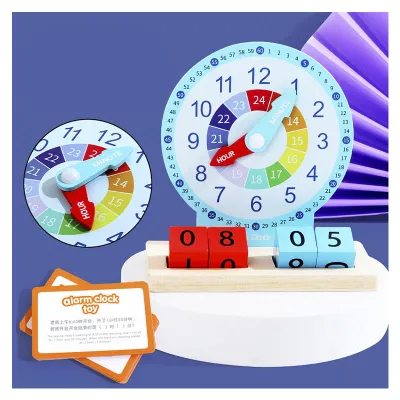
For toddlers and preschoolers aged two to four, the clock face should prioritize color-coded zones and simple visual cues over dense numerical data. Clocks designed for this stage often use changing colors or simple icons, such as a sun and a moon, to indicate when it is time to sleep and when it is acceptable to wake up. The numbers on the dial, if present, should be large, uncluttered, and limited to the essential 1-to-12 sequence to avoid visual confusion. At this stage, the goal is to build a positive association with the clock as a helpful guide for daily transitions.

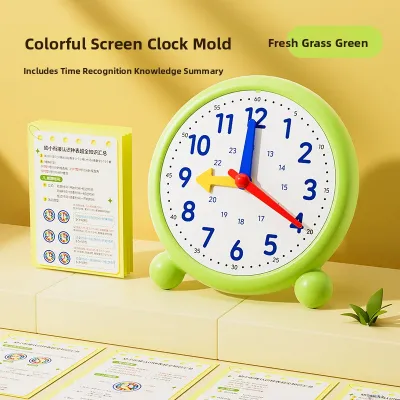
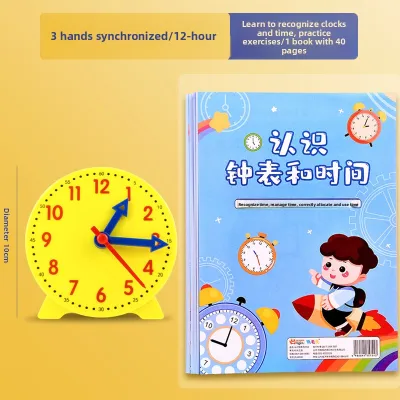
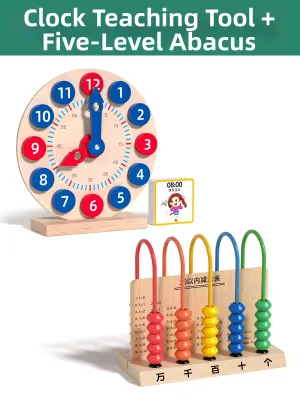
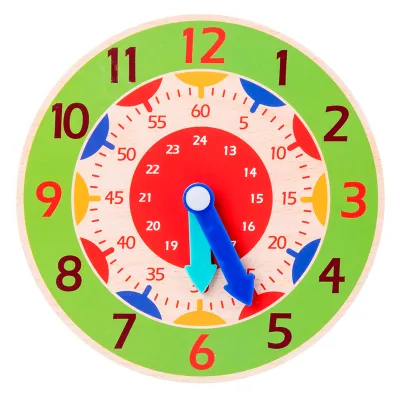
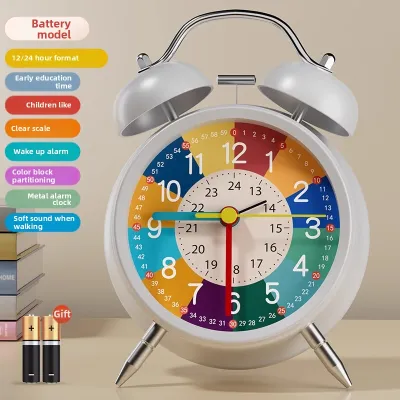
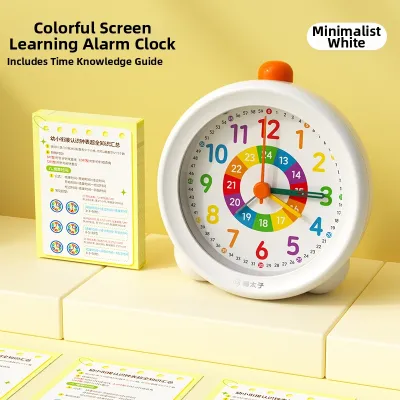
When children reach early primary school, typically between five and seven years old, they are ready for a dedicated educational analog clock. Look for a dial that features distinct, color-coded hour and minute hands. For example, if the hour hand is red, the hour numbers on the dial should also be red; if the minute hand is blue, the minute markers should match. Additionally, the clock face should display individual minute tick marks from 1 to 60, rather than just the standard 1-to-12 numbers, to help children understand that “2” on an analog clock also represents ten minutes.
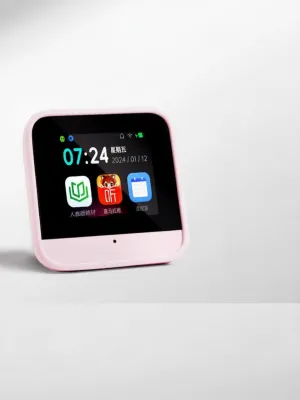
For older children aged eight and above, standard analog faces with clean, minimalist designs help transition them to adult timepieces. This is also an excellent stage to introduce dual-time formats or advanced digital displays. A digital clock that includes the date, day of the week, and ambient temperature helps older children manage their school schedules, prepare their own uniforms, and develop a broader sense of personal organization.
Evaluating Interactive and Functional Add-ons
Interactive features can significantly enhance the learning process, provided they do not become a source of distraction. When evaluating analog educational clocks, look at the time-setting mechanism on the back of the device. Easy-grip, manual knobs allow children to physically turn the hands themselves, which reinforces the physical relationship between the movement of the minute hand and the hour hand. This hands-on manipulation builds fine motor skills while making the abstract concept of moving time tangible.
For digital models and alarm clocks, look for functional features that support daily routines without causing anxiety. Visual countdown rings or progress bars are excellent for study desks, as they show time physically disappearing, which helps children pace themselves during homework. Alarms should feature gentle wake-up lights that gradually brighten, paired with adjustable volume limits. A sudden, loud alarm can startle a child and create a negative association with waking up in the morning.
Smart or app-connected educational clocks offer convenient scheduling features for parents, but they require careful evaluation. While the ability to program custom routines and color changes from your smartphone is highly practical, ensure the clock does not require constant screen interaction from the child. The primary educational value should remain on the physical clock face itself, keeping the bedroom a low-screen, distraction-free environment conducive to learning and rest.
Safety, Durability, and Bedroom Placement Checks
Because educational clocks are designed to be handled by curious children, physical safety and durability are paramount. Inspect the construction materials to ensure the clock face features a shatterproof acrylic or plastic cover rather than standard glass, which can pose a hazard if knocked off a bedside table. The base of the table clock should be wide, stable, and slip-resistant to prevent it from easily tipping over during enthusiastic time-setting practice.
Bedroom placement requires careful consideration of the sleep environment. A loud, repetitive ticking sound can easily disrupt a child’s sleep cycle; therefore, always verify that the clock utilizes a silent sweep quartz movement rather than a traditional stepping motor. For digital or light-up clocks, check that the display features an adjustable dimmer or a complete blackout mode. Harsh blue light or overly bright displays at night can interfere with natural sleep patterns and clutter the bedroom environment with unnecessary light pollution.
Finally, evaluate the power source and electrical safety of the device. If the clock is battery-operated, ensure the battery compartment is secured with a screw lock to prevent young children from accessing the batteries. For plug-in models, practice proper cord management to keep cables safely tucked behind furniture. When purchasing a plug-in adapter for use in Singapore, verify that the power adapter carries the appropriate local safety certifications, such as the SAFETY Mark, to ensure the device meets rigorous electrical safety standards for continuous household use.
Frequently Asked Questions (FAQ)
At what age should a child start using an analog educational clock?
Most children are ready to start learning with a simplified analog educational clock between the ages of five and seven. At this stage, they have typically developed the necessary number recognition skills, can count sequentially up to 60, and are beginning to understand basic mathematical concepts in school. Introducing the analog dial during this window reinforces what they are learning in their early primary curriculum.
Are digital clocks better for children with learning differences?
Digital clocks can be highly beneficial for children who experience difficulties with spatial reasoning, visual processing, or conditions like dyscalculia. A digital display removes the need to decode moving hands, allowing the child to read the time directly. However, to help them understand the actual passage of time, pairing a digital display with a visual countdown timer that uses a disappearing colored disc is often the most effective approach.
Community discussion
Share your experience or ask a question. Comments are reviewed before publication.