
Quick Guide to G24 LED Bulb Selection
Replacing a compact fluorescent lamp (CFL) with a modern G24 LED bulb is an excellent way to lower your home utility bills and reduce heat in warm tropical climates like Singapore. To find the perfect replacement, start by looking at your existing bulb’s base to count the metal pins. Next, locate the specific sub-type code, such as G24d-2 or G24q-3, which is typically printed directly on the plastic base of the old bulb. Finally, focus on matching the actual lumen output and physical dimensions of the bulb rather than relying solely on the “wattage equivalent” printed on the packaging.
Identifying G24 Pin Configurations: 2-Pin vs 4-Pin
The most critical step in your selection process is distinguishing between the two primary families of G24 bases: the 2-pin and the 4-pin configurations. These two types are physically and electrically incompatible, meaning a mistake here will prevent the bulb from fitting into your ceiling downlight.

The 2-pin variant, designated as the G24d series, features two metal pins protruding from the bottom of the plastic base, alongside a central plastic peg that contains small guide keys. These bulbs are traditionally designed to work with older magnetic ballasts, which require an integrated starter housed inside the bulb’s base itself.
Products mentioned in this guide
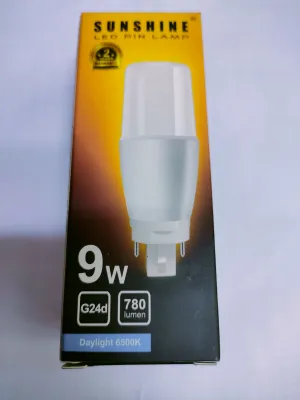
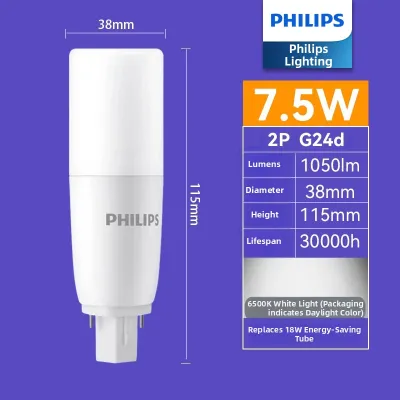
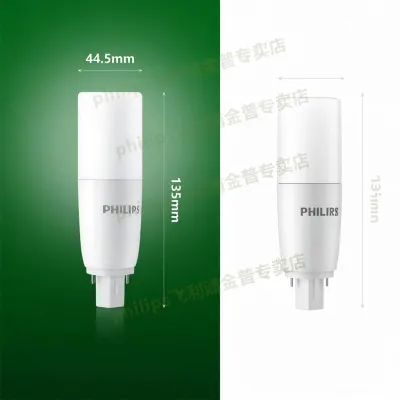
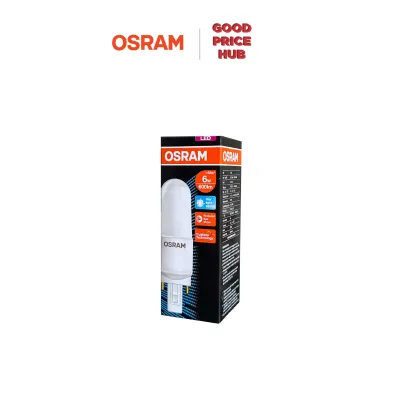
![[3 Year Warranty] Philips LED Vertical PLC PL-C G24D 9w 7.5W Light Bulb Warm White Cool Daylight](https://img.lazcdn.com/g/p/d9d85083fcdd879599367f1d9718d155.png_400x400q80.png_.webp)
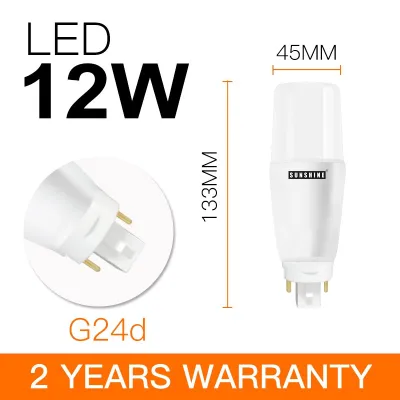
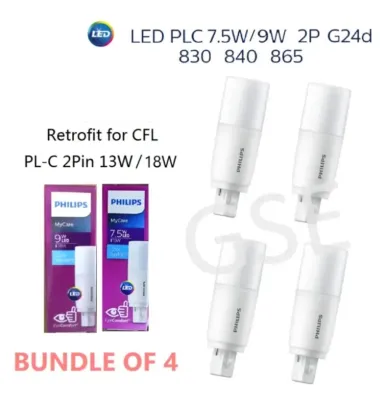
Prices are valid at publication and may change. Please refer to the product page for the latest price.
In contrast, the 4-pin variant, known as the G24q series, features four metal pins arranged in a square pattern and lacks an internal starter. These are typically engineered to operate with modern electronic ballasts or direct-wire mains setups.
Before ordering a replacement from an online marketplace, physically remove your old bulb, count the metal pins, and observe the shape of the central plastic block. Taking a clear photo of the base with your phone is a highly reliable way to verify these details during your search.
Decoding G24 Sub-Types: What the Numbers Mean
Once you know whether you need a 2-pin or 4-pin bulb, you must identify the specific sub-type, which is indicated by a number after the letter (such as -1, -2, or -3). These numbers represent the physical position of the small plastic guide keys on the central peg of the bulb base.
For the 2-pin G24d family, the variations are G24d-1, G24d-2, and G24d-3. Each number corresponds to a different keyway position designed to prevent users from inserting a bulb with the wrong wattage into a fixture.
Similarly, the 4-pin G24q family is divided into G24q-1, G24q-2, and G24q-3. The socket in your ceiling downlight has matching slots that will only accept the corresponding sub-type.
To find your sub-type, inspect the printed text on the side or base of your old CFL bulb. If the text has faded, you can refer to the fixture manufacturer’s specifications or carefully compare the guide key positions on your bulb to a technical diagram.
Never attempt to force an incorrect sub-type into a socket. Forcing a mismatched bulb can crack the plastic socket, bend the internal contacts, or create a loose electrical connection that poses a serious fire hazard.
Choosing the Right Wattage Equivalent and Brightness
When transitioning to LED technology, you should shift your focus from wattage to lumens to ensure you achieve the desired brightness. Wattage measures electrical power consumption, whereas lumens measure the actual light output.
Because LEDs are highly efficient, a G24 LED bulb consuming only 6 to 10 watts can easily match or exceed the light output of an old 18-watt or 26-watt CFL. Always check the lumen rating on the product packaging to ensure the new bulb provides sufficient illumination for your space.
Before purchasing, verify the maximum wattage limit label on your light fixture. While LEDs draw significantly less power than CFLs, ensuring the bulb’s physical dimensions allow for proper heat dissipation is crucial, especially in enclosed ceiling fixtures common in Singapore apartments.
Additionally, verify if your fixture uses a dimmer switch, as most standard G24 LED bulbs are non-dimmable unless explicitly specified on the packaging. Using a non-dimmable LED on a dimming circuit can cause flickering or premature bulb failure.
Finally, consider the color temperature of the bulb to suit the room’s function. A warm white light (around 3000K) is ideal for creating a cozy atmosphere in living rooms and bedrooms, while a cool white or daylight option (4000K to 6500K) is better suited for task-oriented spaces like kitchens, home offices, and bathrooms.
Installation Checks and Electrical Safety
Upgrading to G24 LED bulbs requires careful attention to your existing fixture’s electrical setup. You must verify whether the new LED bulb is a “plug-and-play” model that works with your existing ballast, or a “ballast-bypass” model that requires direct wiring to the mains voltage.
Before performing any inspection, maintenance, or installation, always isolate the power. Switch off the circuit breaker at your home’s main distribution board (DB box) rather than relying solely on the wall switch.
If your upgrade requires a ballast bypass, this involves modifying the fixed wiring of the fixture to route the 220V-240V mains power directly to the socket. For your safety, and to comply with local electrical regulations, always hire a licensed electrician to perform ballast bypasses or to handle damaged sockets, exposed wiring, and work at heights.
Frequently Asked Questions (FAQ)
Can I use a 4-pin G24 LED bulb in a 2-pin fixture?
No, you cannot use a 4-pin G24 LED bulb in a 2-pin fixture. The physical socket shapes, pin configurations, and internal wiring systems are completely different and prevent cross-compatibility. Attempting to modify the pins or force the bulb into the wrong socket will damage the components. If you wish to switch from a 2-pin to a 4-pin setup, you must have a qualified professional replace or rewire the entire light fixture.
Do I need to remove the ballast when switching to a G24 LED bulb?
Whether you need to remove the ballast depends entirely on the specific G24 LED bulb you purchase. Plug-and-play (ballast-compatible) LED bulbs are designed to work with your existing ballast, allowing for a simple direct replacement. However, ballast-bypass (direct-wire) LED bulbs require you to disconnect and bypass the ballast, wiring the socket directly to the mains power. Always check the manufacturer’s installation instructions on the product packaging to confirm the required wiring method.
Community discussion
Share your experience or ask a question. Comments are reviewed before publication.