
Choosing the right Hooga reed diffuser for your home requires balancing three primary pillars: your desired scent profile, the physical dimensions of your room, and the strategic placement of the vessel. Unlike active diffusers that require electricity or heat, reed diffusers rely on passive capillary action, making them highly sensitive to environmental conditions such as humidity, temperature, and airflow. Before making a purchase, it is essential to check product labels for volume specifications and ingredient warnings to ensure compatibility with your household. By understanding how these factors interact, you can select a diffuser that not only complements your interior decor but also delivers a consistent, long-lasting fragrance throw tailored to your specific living environment.
Matching Scent Families to Your Rooms and Moods
To create a cohesive sensory experience throughout your home, it is helpful to understand how different scent families influence the atmosphere of a room. Fragrances are generally categorized into distinct families, each carrying its own characteristics and spatial effects.
Floral Scents Floral fragrances, featuring notes such as rose, jasmine, lily, and lavender, are widely appreciated for their soft, comforting, and elegant qualities. These scents are highly suited for private sanctuaries like bedrooms, dressing rooms, or guest bathrooms, where a relaxing and soothing ambiance is desired.
Products mentioned in this guide

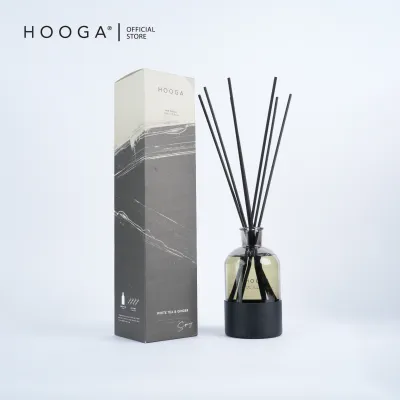
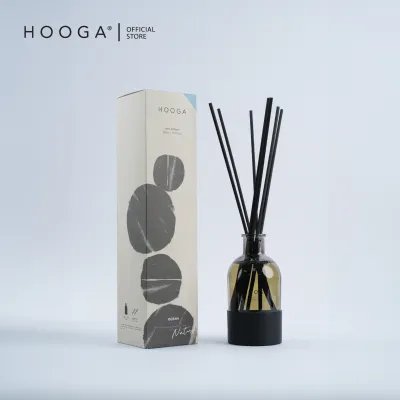
![[ONLINE EXCLUSIVE] Hooga SCENTFUL LIVING Reed Diffuser 180ml | Home Fragrance](https://img.lazcdn.com/g/p/8317d46b06101cb0c714d6b274a8b012.jpg_400x400q80.jpg_.webp)

![[6 NEW SCENTS] Hooga Black Series Reed Diffuser 200ml](https://img.lazcdn.com/g/p/1ffd8c3f6be39df0f302c26adff3be23.jpg_400x400q80.jpg_.webp)

Prices are valid at publication and may change. Please refer to the product page for the latest price.
Woody Scents Woody fragrances, characterized by rich notes of sandalwood, cedarwood, patchouli, and amber, offer a grounding, warm, and sophisticated presence. These deeper tones are excellent for communal spaces such as living rooms, home libraries, or cozy reading corners, where they evoke a sense of stability and warmth.
Citrus Scents Citrus fragrances, driven by vibrant notes of bergamot, lemon, grapefruit, and mandarin, are inherently uplifting, crisp, and energizing. They are highly effective in spaces that benefit from a clean, refreshing atmosphere, such as kitchens, entryways, or morning utility areas, helping to neutralize lingering odors and brighten the mood.
Fresh and Green Scents Fresh, green, or marine fragrances, incorporating elements like eucalyptus, mint, sea salt, and cut grass, provide an airy, clarifying, and modern feel. These scents work exceptionally well in home offices, study areas, or modern bathrooms, where they promote mental clarity and a sense of open space.
Rather than relying solely on the marketing name of a diffuser, always examine the official scent descriptions and detailed fragrance notes. A product named after a fresh coastal breeze may contain heavy base notes of sweet vanilla or musk, which can dramatically alter how the scent behaves in a confined space. Understanding the top, middle, and base notes allows you to predict how the fragrance will evolve over time as it disperses through your home.
Sizing Your Diffuser for Different Room Dimensions
Achieving the perfect fragrance intensity requires matching the physical size of your diffuser to the volume of the room it is intended to scent. The relationship between the liquid volume of the diffuser, the number of reeds used, and the overall fragrance throw radius is fundamental to avoiding an overwhelming or underwhelming sensory experience.

The process begins with capillary action, where the porous channels within the reeds draw the fragrance oil upward, allowing it to evaporate into the surrounding air. A larger volume of liquid generally supports a wider surface area of evaporation, but the actual strength of the scent is controlled by the number of reeds inserted into the bottle.
For small spaces, such as powder rooms, walk-in wardrobes, or compact study rooms (typically under 10 square meters), a smaller diffuser volume of approximately 100ml to 120ml is highly appropriate. Using 3 to 4 reeds in these spaces prevents the fragrance from becoming cloying or overpowering in a confined volume of air.
For medium-sized spaces, including standard bedrooms, closed kitchens, or dining areas (ranging from 10 to 20 square meters), a mid-sized diffuser of 150ml to 200ml is recommended. In these environments, starting with 4 to 6 reeds allows you to gauge the scent strength and adjust as necessary to achieve a balanced throw.
For large, open-concept spaces, such as combined living and dining rooms, spacious master suites, or open hallways (exceeding 20 square meters), a larger vessel of 250ml or more is ideal. Alternatively, placing multiple smaller diffusers at opposite ends of the room can create a more uniform fragrance zone. In these larger areas, utilizing 6 to 8 reeds is often necessary to project the scent across the expansive space.
Environmental factors play a significant role in scent dispersion, particularly in tropical climates like Singapore. High ambient humidity can slow down the evaporation rate of the fragrance oil, while constant air conditioning dries the air, accelerating liquid consumption and increasing scent intensity. Furthermore, the presence of ceiling fans, standing fans, or open windows increases air circulation, which helps distribute the fragrance quickly but also causes the diffuser liquid to deplete at a faster rate.
Strategic Placement and Surface Protection
Where you position your reed diffuser is just as important as the scent you choose. To maximize the efficiency of the fragrance throw while protecting your home’s surfaces, you must consider air currents, temperature, and physical safety.
The ideal location for a reed diffuser is in a high-traffic zone where natural movement creates gentle air currents, helping to carry the scent throughout the room. Entryways, hallways, and low-lying shelves near doorways are excellent choices, as the motion of people walking past naturally distributes the fragrance. Placing the diffuser slightly below eye level allows the rising scent molecules to disperse effectively across the living space.
Conversely, there are several areas where diffusers should not be placed. Avoid positioning them near direct heat sources, such as radiators, sunny windowsills, or on top of warm electronic appliances. Direct sunlight and heat degrade the fragrance oils, altering their scent profile and causing the liquid to evaporate prematurely. High-humidity zones, such as unventilated shower areas, should also be avoided, as excess moisture can saturate the reeds, blocking the pores and preventing the oil from rising.
Physical safety and surface protection are paramount when using reed diffusers. Fragrance oils and carrier solvents can act as mild solvents themselves, capable of stripping varnish, paint, wax, or polish from wooden furniture, veneers, and plastics. Always place your glass diffuser vessel on a protective barrier, such as a ceramic coaster, glass tray, or marble plate. Ensure the diffuser is situated on a stable, flat surface out of reach of pets, children, and areas where it could be easily knocked over by curtains or passing household members.
Maintaining Fragrance Throw and Lifespan
To ensure your reed diffuser remains effective throughout its lifespan, regular maintenance is required. Over time, the performance of the reeds will naturally decline, but simple adjustments can prolong the fragrance throw and keep the scent fresh.
Flipping the reeds is the primary method for reviving a fading scent. To do this safely, carefully remove the reeds from the bottle using a paper towel or tissue to avoid getting oil on your skin. Flip them over and reinsert the dry ends into the liquid, performing this action over a sink or a protected surface to prevent accidental drips on your furniture. Washing your hands immediately afterward is highly recommended. Flipping the reeds once a week is generally sufficient to maintain a consistent scent throw.
Eventually, reeds will lose their effectiveness. Dust from the air and heavy oil molecules will clog the microscopic pores of the reeds, preventing them from drawing up fresh liquid. If you notice that flipping the reeds no longer improves the fragrance strength, or if the reeds appear dusty or oversaturated, it is time to replace them entirely. Keeping a stock of fresh fiber or rattan reeds ensures you can restore the diffuser’s performance without needing to buy a completely new set.
When refilling a diffuser bottle or switching to a new scent, safety and hygiene checks are essential. Thoroughly wash the glass vessel with warm, soapy water and allow it to dry completely before adding new liquid. Never mix different fragrance oils, as this can result in unpredictable scent combinations and alter the chemical stability of the mixture. When disposing of remaining diffuser liquid, check local environmental guidelines; never pour concentrated fragrance oils directly down household drains, as they can damage plumbing and pose risks to aquatic ecosystems.
Building Your Hooga Reed Diffuser Shortlist
To help you synthesize these factors into a practical decision, you can use a structured framework to match your specific household needs with the right diffuser specifications.
Scent Selection Matrix
- Small Spaces (Bathrooms, Wardrobes): Choose fresh or light floral scents in 100ml vessels. Use 3 to 4 reeds to maintain a subtle, non-overpowering presence.
- Medium Spaces (Bedrooms, Home Offices): Opt for relaxing woody or clarifying green scents in 150ml to 200ml vessels. Use 4 to 6 reeds, adjusting based on air conditioning usage.
- Large Spaces (Living Rooms, Open Areas): Select warm woody, rich floral, or vibrant citrus scents in 250ml vessels (or multiple smaller vessels). Use 6 to 8 reeds to ensure adequate coverage across high-ceiling or high-airflow zones.
Before finalizing your purchase, verify current stock, exact scent notes, and retail availability through authorized home decor retailers or the brand’s official channels. It is also highly recommended to check for any household allergies or pet sensitivities, as certain essential oils commonly used in home fragrances can trigger adverse reactions in sensitive individuals or domestic animals.
Frequently Asked Questions (FAQ)
Why does my reed diffuser stop smelling after a few weeks?
A decrease in perceived scent strength is often caused by olfactory adaptation, commonly known as nose blindness. Your brain naturally filters out constant background smells to remain alert to new environmental cues; you can test this by leaving your home for a few hours and noticing if the scent is apparent upon your return. Alternatively, physical factors such as dust accumulation or oil saturation can clog the reeds, preventing the liquid from evaporating. Wiping down the vessel and replacing the old reeds with fresh ones will typically resolve this physical blockage.
Are reed diffusers safe to use around pets and children?
While reed diffusers are generally safe when undisturbed, they present risks if ingested or if the liquid comes into direct contact with skin. Certain essential oils, such as tea tree, eucalyptus, citrus, and peppermint, are known to be toxic to cats and dogs even in vaporized forms if the space is poorly ventilated. Always keep diffuser vessels on high, stable shelves completely out of reach of children and pets to prevent accidental spills or ingestion. If a spill occurs, clean the area immediately with soap and water, and consult a professional or veterinarian if ingestion is suspected.
Community discussion
Share your experience or ask a question. Comments are reviewed before publication.