
An hourglass, or sand timer, offers a tactile and visual way to measure time, serving as both a functional tool and a striking decor piece. Choosing the right duration depends entirely on your primary activity: quick kitchen tasks require short, highly visible timers, while meditation and deep work benefit from silent, mid-length intervals. For purely decorative desk displays, the visual rhythm of the falling sand often matters more than strict chronological precision. By matching the physical size, sand color, and duration of the glass to your specific environment, you can find a piece that is both highly practical and aesthetically pleasing.
Understanding How Size and Sand Volume Affect Timing
The relationship between an hourglass’s physical dimensions and its timing duration is governed by physics, specifically the volume of sand and the width of the central neck. A larger hourglass does not automatically translate to a longer duration; a massive glass vessel can be designed to run for just five minutes if it has a wide opening and coarse sand, while a smaller, delicate vessel with a narrow neck and fine sand can run for thirty minutes. The physical size of the glass bulb must accommodate the entire volume of sand in either the top or bottom chamber, meaning longer-duration timers generally require larger overall dimensions to house the necessary sand volume without clogging.
It is essential to recognize that traditional sand timers are not precision instruments and should not replace digital or mechanical clocks for high-stakes timing. Factors such as the consistency of the sand grain size, minor variations in the hand-blown glass neck, and environmental conditions mean that most consumer hourglasses carry an inherent variance, often around five to ten percent. While this variance is negligible for steeping tea or pacing a study session, it makes them unsuitable for tasks requiring split-second accuracy.
Products mentioned in this guide
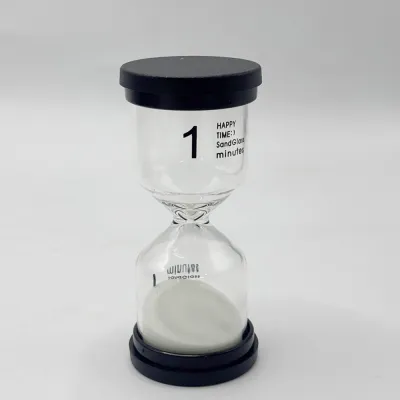
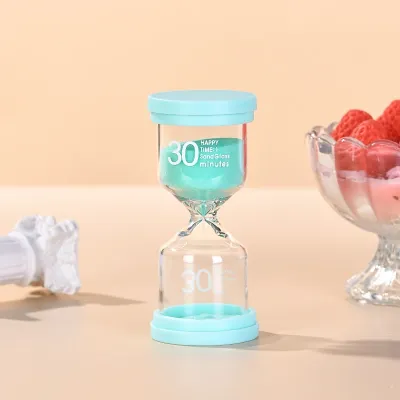
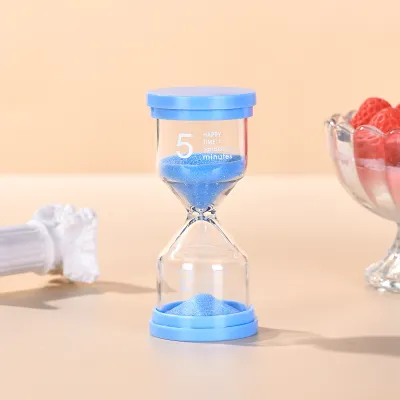
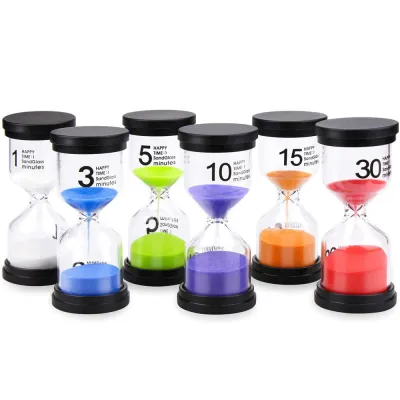

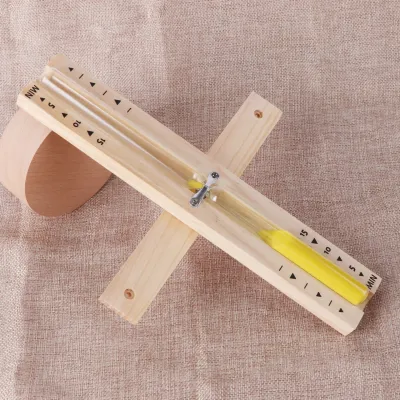
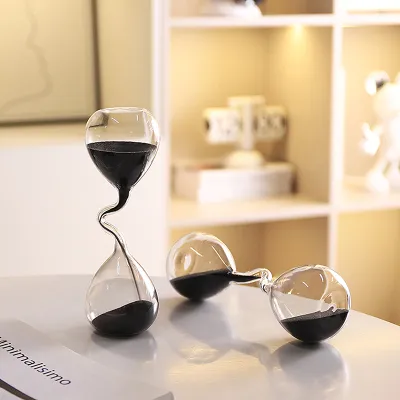
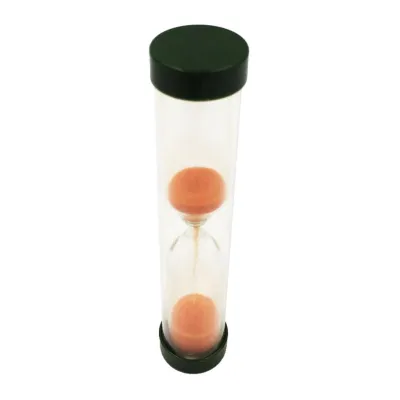
Prices are valid at publication and may change. Please refer to the product page for the latest price.
Beyond functional timing, the physical scale of the hourglass dictates its visual presence within a room. A tall, substantial hourglass measuring twenty to thirty centimeters in height commands attention on a deep bookshelf or a spacious executive desk, acting as a focal point. Conversely, a compact timer under ten centimeters tall is ideal for crowded workspaces or narrow kitchen shelves, where it can be easily reached and flipped without disrupting surrounding items.
The material of the sand itself also plays a role in both timing and aesthetics. Fine glass beads, silica sand, and synthetic colored sands flow differently based on their grain shape and density. Coarser grains are less prone to static cling but require a wider neck, which can result in a faster, more audible flow. Extremely fine sands offer a smooth, almost liquid-like movement but are more sensitive to minor changes in humidity and static charge within the glass bulb.
Selecting a Practical Timer for Cooking and Kitchen Tasks
In a busy kitchen, an hourglass serves as a reliable, hands-free countdown that requires no batteries or digital programming. For common culinary tasks, short-duration timers are highly practical. A three-minute timer is ideal for steeping delicate green teas, while a five-minute glass perfectly times soft-boiled eggs or robust black teas. For resting steaks or timing quick baking prep steps, a ten-minute hourglass provides a clear visual cue that helps home cooks maintain their rhythm without constantly checking a smartphone screen.

Readability is paramount when selecting a kitchen sand timer, as you will often need to check the remaining time from across the room or through a cloud of steam. Opt for hourglasses featuring high-contrast sand, such as vibrant black, deep blue, or bright red, set against clear, non-tinted glass. This stark contrast allows you to gauge how much sand has fallen at a single glance, even when your hands are busy kneading dough or washing vegetables.
Kitchen environments are inherently active and prone to spills, meaning stability is a critical safety consideration. Look for hourglasses with a wide, low-profile base made of durable materials like sealed hardwood, silicone, or metal. Avoid top-heavy designs or delicate, free-standing glass bulbs without protective frames, as these can easily tip over on slick countertops or when bumped by a stray mixing bowl. A sturdy, framed hourglass ensures the delicate glass remains protected from accidental impacts.
Furthermore, the materials used in a kitchen hourglass must withstand the unique challenges of a cooking environment. High humidity, grease splatters, and temperature fluctuations can degrade unprotected wooden frames or cause cheap adhesives to fail. Selecting a timer with a water-resistant finish, a metal frame, or a fully enclosed protective acrylic cylinder will ensure the device remains hygienic and functional over years of daily kitchen use.
Choosing a Calming Hour Glass for Meditation and Deep Work
For mindfulness, yoga, or focused productivity sessions like the Pomodoro technique, the silent operation of an hourglass is highly beneficial. A fifteen-minute timer is excellent for a quick morning breathing exercise or a mid-day mental reset, while a thirty-minute or forty-five-minute glass aligns perfectly with deep work intervals. The gradual, silent flow of sand provides a gentle transition between tasks, completely free from the jarring alarms or intrusive screen notifications associated with digital devices.
The psychological impact of a visual countdown is uniquely calming. Unlike a digital clock that counts down seconds with stressful precision, an hourglass presents time as a continuous, flowing physical element. Watching the steady accumulation of sand in the lower chamber encourages a state of flow, helping to ground your attention during meditation or keep you anchored to a single task during a writing or coding session.
To enhance this calming effect, select an hourglass with aesthetic elements that complement a peaceful environment. Natural base materials, such as oiled bamboo, light oak, or smooth marble, harmonize well with meditation spaces and modern home offices. Soft, muted sand colors—such as pale grey, earthy terracotta, or soft white—minimize visual distraction, allowing the timer to blend seamlessly into a serene decor scheme while still performing its functional role.
When using an hourglass for deep work, placing it just outside your direct line of sight can prevent it from becoming a distraction. Position it on the corner of your desk or a nearby shelf where you can easily glance at it to check your progress, but where the movement of the sand does not pull your focus away from your screen or notebook. This subtle placement reinforces the timer as a supportive tool rather than a source of pressure.
Picking a Visually Striking Hour Glass for Desk Display
When choosing an hourglass primarily as a decorative accent for a study, office, or living room display, strict timing accuracy takes a backseat to craftsmanship and design. These ornamental pieces are selected to elevate the room’s aesthetic, making the quality of the glass, the elegance of the frame, and the uniqueness of the sand the primary decision factors. Hand-blown glass with subtle curves or a minimalist, frameless silhouette can serve as a sophisticated sculptural element on a coffee table or executive desk.
For a display piece, longer durations—such as sixty minutes—are highly desirable because they offer a slow, mesmerizing visual effect that unfolds over an hour. The slow trickle of sand creates a dynamic, ever-changing sculpture that draws the eye and invites contemplation. Some decorative hourglasses even utilize magnetic sand, which forms intricate, crystalline structures as it falls onto a magnetic base, adding an extra layer of visual intrigue to a workspace.
Proportion and scale are vital when integrating an hourglass into your existing desk decor. A massive, heavy glass timer can overwhelm a compact laptop desk, leaving little room for daily tasks and creating a cluttered appearance. Conversely, a tiny sand timer may get lost among large monitors, desk mats, and book stacks. Aim for a balanced proportion where the height of the hourglass complements nearby items, such as table lamps or bookends, ensuring it stands out as a deliberate design choice rather than an afterthought.
The color of the sand in a display hourglass should either complement or intentionally contrast with your room’s color palette. For a cohesive, minimalist look, match the sand to the dominant neutral tones of your office, such as charcoal grey or warm beige. If you want the hourglass to serve as a statement piece, choose a bold, unexpected color like emerald green or metallic gold sand that catches the light and adds a touch of luxury to your shelving.
Evaluating Cross-Scenario Compatibility and Basic Care
If you plan to use a single hourglass for multiple purposes—such as timing a study session on your desk and later using it in the kitchen—you must weigh the trade-offs between decorative appeal and practical durability. A delicate, frameless glass timer with pale sand might look stunning on a living room shelf, but it will be difficult to read in a bright kitchen and highly vulnerable to breakage. For multi-use scenarios, a medium-sized, framed hourglass with moderately contrasting sand offers the best balance of portability, readability, and durability.
Maintaining your hourglass is straightforward but requires care to preserve its clarity and flow consistency. Keep the glass out of direct sunlight, as prolonged exposure to heat can cause moisture to expand inside the sealed chambers, leading to condensation that ruins the sand flow. Regularly dust the exterior with a soft, dry microfiber cloth to maintain its luster, and avoid using harsh chemical glass cleaners that could seep past the seals or damage wooden and metal frames.
Always check the manufacturer’s label or instruction sheet for specific material safety guidelines and cleaning limits. Some decorative hourglasses are not designed to be washed or exposed to high humidity, while others may have delicate finishes on their bases that react poorly to water. Understanding these boundaries ensures your sand timer remains a beautiful and functional part of your home or office decor for years to come.
Frequently Asked Questions (FAQ)
Can I adjust the time on a sand timer?
No, traditional hourglasses are fixed-duration devices and cannot be mechanically adjusted or recalibrated. The timing is permanently set during manufacturing by the specific volume of sand and the physical width of the glass neck. If you require different timing intervals for various activities, such as a five-minute break and a twenty-five-minute work session, the most practical solution is to keep a small, curated collection of different-sized sand timers on your desk or shelf.
Why does my hour glass run faster or slower over time?
An hourglass can experience slight timing variations due to environmental factors like ambient humidity and static electricity. High humidity can cause microscopic moisture particles to cling to the sand grains, making them stick together and slow down the flow, or even stop it entirely. Static electricity can cause sand to cling to the inner walls of the glass bulb. If the sand flow becomes permanently inconsistent, or if you notice persistent fogging or moisture inside the sealed glass, it is a sign that the seal has failed and the timer should be replaced.
Community discussion
Share your experience or ask a question. Comments are reviewed before publication.