
Matching the correct incense burner holder to your specific incense type is essential for proper fit, complete ash containment, and home safety. Because stick, cone, and coil incense burn at different angles, produce varying amounts of ash, and require distinct structural support, using the wrong holder can lead to messy surfaces or fire hazards. This guide breaks down the design requirements and selection criteria for each incense format, helping you choose the right holder style for your space and routine.
Matching Holder Designs to Stick Incense
Stick incense comes in various thicknesses, primarily divided into coreless sticks (like Tibetan or Japanese incense) and cored sticks (like Indian incense with a bamboo core). The holder’s insertion hole must match these dimensions. A hole that is too wide causes the stick to lean excessively, which often results in ash falling outside the catchment area. Conversely, a hole that is too narrow will not accommodate thicker, coreless varieties, forcing you to shave down the incense end or risk breaking it.
The angle of the insertion hole dictates the trajectory of the falling ash. Angled holes require a longer catchment tray to capture the ash as it drifts downward and outward. If you choose a holder with a steep angle, verify that the tray extends far enough forward to catch the debris from the entire length of the burning stick.
Products mentioned in this guide

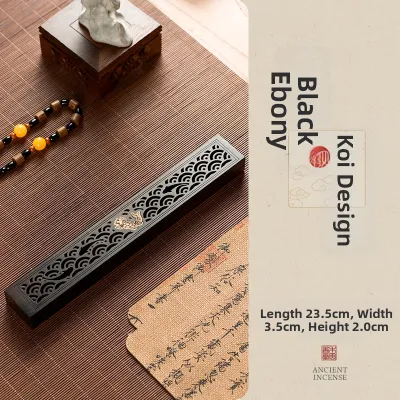
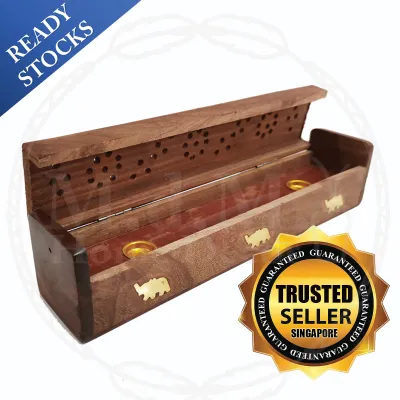
Prices are valid at publication and may change. Please refer to the product page for the latest price.
Ash containment designs vary widely to suit different aesthetic preferences and spatial limitations. The classic boat-shaped holder, often made of wood, ceramic, or metal, features a curved channel that cradles the ash. While simple and effective, these open trays are susceptible to drafts, which can blow light ash onto surrounding surfaces.
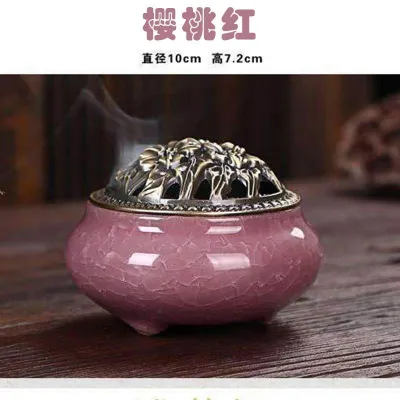
Enclosed boxes, sometimes called incense coffins or burners, offer a more controlled alternative. These designs house the burning stick horizontally on a bed of non-flammable felt or a metal grate, allowing the smoke to escape through decorative lid cutouts while keeping all ash completely contained. This style is highly practical for households with active pets, children, or mild indoor drafts.
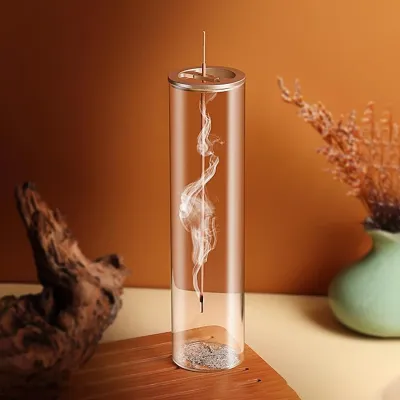
Minimalist vertical stands hold the stick upright, allowing ash to fall straight down onto a compact, circular base. While these save significant table space, they require precise vertical alignment. Any slight tilt in the stick or a minor breeze can cause the ash to miss the small base entirely, making them highly suited for calm, draft-free rooms.
When planning your space, consider the clearance required for both horizontal and vertical setups. Vertical holders need ample overhead clearance away from shelves, cabinets, and hanging decorations to prevent heat buildup and discoloration. Horizontal holders require a clear, flat surface where the long tray will not be accidentally bumped or obstructed by nearby objects.
Choosing Holders for Cone and Backflow Incense
Cone incense burns from the top down, with the burning ember growing wider as it reaches the flat base. This concentrated heat is transferred directly to the surface beneath the cone, making a highly heat-resistant holder essential. Standard cone holders must feature a thick, non-flammable base—such as ceramic, stone, or heavy metal—to prevent heat damage to your furniture.

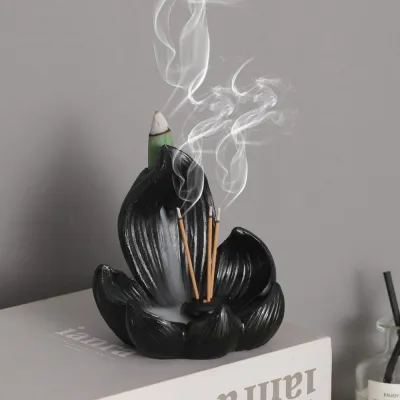
Backflow incense cones require a specialized holder design to achieve their signature cascading smoke effect. These cones have a hollow center and a hole at the bottom, which forces the cooled, dense smoke downward rather than upward. The holder must feature a matching hole or channel directly beneath where the cone sits, allowing the downward smoke to flow smoothly into the designed pathways.
The pathways in backflow burners are often sculpted as tiered steps, winding streams, or recessed basins. When selecting a backflow holder, inspect the alignment of the cone platform and the smoke channels. If the platform is uneven or the channel is obstructed, the smoke will disperse into the air like standard incense rather than pooling in the lower chambers.
A major consideration for both standard and backflow cones is the residue left behind after burning. Because cones contain a higher concentration of aromatic oils and binding agents, they produce a sticky, yellowish resin that settles on the holder. This residue has a strong, sometimes unpleasant burnt odor and can stain porous materials if not cleaned regularly.
Choose a holder with a smooth, glazed ceramic or polished metal surface that does not absorb these oils. Avoid unglazed clay, soft stones, or unfinished wood for cone incense, as these materials will permanently absorb the resin, making them difficult to clean and prone to holding stale odors over time.
Selecting Holders for Coil Incense
Coil incense is designed for extended burn times, often lasting several hours, which requires a highly stable and secure support system. Unlike sticks or cones, coils must be suspended or supported in a way that allows air to circulate entirely around the burning edge. If any part of the burning coil touches a flat, non-breathable surface, the ember will lose oxygen and extinguish prematurely.
There are three primary support mechanisms for coil incense: hanging clips, center-post supports, and wire mesh bases. Hanging clips suspend the coil from its center, allowing it to hang freely in the air. This method is highly effective for air circulation but requires a tall burner housing to prevent the coil from swinging or touching the sides.
Center-post supports utilize a small metal or ceramic pin that inserts through the center loop of the coil, holding it horizontally above the base. This design is compact and stable, though you must ensure the coil is balanced evenly to prevent it from tilting and touching the tray. Wire mesh bases allow the coil to lay flat on a heat-resistant screen, providing excellent support for fragile or warped coils while maintaining sufficient airflow from below.
Because coil incense burns for a long duration, it produces a significantly larger volume of ash than other formats. The catchment area of the holder must be wide enough to encompass the entire diameter of the coil, with sufficient depth to contain the accumulated ash without it spilling over. A shallow tray is easily overwhelmed by a full-sized coil, leading to messy cleanups.
Clearance and height are critical safety factors when positioning a coil burner. The continuous heat generated over several hours can warm the base of the holder significantly. Ensure the holder has raised feet or is placed on an additional heat-resistant pad to protect delicate tabletops from heat discoloration or cracking.
Material, Safety, and Surface Protection
The material of your incense holder directly impacts both its durability and its safety. Ceramic, brass, cast iron, and natural stone are excellent choices because they can withstand high temperatures without warping, melting, or releasing toxic fumes. Glazed ceramic is particularly popular for its ease of cleaning and resistance to oil staining.
Decorative wood and resin holders are widely available and offer unique aesthetics, but they require careful inspection. Wood holders must feature a metal or ceramic insert where the burning incense actually makes contact with the holder. Raw wood or synthetic resin can scorch, melt, or even ignite if a hot ember falls directly onto them or if the incense burns down completely to the base.
Even with a high-quality holder, heat transfer to your furniture remains a risk. Many metal and thin ceramic holders become hot to the touch during use. To protect delicate wood, glass, or laminate surfaces, consider using a secondary catchment tray, a cork coaster, or a heat-proof silicone mat beneath your burner to act as a thermal barrier.
Safe placement within your home is the final, crucial step in incense safety. Always position your burner on a stable, level surface away from open windows, fans, or air conditioning vents, as drafts can carry hot ash onto flammable materials. Keep the burning incense well out of reach of children and pets who might bump the table or try to touch the glowing ember.
Maintain a clear safety zone around the burner, ensuring there are no hanging curtains, loose papers, or flammable decorations nearby. Never leave burning incense unattended, and always verify that the ember is completely extinguished before leaving the room or discarding the ash.
Evaluating Multi-Purpose and Universal Holders
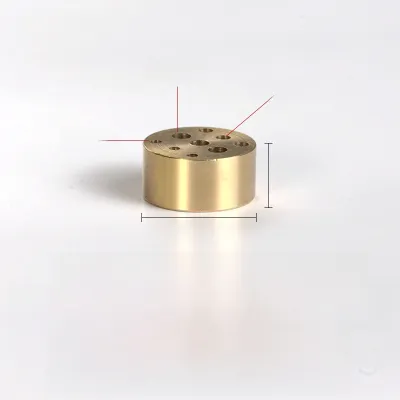
Multi-purpose or universal incense holders attempt to accommodate stick, cone, and coil formats within a single design. These often feature a wide ceramic tray equipped with a removable brass insert that has multiple holes of varying sizes, along with a flat center platform for cones. Some also include a small detachable clip or post for holding coils.
While highly versatile, universal holders come with distinct trade-offs. A tray designed to catch ash from a long, angled stick might be unnecessarily large and bulky when burning a single small cone. Conversely, a compact universal tray may struggle to contain the wide ash spread of a large coil or the drifting ash of a long stick, requiring frequent monitoring and cleaning.
Structural stability can also be compromised in multi-purpose designs. Removable inserts must fit snugly within the tray to prevent wobbling; a loose insert can cause a burning stick to tilt unexpectedly, spilling ash or creating a safety hazard. Additionally, the aesthetic of a multi-purpose holder can sometimes feel cluttered due to the various slots, holes, and attachments required to support every format.
When deciding between dedicated holders and a universal option, consider your daily routine. If you primarily burn one type of incense and only occasionally experiment with others, a dedicated holder tailored to your primary format will offer optimal performance, reliable safety, and clean visual appeal. However, if you regularly rotate between sticks, cones, and coils, a high-quality, stable universal tray with a wide base is a practical, space-saving solution.
Frequently Asked Questions (FAQ)
How do I clean sticky residue from backflow cone holders?
The sticky, yellowish residue left by backflow cones consists of concentrated oils and resins. To clean ceramic or metal holders, soak the burner in warm, soapy water for several minutes to loosen the buildup. For stubborn spots, use a soft-bristled brush or a cloth dipped in isopropyl alcohol, which effectively breaks down the oily resins without scratching the surface. Avoid using harsh abrasive pads or metal scrapers, as these can damage decorative glazes or polished finishes. Always dry the holder completely before using it again.
Can I burn cone incense in a standard stick holder?
Burning a cone in a standard stick holder is generally not recommended unless the holder has a wide, flat, and highly heat-resistant base. Many stick holders, such as thin wooden boat trays, do not offer sufficient heat protection for the intense, concentrated heat generated at the base of a burning cone. If the stick holder is made of thick ceramic or metal and has a flat section large enough to safely support the cone, it may be used temporarily. However, ensure the cone is completely stable and cannot tip over, as standard stick trays lack the raised edges needed to contain a rolling cone.

Community discussion
Share your experience or ask a question. Comments are reviewed before publication.