
Selecting the right shrine cabinet size for your Singapore home is a balancing act between spiritual reverence and spatial reality. In a typical HDB flat or condominium, floor area is at a premium, making precise measurements essential before purchasing any religious furniture. To find the ideal dimensions, you must evaluate both the external footprint of the cabinet within your room layout and the internal volume required to accommodate your deities, ancestral tablets, and daily offerings safely.
By taking a systematic approach to measuring clearances, understanding the structural limitations of your walls, and planning for daily worship rituals, you can select a shrine cabinet that fits seamlessly into your living space. This guide outlines the essential spatial calculations, size classifications, and safety considerations required to make an informed decision for your apartment.
Assessing Your Apartment Space: Measurements and Clearances
Before browsing designs, you must establish the physical boundaries of the intended installation area. Begin by measuring the floor footprint, specifically the maximum width and depth available. To maintain a comfortable and safe living environment, ensure that the cabinet does not encroach on major thoroughfares. A standard rule of thumb is to preserve a walkway clearance of 60 to 80 cm in front of and around the cabinet. This clearance allows family members to walk past comfortably without risk of bumping into the structure or disturbing active incense burners.
Products mentioned in this guide
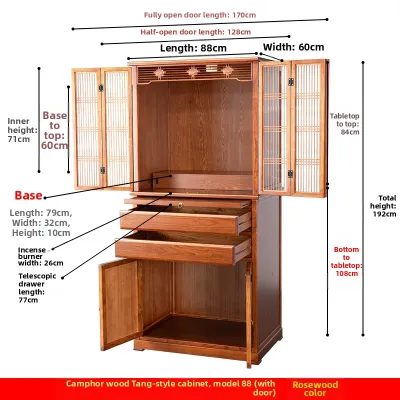
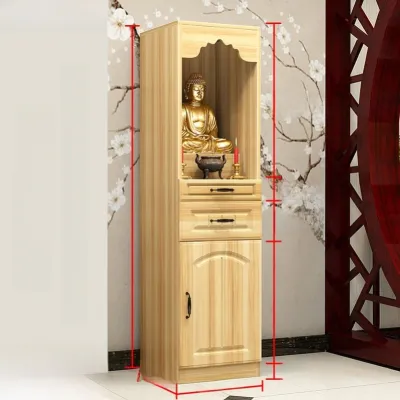
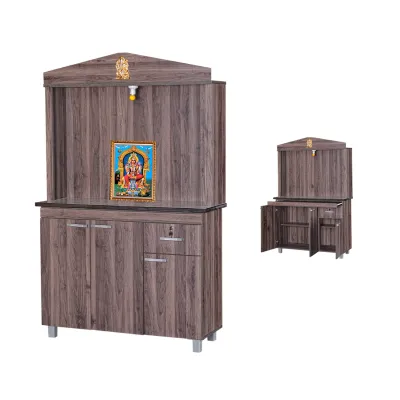
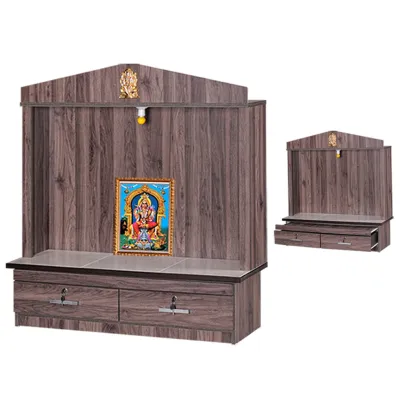
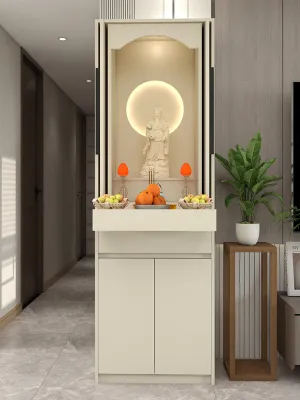
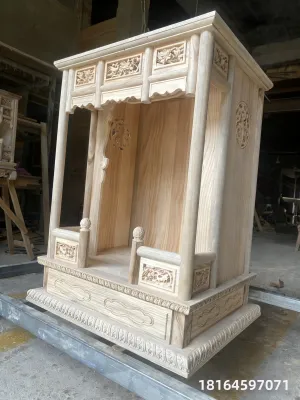
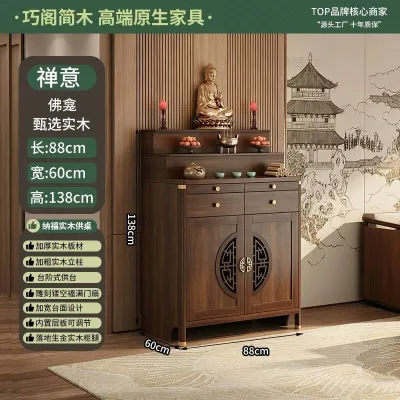
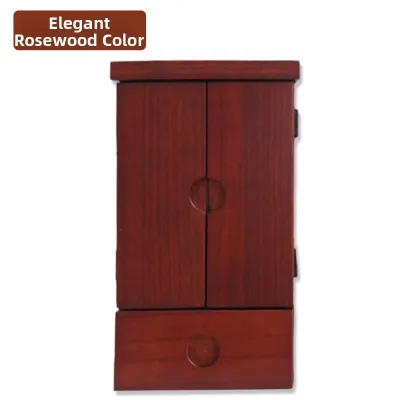
Prices are valid at publication and may change. Please refer to the product page for the latest price.
Vertical constraints require careful inspection, as Singapore apartments feature unique architectural elements. Measure the height from the floor to the ceiling, but do not assume this measurement is uniform across the room. Check for low-hanging structural beams, false ceilings, exposed air-conditioning trunking, and fire sprinkler heads (which are standard in newer condominium developments). The shrine cabinet must sit clear of these features to prevent physical obstruction and to comply with safety clearances.
Logistics and delivery paths are frequently overlooked when purchasing large furniture. Measure the dimensions of your apartment’s main door frame, internal doorways, and the building’s passenger or service elevator. Many traditional shrine cabinets are delivered fully assembled as solid-wood units; if the cabinet’s height or depth exceeds the elevator door clearance (typically around 2.0 to 2.1 meters) or the turning radius of your entryway, delivery may be impossible without costly crane services or custom disassembly.
Finally, identify the wall type where the cabinet will stand or hang. If you are considering a wall-mounted shelf or a tall, top-heavy cabinet that requires anchoring, you must verify whether the wall is solid concrete or a drywall partition. Structural concrete walls provide excellent support for heavy loads. Conversely, hollow drywall or lightweight partition walls common in newer HDB layouts cannot support significant weight without specialized heavy-duty toggle bolts or direct anchoring into the internal metal studs.
Matching Shrine Cabinet Sizes to HDB and Condo Layouts
Shrine cabinets are available in several standard size categories designed to match the diverse layouts of Singaporean apartments. Selecting the right category depends on your available floor area and the specific room layout.

Compact and Wall-Mounted Shrines for Tight Spaces
Compact cabinets and wall-mounted shelves are highly suited for space-constrained environments, such as studio apartments, study rooms, or multi-purpose living areas. These units typically feature an external width of under 60 cm and a shallow depth of 30 to 35 cm. They can be placed on top of existing console tables or mounted directly to the wall to preserve floor space.
When opting for a wall-mounted shrine, strict adherence to structural safety is paramount. Follow the manufacturer’s installation instructions precisely and ensure the unit is anchored securely. Because these shelves hold heavy items like ceramic deity statues, brass incense burners, and metal oil lamps, they must be mounted onto solid concrete walls. If you must mount a shrine to a drywall partition, consult a qualified contractor to reinforce the wall cavity or locate the structural studs, as standard plasterboard will fail under a suspended load.
Console and Mid-Sized Cabinets for Standard Living Areas
Mid-sized shrine cabinets are the most common choice for standard 3-room, 4-room, and 5-room HDB flats. These units generally range from 60 cm to 120 cm in width, with a standard depth of 40 to 50 cm. They are designed to stand on the floor, often integrating lower storage cupboards for prayer books, spare incense, and ritual accessories.
When positioning a mid-sized cabinet in a dining room or a dedicated corner of the living room, pay close attention to depth. A cabinet that protrudes beyond 50 cm can easily block adjacent furniture, such as dining chairs or television consoles. Ensure that the cabinet doors can swing open fully without striking nearby objects, and verify that the pull-out offering drawer—a common feature in mid-sized designs—has ample space to extend fully during prayer times.
Full-Height and Floor-Standing Shrines for Dedicated Rooms
For spacious executive apartments, jumbo flats, or larger condominium units with dedicated prayer rooms, full-height floor-standing cabinets are a popular option. These grand units often measure over 120 cm in width and can stand anywhere from 180 cm to over 210 cm tall. They provide a highly formal, traditional aesthetic and ample space for multiple deities or ancestral tablets.
Before purchasing a full-height solid-wood cabinet, consider the structural floor load. Hardwoods like teak or rosewood are exceptionally heavy; a large, fully laden cabinet can weigh well over 100 kg. While standard HDB floor loads are designed to support up to 150 kg per square meter, placing extremely heavy custom stone or solid-timber shrines close to load-bearing walls or columns is a prudent practice. Additionally, these large units require careful visual planning to ensure they do not make a standard living space feel dark or visually cramped.
Sizing for Worship Needs: Internal Dimensions and Ventilation
While external dimensions dictate how the cabinet fits your room, internal dimensions determine how well it serves your spiritual practices. A common mistake is buying a cabinet based solely on its outer footprint, only to find the internal compartments are too tight for comfortable worship.
First, measure your largest deity statue or ancestral tablet. Record the height, width, and depth of the figures, including any detachable halos, crowns, or decorative backdrops. The internal compartment must offer comfortable clearance; as a respectful guideline, aim for at least 10 to 15 cm of empty space above the highest point of the deity’s crown. This prevents the compartment from looking cramped and makes cleaning the interior easier.
Second, calculate the shelf depth required for your daily offerings. The internal shelf must safely accommodate your primary incense burner, oil lamps, water cups, and fruit plates. None of these items should overhang the edge of the shelf, as this poses a severe tipping hazard. If you perform larger prayer rituals during festive periods, look for cabinets equipped with a built-in slide-out offering tray, which temporarily extends your working depth by 20 to 30 cm without permanently consuming floor space.
Third, plan for adequate ventilation. The burning of incense, joss paper, and oil lamps generates heat, soot, and smoke. Enclosed cabinets must feature open-back designs, louvered doors, or dedicated ventilation slots near the top to prevent heat buildup. Trapped heat can discolor the cabinet’s wood finish, melt wax offerings, and create a fire hazard. If your cabinet features built-in electrical components, ensure the wiring is routed safely away from direct heat sources.
Installation Safety and Common Sizing Mistakes to Avoid
Setting up a shrine cabinet involves open flames, high heat, and heavy structures, making physical safety a primary concern during the installation process.
Fire Safety and Clearances
- Maintain a minimum vertical clearance of 30 to 45 cm between the top of an active incense burner or candle flame and the underside of any wooden shelf or ceiling panel.
- Keep the shrine setup away from window curtains, blinds, and air-conditioning vents, as sudden drafts can blow ashes onto flammable materials or fan small flames.
- Consider lining the inner shelves with heat-resistant materials, such as tempered glass or specialized metal sheets, to protect the wood from heat damage and dripping wax.
Electrical and Lighting Safety
- If your shrine cabinet features integrated LED lighting, verify the electrical specifications. Ensure the voltage matches Singapore's standard 230V system and that the LED driver or power adapter carries the Enterprise Singapore Safety Mark.
- For fixed electrical wiring or custom light installations, always isolate the power at the main distribution board before beginning work, and hire a licensed electrical worker (LEW) to complete the connections.
- Avoid pinching power cords behind the cabinet; leave a gap of at least 2 to 3 cm between the back of the cabinet and the wall to allow for cord clearance and heat dissipation from power adapters.
Structural Anchoring
- Heavy, top-heavy, or tall floor-standing cabinets must be anchored to the wall using heavy-duty L-brackets or anti-tip straps. This is a critical safety measure in households with young children, elderly family members, or pets who might accidentally pull or lean on the cabinet.
- Always check the manufacturer's maximum weight limits for both wall-mounted shelves and internal glass shelves before placing heavy brass or stone statues.
Common Sizing Mistakes to Avoid
- Ignoring Door Swing Radii: Buying a cabinet that fits perfectly on the floor but has doors that block a hallway or hit nearby dining chairs when opened.
- Neglecting the Baseboard Gap: Forgetting that wall baseboards (skirting boards) prevent a cabinet from flushing completely against the wall, which can add 1 to 2 cm to the overall depth requirement.
- Inadequate Vertical Clearance for Incense: Purchasing a low-clearance shelf that forces you to use shorter incense sticks, leading to smoke damage on the cabinet ceiling.
Frequently Asked Questions (FAQ)
Can I place a shrine cabinet facing the main door in an HDB?
Yes, placing a shrine cabinet facing the main door is a common practice in Singapore, but you must ensure the cabinet’s size does not block the entryway. The cabinet must not obstruct the door’s full 90-degree swing or reduce the internal corridor space. Additionally, ensure the placement does not violate Singapore Civil Defence Force (SCDF) fire safety guidelines, which require common escape paths outside your unit to remain completely clear of personal belongings and furniture.
How much clearance is needed above a shrine cabinet?
For floor-standing cabinets that do not reach the ceiling, maintain a clear gap of at least 30 cm from the top of the cabinet to the ceiling. This space allows for proper heat and smoke dissipation when burning incense and prevents soot from staining your ceiling. Avoid placing the cabinet directly under active air-conditioning units, low structural concrete beams, or ceiling fans, as the resulting drafts can scatter ash and pose a fire hazard.
Community discussion
Share your experience or ask a question. Comments are reviewed before publication.