
Choosing a wall-mounted altar shelf requires a careful balance of spiritual tradition, spatial planning, and structural engineering. To ensure your sacred space is both respectful and structurally secure, you must select a shelf that matches the physical footprint of your deities and offerings while verifying that your wall and mounting hardware can support the combined weight. A safe installation relies on calculating the total load of your statues, incense burners, and daily offerings, and adding a generous safety margin to prevent structural failure.
In Singapore’s diverse housing landscapes, from high-rise apartments to landed homes, understanding your wall construction is the single most critical factor before drilling. Whether you are setting up a traditional family altar or a minimalist modern shrine, taking precise measurements and selecting the correct heavy-duty fasteners will keep your sacred items safe. By planning for proper clearances and environmental factors, you can create a serene, beautiful, and secure focal point in your home.
Assess Your Space and Determine Shelf Dimensions
Before purchasing an altar wall shelf, you must measure your designated wall space with high precision. Use a steel measuring tape to determine the maximum width and height available on the wall, keeping a close eye on nearby obstacles. Ensure the shelf will not interfere with door frames, window openings, high-traffic walkways, or existing furniture. In compact living spaces, a shelf that projects too far into a room can become a safety hazard, leading to accidental bumps that might destabilize the sacred items placed upon it.
Products mentioned in this guide
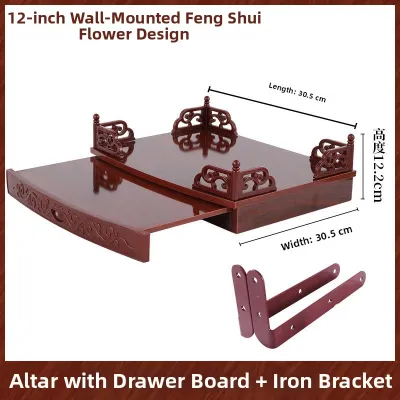
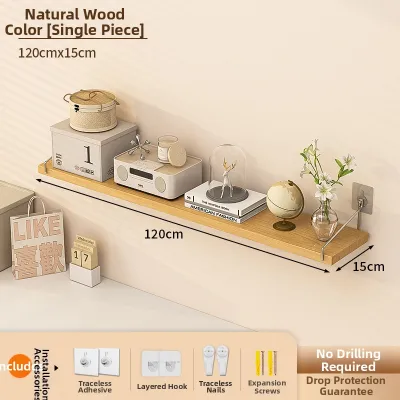
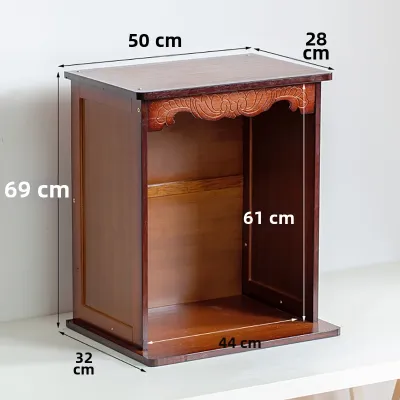
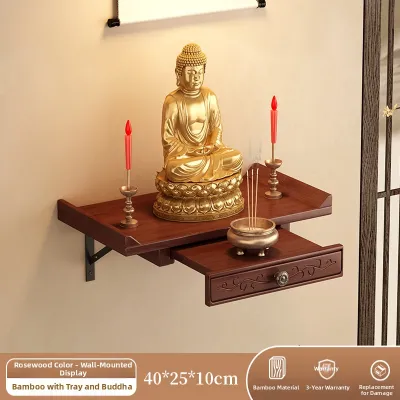
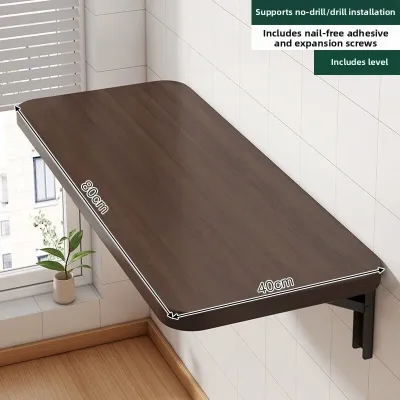
Prices are valid at publication and may change. Please refer to the product page for the latest price.
To determine the minimum required length and depth of the shelf, you must measure the physical footprint of every item you plan to place on it. Do not rely on visual estimates; physically arrange your primary statues, ancestral tablets, incense burners, oil lamps, and offering cups on a flat surface like a table. Measure the absolute outer edges of this arrangement to find the minimum surface area your shelf must provide. Remember that the base of a statue or the feet of an incense burner often require more depth than their upper sections.
Visual and physical clearance around your sacred items is essential for both aesthetic harmony and practical safety. A crowded altar looks cluttered and makes daily rituals difficult to perform. Allow a buffer of at least 5 to 10 centimeters between each item so you can easily reach in to light incense, refill water cups, or clean the surface without knocking neighboring objects over. Additionally, ensure there is adequate clearance on the left and right sides of the shelf to maintain a balanced, respectful presentation.
When evaluating shelf depth, pay close attention to the center of gravity of your heaviest items. For maximum stability, the center of mass of heavy statues must rest fully on the shelf, preferably centered over the mounting brackets or slightly toward the back wall. If a shelf is too shallow, a statue may sit dangerously close to the front edge. This front-heavy distribution creates a lever effect, multiplying the pull-out force exerted on the wall anchors and significantly increasing the risk of the shelf pulling away from the wall over time.
Calculate the Total Load and Required Weight Capacity
To establish a safe load-bearing target, you must calculate the exact cumulative weight of everything that will sit on the altar wall shelf. Create a detailed inventory of all items and weigh them if possible. Statues vary dramatically in weight based on their construction materials; for example, a 30-centimeter statue made of solid brass, bronze, marble, or dense tropical hardwood will be significantly heavier than a hollow ceramic, resin, or plaster equivalent. Never guess the weight of stone or metal items, as their density often surprises homeowners.

Do not forget to account for secondary ritual accessories, which can add substantial weight to the overall setup. Incense burners made of thick ceramic or brass are heavy on their own, and when filled with dense incense ash or sand, their weight can easily double. Water offering cups, oil lamps filled with liquid fuel, flower vases filled with water, and plates of fresh fruit or food offerings must all be factored into your calculations. Remember that one liter of water adds exactly one kilogram of dead weight to your shelf.
Once you have calculated the static weight of your items, you must apply a safety margin to determine the required weight capacity of your shelf and hardware. It is highly recommended to choose a shelf assembly rated for at least 1.5 to 2 times your calculated static weight. This safety buffer accounts for dynamic loads—the temporary downward forces applied when you wipe down the shelf during cleaning, polish the statues, or place heavy festive decorations and larger food offerings during major holidays.
Underestimating the weight of small but dense objects is a common cause of wall shelf sagging and failure. Items like solid brass oil lamps, heavy glass candle holders, or thick porcelain urns exert highly concentrated pressure on specific points of the shelf. If your shelf material is prone to flexing, these concentrated loads can cause bowing, which shifts the balance of your statues and creates an unstable surface. Always design your setup around the heaviest possible configuration you might use throughout the year.
Match the Shelf and Hardware to Your Wall Type
Identifying Solid vs. Hollow Wall Structures
To ensure a secure installation, you must identify the structural composition of the wall where you plan to mount the altar. In Singapore, residential walls generally fall into two categories: solid walls and hollow partition walls. Solid walls, which include reinforced concrete structural walls and solid clay brick walls common in older HDB flats and landed properties, offer exceptional load-bearing capacity. Hollow walls, such as drywall, gypsum board partitions, or hollow concrete block walls, are frequently used to divide rooms in modern renovations and have strict weight limitations.
You can identify your wall type by performing a simple tap test or using a digital stud finder. Tapping a solid concrete or brick wall produces a dull, flat thud, whereas tapping a drywall partition yields a hollow, echoing sound. Heavy altar shelves holding dense stone or metal statues should only be mounted directly onto solid, load-bearing walls. The sheer weight of these setups can easily tear through plasterboard if not properly supported.
If your only available location is a hollow drywall partition, you must take specialized structural precautions. Standard drywall cannot support a heavy cantilevered load without internal reinforcement. In this scenario, you must either relocate the altar to a solid wall or engage a qualified contractor to install structural timber or metal backing behind the drywall before mounting the shelf. This backing transfers the weight of the shelf directly to the wall’s internal framing studs rather than relying on the fragile gypsum board.
Selecting Heavy-Duty Brackets and Anchors
The physical shelf material must be paired with heavy-duty brackets that are specifically rated for your calculated total load. Solid hardwoods like teak, oak, or mahogany are highly durable but inherently heavy, meaning the brackets must support the weight of the shelf itself in addition to your ritual items. Steel L-brackets offer the strongest vertical support, while concealed floating shelf brackets provide a clean, modern aesthetic but require a thick shelf and highly precise drilling. Ensure any bracket you choose has a certified load rating that matches or exceeds your safety-adjusted target.
Using the correct wall anchors is critical to preventing catastrophic structural failure. For solid concrete or brick walls, you must use metal expansion bolts (often called dynabolts) or heavy-duty masonry screws that grip the concrete securely. Never use standard plastic wall plugs (rawlplugs) for heavy or medium-heavy altar setups; these plastic sleeves can easily deform and slip out of concrete holes under sustained shear and tension. For hollow walls, specialized toggle bolts or heavy-duty steel hollow-wall anchors must be used, provided the load remains within safe limits.
If you are unsure about your wall’s material, do not know the correct drill bit size to use, or cannot verify the load rating of your mounting hardware, you must stop immediately. Working at height or drilling into tough reinforced concrete requires specialized tools, such as a rotary hammer drill, and precise execution. To guarantee the structural integrity of your altar and prevent dangerous collapses, hire a qualified professional handyman or structural contractor to perform the installation.
Plan for Safety Clearances and Environmental Factors
Your altar’s height and physical placement must accommodate essential safety clearances to prevent fire hazards and structural damage. Burning incense, oil lamps, and candles generate significant rising heat, smoke, and soot. You must maintain a generous vertical clearance of at least 60 to 90 centimeters between the top of any open flame or incense burner and the ceiling, overhead wooden beams, or upper cabinets. This prevents the accumulation of flammable soot and eliminates the risk of heat warping or igniting overhead structures.
Environmental factors play a major role in preserving the beauty and structural integrity of both your shelf and your sacred items. Avoid mounting your altar directly beneath or opposite an air-conditioning vent. The strong drafts from an air conditioner can blow incense ash onto your floor, cause candle flames to flicker erratically, or prematurely extinguish oil lamps. Furthermore, rapid temperature fluctuations and direct, harsh sunlight can cause solid wood shelves to warp, split, or fade, and may damage the paint or lacquer on your statues.
Electrical safety is another critical boundary when designing your altar wall shelf. If your setup includes built-in LED lighting, electric candles, or plug-in lamps, ensure all power adapters carry recognized safety certifications, such as the Enterprise Singapore SAFETY Mark. Plan the shelf size and cord routing so that electrical cables are kept far away from open flames, hot incense burners, and water vessels. Before drilling any holes into your wall, use a digital wall scanner to check for concealed electrical conduits or water pipes to avoid costly and dangerous utility punctures.
Common Sizing and Installation Mistakes to Avoid
One of the most frequent mistakes homeowners make is choosing an altar shelf based solely on the height of their main statue while completely ignoring the depth required for other essential items. A shelf might comfortably accommodate a tall deity, but if it lacks the depth to hold the incense burner, oil lamps, and daily offering cups in front of the statue, the setup will be dangerously crowded. This error often forces homeowners to place heavy items precariously close to the shelf’s edge, risking a fall.
Another critical error is failing to factor in the self-weight of the altar shelf itself. A beautiful, thick slab of solid teak or marble is heavy on its own, sometimes weighing between 5 to 10 kilograms before any religious items are added. Your wall anchors and brackets must support the combined weight of the shelf material, the mounting hardware, and the deities. Always add the weight of the empty shelf to your load calculations to ensure your wall anchors are not operating at their absolute limit.
Mounting the altar shelf at an impractical height is a mistake that compromises both safety and daily comfort. If the shelf is mounted too high, daily tasks like refilling water cups, lighting incense, and wiping down the shelf become physically awkward and unsafe, increasing the risk of spilling hot oil or dropping heavy items. Conversely, mounting the shelf too low makes it vulnerable to accidental bumps from family members, vacuum cleaners, or pets. Aim for a height where the main deities sit slightly above eye level when you are standing, allowing for comfortable, safe reach.
Finally, never allow aesthetic preferences to override structural safety limits. While a minimalist, floating wooden shelf with no visible brackets might look elegant, it may not possess the structural capacity to safely hold heavy brass statues and stone incense burners. Never rely on standard drywall anchors to hold a sacred altar setup on a partition wall. Prioritizing robust, visible heavy-duty brackets and securing them into solid concrete will ensure your altar remains a safe, permanent, and respectful sanctuary in your home.
Community discussion
Share your experience or ask a question. Comments are reviewed before publication.