
Quick Answer: How to Compare 5W Downlights Without Lab Tests
When comparing popular 5W LED downlight brands, you cannot rely on wattage alone to determine brightness or build quality. Wattage simply measures electrical power consumption, not the actual light output or the durability of the fixture. To compare brands effectively without independent laboratory testing, you must evaluate standardized specification labels, inspect physical build indicators, and verify local safety certifications.
A systematic comparison requires checking the lumen output (which indicates true brightness) and the Color Rendering Index (CRI) on the product packaging. Additionally, inspecting the housing materials—such as choosing die-cast aluminum over cheap plastics—and verifying the presence of recognized safety marks will ensure you select a reliable, high-performing fixture. By focusing on these verifiable specifications, you can confidently choose the best downlights for your specific home environment.
How to Evaluate Brightness and Light Quality Specifications
To understand the true performance of a 5W LED light, you must look beyond the wattage and examine the luminous efficacy. Luminous efficacy is measured in lumens per watt (lm/W) and indicates how efficiently the fixture converts electricity into visible light. A high-quality 5W downlight might produce 450 lumens (90 lm/W), whereas a less efficient model of the same wattage might only produce 300 lumens (60 lm/W). Always locate the total lumen rating on the technical specification sheet to compare the actual brightness of different brands.
Products mentioned in this guide
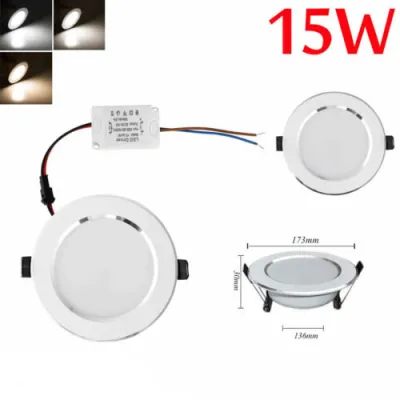
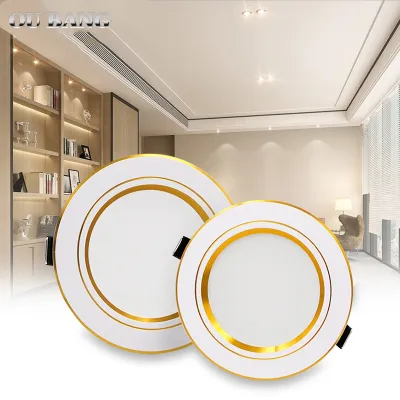
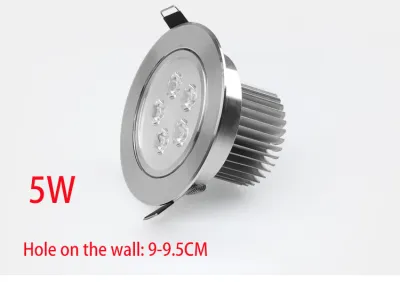
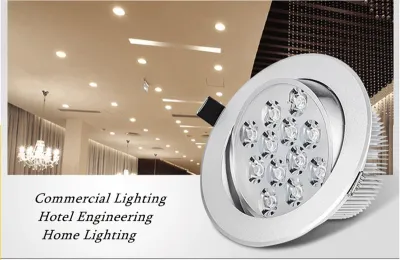
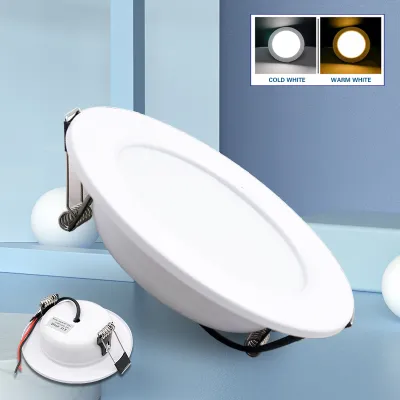
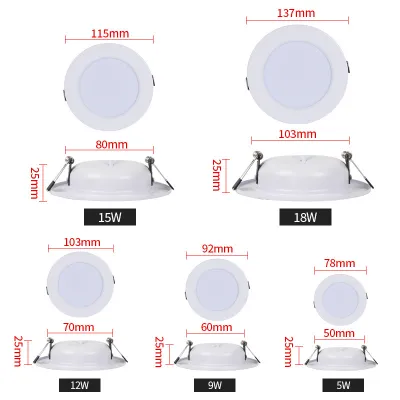
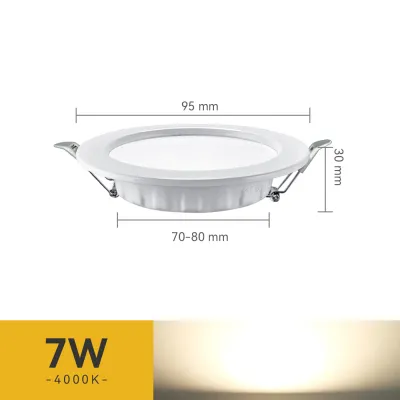
Prices are valid at publication and may change. Please refer to the product page for the latest price.

Color rendering is another critical aspect of light quality that directly impacts how colors appear in your home. The Color Rendering Index (CRI, or Ra) measures a light source’s ability to reveal the true colors of objects compared to natural daylight. For living rooms, dining areas, and dressing spaces where visual accuracy is important, look for downlights with a CRI of 90 or higher. For general transition areas like corridors, stairwells, or utility rooms, a CRI of 80 is generally acceptable, but lower values can make spaces look dull and unnatural.
Color temperature, measured in Kelvin (K), determines the warmth or coolness of the light and should match the room’s function. Warm white (2700K to 3000K) creates a cozy, inviting atmosphere suitable for bedrooms and living areas. Neutral white (4000K) offers a clean, balanced light ideal for kitchens and study rooms, while cool white (6000K to 6500K) provides high-contrast illumination for task-oriented spaces. Avoid mixing different color temperatures within the same room to maintain visual consistency.
Finally, analyze the beam angle specification to ensure proper light distribution across your space. A narrow beam angle (15 to 36 degrees) concentrates light in a specific spot, making it excellent for accent lighting or highlighting artwork. A wide beam angle (60 to 120 degrees) distributes light broadly, which is preferred for general ambient illumination in residential spaces. Consider your ceiling height when choosing beam angles; higher ceilings typically require narrower beams to project sufficient light down to the floor level.
Assessing Build Quality and Heat Management Features
Heat is the primary factor affecting the lifespan and performance of LED downlights. While LEDs run cooler than traditional halogen bulbs, they still generate significant internal heat that must be dissipated. High-quality 5W downlights feature robust heat sinks made from die-cast or extruded aluminum, which conducts heat away from the LED chips efficiently. In contrast, cheaper models often use plastic or thin polycarbonate housings that trap heat, leading to rapid brightness decay and premature component failure.
When comparing brands, look closely at the physical design of the heat sink. Effective thermal management is often visible in the form of cooling fins or open-air channels on the back of the fixture, which maximize the surface area available for cooling. If a product description or image shows a completely smooth, sealed plastic back, the heat dissipation capacity is likely limited. A heavier physical weight is also a reliable indicator of a substantial metal heat sink inside the fixture.
The environment where you install the downlights dictates the required Ingress Protection (IP) rating. Standard dry areas like bedrooms and living rooms are perfectly suited for IP20-rated fixtures, which protect against solid objects but not moisture. However, for high-humidity zones such as bathrooms, kitchens, or covered outdoor balconies, you must select downlights with at least an IP44 (splash-proof) or IP65 (water-resistant) rating. This prevents steam, condensation, and water splashes from penetrating the housing and causing electrical faults.
The quality of the front lens and diffuser also plays a major role in long-term satisfaction. Cheap plastic diffusers can degrade and turn yellow over time due to heat and UV exposure, which reduces light transmission and alters the color temperature. High-quality fixtures utilize PMMA (acrylic) or frosted glass diffusers that resist yellowing, minimize glare, and distribute light evenly across the room. Check the manufacturer’s material specifications to verify the diffuser type before purchasing.
Verifying Electrical Safety and Ceiling Compatibility in Singapore
When purchasing electrical fixtures in Singapore, verifying compliance with local safety standards is paramount. Certain electrical components, such as the external LED drivers supplied with downlights, are classified as controlled goods and must carry the Enterprise Singapore Safety Mark. This mark, accompanied by a unique registration number, certifies that the device has been tested and approved for safe use in local households. Avoid purchasing unbranded or direct-import fixtures that lack this certification, as they may pose fire or shock hazards.
Understanding the electrical configuration of your downlights is essential for a safe and successful installation. A 5W LED downlight can operate directly on mains voltage (230V AC) if it has an integrated driver, or it may require an external low-voltage driver. If you are replacing older low-voltage halogen fixtures, you cannot simply plug a new LED downlight into the old halogen transformer. You must replace the old transformer with a compatible LED driver that matches the voltage and current requirements of the new fixture.
Physical compatibility with your ceiling structure requires precise measurement of the cut-out size. Downlights are installed by inserting them into pre-cut holes in plasterboard or false ceilings, and these holes must match the fixture’s specified cut-out diameter (typically ranging from 70mm to 90mm). Measuring the outer trim of your existing light is not enough; you must measure the actual hole in the ceiling. Additionally, ensure there is sufficient recess depth in the ceiling void to accommodate the height of the downlight and allow for proper air circulation around the heat sink.
If you plan to adjust the light levels in your home, you must verify dimmer compatibility. Not all 5W LED downlights are dimmable, and using a non-dimmable fixture on a dimmer switch can cause severe flickering, buzzing, or permanent damage to the driver. Check the product specifications to ensure both the LED light engine and the driver are explicitly labeled as dimmable. Furthermore, confirm whether they require specific dimming technologies, such as trailing-edge (electronic) or leading-edge (triac) dimmers, to match your existing wall switches.
For all installation and maintenance tasks, safety must be your top priority. Before attempting to replace, wire, or inspect any ceiling fixtures, always isolate the mains power at the main distribution board. Working at heights, handling fixed electrical wiring, or installing fixtures in damp areas carry inherent risks. If you are unfamiliar with electrical wiring, driver configurations, or ceiling structural modifications, always engage a licensed electrical worker or a qualified professional to complete the work safely.
Decision Framework: Choosing the Right 5W Downlight for Your Rooms
To simplify your purchasing decision, use a structured approach based on the specific requirements of each room in your home:
- Living Rooms, Bedrooms, and Dining Areas: Focus on visual comfort and atmosphere. Choose 5W downlights with a high color rendering index (CRI Ra >= 90) to make your furnishings and decor look vibrant. Opt for a warm white color temperature (2700K to 3000K) and a wide beam angle (60 to 120 degrees) to create soft, glare-free ambient lighting. Ensure the fixture features a high-quality PMMA diffuser to prevent harsh glare.
- Bathrooms, Kitchens, and Balconies: Prioritize durability and moisture resistance. Select fixtures with an IP44 or IP65 rating to withstand steam and splashes. Look for robust die-cast aluminum housings that can handle the heat and humidity of these zones. A neutral white (4000K) color temperature is highly recommended for kitchens to provide clear, clean light for food preparation.
- Corridors, Utility Rooms, and Pantries: Prioritize cost-effectiveness and utility. Standard 5W models with a CRI of 80 (CRI Ra >= 80) and a neutral or cool white color temperature (4000K to 6000K) are ideal for these transitional spaces. A basic plastic-aluminum composite housing is acceptable here, provided the fixture carries the necessary local safety certifications.
Before finalizing any purchase, always cross-reference your ceiling’s physical dimensions (cut-out size and recess depth) and your electrical setup (dimmer compatibility and driver requirements) with the product specifications to avoid costly installation errors.
Frequently Asked Questions (FAQ)
Is a 5W LED downlight bright enough for a standard bedroom?
A 5W LED downlight can be bright enough for a standard bedroom, but you must calculate the total light output required rather than relying on a single fixture. A typical bedroom requires an ambient light level of approximately 100 to 150 lux (lumens per square meter). For a bedroom measuring 10 square meters, you would need a total of 1,000 to 1,500 lumens. Since a high-quality 5W LED downlight generally produces between 350 and 450 lumens, you will need to install three to four evenly spaced fixtures to achieve uniform, comfortable illumination throughout the room.
Can I replace a higher wattage downlight with a 5W LED?
Yes, you can replace a higher wattage downlight with a 5W LED downlight, provided the physical cut-out dimensions, recess depth, and operating voltage are compatible. However, you must compare the lumen output of the old fixture with the new 5W LED to avoid a significant drop in brightness. If you are replacing older, power-hungry halogen bulbs (which often run on low-voltage transformers), you must also ensure that the existing transformer is replaced with a compatible LED driver to prevent flickering, strobing, or premature failure of the new LED light.
Do 5W LED downlights require a separate driver?
Whether a 5W LED downlight requires a separate driver depends entirely on its design. Some models feature an integrated driver built directly into the light housing, allowing them to connect directly to your home’s 230V mains wiring. Other models utilize an external driver that sits in the ceiling void next to the fixture. External drivers are highly common because they keep heat away from the delicate LED chips, extending the lifespan of the light, and they are much easier to replace individually if an electrical fault occurs. Always check the product packaging to confirm if the driver is included.
Community discussion
Share your experience or ask a question. Comments are reviewed before publication.