
When selecting a diamond painting kit in Singapore, the ideal choice depends on whether you prioritize premium, long-lasting materials or budget-friendly, casual entertainment. Specialized craft brands focus on high-resolution canvases, uniform resin drills, and legal artist licensing, creating an exceptional crafting experience. Conversely, budget kits found on general online marketplaces offer an accessible entry point for beginners but often come with irregular acrylic drills, double-sided adhesive tape, and blurry symbols.
To make an informed decision, you must evaluate kits across three primary pillars: drill consistency, canvas print clarity, and tool ergonomics. Understanding these technical differences ensures you select a kit that matches your skill level, budget, and long-term display goals.
Core Comparison Dimensions: What Makes a Premium Kit?
Evaluating a diamond painting kit goes far beyond looking at the digital product image on a screen. The true quality of a kit is defined by the physical components you will interact with over dozens of hours of meticulous placement.
Products mentioned in this guide
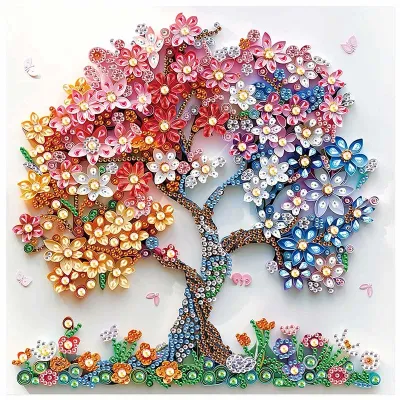
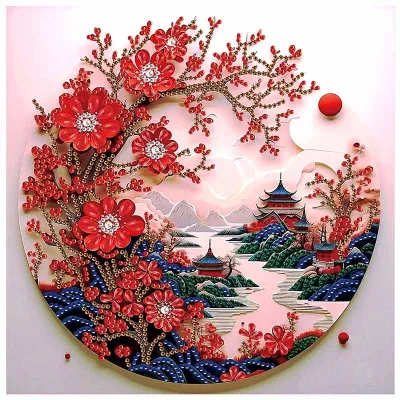

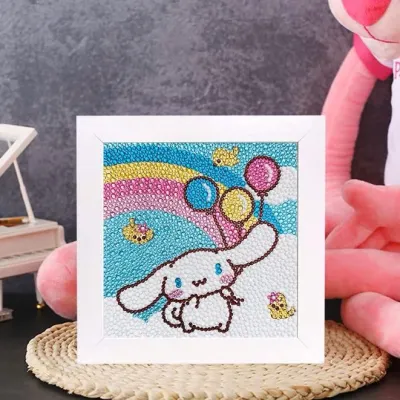
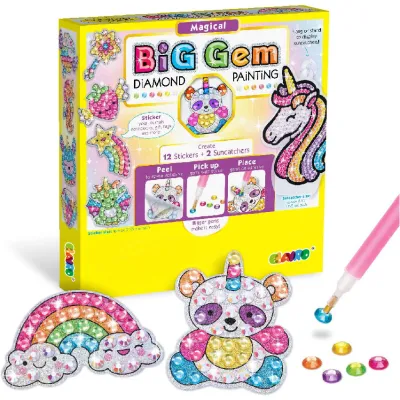
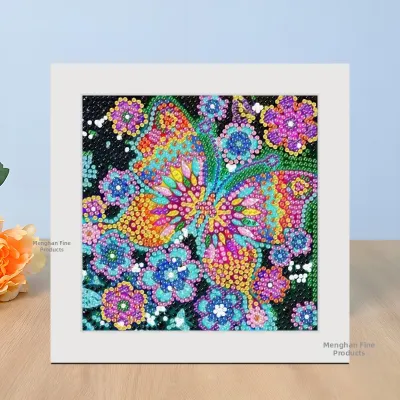
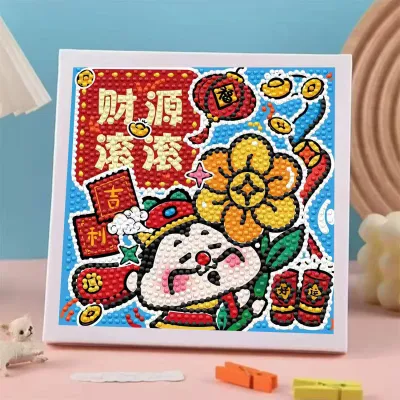
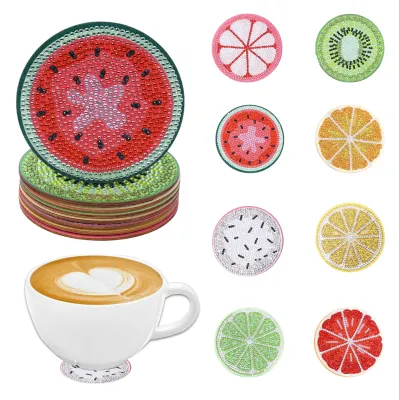
Prices are valid at publication and may change. Please refer to the product page for the latest price.
By understanding the technical specifications of drills, canvases, and adhesives, you can look past generic marketing claims and identify which brands offer genuine value for your money.
Drill Quality, Faceting, and Material
The “diamonds” or drills are the heart of any diamond painting project, directly dictating how much the finished artwork will sparkle and how smoothly the pieces fit together. Drills are primarily offered in two shapes: round and square, each presenting distinct visual and tactile characteristics. Round drills are highly forgiving, making them ideal for rapid placement, as they leave tiny gaps that show the printed canvas background. Square drills fit together flush with no gaps, creating a dense, mosaic-like finish that requires precise alignment.
Beyond shape, the manufacturing material plays a critical role in the final aesthetic. Premium brands exclusively use resin drills, which are molded under high pressure to create sharp, crisp facets that reflect light beautifully. Resin is highly durable and retains its luster for years without fading. Budget brands often opt for acrylic drills, which are cheaper to produce but tend to look dull, suffer from static electricity that makes them cling together, and frequently exhibit manufacturing defects.
When comparing brands, look closely at the “trash rate”—the percentage of deformed, concave, or fused drills in a packet. High-end brands maintain rigorous quality control, resulting in a trash rate of less than 1%, and they typically include 20% to 30% extra drills to cover any minor losses. Lower-tier brands often have trash rates exceeding 10%, forcing you to spend valuable crafting time sorting through useless plastic scraps and risking running out of essential colors before the canvas is complete.
Canvas Clarity, Print Resolution, and Adhesive
The canvas serves as the foundation of your artwork, and its construction determines both the ease of application and the longevity of the finished piece. Premium kits utilize heavy-duty, woven canvases made from polyester or cotton blends. These canvases feature a soft, fabric-like backing, lay flat almost immediately upon unboxing, and have finished, serged edges that prevent fraying. Budget kits typically use thin, stiff, non-woven plastic canvases that retain deep creases and require flattening under heavy weights for several days before you can begin working.
Print resolution is equally vital for a frustration-free experience. High-quality kits employ ultra-clear, high-definition printing where every tiny symbol is crisp, high-contrast, and easy to read. This is crucial when distinguishing between similar symbols, such as letters and numbers in the same color family. Cheap kits often suffer from blurry, pixelated printing and color bleeding, which leads to severe eye strain and alignment errors.
The adhesive layer that holds the drills in place is another major differentiator. Premium brands use poured glue, a liquid adhesive that is applied to the canvas and cured slowly under UV light. Poured glue remains highly transparent, incredibly sticky, and flexible enough to allow you to slide drills slightly into place. Budget kits often utilize double-sided tape, which is a dry adhesive sheet rolled onto the canvas. Double-sided tape is highly susceptible to lifting, creating air bubbles or “rivers” under the surface, and losing its stickiness if exposed to dust or humidity.
Accessory Completeness and Tool Ergonomics
The tools included in a kit can make the difference between a relaxing, therapeutic hobby and a physically uncomfortable chore. A standard, entry-level kit typically includes a basic pink plastic applicator pen, a small square of pink wax, and a simple green slotted sorting tray. While these basic accessories are functional for small, quick projects, they lack the comfort required for larger, multi-week canvases.
Premium brands elevate the crafting experience by providing upgraded, ergonomic accessories. These packages often feature dual-sided pens with soft foam grips, multiple-placer tips that allow you to apply three, six, or ten drills simultaneously, and high-quality stainless steel tweezers that are essential for aligning square drills. Additionally, they may include larger, sturdier sorting trays with easy-pour spouts and resealable storage baggies to keep your drills organized.
If you plan to pursue diamond painting as a long-term hobby, choosing a brand that includes high-quality tools saves you the immediate expense of purchasing third-party upgrades.
Evaluating Price and True Value for Money
Calculating the true value of a diamond painting kit requires looking beyond the initial sticker price. In Singapore, you must factor in international shipping fees, potential import taxes, and the hidden costs associated with low-quality components.

Specialized premium kits ordered from international craft stores often carry higher retail prices, ranging from S$40 to S$100, and may incur shipping fees of S$15 to S$25 to Singapore. While this initial investment is high, these kits are self-contained and require no additional purchases. They provide premium resin drills, flawless poured-glue canvases, and highly comfortable tools that can be reused for future projects.
Budget kits purchased from local online marketplaces or discount shops are highly affordable, often priced between S$5 and S$15, with cheap or free local shipping. However, these kits frequently come with hidden costs. If you receive a kit with insufficient or highly deformed drills, you may need to purchase replacement drill packets separately. Furthermore, the uncomfortable basic tools may force you to spend an extra S$10 to S$15 on an ergonomic tool set and upgraded wax.
To measure value accurately, calculate the cost relative to the canvas size and complexity. A small 20×30 cm kit is cheap but will yield a highly pixelated, blurry image because there are not enough pixels (drills) to represent fine details. A larger 40×50 cm or 50×70 cm canvas costs more but offers the resolution necessary for a stunning, detailed finished product. This larger canvas also provides significantly more hours of entertainment, lowering your overall cost per hour of recreation.
Finally, consider the value of customer support. Reputable, specialized brands offer “missing drill protection” and will ship replacement colors to Singapore free of charge if you run short. Budget marketplace sellers rarely offer this level of support, meaning a single missing color packet can ruin an entire project.
Decision Framework: Which Brand Type Should You Choose?
To help you navigate your options, we have structured a clear decision matrix based on your experience level, goals, and budget.
Choose a specialized premium brand if:
- You are an experienced crafter who wants a smooth, frustration-free experience with uniform drills.
- You intend to frame, seal, and display the completed artwork on your walls as permanent home decor.
- You prefer square drills and want a dense, gap-free mosaic finish.
- You support ethical crafting and want legally licensed artwork where the original artists are fairly compensated.
Choose a budget-friendly marketplace brand if:
- You are a complete beginner testing the hobby to see if you enjoy the repetitive, meditative process.
- You are purchasing kits for children's activities or casual, low-stakes weekend crafts.
- You prefer round drills, which are much faster and more forgiving to place.
- You are working with a strict budget and view the project as a temporary activity rather than a long-term display piece.
Neither option may fit if:
- You are looking for highly specific, localized Singaporean designs or custom personal photographs, which require specialized custom-printing services rather than pre-made brand kits.
- You require immediate, same-day pickup. Most high-quality diamond painting kits are imported or sold online, requiring a waiting period of several days to a few weeks for delivery to Singapore.
Critical Verification Steps Before Purchasing:
- Check the listing details to confirm if the kit is "full drill" (the entire canvas is covered in diamonds) or "partial drill" (only specific sections are covered, leaving the background printed).
- Look at the color count. A high-quality kit of a complex image should feature at least 30 to 50 distinct DMC colors to ensure smooth color gradients. If a complex design only uses 10 to 15 colors, the final image will look blocky and lose its depth.
Practical Tips for Buying and Storing in a Humid Climate
Singapore’s tropical climate, characterized by high relative humidity and warm temperatures, requires careful handling and storage of your diamond painting materials to prevent damage.
Upon receiving your kit, perform an immediate quality check. Unroll the canvas to inspect the adhesive layer and ensure there are no deep creases or separation of the protective cover. Cross-reference the included drill packets with the canvas legend to confirm that all DMC color codes are present and accounted for.
Humidity is the primary threat to canvas adhesives. Excess moisture in the air can cause poured glue to lose its stickiness and can cause double-sided tape to lift, bubble, or peel away from the canvas. To protect your project, always work in small, controlled sections. Only peel back or cut away the protective film over the specific area you plan to complete during that session, leaving the rest of the canvas securely covered.
Store your unfinished canvases flat in a cool, dry room—ideally one with regular air conditioning or a dehumidifier. If you must roll your canvas, always roll it with the drills facing outward. Rolling it inward compresses the drills against each other, which can cause them to pop off the adhesive.
To protect your unused drills from humidity and static, store them in airtight plastic organizer boxes. Adding a few small silica gel packets to your storage containers will absorb any ambient moisture, keeping your drills dry, free-flowing, and easy to pick up with your applicator pen.
Frequently Asked Questions (FAQ)
Are square drills better than round drills for beginners?
Round drills are highly recommended for beginners because they are circular and do not require perfect alignment. Even if you place them slightly crooked, they still look neat and sparkle beautifully. Square drills require precise placement with tweezers or alignment tools to ensure they sit flush against one another. If one square drill is slightly misaligned, it can create a crooked row that affects the rest of the canvas. However, square drills provide a fuller, gap-free mosaic finish that advanced crafters prefer.
How do I prevent the canvas adhesive from drying out before finishing?
To keep your canvas adhesive sticky, never remove the entire protective cover sheet at once. Instead, peel back only the section you are actively working on and cover it immediately when you take a break. If your kit uses opaque release paper, cut it into a grid and peel off one small square at a time. After completing a section, press down firmly on the drills using a rolling pin or a heavy book to secure the bond. Store the unfinished canvas in a sealed plastic bag to protect it from dust and humidity.
Can I use my own diamond painting tools with any brand's kit?
Yes, diamond painting tools are universally compatible across all brands. The physical dimensions of the drills—typically 2.8 mm for rounds and 2.5 mm for squares—are standardized worldwide. This means any aftermarket ergonomic pen, multi-placer tip, metal tweezer, or specialized sorting tray you purchase will work perfectly with any kit. Upgrading to high-quality, comfortable tools is an excellent, cost-effective way to enhance your crafting experience, regardless of the brand of kit you choose.
Community discussion
Share your experience or ask a question. Comments are reviewed before publication.