
Quick Answer: Evaluating E27 LED Bulb Efficiency Across Brands
When comparing E27 LED bulb brands for energy efficiency, the most reliable approach is to look beyond brand names and focus on verified technical specifications. True energy efficiency is determined by a bulb’s luminous efficacy, which is measured in lumens per watt (lm/W). Rather than relying on marketing claims or unverified “eco-friendly” badges, buyers must examine official energy labels and independent product specifications. To maximize power savings, prioritize bulbs with high lumens-per-watt ratios and recognized local or international certifications. This systematic verification ensures you select a bulb that delivers the highest light output for the lowest electrical consumption.
Core Metrics for Comparing E27 LED Bulb Efficiency
To make an informed comparison between different E27 light bulb options, you must understand the key metrics printed on product packaging. The most critical metric is luminous efficacy, expressed as lumens per watt (lm/W). This value represents the amount of visible light (lumens) a bulb produces for every watt of electricity it consumes. For example, a bulb that produces 800 lumens while drawing 8 watts has an efficacy of 100 lm/W. When comparing brands, always calculate or look for this ratio; a higher number directly translates to better energy efficiency and lower electricity bills.

Another common point of confusion is the comparison between actual wattage and incandescent equivalents. Many manufacturers prominently display labels like “60W replacement” or “equivalent to 75W” on their packaging. These terms are legacy marketing shorthand designed to help consumers transition from older, inefficient lighting technologies. They do not represent the actual power consumption of the LED bulb. When evaluating efficiency, ignore the equivalent wattage and focus solely on the actual rated wattage of the LED. A lower actual wattage for the same lumen output is always the more efficient choice.
Products mentioned in this guide
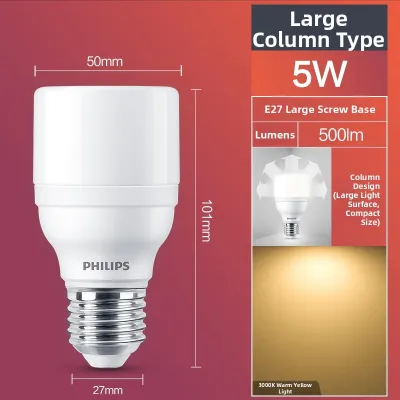
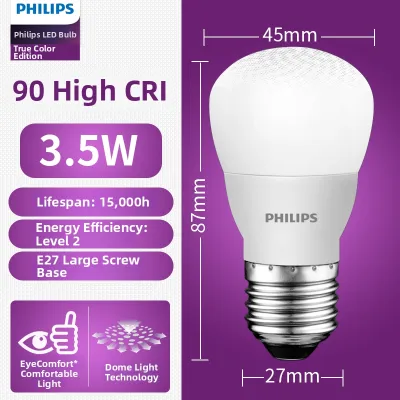
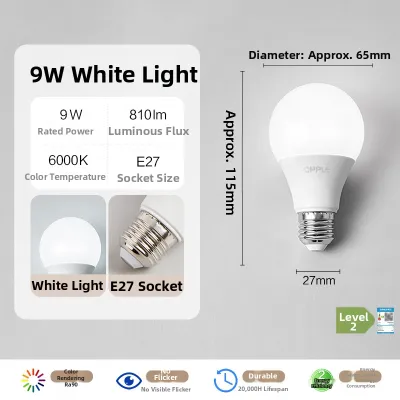
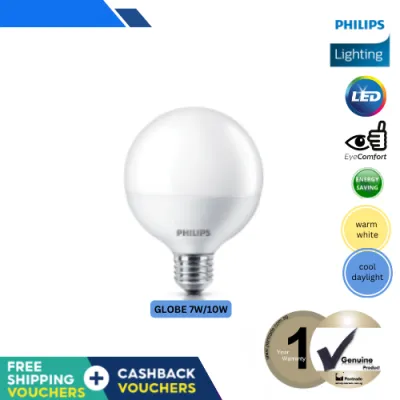
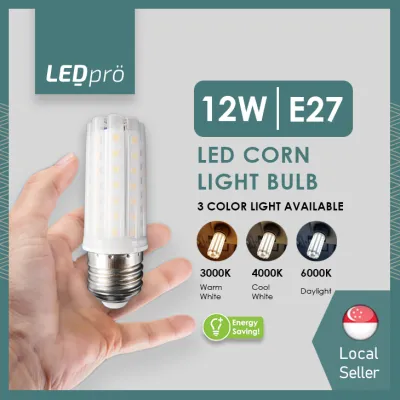
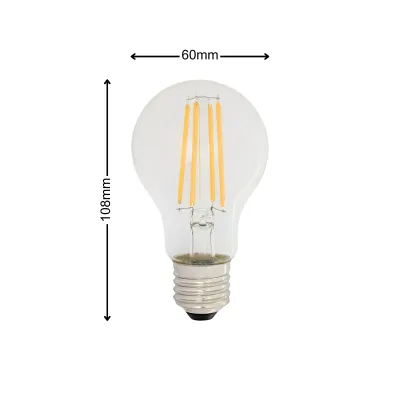
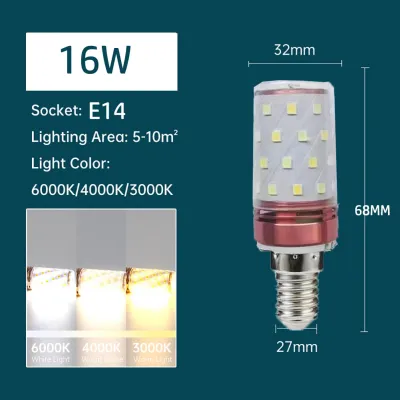
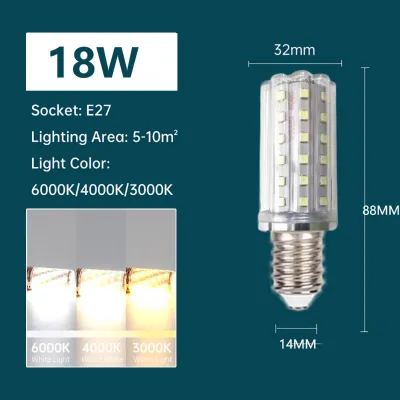
Prices are valid at publication and may change. Please refer to the product page for the latest price.
Power Factor (PF) is a third, often overlooked metric that indicates how effectively a bulb uses electricity. Power Factor is expressed as a decimal between 0 and 1. A higher Power Factor, such as 0.7 or 0.9, means the bulb’s internal driver draws current in a highly synchronized manner with the mains voltage, minimizing electrical waste within your home’s wiring. While a high Power Factor does not directly reduce the active power billed to residential consumers, it is a strong indicator of high-quality internal components and overall circuit efficiency.
Navigating Energy Labels and Certifications
In Singapore, consumers can rely on standardized regulatory frameworks to verify the efficiency claims of different E27 light bulb brands. The Singapore Energy Label, administered by the National Environment Agency (NEA), is a highly visible tool for comparing appliances and lamps. This label uses a tick rating system to indicate energy efficiency. When shopping for E27 LED bulbs, look for the energy label on the packaging; a higher number of ticks indicates a more efficient product that meets strict national standards for power savings.
These labels are backed by the Minimum Energy Performance Standards (MEPS). MEPS acts as a regulatory gatekeeper, ensuring that all lighting products imported and sold in the local market meet a baseline level of energy efficiency. This standard effectively bans highly inefficient products from entering retail channels, providing a safety net for consumers. However, because MEPS only establishes a minimum baseline, significant differences in efficiency still exist among compliant brands, making active comparison necessary.
To verify that a brand’s performance claims are accurate, look for third-party testing marks and safety certifications on the packaging. Independent testing bodies verify that the bulb’s actual lumen output, wattage, and lifespan match the manufacturer’s claims. Additionally, ensure the bulb carries local safety compliance marks, which verify that the internal driver and electrical connections are safe for use under local voltage conditions (typically 220V-240V).
Calculating Real-World Power Savings and Value
To determine whether a premium, high-efficiency E27 light bulb is worth the extra upfront cost, you can calculate its real-world power savings. The formula for estimating the annual energy cost of a bulb is straightforward: multiply the bulb’s actual wattage by the number of daily usage hours, multiply by 365 days, divide by 1,000 to convert to kilowatt-hours (kWh), and then multiply by the prevailing electricity tariff in S$ per kWh.
For instance, consider a standard 9W E27 LED bulb used in a living room for 5 hours a day. Assuming a local electricity tariff of S$0.30 per kWh, the calculation is: (9W / 1000) 5 hours 365 days S$0.30 = S$4.93 per year. If you replace this with a highly efficient 6W LED bulb that produces the exact same amount of light, the annual cost drops: (6W / 1000) 5 hours 365 days S$0.30 = S$3.29 per year. While a saving of S$1.64 per year per bulb may seem small, multiplying this across ten or twenty fixtures in a household yields significant cumulative savings.
When deciding between a budget bulb and a premium high-efficacy option, you must also factor in the rated lifespan. A budget bulb might cost S$3 and carry a rated lifespan of 10,000 hours, while a premium bulb might cost S$8 but last 25,000 hours. Over the lifespan of the premium bulb, you would have gone through 2.5 budget bulbs, narrowing the upfront price gap. When you combine the lower replacement frequency with the continuous energy savings of the higher-efficacy bulb, the premium option often reaches its break-even point within the first two years of operation.
Real-World Performance Factors Beyond the Label
While packaging specifications provide an excellent baseline, several real-world environmental factors can alter the actual efficiency and lifespan of an E27 light bulb. Heat dissipation is one of the most critical variables. LEDs are highly sensitive to elevated temperatures. If you install an E27 bulb inside a tightly enclosed fixture or a recessed ceiling downlight with poor ventilation, heat will build up around the base. This trapped heat degrades the LED chips and places thermal stress on the internal driver, leading to a rapid drop in light output and a significantly shortened operational lifespan.
Dimmer compatibility is another factor that directly impacts energy efficiency and product safety. If you install a non-dimmable E27 LED bulb on a circuit controlled by a dimmer switch, the bulb may flicker, buzz, or fail to light up entirely. This mismatch forces the internal driver to operate under unstable electrical conditions, which wastes energy as heat and can permanently damage the bulb. Always verify that the bulb is explicitly labeled as dimmable and pair it with a compatible dimmer switch designed for LED loads.
Color temperature and the Color Rendering Index (CRI) also introduce subtle trade-offs in efficiency. Bulbs that produce a warm white light (2700K to 3000K) or feature a high CRI (above 90) require thicker or more complex phosphor coatings to convert the blue LED light into high-quality, natural-looking light. These coatings absorb a portion of the emitted light, which slightly reduces the bulb’s overall luminous efficacy compared to a cool white (6500K) bulb with a standard CRI of 80. When choosing bulbs, balance your aesthetic preferences for light quality against your absolute energy-saving goals.
Your Pre-Purchase Checklist for E27 Light Bulbs
Before purchasing your next E27 light bulb from a local retailer or an online marketplace, use this checklist to ensure compatibility, safety, and maximum efficiency:
- Base and Dimensions: Confirm the bulb has a standard E27 screw base and that its physical shape (such as A60, globe, or stick) fits comfortably within your light fixture without touching the shade or housing.
- Electrical Specifications: Verify that the bulb is rated for local voltage (220V-240V) and that its actual wattage does not exceed the maximum wattage limit printed on your light fixture.
- Efficacy and Ratings: Check the packaging for the lumens-per-watt (lm/W) ratio and look for the official Singapore Energy Label tick rating to ensure high efficiency.
- Dimming and Controls: Ensure the bulb is marked as dimmable if you plan to use it with a dimmer switch, and verify compatibility with your existing dimmer system.
- Lifespan and Warranty: Look for a rated lifespan of at least 15,000 hours and check for a manufacturer's warranty to protect against premature failure.
Frequently Asked Questions (FAQ)
Do smart E27 LED bulbs use more energy than standard ones?
Yes, smart E27 LED bulbs consume slightly more energy than standard LEDs because they require a continuous standby power draw. Even when the light is turned off via an app or voice command, the bulb’s internal wireless receiver (utilizing Wi-Fi, Zigbee, or Bluetooth) must remain active to listen for control signals. This standby power consumption typically ranges from 0.2 to 0.5 watts. While this draw is minimal, it does accumulate over time, making smart bulbs slightly less efficient than standard, non-smart LED bulbs that draw zero power when switched off at the wall.
Does the color of the E27 LED bulb affect its energy efficiency?
Yes, the color temperature and color rendering capabilities of an E27 LED bulb directly affect its luminous efficacy. Warm white bulbs (2700K to 3000K) generally produce fewer lumens per watt than cool white or daylight bulbs (5000K to 6500K). This difference is due to the thicker phosphor coatings required to shift the blue light of the LED chip into warmer tones, which absorbs more of the light energy. Similarly, high Color Rendering Index (CRI) bulbs, which render colors more accurately, also experience a slight reduction in efficiency due to specialized phosphor blends.
How often should I replace E27 LED bulbs to maintain optimal efficiency?
Unlike older incandescent bulbs that burn out suddenly, E27 LED bulbs gradually dim over time in a process known as lumen depreciation. The industry standard for measuring LED lifespan is L70, which represents the point at which the bulb’s light output drops to 70% of its original brightness. Once a bulb passes this threshold, its efficiency declines significantly because it continues to draw the same amount of electricity while producing noticeably less light. You should replace your E27 LED bulbs when you notice visible dimming, color shifting, or flickering, as these are clear signs that the bulb is no longer operating efficiently.
Community discussion
Share your experience or ask a question. Comments are reviewed before publication.