
When shopping for E27 LED bulbs, assuming a well-known brand name guarantees the highest energy efficiency is a common mistake. Energy efficiency is not a uniform brand characteristic; instead, it varies significantly across different product tiers, model lines, and specific designs within the same brand’s catalog. No single manufacturer holds a permanent monopoly on efficiency, as a premium brand’s budget-friendly line may offer lower efficiency than a lesser-known brand’s specialized high-performance bulb.
To make an accurate comparison, look beyond brand reputation and focus on the core technical metric: luminous efficacy, measured in lumens per watt (lm/W). This ratio reveals exactly how much visible light a bulb produces for every watt of electricity it consumes. Additionally, rely on official local energy labels and independent certifications rather than marketing claims printed on the packaging. By verifying these specifications, you can identify which specific E27 bulb model delivers the best performance for your energy costs.
Essential Metrics to Compare on E27 LED Packaging
To compare E27 LED bulbs effectively, you must understand how to read and interpret the technical specifications on their packaging. The most critical comparison is between lumens and wattage. Wattage represents the electrical power the bulb consumes, whereas lumens measure the actual volume of light emitted. To calculate a bulb’s luminous efficacy, divide the total lumens by the wattage. For instance, an E27 bulb that consumes 9 watts and produces 810 lumens has an efficacy of 90 lumens per watt. In contrast, a highly efficient 9-watt bulb producing 1,080 lumens boasts an efficacy of 120 lumens per watt. Comparing this ratio across different brands allows you to identify which bulb converts electricity into light most effectively.
Products mentioned in this guide
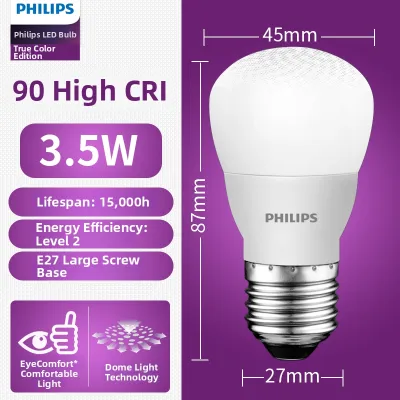
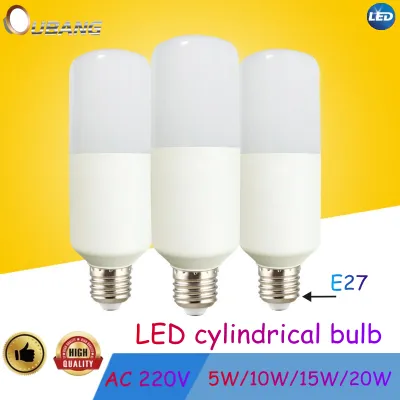
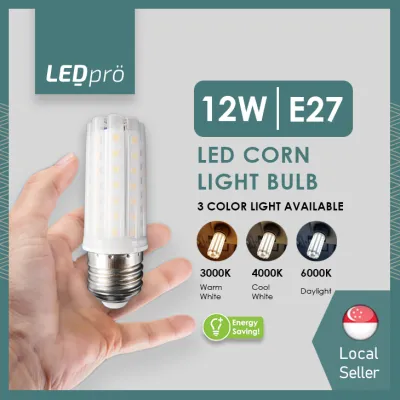
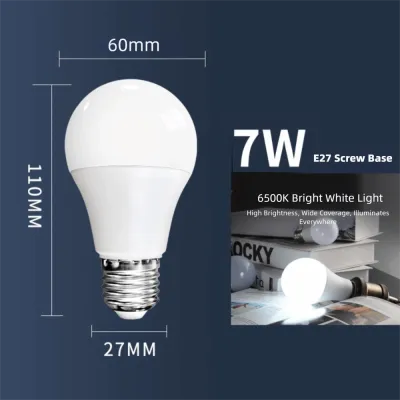
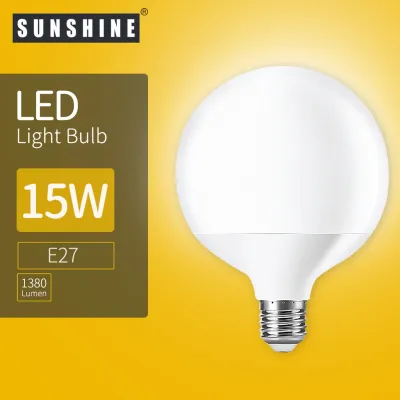
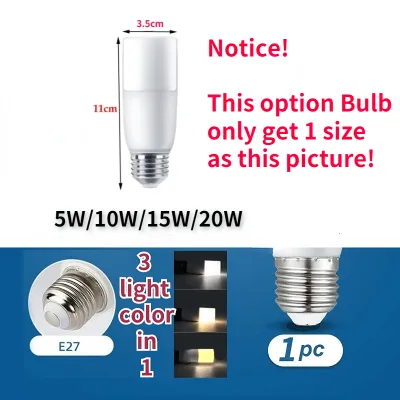
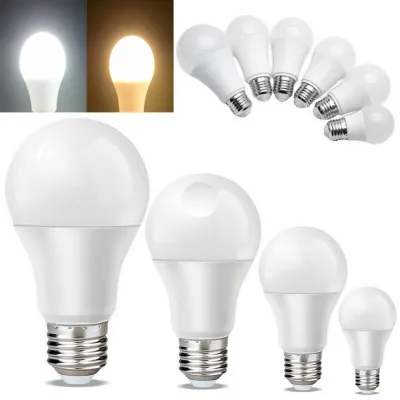
Prices are valid at publication and may change. Please refer to the product page for the latest price.
Color temperature and the Color Rendering Index (CRI) also play a significant role in how you perceive light and how efficiently a bulb operates. Color temperature, measured in Kelvins (K), ranges from warm yellow tones (around 2700K) to cool daylight tones (6500K). While cooler color temperatures often appear brighter to the human eye, this is a perceptual effect rather than a physical energy-saving advantage. CRI measures how accurately a light source reveals the true colors of objects compared to natural light. Bulbs with a high CRI (such as CRI 90 or above) require more complex phosphor coatings on the LED chips. This extra coating can slightly reduce the overall luminous efficacy of the bulb, meaning a high-CRI bulb might consume slightly more power to produce the same level of brightness as a standard CRI 80 bulb.
Another factor influencing perceived brightness without changing power consumption is the beam angle. The beam angle determines how widely or narrowly the light is distributed from the E27 base. A wide beam angle, such as 240 degrees, distributes light evenly across a large room, making it ideal for general ambient lighting. Conversely, a narrow beam angle, such as 36 or 60 degrees, concentrates the light into a focused beam. This concentrated light makes a specific area appear much brighter, which is highly effective for task lighting or accentuating decor. Choosing a bulb with an appropriate beam angle for your fixture ensures that light is directed exactly where it is needed, preventing the need to install higher-wattage bulbs to achieve the desired brightness.
Verifying Efficiency and Safety Labels in Singapore
In Singapore, consumers can bypass marketing jargon by utilizing official regulatory labels to verify the efficiency and safety of E27 LED bulbs. The National Environment Agency (NEA) administers the Mandatory Energy Labelling Scheme (MELS), which applies to registered lamps, including LED bulbs. Under this scheme, bulbs are awarded energy ticks based on their efficiency levels. A higher number of ticks indicates a more energy-efficient product that will cost less to run over time. When comparing different brands on retail shelves or online marketplaces, look for the official MELS label. This label displays the tick rating and estimates the annual energy consumption in kilowatt-hours, allowing you to make a direct, standardized comparison between competing models.

While energy efficiency is important, electrical safety is absolutely non-negotiable. In Singapore, LED bulbs and their integrated drivers are classified as Controlled Goods under the Consumer Protection (Safety Requirements) Registration Scheme. This means they must be tested to meet stringent safety standards and must display the blue SAFETY Mark along with a unique certification number. This mark ensures that the bulb has been designed to prevent electrical shocks, short circuits, and fire hazards. Purchasing uncertified E27 bulbs from unregulated overseas sellers on online marketplaces carries significant risks, as these products often lack proper insulation, overload protection, or fire-retardant materials.
In addition to safety and efficiency labels, you should carefully evaluate the manufacturer’s lifespan claims. LED packaging frequently advertises lifespans ranging from 15,000 to 50,000 hours. These figures are typically based on laboratory testing under controlled conditions and represent the “L70” lifespan—the point at which the bulb’s light output drops to 70% of its original brightness. To assess the real-world durability of a bulb, look for the rated switching cycles on the packaging. A high-quality E27 LED bulb should be rated for at least 50,000 switching cycles (turning on and off), ensuring that frequent use in high-traffic areas like bathrooms or hallways will not cause premature failure of the internal driver.
Comparing Premium and Budget E27 LED Trade-offs
When comparing premium and budget E27 LED bulbs, the price difference is rarely just about the brand logo; it is primarily driven by the quality of the internal components. The most critical internal component is the LED driver, which converts alternating current (AC) from your home’s electrical supply into the direct current (DC) required by the LED chips. Budget bulbs often utilize simple capacitor-drop drivers that are highly sensitive to voltage fluctuations and have a lower power factor. These cheap drivers generate excess heat and can cause the light to flicker invisibly, leading to eye strain. Premium brands, however, invest in advanced integrated circuit (IC) drivers that regulate current smoothly, maintain high efficiency, and protect the LED chips from power surges.
Thermal management is another area where premium and budget bulbs diverge significantly. LED chips are highly sensitive to heat; if heat is not dissipated effectively, the chips will degrade rapidly, leading to a sharp drop in brightness and a shortened lifespan. Premium E27 bulbs typically feature robust heat sinks made of aluminum-clad plastic, ceramic, or specialized thermal polymers that draw heat away from the electronics. Budget bulbs often use minimal thermal management or lower-grade plastics that trap heat inside the housing. This poor heat dissipation not only reduces the luminous efficacy of the bulb over time but can also cause the plastic casing to become brittle and discolored.
The warranty period offered by a brand is a direct reflection of its confidence in these internal components. Budget E27 bulbs often come with a very short warranty, such as 6 months, or no warranty at all. Premium brands frequently offer warranties ranging from 2 to 5 years. A longer warranty provides peace of mind and ensures that if a bulb fails prematurely due to a manufacturing defect, you can obtain a replacement without additional cost. When calculating the total cost of ownership, a slightly more expensive premium bulb with a long warranty and stable efficiency often proves to be more economical than repeatedly replacing cheap, short-lived budget bulbs.
Another modern consideration is the difference between smart and standard E27 LED bulbs. Smart bulbs offer convenient features like color changing, dimming via mobile apps, and integration with home automation systems. However, this convenience comes with an efficiency trade-off known as standby power draw. Because smart bulbs must remain connected to your home’s Wi-Fi or Zigbee network to receive commands, they consume a small amount of electricity (typically between 0.2W and 0.5W) even when the light is turned “off” via the app. While this standby power seems negligible for a single bulb, having dozens of smart bulbs throughout a home can create a continuous, silent energy drain that standard LED bulbs—which draw zero power when switched off at the wall—do not have.
Decision Framework: Choosing the Right E27 LED for Your Space
To maximize your energy savings and ensure long-term satisfaction, you should apply a conditional decision framework based on how and where the E27 bulbs will be used in your home. For high-usage areas where lights are switched on for several hours every day—such as the living room, kitchen, study, or outdoor security fixtures—it is highly recommended to invest in premium bulbs with the highest luminous efficacy (above 100 lm/W) and a high tick rating. In these spaces, the higher initial purchase price of a premium bulb is quickly recovered through lower monthly electricity bills, and the superior thermal management ensures the bulb maintains its brightness over years of heavy use.
For low-usage or decorative areas, a different approach is more practical. In spaces like storerooms, bomb shelters, guest bedrooms, or decorative accent fixtures that are only illuminated occasionally, the absolute energy savings achieved by a top-tier efficient bulb are minimal. In these scenarios, choosing a standard-efficiency, budget-friendly E27 bulb is a sensible financial decision. The payback period for a premium, high-efficiency bulb in a rarely used storeroom could span several decades, making the lower upfront cost of a basic, safety-certified budget bulb the more logical choice.
Finally, you must address dimmer compatibility before making a purchase. If your E27 fixture is connected to a wall dimmer switch, you must verify that the bulb packaging explicitly states it is “dimmable.” Attempting to use a standard, non-dimmable LED bulb on a dimming circuit can lead to severe performance issues, including rapid flickering, loud buzzing noises, and immediate damage to both the bulb’s driver and the dimmer switch itself. Even when buying dimmable bulbs, compatibility can vary between different brands of dimmer switches and LED drivers. To avoid wasted energy and potential electrical hazards, always check the manufacturer’s official dimmer compatibility list or consult a qualified electrician to ensure your wall switches and E27 bulbs are fully compatible.
Frequently Asked Questions (FAQ)
Do higher wattage E27 LEDs always produce more light?
No, higher wattage does not automatically mean a bulb will produce more light. Wattage measures the amount of electrical energy a bulb consumes, not the amount of light it emits. The actual brightness of a bulb is measured in lumens. Because different brands and models have varying levels of luminous efficacy, a highly efficient 8-watt LED bulb can easily produce the same or greater light output (lumens) as a poorly designed 12-watt LED bulb. When comparing brightness, always look at the lumen rating on the packaging rather than the wattage.
Can I use a standard E27 LED in an enclosed fixture?
You should not use a standard E27 LED bulb in an enclosed fixture unless the packaging explicitly states it is rated for enclosed use. Enclosed fixtures, such as tight flush-mount ceiling lights or sealed outdoor lanterns, trap heat around the bulb. Because LEDs are highly sensitive to temperature, this trapped heat cannot dissipate, causing the internal driver and LED chips to overheat. This thermal stress rapidly degrades the bulb’s efficiency, causes premature component failure, and can even pose a safety hazard. Always verify the fixture rating on the bulb’s packaging before installation.
Community discussion
Share your experience or ask a question. Comments are reviewed before publication.