
To find the most energy-efficient G24D LED light bulb for your home or office in Singapore, you must look beyond brand names and focus on verifiable performance specifications. Because manufacturers frequently update their product lineups, the single most efficient bulb is not determined by a brand label, but by its luminous efficacy—the ratio of light output (lumens) to energy consumed (watts). By evaluating these technical specifications alongside your existing fixture setup, you can identify the most cost-effective and reliable lighting upgrade.
Upgrading from older compact fluorescent lamps (CFLs) to LED technology offers immediate energy savings, but the actual efficiency you achieve depends heavily on how the bulb interacts with your existing infrastructure. Factors such as ballast compatibility, base sub-types, and local operating conditions play a critical role in performance. Taking a systematic approach to comparing these technical details ensures you do not spend money on a bulb that underperforms or fails prematurely in your specific environment.
Key Metrics for Comparing G24D LED Energy Efficiency
To accurately compare the efficiency of different G24D LED light bulbs, you must understand luminous efficacy, which is measured in lumens per watt (lm/W). This metric represents the amount of visible light a bulb produces for every watt of electricity it consumes. You can easily calculate this value by taking the total lumen output listed on the product specification sheet and dividing it by the operating wattage. For example, a bulb that delivers 1,000 lumens while consuming 10 watts has an efficacy of 100 lm/W, which serves as a reliable baseline for comparison.
Products mentioned in this guide
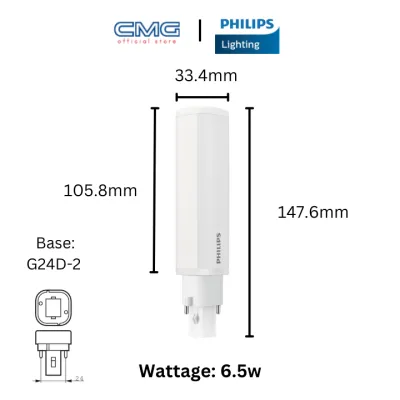
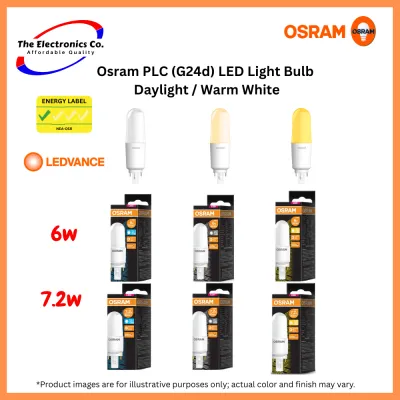
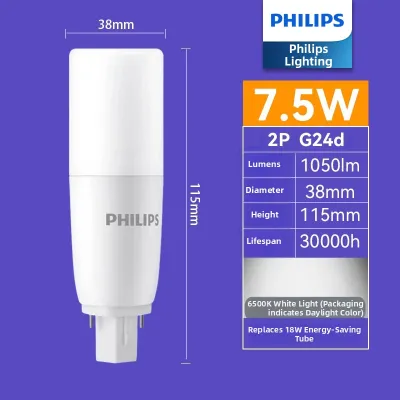
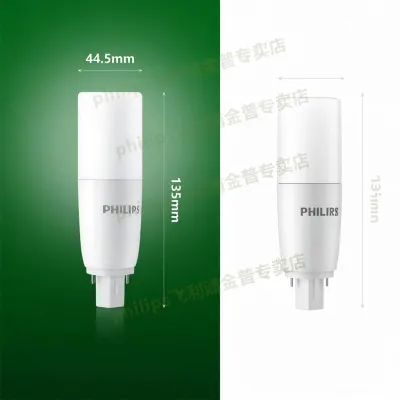
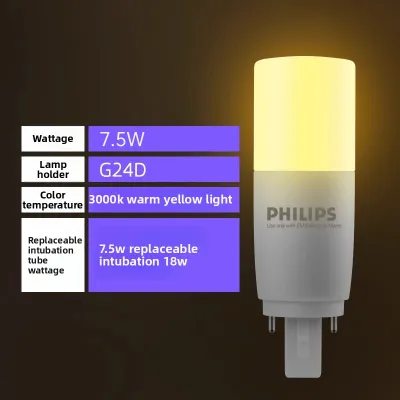
![[Authorized Dealer] Philips LED PL-C 2Pin G24D 7.5W | 9W](https://img.lazcdn.com/g/p/00bd40b976dfdaeffe0c196f9263de83.jpg_400x400q80.jpg_.webp)
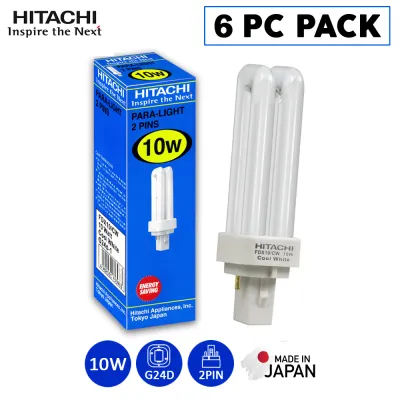
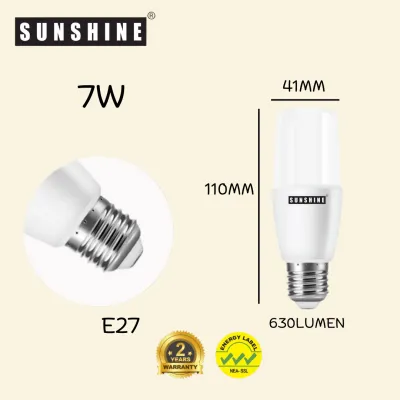
Prices are valid at publication and may change. Please refer to the product page for the latest price.
It is a common misconception that a lower wattage rating automatically translates to a more efficient bulb. If a manufacturer reduces the wattage but the total lumen output drops disproportionately, the bulb may actually be less efficient than a slightly higher-wattage alternative. When comparing brands, always look for the highest lumen output at the lowest possible wattage rather than focusing solely on the wattage number itself. This ensures you maintain adequate brightness in your living or working spaces while minimizing electricity consumption.
The color characteristics of a bulb also influence its overall energy efficiency. Color temperature, measured in Kelvin (K), and the Color Rendering Index (CRI) both affect how much light is emitted. Generally, bulbs with cooler color temperatures, such as daylight (6000K or 6500K), tend to have slightly higher luminous efficacy than warm white options (2700K or 3000K) due to the nature of LED phosphors.
Furthermore, a high CRI (such as CRI 90 or above), which renders colors more accurately, typically requires a thicker phosphor coating that absorbs some light, slightly reducing the bulb’s overall efficacy. When selecting a bulb, you must balance the visual requirements of the room with your efficiency goals. For task-oriented spaces like kitchens or study areas, a higher CRI might be preferred despite a minor drop in efficiency, whereas general transition areas like hallways can prioritize maximum efficacy with a standard CRI rating.
Verifying G24D Base Types and Ballast Compatibility
Before purchasing any G24D LED light bulb, you must verify the exact physical configuration of your existing fixture’s socket. The G24d base is a 2-pin plug-in design, but it comes in three distinct variations: G24d-1, G24d-2, and G24d-3. Each variation features plastic guide keys positioned at different angles to prevent users from inserting the wrong wattage bulb into a legacy ballast fixture. You must physically inspect your current bulb or socket to identify these notches and ensure the replacement LED bulb matches this exact keying configuration, as an incompatible base will not fit into the socket.

Another critical decision is choosing between plug-and-play (ballast-compatible) and direct-wire (ballast-bypass) LED bulbs. Plug-and-play bulbs are designed to work directly with the existing magnetic ballast inside your old CFL fixture. While this option offers the easiest installation, the ballast itself continues to draw a small amount of electricity, known as ballast loss, which reduces the overall energy efficiency of the system. Additionally, if the old ballast eventually fails, the LED bulb will stop working until the ballast is replaced.
In contrast, direct-wire LED bulbs bypass the ballast entirely, connecting the bulb directly to the mains voltage. This method eliminates ballast energy loss and removes a common point of failure, maximizing the long-term efficiency and reliability of your lighting system. However, converting a fixture to direct-wire requires modifying the internal wiring.
Because direct-wire installation involves working with fixed electrical wiring, safety must be your top priority. Always isolate the power supply by turning off the main circuit breaker before attempting any inspection or modification. If you are not fully trained in electrical work, you must engage a licensed electrician to perform the ballast bypass and rewiring. This ensures the modification complies with local electrical safety standards and prevents hazards such as short circuits or electrical fires.
Reading Energy Labels and Performance Claims
To avoid falling for misleading marketing claims, you should rely on standardized, independent energy labels and certifications rather than promotional text on the packaging. In Singapore, electrical appliances and lighting products are subject to regulatory frameworks that verify energy performance. Look for official energy labels that display clear rating tiers, such as tick ratings, which provide an objective assessment of the product’s efficiency relative to standard benchmarks. Comparing these official ratings across different brands gives you a reliable, standardized basis for your decision.
Be highly skeptical of vague marketing terms like “ultra-bright,” “super-saving,” or “eco-friendly” when browsing online marketplaces or retail stores. These terms are not regulated and do not guarantee superior performance. Instead, always cross-reference these claims with the technical specifications listed on the manufacturer’s official datasheet. Verify the exact lumen output, power consumption, and power factor to confirm whether the bulb genuinely delivers on its efficiency promises.
In addition to energy labels, you must verify that the G24D LED bulb carries the appropriate safety and electrical certifications required for the local market. In Singapore, look for the Safety Mark on the packaging or product body, which indicates that the model has been tested and certified to meet essential safety standards. Using uncertified lighting products can pose serious electrical risks, including overheating and insulation failure, which can compromise both your safety and the longevity of your fixtures.
Decision Framework: Choosing the Most Cost-Effective Option
To choose the most cost-effective G24D LED bulb for your specific situation, you must weigh the convenience of installation against your long-term energy-saving goals. If you require an immediate, tool-free replacement and your existing magnetic ballast is in excellent working condition, a plug-and-play bulb is the most practical choice. This option minimizes upfront labor costs and downtime, making it ideal for quick upgrades in rented properties or areas where electrical modifications are restricted.
If your primary goal is to maximize energy savings over several years and eliminate future maintenance hassle, a direct-wire bulb is the superior long-term investment. Although it requires an initial investment in professional installation, bypassing the ballast ensures you achieve the absolute lowest power consumption possible and prevents the need for future ballast replacements. This approach is highly recommended for high-usage areas where lights remain on for many hours each day.
To estimate your potential annual energy cost savings when upgrading to G24D LEDs, you can use a straightforward calculation based on your usage patterns. First, determine the wattage difference between your old CFL bulb and the new LED bulb. Multiply this difference by the number of hours the light is operated daily, and then multiply by 365 to find the annual watt-hour savings. Divide this number by 1,000 to convert it to kilowatt-hours (kWh).
Finally, multiply the annual kWh savings by your current local electricity tariff rate to find your estimated annual savings in S$. For example, if you replace a 26-watt CFL with a 10-watt LED bulb (a difference of 16 watts) that runs for 8 hours a day, the calculation is as follows:
16 watts 8 hours 365 days = 46,720 watt-hours per year
46,720 / 1,000 = 46.72 kWh saved per year
Multiplying 46.72 kWh by your specific electricity tariff (expressed in S$ per kWh) will give you the exact annual monetary savings per fixture. When multiplied across multiple fixtures in a home or commercial space, these savings quickly offset the initial purchase and installation costs of the new LED bulbs.
Frequently Asked Questions (FAQ)
Can I use a G24q (4-pin) LED bulb in a G24d (2-pin) fixture?
No, you cannot use a G24q (4-pin) LED bulb in a G24d (2-pin) fixture. These two base types are physically and electrically incompatible. The G24d base has two pins and is designed for fixtures with magnetic ballasts, while the G24q base has four pins and is designed for electronic ballasts. The physical shape of the plastic base and the pin configuration will prevent the bulb from inserting into the socket. Attempting to force or modify the connection can damage the fixture, ruin the bulb, or create a serious electrical hazard.
Do G24D LED bulbs generate less heat than the CFLs they replace?
Yes, G24D LED bulbs generate significantly less radiant heat than the compact fluorescent lamps (CFLs) they replace, which helps keep the surrounding room cooler. However, it is important to understand that LEDs still produce internal heat within their electronic components and driver. To prevent premature failure, you must ensure that the fixture provides adequate ventilation. Installing an LED bulb in a completely sealed or tightly enclosed fixture without proper airflow can cause heat to build up, degrading the internal driver and drastically shortening the bulb’s lifespan.
Community discussion
Share your experience or ask a question. Comments are reviewed before publication.