
Choosing a wireless aroma diffuser requires looking past aesthetic designs and focusing on the technical specifications that dictate daily performance. Unlike traditional plug-in models that enjoy a constant power supply, cordless units rely on a delicate balance of battery capacity, water volume, and mist output. Selecting the wrong configuration can leave you with a device that runs out of power mid-day, requires constant refilling, or fails to disperse scent effectively in your living space.
To make an informed comparison, you must evaluate how battery runtimes align with actual misting modes, calculate how quickly the water tank empties at maximum output, and understand how your home’s layout affects scent dispersion. By focusing on these core engineering specifications, you can select a portable diffuser that delivers consistent fragrance without becoming a high-maintenance chore.
Battery Life and Charging: Defining True Portability
When evaluating a wireless aroma diffuser, battery specifications are often the most misleading numbers on the box. Many manufacturers prominently advertise “up to 20 hours of runtime,” but a closer look at the fine print usually reveals this figure applies only to intermittent modes with all LED lights turned off. To understand actual performance, you must distinguish between standby time, intermittent misting time, and continuous, full-power operation.
Products mentioned in this guide

![[KIRONA SCENT] Stone Aroma Nebulizer | Lantern Inspired Minimalist Diffuser | Home Fragrance Gifts Decor | Waterless & Wireless](https://img.lazcdn.com/g/p/2ebbcabc2c7c3ae589e7b88fd140eeb7.png_400x400q80.png_.webp)
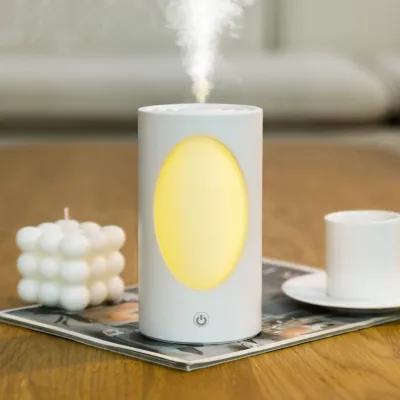
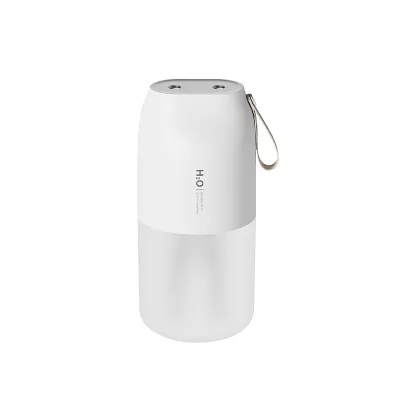
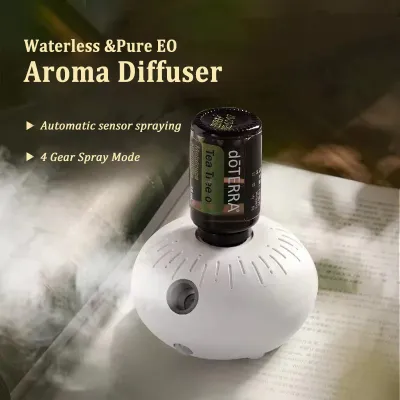
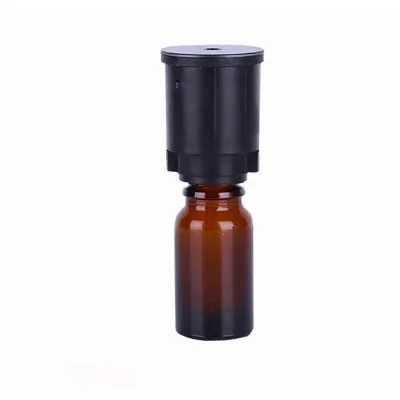
Prices are valid at publication and may change. Please refer to the product page for the latest price.
A reliable way to estimate real-world performance is to compare the battery capacity, measured in milliampere-hours (mAh), against the device’s power consumption. Most high-quality wireless diffusers feature rechargeable lithium-ion batteries ranging from 2,000 mAh to 4,000 mAh. If a device operates on a standard 5V USB input and draws approximately 1A of current during active ultrasonic misting, a 2,000 mAh battery will realistically provide roughly two hours of continuous high-output misting. If you require a device that can run continuously throughout a full workday without a cord, prioritizing a larger battery capacity of 4,000 mAh or higher is essential.
The charging interface also affects convenience. USB-C ports are preferred because they let you use standard cables and phone chargers. Proprietary pins or magnetic docks limit your charging options and require carrying extra cords that are difficult to replace.
Additionally, verify if the diffuser supports pass-through charging (operating while plugged in). Some compact models disable misting during charging to prevent overheating. When charging the device or running it continuously on mains power, ensure you use a compatible power adapter that matches the manufacturer’s specified input voltage (usually 5V). In Singapore, always use a wall adapter that carries the Safety Mark certification to prevent short circuits or electrical hazards.
Tank Capacity vs. Mist Output: Balancing Runtime and Scent Throw
The balance between water tank capacity and mist output rate determines refill frequency and scent strength. Because wireless models must remain portable, their water tanks are smaller than desktop plug-in units, typically ranging from 50 ml to 150 ml.

Mist output is the volume of water and oil atomised per hour (ml/h). A higher mist output (15 to 20 ml/h) provides a stronger scent throw but drains water and battery power quickly. A lower output (5 to 10 ml/h) extends runtime but might yield a faint aroma in larger spaces.
To estimate runtime, divide tank capacity by the maximum mist output. A 100 ml tank running at 20 ml/h will run dry in five hours, while a smaller 50 ml tank at the same rate will require a refill in just two and a half hours.
Adjustable mist settings and intermittent modes are crucial features that help balance this trade-off. Many quality diffusers allow you to switch between continuous misting and intermittent cycles, such as 10 seconds of mist followed by 30 seconds of rest. Using an intermittent setting dramatically reduces both water consumption and battery drain, often extending a five-hour continuous tank capacity to over ten hours of practical use. When comparing models, look for those that offer fine-grained control over these intervals so you can customise the scent intensity to your liking.
Coverage Area and Timers: Adapting to Your Environment
Manufacturer claims regarding “coverage area” should always be approached with caution. These specifications, typically listed in square metres (such as 15m² or 30m²), are almost always calculated under laboratory conditions—specifically, in completely sealed, draught-free rooms with static air. In real-world environments, active ventilation, open doors, and architectural layouts will significantly reduce the effective reach of any aroma diffuser.
For homes in Singapore, environmental factors play an exceptionally large role in how mist and fragrance behave. Many modern apartments feature open-plan living and dining areas where scent can easily disperse and dissipate into adjacent spaces. Additionally, the widespread use of air-conditioning systems creates a unique challenge. Air conditioners actively dehumidify the air and create strong, continuous air currents that can sweep mist away before it has a chance to settle, or cause the microscopic water droplets to evaporate too rapidly, suppressing the scent.
To counter these environmental challenges, look for wireless diffusers that offer built-in timers and auto-off safety features. Multi-stage timers (such as 1-hour, 3-hour, or 5-hour settings) allow you to run the device for a set period without worrying about wasting battery power or essential oils after you leave the room or fall asleep. Because wireless units are highly portable, you can also practice “zone scenting”—placing the compact device directly on your bedside table, work desk, or dining table rather than trying to scent an entire open-plan room from a single corner.
Secondary Specs: What You Can Safely Ignore
When shopping for a wireless diffuser, it is easy to get distracted by premium features that add to the retail price but contribute very little to the core performance of the device. Identifying these secondary specifications can help you simplify your comparison and avoid overpaying for features you do not need.
- Intricate LED Mood Lighting: While multi-coloured LED light strips or simulated flame effects look appealing, they are a massive drain on a portable battery. Running a bright light display alongside an ultrasonic transducer can reduce your wireless battery life by up to 30%. If you want a diffuser primarily for its portable scenting capabilities, treat lighting as a minor secondary feature and ensure any model you buy allows you to turn the lights completely off while misting.
- Smart-Home and App Integrations: Some premium wireless diffusers feature Bluetooth or Wi-Fi connectivity, allowing you to control mist schedules and light colours via a smartphone app. While convenient for fixed smart-home setups, app integration is often more of a hassle than a benefit for a portable device that you move from room to room. Connecting to different Wi-Fi networks or waiting for Bluetooth pairing to sync can add unnecessary friction compared to simply pressing a physical button on the device.
- Hyper-Specific Decibel Ratings: Many brands compete heavily on noise levels, advertising ultra-quiet operation down to 20 decibels. In reality, almost all modern ultrasonic diffusers operate well below 35 decibels, which is quieter than a soft library whisper. Unless you are extremely sensitive to sound, the minor decibel differences between competing models are virtually imperceptible in daily life, making this spec safe to ignore.
Frequently Asked Questions (FAQ)
Can I use tap water in a wireless aroma diffuser?
While many ultrasonic wireless diffusers are physically capable of running on tap water, using distilled, purified, or filtered water is highly recommended. Tap water contains dissolved minerals that can accumulate on the delicate ultrasonic plate over time, creating a hard crust that reduces mist output and shortens the lifespan of the device. This mineral buildup is particularly problematic for compact wireless units, which have smaller internal components that are difficult to clean. Always consult your specific product’s instruction manual for water compatibility and cleaning guidelines.
Do wireless diffusers work well in air-conditioned rooms?
Wireless diffusers work well in air-conditioned rooms, but you may need to adjust their placement and settings. Cold, dry air from air conditioners can speed up mist evaporation and alter how scent molecules travel through the room. To get the best results, place your portable diffuser away from direct air-conditioning vents, open windows, or air purifiers that might pull the scented mist out of circulation. Using an intermittent misting mode can also help maintain a steady, subtle fragrance level without quickly exhausting the water tank in dry, air-conditioned air.
Community discussion
Share your experience or ask a question. Comments are reviewed before publication.