
The brightest and longest-lasting glow-in-the-dark turtle figurines are those crafted from high-grade strontium aluminate photoluminescent pigments embedded within a clear or translucent resin body. Unlike older, cheaper zinc sulfide formulations, strontium aluminate can absorb and store light energy far more efficiently, releasing a glow that is up to ten times brighter and lasts significantly longer. A premium strontium aluminate figurine can remain visible to dark-adapted eyes for several hours, whereas standard zinc sulfide models typically fade within thirty minutes.
When selecting a glow-in-the-dark turtle figurine for your home, understanding the underlying material science and environmental factors is crucial. Many products on the market are marketed with generic “glow-in-the-dark” labels, masking significant differences in performance, durability, and safety. By focusing on verified material compositions, realistic charging requirements, and the physical design of the figurine, you can find a decorative piece that provides a reliable, comforting luminescence throughout the night.
Whether you are placing a decorative turtle on a bedside table, arranging a cluster of figurines on a living room shelf, or using them as whimsical accents in a garden, the quality of the glow depends on specific physical properties. This guide breaks down the essential criteria for evaluating these figurines, helping you distinguish between high-performance photoluminescent materials and low-grade alternatives, while optimizing your home environment to achieve the best possible visual effect.
Products mentioned in this guide

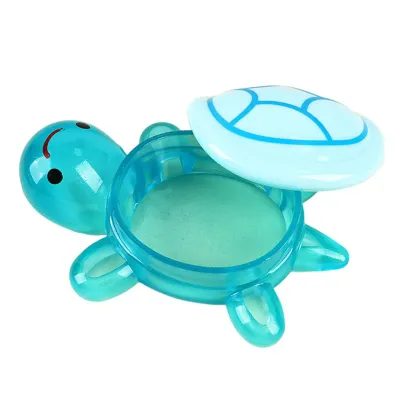
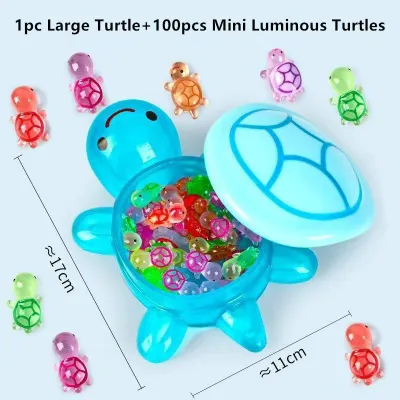
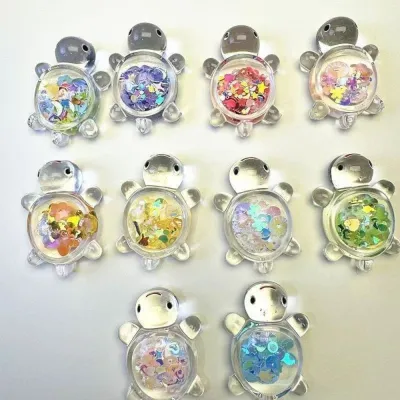
![[SG FREE ] Glow in the Dark Turtles Luminous Turtle Statues 100 Pcs Mini Resin Turtle Statues Glow in Dark Cute Tiny Tu](https://img.lazcdn.com/g/p/97f1e8cb76a83c065875cd6e282d43e4.jpg_400x400q80.jpg_.webp)
Prices are valid at publication and may change. Please refer to the product page for the latest price.
Understanding the Materials Behind the Glow
The primary factor determining how brightly and how long a turtle figurine will glow is the chemical composition of its photoluminescent pigment. Modern glow-in-the-dark products generally utilize zinc sulfide or strontium aluminate. Zinc sulfide is the traditional, budget-friendly option. While it charges quickly under almost any light source, its energy capacity is limited, resulting in a rapid decay rate that leaves the figurine dark shortly after the lights are turned off.
In contrast, strontium aluminate is a highly advanced photoluminescent material that represents the current industry standard for premium glow products. It is chemically stable, non-toxic, and capable of absorbing a much broader spectrum of light. Once fully charged, strontium aluminate pigments release their stored energy at a much slower, more controlled rate. This slow decay allows the figurine to emit a visible ambient glow for hours, making it highly suitable for overnight decorative use or as a gentle nightlight.
Beyond the chemical formulation, the concentration and distribution of the pigment within the figurine play a critical role. Some manufacturers apply a thin layer of glow-in-the-dark paint to the exterior of a solid plastic or ceramic turtle. This surface-painted approach is highly susceptible to peeling, scratching, and uneven charging. A superior design involves mixing the photoluminescent pigment directly into a clear or translucent carrier material, such as epoxy resin, silicone, or glass, before molding. This ensures that the pigment particles are suspended throughout the entire volume of the figurine, allowing light to penetrate deeply and charge the material from all angles.
When browsing online marketplaces or specialty decor stores, look past generic marketing descriptions. Reputable manufacturers will often explicitly state if their products use “strontium aluminate,” “premium photoluminescent pigment,” or “high-density glow resin.” If a product listing lacks these details and is priced significantly lower than competitors, it is highly likely made with standard zinc sulfide or a very low concentration of glow paint, which will not deliver the sustained performance you expect.
How to Evaluate Brightness and Duration Claims
Evaluating manufacturer claims regarding glow brightness and duration requires a critical eye, as these specifications are often measured under highly controlled laboratory conditions. A common claim is that a figurine will glow for “up to 8 hours” or “all night long.” While this may be technically true under ideal circumstances, the actual performance in your home depends heavily on how the figurine is charged and the ambient darkness of the room.

To properly interpret these claims, look for disclosures regarding the specific charging conditions required. For example, a manufacturer might specify that the figurine requires thirty minutes of exposure to direct sunlight or fifteen minutes under a high-intensity ultraviolet (UV) light to reach its maximum charge. If your intended placement area only receives indirect indoor lighting, the figurine will rarely reach its full charging potential, and the resulting glow duration will be significantly shorter than the maximum advertised time.
It is also essential to understand the natural decay curve of photoluminescent materials. Immediately after the charging light source is removed, the figurine will exhibit an intense “peak brightness.” This initial burst is highly visible even in partially lit rooms but fades rapidly over the first ten to thirty minutes. Following this initial drop, the glow transitions into a much lower, sustained “afterglow.” This secondary phase is what keeps the figurine visible in a pitch-black room for several hours. A high-quality figurine will maintain a steady, low-level afterglow that remains visible to eyes that have fully adjusted to the dark, whereas a low-quality model will quickly fade to complete invisibility.
To verify these performance claims before making a purchase, cross-reference user feedback and customer photos on online marketplaces. Look for reviews from buyers who have tested the figurines in real-world settings, paying close attention to mentions of how long the glow remains visible after several hours of darkness. Avoid relying solely on promotional images, which are often captured immediately after intense UV charging or digitally enhanced to make the glow appear unnaturally bright.
Optimizing Light Exposure and Room Conditions
Achieving the maximum luminescent performance from your glow-in-the-dark turtle figurine requires understanding how photoluminescent materials interact with different light sources. These pigments do not generate their own light; they act as optical batteries that must be charged by external light energy. The efficiency of this charging process depends heavily on the wavelength and intensity of the light source you use.
Ultraviolet (UV) light is the most effective wavelength for charging photoluminescent pigments because it carries higher energy than visible light. Direct sunlight is an excellent, natural source of UV light and will charge a figurine to its maximum capacity in a short amount of time. If you place your turtle figurine on a sunny windowsill or a bright balcony, it will easily achieve a strong charge by nightfall. For indoor areas that do not receive direct sunlight, a dedicated UV blacklight or a small UV flashlight can be used to quickly and intensely charge the figurine in just a few minutes.
Standard indoor lighting can also charge these figurines, but the efficiency varies greatly depending on the bulb type. Cool-white or daylight LED bulbs (typically rated between 5000K and 6500K) emit a small amount of blue light that can charge photoluminescent materials reasonably well over time. However, warm-white LED bulbs (2700K to 3000K), which are commonly used in bedrooms and living rooms to create a cozy atmosphere, emit very little blue or UV light. If your figurine is placed in a room illuminated only by warm-white LEDs, it will charge very slowly and may never achieve a bright or long-lasting glow.
The perceived brightness of the figurine is also highly dependent on the ambient darkness of the room. In urban environments, light pollution from streetlights, corridor lights, or electronic standby indicators can prevent a room from becoming completely dark. When there is ambient light in a room, your eyes do not fully transition to night vision, making the subtle afterglow of the figurine difficult or impossible to see. To maximize the visual effect, place the figurine in a room that can be made completely dark, and position it away from competing light sources like digital clocks, televisions, or windows without blackout curtains.
Passive Glow vs. Battery-Operated Light-Ups
When searching for a glow-in-the-dark turtle figurine, you will likely encounter two distinct product categories: passive photoluminescent figurines and active, battery-operated or USB-powered light-up figurines. Understanding the functional differences between these two types is essential for selecting a product that aligns with your decorative goals, maintenance preferences, and safety requirements.
Passive photoluminescent figurines rely entirely on the light-absorption process described earlier. They contain no electrical components, wires, or batteries, making them completely silent, heat-free, and waterproof. This lack of electrical parts makes them exceptionally safe for use in children’s bedrooms, bathrooms, or outdoor garden spaces where exposure to moisture is a concern. They are also highly durable and require virtually no maintenance beyond occasional dusting. However, their light output is passive, meaning it will inevitably fade over the course of the night and cannot be adjusted or turned off.
Active light-up figurines, on the other hand, use internal LED bulbs powered by batteries, a USB connection, or a standard electrical outlet to illuminate a translucent turtle shell. These products provide a constant, bright, and reliable light source that does not fade over time. Many active models include convenient features such as remote controls, adjustable brightness levels, color-changing modes, and automatic shut-off timers. However, they require ongoing power management, including regular battery replacements or proximity to an electrical outlet, and their electrical components make them less suitable for wet environments unless they carry a verified waterproof rating.
If your primary goal is to have a subtle, natural nighttime accent that gently fades as you fall asleep without adding to your electricity usage or requiring battery changes, a passive photoluminescent turtle is the ideal choice. If you require a reliable, bright nightlight that can remain illuminated at a consistent level all night long and offers customizable lighting options, an active LED-powered figurine is the more appropriate option. When choosing an active model, always verify the voltage requirements, battery safety, and electrical certifications to ensure safe operation in your home.
Building Your Shortlist: Pre-Purchase Checklist
To help you compare different glow-in-the-dark turtle figurines and select the best option for your home, use the following structured checklist before finalizing your purchase:
- Verify the Material Composition: Look for explicit product specifications indicating the use of strontium aluminate or high-density photoluminescent resin. Avoid products that only use generic "glow-in-the-dark" labels, as these are often lower-performing zinc sulfide models.
- Assess the Charging Requirements: Consider where you plan to place the figurine and whether that location receives sufficient natural sunlight or cool-white LED light. If the area is consistently dim, decide if you are willing to use a UV flashlight to manually charge the figurine.
- Check the Physical Dimensions and Weight: Ensure the figurine's size is appropriate for your space. A small, lightweight resin turtle is perfect for a bedside table, while a larger, heavier glass or ceramic model may be better suited for a garden display.
- Evaluate Safety and Material Certifications: If the figurine is intended for a child's bedroom, verify that the materials are non-toxic, lead-free, and BPA-free. For active, battery-operated models, ensure the battery compartment is securely screwed shut.
- Review Customer Feedback for Durability: Search user reviews on online marketplaces for mentions of long-term durability. Look out for complaints regarding paint peeling, structural fragility, or a rapid decline in the material's ability to hold a charge.
- Confirm the Return Policy: Because photoluminescent performance can be highly subjective, choose a seller that offers a clear return or exchange policy. This allows you to test the figurine's glow in your actual room environment.
Frequently Asked Questions (FAQ)
Why did my glow-in-dark turtle stop glowing after a few months?
If your photoluminescent turtle figurine has experienced a decline in glow brightness, the issue is often related to environmental factors rather than pigment failure. Over time, a fine layer of dust, grease, or airborne particles can accumulate on the surface. This microscopic barrier blocks incoming light from reaching the photoluminescent particles during the day and dims the light emitted at night. Gently cleaning the figurine with a soft, damp microfiber cloth can remove this buildup and restore its charging efficiency.
Another potential cause is prolonged exposure to harsh, direct outdoor sunlight, which can cause the carrier resin or protective clear coat to degrade or turn yellow. This yellowing acts as a filter that blocks the specific wavelengths of light needed to charge the pigment. If you are using the figurine outdoors, ensure it is rated for outdoor use and try placing it in an area that receives partial shade rather than continuous, intense midday sun.
Can I use a regular room light to charge the figurine?
Yes, you can use regular indoor room lights to charge a glow-in-the-dark turtle figurine, but the speed and effectiveness will depend heavily on the type of light bulb. Standard cool-white or daylight LED bulbs, which emit light in the blue spectrum, are reasonably effective at charging photoluminescent materials. However, they will require a significantly longer exposure time—often several hours—to achieve the same level of brightness that a few minutes of direct sunlight or a UV light source would provide.
In contrast, warm-white LED bulbs or traditional incandescent bulbs emit very little blue or ultraviolet light, making them highly inefficient for charging. If your room is primarily lit by warm, cozy lighting, your figurine may only emit a very faint, short-lived glow. For the best results in rooms with warm lighting, consider using a small, dedicated UV flashlight to quickly charge the figurine for a minute or two before bedtime, which will instantly trigger a bright and lasting glow.
Community discussion
Share your experience or ask a question. Comments are reviewed before publication.