
Creating a cozy, inviting living room relies heavily on layers of soft, warm light rather than a single harsh overhead fixture. An LED stand light serves as a highly effective tool for this purpose, offering both localized illumination and a decorative element that anchors your seating area. When evaluating which brands are best for your home, the ideal choice is not a one-size-fits-all label, but rather a manufacturer that consistently delivers precise color temperature control, high-quality diffusion materials, and certified electrical safety. By focusing on these technical and design standards, you can select a fixture that transforms your living space into a relaxing sanctuary.
Understanding Warm Ambiance in LED Stand Lights
To achieve a truly warm living room ambiance, you must first understand the technical specifications that govern light quality. The most critical factor is color temperature, measured in Kelvins (K). For a cozy, relaxing environment, look for LED stand lights that operate within the 2700K to 3000K range. A temperature of 2700K produces a warm, golden glow that closely mimics traditional incandescent bulbs, which helps signal to the brain that it is time to wind down. A slightly higher temperature of 3000K offers a clean, warm white light that is highly functional for reading while still maintaining a welcoming atmosphere. Avoid fixtures that exceed 4000K in relaxation zones, as cooler light contains more blue wavelengths, which can feel clinical and disrupt your natural sleep cycle.
Beyond color temperature, the ability to adjust brightness is essential for setting different moods throughout the day. High-quality lighting brands incorporate advanced dimming technologies, such as step-less dimming or pulse-width modulation (PWM) designed to prevent flickering. Flickering, even when imperceptible to the naked eye, can cause eye strain and headaches over extended periods. A stand light with a wide dimming range—ideally from 10% to 100%—allows you to transition seamlessly from a bright setting for family board games to a low, ambient glow for movie nights.
Products mentioned in this guide
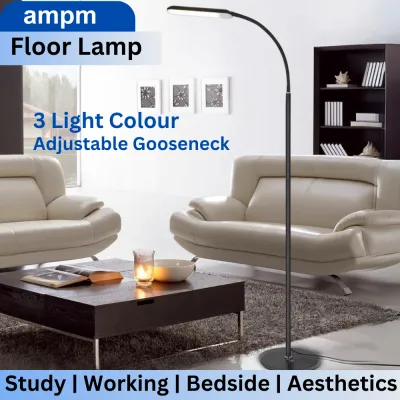
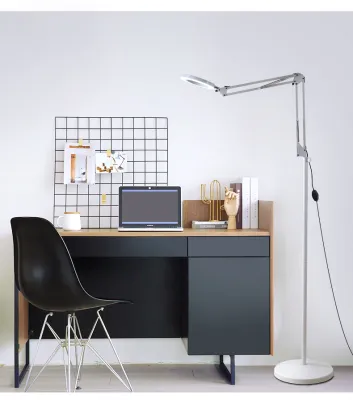
![[SG Seller]LED Floor Lamp Multi Brightness Dimmable Lightings Gooseneck Adjustable USB Operated Standing Light for Study Bedside Living Room Piano Aesthetic Lamp White Black](https://img.lazcdn.com/g/p/1ee573180e8aa449d878c5b30c81e865.jpg_400x400q80.jpg_.webp)
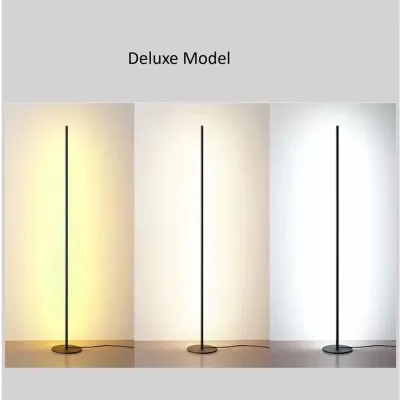
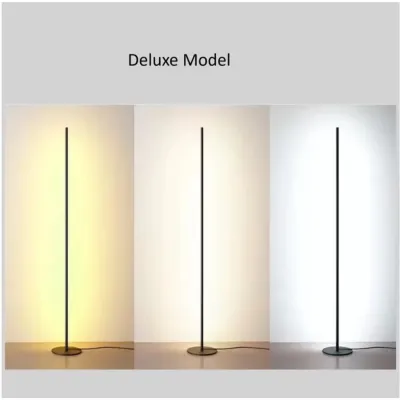
![[SG] 100cm Eye Protection LED Floor Lamp Piano Lamp. 3 Tone Light Changeable Standing Lamp](https://img.lazcdn.com/g/p/118ab874b6f1fe814d7f2935677ab44a.png_400x400q80.png_.webp)
Prices are valid at publication and may change. Please refer to the product page for the latest price.
The physical design of the lamp shade also plays a pivotal role in how light is distributed across your living room. Unshielded LED diodes emit a highly concentrated, intense light that creates harsh shadows and uncomfortable glare. To prevent this, premium brands utilize high-quality diffusion materials. Fabric shades made of linen or cotton naturally soften the light, scattering it gently in all directions. Paper shades, particularly those inspired by traditional designs, offer an organic, highly diffused glow. If you prefer glass or metal shades, ensure they feature frosted diffusers or internal baffles that shield the light source from direct line of sight, ensuring the output remains soft and indirect.
Key Criteria for Evaluating Lighting Brands
When evaluating different lighting brands, assessing the structural integrity and material quality of the fixture is paramount. A well-constructed LED stand light should feature a robust frame made of durable metals such as brass, steel, or powder-coated aluminum. Cheaply manufactured brands often use thin plastics or low-grade alloys that can warp, discolor, or lean over time. Examine the joints, adjustment screws, and threaded connections; they should feel heavy and secure, ensuring the lamp remains perfectly upright and stable throughout years of daily use.

Modern ambient lighting also benefits significantly from smart features and tunable white technology. Forward-thinking brands design fixtures that integrate seamlessly with smart home ecosystems, allowing you to control your lighting via mobile applications, voice commands, or automated schedules. Tunable white technology is particularly valuable, as it allows you to adjust the color temperature dynamically. You can set the lamp to emit a bright, cool light during the afternoon to boost focus, and automatically transition to a deep, warm amber hue as evening approaches, supporting your body’s natural circadian rhythm.
For homeowners, local compliance and after-sales support are crucial indicators of a brand’s reliability. Electrical appliances must be compatible with the local 230V, 50Hz power grid. Look for brands whose products carry the Safety Mark issued by Enterprise Singapore, which certifies that the power adapters and internal wiring have undergone rigorous safety testing. Additionally, prioritize manufacturers that offer clear warranty terms—ideally one to three years—and have established local service centers or responsive customer support channels. This ensures that if an integrated LED module or driver fails, you can easily obtain replacement parts or professional repairs without having to discard the entire fixture.
Matching Lamp Styles to Living Room Layouts
Selecting the right physical style of an LED stand light is essential for complementing your living room’s layout and maximizing its ambient effect. Arc and overhang designs are highly popular for modern seating areas. These lamps feature a long, curved neck that extends over a sofa or armchair, casting a pool of warm light directly downward. This design is particularly useful in high-density apartments, such as HDB flats or condominiums, where drilling into concrete ceilings to install pendant lights can be challenging. An arc lamp provides the visual effect of a suspended light fixture without requiring permanent installation, though you must ensure the arc height provides sufficient clearance for walking paths.
Torchiere and uplight styles offer an entirely different approach by directing their light upward toward the ceiling. This creates a soft, indirect glow that bounces off the ceiling surface and disperses evenly throughout the room. Bouncing light in this manner eliminates harsh shadows and makes smaller living spaces feel larger and more open. To get the best results from a torchiere, your ceiling should be painted a light, reflective color, such as white or off-white. If your ceiling features dark wood paneling or textured concrete, much of the light will be absorbed rather than reflected.
Tripod and mid-century modern stand lights serve as striking decorative statement pieces while providing excellent ambient illumination. These designs typically feature three wooden or metal legs that support a large fabric or paper drum shade. The shade diffuses light outward horizontally, creating a warm, cozy perimeter glow in corners or next to media consoles. Because tripod lamps have a larger physical footprint, they require a dedicated corner where they will not be easily bumped or obstruct foot traffic. They are best suited for spacious living rooms where their sculptural form can be fully appreciated as part of the interior decor.
Pre-Purchase Safety and Compatibility Checks
Before finalizing your purchase, conducting thorough safety and compatibility checks will prevent operational issues and hazards in your home. First, verify that the lamp’s electrical specifications match the standard domestic supply of 230V and 50Hz. The fixture should come equipped with a native Type G three-pin plug or a certified, compatible power adapter. Avoid relying on cheap, uncertified travel adapters for long-term use, as poor contact points can lead to overheating or short circuits.
Physical stability is another critical safety consideration, particularly in active households with young children or pets. A high-quality stand light must have a heavily weighted base—often constructed from solid marble, cast iron, or dense steel—to keep the center of gravity as low as possible. When reviewing product specifications, check the total weight of the base relative to the height of the lamp. A top-heavy design is prone to tipping over if accidentally bumped, which can damage the fixture or cause injury.
Finally, plan your cord management carefully before placing the lamp in your living room. Ensure the power cord is long enough to reach the nearest wall outlet without being stretched taut, which can create a serious tripping hazard or damage the cord’s internal wiring. Avoid running cords under rugs or carpets, as trapped heat can degrade the insulation over time. When setting up, cleaning, or performing any maintenance on your LED stand light, always isolate the power by switching off the outlet and unplugging the fixture. Following the manufacturer’s specific assembly and safety instructions is essential to ensure a safe and long-lasting installation.
Frequently Asked Questions (FAQ)
Can I use a smart bulb in any LED stand light?
Whether you can use a smart bulb depends entirely on the design of the fixture. Many modern LED stand lights feature integrated LED modules, where the light-emitting diodes are permanently soldered onto an internal circuit board. In these fixtures, the light source cannot be replaced, meaning you must rely on the lamp’s built-in smart features or connect the lamp to a smart plug for basic on/off automation. However, if the stand light uses a standard screw or bayonet socket (such as an E27 or E14 base), you can easily install a smart bulb. When doing so, always verify that the smart bulb’s wattage does not exceed the maximum wattage limit specified on the lamp’s label. Additionally, avoid using smart bulbs in fixtures equipped with physical, built-in dimmer switches, as the conflicting dimming technologies can cause severe flickering, buzzing, or permanent damage to the bulb’s internal electronics.
How do I clean fabric or paper lamp shades without damaging them?
Delicate shade materials require gentle, dry cleaning methods to preserve their texture and color. Before you begin cleaning, always turn off the lamp and unplug it from the wall outlet to ensure complete electrical safety. For fabric shades, use a clean lint roller or a vacuum cleaner equipped with a soft brush attachment set to low suction to gently lift away accumulated dust and pet hair. For paper shades, which are highly susceptible to moisture damage, use a dry microfiber cloth or a specialized dry-cleaning sponge to wipe away dust using light, sweeping motions. Never use water, damp cloths, or liquid chemical cleaners on paper or delicate fabric shades, as moisture can warp the material, dissolve adhesives, rust the underlying metal frame, or leave permanent water stains that ruin the lamp’s appearance.
What is the ideal height for a living room reading and ambient floor lamp?
The ideal height for an LED stand light depends on its primary function within your living room layout. For general ambient lighting, a lamp height of 150 cm to 180 cm is recommended. This height ensures that the light source is positioned above eye level when you are seated, allowing the shade to diffuse light evenly across the room without casting direct glare into your eyes. If you intend to use the lamp primarily for reading while seated in an armchair or sofa, look for an adjustable model that can be lowered to a height of 115 cm to 135 cm. This lower positioning directs the light precisely onto your reading material while keeping the bulb shielded from your direct line of sight, preventing eye strain and maintaining a cozy, glare-free environment.
Community discussion
Share your experience or ask a question. Comments are reviewed before publication.