
Evaluating solar-powered motion sensor lights for Singapore’s outdoor spaces requires a systematic approach focused on environmental resilience and technical specifications. Because the local climate combines intense equatorial sunshine, high humidity, and sudden, heavy downpours, off-the-shelf lighting solutions often fail prematurely if they lack the appropriate build quality. To identify a reliable brand, you must look beyond generic marketing claims and scrutinize the physical construction, battery chemistry, solar panel efficiency, and sensor technology of each fixture. By understanding how these components interact with tropical conditions, you can select a durable system that provides consistent security lighting for your perimeter, garden, or driveway.
Critical Weather-Resistance Specifications to Verify
When assessing outdoor lighting, the Ingress Protection (IP) rating is the most critical specification to verify on the product packaging or manual. This rating consists of two digits: the first indicates protection against solid objects like dust, while the second measures resistance to liquids. For Singapore’s intense tropical downpours, look for a minimum rating of IP65, which ensures the fixture is dust-tight and protected against water jets from any angle. For highly exposed areas, such as unshielded garden walls or open pillars, opting for IP66 or IP67 provides a higher safety margin against heavy monsoon rains.
Beyond water resistance, the casing material determines how well the light survives intense daily exposure to ultraviolet (UV) radiation. Standard plastics degrade rapidly under the equatorial sun, becoming brittle, yellowed, and prone to cracking. Reliable brands construct their housings from UV-stabilized polycarbonate or high-impact ABS plastics. For premium durability, treated metals such as anodized aluminum or powder-coated stainless steel offer excellent resistance to both UV degradation and the corrosive effects of high ambient humidity.
Products mentioned in this guide
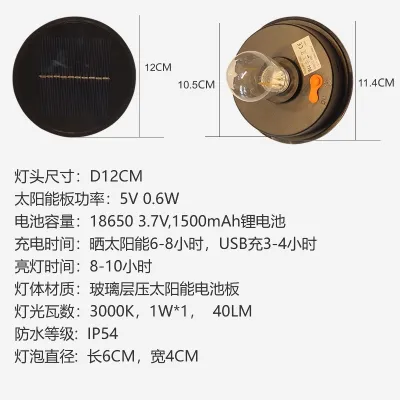
Prices are valid at publication and may change. Please refer to the product page for the latest price.
Finally, examine the physical seals of the fixture. High-quality brands incorporate thick silicone or rubber gaskets around the battery compartment, lens cover, and solar panel seams. Cable entry points must utilize tight-fitting rubber grommets or compression glands to prevent moisture from wicking into the internal electronics. If moisture penetrates these barriers, it leads to rapid internal corrosion, electrical short circuits, and premature battery failure.
In addition to external rain, high relative humidity can cause internal condensation when temperatures drop rapidly at night. Brands that include pressure-equalization vents or breathable membranes allow moisture vapor to escape without letting liquid water in, preventing fogging on the lens and protecting the internal circuitry from slow degradation.
Battery and Solar Panel Performance in Tropical Conditions
The reliability of a solar-powered light during consecutive overcast days depends entirely on its energy storage and generation components. Most modern solar lights utilize either Lithium-ion (Li-ion) or Lithium Iron Phosphate (LiFePO4) batteries. LiFePO4 batteries are highly recommended for tropical climates because they exhibit superior thermal stability, safely operating at higher ambient temperatures without degrading. They also offer a significantly longer cycle life, often lasting up to 2,000 charge-discharge cycles compared to the 300 to 500 cycles typical of standard Li-ion batteries.

The solar panel itself must be highly efficient to maximize energy capture during limited daylight hours. Solar panels generally fall into two categories: monocrystalline and polycrystalline. Monocrystalline panels feature a higher silicon purity, allowing them to achieve conversion efficiencies of 15% to 22%. This efficiency is crucial during Singapore’s monsoon seasons, as monocrystalline panels generate more electricity from diffused, low-light conditions than lower-cost polycrystalline alternatives.
To ensure reliable operation, you must verify the balance between solar panel wattage, battery capacity, and power consumption. The solar panel’s wattage determines how quickly it can replenish the battery under standard sunlight. A battery with a high capacity, measured in milliampere-hours (mAh) or Watt-hours (Wh), acts as a reservoir. If the panel wattage is too low relative to the battery capacity, the battery will never fully charge, especially during consecutive cloudy days. Conversely, a large battery paired with an efficient panel ensures the light has enough stored energy to operate through multiple nights of low solar generation.
When evaluating brands, look for recognized electrical safety certifications on the product label, such as the CE mark or local safety marks. These certifications verify that the battery management system (BMS) includes essential protections against overcharging, over-discharging, and short circuits, which are critical for preventing thermal runaway in hot outdoor environments.
Sensor Accuracy and Lighting Modes for Outdoor Security
A security light is only as reliable as its motion sensor. Passive Infrared (PIR) sensors detect changes in infrared radiation, meaning they trigger when a warm body moves across their field of view. However, in extremely hot tropical afternoons where ambient ground temperatures approach body temperature, PIR sensitivity can decrease. Heavy rain can also temporarily mask infrared signatures. Microwave sensors emit low-energy radar waves and measure the reflection off moving objects. While highly accurate and unaffected by temperature or rain, microwave sensors are extremely sensitive and can trigger falsely due to wind-blown tree branches or heavy downpours.
Look for brands that offer customizable detection parameters. This includes adjustable detection angles, ranging from 120 to 270 degrees, and sensing distances, typically adjustable up to 10 or 12 meters. Being able to adjust the sensor’s sensitivity and the delay time—how long the light stays on after motion stops—allows you to fine-tune the fixture to your specific environment, minimizing false triggers from passing cars or neighborhood cats.
Reliable solar lights feature multiple operating modes to help manage energy reserves. A common mode is ‘dim-to-bright,’ where the light remains at a low standby level and switches to 100% brightness only when motion is detected. For maximum energy conservation, especially during prolonged rainy periods, a ‘motion-only’ mode keeps the light completely off until triggered, preserving the battery charge for when illumination is actually needed.
Installation Boundaries and Safety Checks
To maximize solar energy collection, the solar panel must receive unobstructed sunlight. Because Singapore is situated near the equator, solar panels should ideally be mounted horizontally or at a very slight angle, around 5 to 15 degrees, facing north or south to allow rainwater to run off naturally rather than pooling on the glass. Ensure the mounting height aligns with the manufacturer’s recommended sensor range, typically between 2 and 3 meters above the ground.
Installing outdoor lighting often involves working at heights, which requires stable ladders and proper safety precautions. If you are mounting a heavy fixture onto a high wall or soffit, ensure the mounting surface, such as brick, concrete, or sturdy timber, can support the weight under high wind loads during tropical storms. For hybrid solar lights that connect to fixed household wiring for backup power, always isolate the mains power at the distribution board before installation. Any fixed electrical wiring must comply with local safety regulations and should be carried out by a licensed electrical worker (LEW).
Before drilling, verify that the mounting surface is free from hidden water pipes or electrical conduits. Use appropriate wall plugs and stainless steel screws to prevent rust streaks from forming on your exterior walls over time. If mounting on external insulation finishing systems or lightweight cladding, consult the manufacturer’s instructions to avoid compromising the building’s waterproofing envelope.
Navigating Warranties and Retailer Policies
When purchasing solar lights from online marketplaces or local retailers, pay close attention to the warranty terms. A local distributor warranty ensures you can easily obtain a replacement or repair without shipping the product overseas. International or seller-only warranties often require you to bear the cost of return shipping, which can exceed the value of the light itself.
Read the fine print regarding what the warranty covers. Many manufacturers exclude water damage if the light was installed upside down or if the seals were compromised during battery replacement. Similarly, degradation of battery capacity over time is often treated as normal wear and tear rather than a manufacturing defect, though some premium brands offer a separate, limited warranty on the battery cell itself.
To protect your investment, purchase only from authorized retail channels or official brand stores. Keep a digital copy of your purchase receipt, as thermal paper receipts fade quickly in humid environments. Register the product on the manufacturer’s official website immediately after purchase to validate your warranty coverage and access customer support if technical issues arise.
Frequently Asked Questions (FAQ)
Do solar motion sensor lights work during Singapore's monsoon season?
Yes, solar motion sensor lights can function during the monsoon season, provided they are equipped with high-efficiency monocrystalline solar panels and adequate battery storage. While solar generation decreases on overcast days, monocrystalline panels can still harvest energy from diffused daylight. To ensure the light remains operational throughout consecutive rainy days, you should switch the fixture to a ‘motion-only’ mode. This prevents the battery from draining continuously and reserves the stored power exclusively for when movement is detected.
Can I replace the built-in battery when it degrades?
Whether you can replace the battery depends entirely on the product’s design. Many budget-friendly solar lights feature completely sealed housings to achieve high IP ratings, meaning the battery cannot be replaced without destroying the waterproof seal. More sustainable, premium brands design their fixtures with dedicated, gasket-sealed battery compartments that allow users to swap out degraded cells easily. Always check the product manual or manufacturer specifications before purchasing to verify if the battery is user-replaceable and what specific battery type is required.

Community discussion
Share your experience or ask a question. Comments are reviewed before publication.