
Finding the most energy-efficient UFO LED light in Singapore requires looking beyond brand names to evaluate verified technical specifications. Because manufacturers frequently update their LED chips and driver technologies, the most efficient fixture is determined by its luminous efficacy—measured in lumens per watt (lm/W)—rather than brand reputation alone. To secure the highest long-term energy savings, you must compare verified product datasheets, check local safety certifications, and calculate the total cost of ownership based on your facility’s specific operating hours and local electricity tariffs.
Selecting the right lighting for high-ceiling commercial, industrial, or retail spaces involves balancing upfront procurement costs with ongoing operational expenses. In Singapore, where commercial utility rates can fluctuate, choosing a highly efficient lighting system directly impacts your bottom line. By understanding how to read technical specifications and verify manufacturer claims, you can make an informed decision that ensures optimal illumination while minimizing electricity consumption.
Core Metrics for Evaluating UFO LED Light Efficiency
To objectively compare different UFO LED lights, you must first understand the core metrics that define how efficiently a fixture converts electricity into usable light. The primary indicator of this performance is luminous efficacy, which is expressed in lumens per watt (lm/W). This metric tells you exactly how much light (lumens) the fixture produces for every watt of electrical power it consumes. A higher lm/W rating indicates a more efficient fixture that delivers the same brightness while drawing less power from the grid.
Products mentioned in this guide
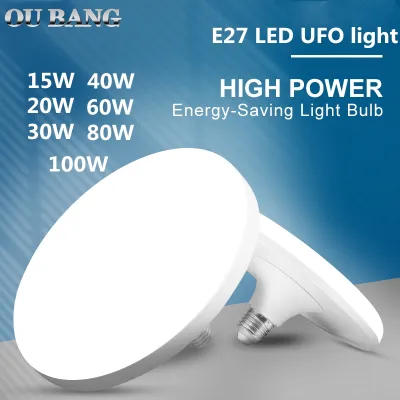
![[Climate Voucher] PHILIPS UFO 15W 24W LED Bulb E27 Base Easy Replacement](https://img.lazcdn.com/g/p/b23fd78644326a4d703d40b4ac7f95fd.jpg_400x400q80.jpg_.webp)
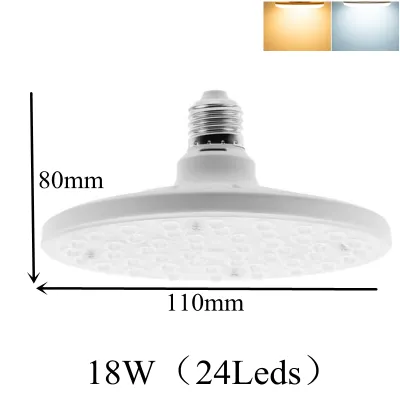
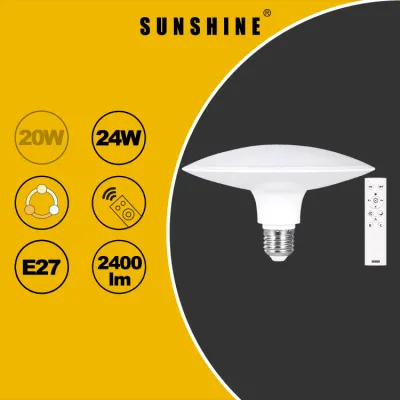
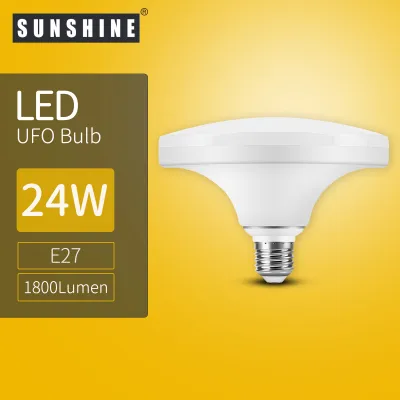
Prices are valid at publication and may change. Please refer to the product page for the latest price.
Beyond luminous efficacy, the electrical design of the LED driver plays a critical role in overall system efficiency. The power factor (PF) measures how effectively the fixture uses the incoming alternating current (AC) electricity. A power factor close to 1.0 (ideally 0.90 or higher) means the fixture wastes very little power as reactive energy. Additionally, total harmonic distortion (THD) should be kept low—typically under 15%—to prevent electrical noise and minimize strain on your building’s electrical distribution system.
Thermal management is another vital factor that directly influences long-term efficiency. Although LEDs run cooler than traditional metal halide or high-pressure sodium lamps, they still generate heat at the silicon junction. If this heat is not dissipated effectively, the junction temperature rises, which temporarily reduces the luminous efficacy and permanently accelerates the degradation of the LED chips. High-quality UFO LED lights feature robust, integrated heat sinks—often constructed from die-cast aluminum with open-air flow designs—to maintain low operating temperatures and preserve efficiency over time.
Essential Specifications to Compare Across Brands
When reviewing product datasheets from various lighting brands, it is important to distinguish between initial performance and long-term reliability. Initial luminous efficacy refers to the fixture’s performance when brand new, but you must also evaluate its maintained efficacy over its rated lifespan. Look for lumen maintenance specifications, typically designated as L70 or L80, which indicate the number of operating hours before the light output drops to 70% or 80% of its original brightness. A fixture that maintains its output longer will deliver better value and delay the need for premature replacements.

The efficiency of the LED driver itself is another critical specification to compare. The driver converts the standard 220-240V AC power supplied in Singapore to the low-voltage DC power required by the LED chips. A high-quality driver operates at an efficiency of 90% or higher, meaning less energy is lost as heat during the conversion process. When comparing brands, ensure the listed wattage represents the total system wattage (including driver losses) rather than just the power consumed by the LED chips alone.
Beam angle options and light distribution also play a major role in practical energy efficiency. UFO LED lights are commonly available with beam angles of 60, 90, or 120 degrees. Selecting the correct beam angle for your mounting height ensures that light is directed precisely onto the work plane rather than being wasted on upper walls or ceiling structures. By optimizing light distribution, you can often achieve your target illuminance (lux) using lower-wattage fixtures, thereby reducing overall energy consumption across your facility.
Verifying Efficiency Claims and Certifications in Singapore
With numerous lighting products available on the market, verifying manufacturer claims through independent testing standards is essential. Reliable brands provide comprehensive photometric reports based on industry-standard testing methods. Look for LM-79 reports, which detail the fixture’s total luminous flux, electrical power, efficacy, and chromaticity as measured by an accredited third-party laboratory. Additionally, LM-80 test data and TM-21 projections provide verified evidence of how the LED chips perform over thousands of hours of continuous operation.
In Singapore, electrical safety and performance compliance are paramount. Ensure that the UFO LED lights and their drivers comply with local safety regulations and carry recognized certification marks, such as the Enterprise Singapore Safety Mark where applicable, or international standards like IEC 60598. These certifications guarantee that the fixtures have undergone rigorous testing for electrical safety, thermal stability, and electromagnetic compatibility, protecting your facility from electrical hazards and premature equipment failure.
Be cautious of common red flags when browsing marketing materials, especially on generic online marketplaces. Unusually cheap fixtures often make exaggerated “equivalent wattage” claims without providing any supporting LM-79 or LM-80 test reports. Other warning signs include missing manufacturer contact details, vague warranty terms, and unrealistic lifespan promises (such as 100,000 hours) that lack independent laboratory verification. Investing in certified products from reputable distributors ensures that the performance you pay for matches the actual output in your facility.
Calculating Long-Term Energy Savings and Total Value
To determine whether a premium, high-efficacy UFO LED light is worth the initial investment, you can calculate the projected energy savings and total cost of ownership. To perform this calculation, you will need the actual system wattage of the fixtures, the average daily operating hours, and your current electricity tariff in S$ per kilowatt-hour (kWh). By comparing these variables, you can estimate the monthly and annual operating costs of different models.
For example, consider a facility in Singapore operating 12 hours a day, 365 days a year, with an electricity tariff of S$0.32 per kWh. If you compare a standard 150W UFO LED light (with an efficacy of 100 lm/W) against a high-efficacy 100W model (with an efficacy of 150 lm/W), both fixtures will deliver approximately 15,000 lumens of light. The annual operating cost for the standard 150W fixture is calculated as follows: (150W × 12 hours × 365 days / 1000) × S$0.32 = S$210.24. For the high-efficacy 100W fixture, the annual cost is: (100W × 12 hours × 365 days / 1000) × S$0.32 = S$140.16. This results in an annual saving of S$70.08 per fixture.
Over a five-year period, the high-efficacy fixture saves S$350.40 in electricity costs alone. When multiplied across a facility requiring dozens of fixtures, the total savings become substantial. Furthermore, high-quality fixtures with superior lumen maintenance reduce the frequency of replacements. In high-ceiling environments, replacing a failed light often requires renting scissor lifts and hiring specialized labor, meaning that choosing a reliable, long-lasting fixture yields significant maintenance savings alongside direct energy reductions.
Decision Framework: Selecting the Right UFO LED Light
To select the most appropriate UFO LED light for your facility, establish a clear decision framework based on your specific operational environment. For facilities with continuous, high-bay, or 24/7 operations, prioritize fixtures with the highest verified luminous efficacy (such as 140 lm/W or higher) to maximize your return on investment. In these scenarios, the higher upfront cost of premium models is rapidly offset by the dramatic reduction in daily energy consumption.
The physical environment of your facility also dictates the required specifications. For high-ceiling, humid, or dusty industrial spaces in Singapore, select fixtures with robust thermal management and an appropriate Ingress Protection (IP) rating, such as IP65 or IP66, to prevent moisture and dust ingress. Additionally, ensure the fixture is rated for the ambient operating temperatures of your space, especially in unventilated warehouse roofs where heat can accumulate. Because installing these fixtures typically involves working at height, suspended loads, and fixed electrical wiring, always isolate the power supply before installation. These tasks must be carried out in accordance with local building regulations and manufacturer instructions, ideally by a licensed electrical worker (LEW) to ensure safety and compliance.
Finally, verify the warranty terms and the availability of local support before finalizing any bulk purchases. A reliable manufacturer warranty should cover at least three to five years and include clear terms regarding lumen depreciation and driver failure. Working with established local distributors in Singapore ensures that you have access to prompt technical assistance, replacement parts, and warranty support, securing your investment for years to come.
Frequently Asked Questions (FAQ)
Do higher wattage UFO LED lights always produce more usable light? (FAQ)
No, higher wattage does not guarantee more usable light. A lower-wattage fixture with high luminous efficacy (such as 150 lm/W) can produce the same or greater light output (lumens) than a higher-wattage fixture with poor efficacy (such as 100 lm/W) while consuming less electricity. Furthermore, the usability of the light depends heavily on the fixture’s beam angle and optical design, which direct the light precisely to the work plane rather than scattering it uselessly.
How does ambient temperature affect UFO LED light efficiency? (FAQ)
Excessive ambient temperature raises the internal junction temperature of the LED chips, which temporarily reduces their luminous efficacy and accelerates permanent lumen depreciation over time. In warm, poorly ventilated high-ceiling environments, it is essential to choose UFO LED lights with high-quality, die-cast aluminum heat sinks designed for efficient thermal dissipation, and to verify that the fixture’s rated maximum operating temperature exceeds the peak ambient temperatures of your facility.
Community discussion
Share your experience or ask a question. Comments are reviewed before publication.