
Finding authentic Japandi-style dining pendant light brands in Singapore requires a careful balance of aesthetic appreciation and technical verification. The Japandi style—a harmonious fusion of Japanese minimalism (wabi-sabi) and Scandinavian functionality (hygge)—relies heavily on natural materials, organic textures, and soft, diffused lighting. To secure a high-quality fixture that stands the test of time, homeowners must look beyond superficial online listings and focus on reputable brands that offer certified electrical safety, robust local warranties, and genuine craftsmanship. By exploring curated local showrooms, understanding material indicators, and verifying local electrical compatibility, you can find a dining pendant light that elevates your space while ensuring long-term safety and performance.
Identifying Authentic Japandi Design Elements
To distinguish a true Japandi dining pendant light from generic minimalist or rustic fixtures, you must understand the core design philosophies of both cultures. Scandinavian design contributes clean, structured lines, functional simplicity, and a preference for light, airy spaces. Japanese design introduces organic asymmetry, rustic warmth, and a deep reverence for natural imperfections. Together, they create a style that is warm, uncluttered, and deeply connected to nature.
When evaluating brands, pay close attention to the material indicators listed on product specifications. Authentic Japandi fixtures utilize high-quality, natural materials such as hand-woven rattan, sustainable bamboo, washi paper, spun ash or oak wood, matte ceramics, and frosted hand-blown glass. Be cautious of brands that use synthetic substitutes, such as plastic printed with wood-grain patterns or low-grade faux rattan. These materials lack the tactile warmth and subtle irregularities that define the wabi-sabi aesthetic. True designer brands will explicitly state the origin and type of wood or natural fiber used, reflecting a commitment to sustainability and craftsmanship.
Products mentioned in this guide
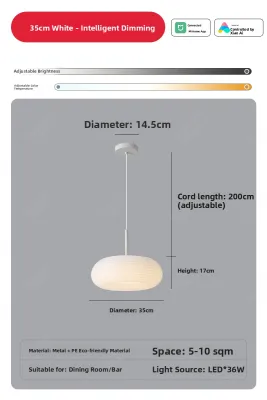
Prices are valid at publication and may change. Please refer to the product page for the latest price.
The lighting effect is another critical element of authentic Japandi design. In a dining setting, the light should foster intimacy and comfort. Japandi fixtures are designed to emit a warm, diffused glow rather than a harsh, direct beam. Look for brands that incorporate built-in diffusers, semi-translucent shades that gently scatter light, or deep-domed shapes that conceal the light source from direct view. This prevents glare and creates a soft wash of light across the dining table, enhancing the textures of your food and tableware.
Navigating Retail Channels for Quality Lighting in Singapore
Finding reputable Japandi lighting brands in Singapore involves navigating a diverse retail landscape. While online shopping offers convenience, high-quality lighting is best experienced in person. Specialized local lighting showrooms and curated interior design boutiques—often located in design-centric districts like Jalan Besar, Outram, or Tai Seng—are excellent starting points. These showrooms curate international and regional designer brands that specialize in minimalist and organic aesthetics, allowing you to see how the fixtures interact with real-world furniture and architectural elements.

Visiting official brand flagship stores or authorized home decor retailers provides a distinct advantage: the opportunity for physical inspection. Natural materials like wood, rattan, and ceramics possess unique grains, weaves, and finishes that vary from one piece to another. By examining the fixtures in person, you can assess the structural integrity of the frames, the precision of the joints, and the overall build quality. Showroom consultants can also provide valuable insights into the brand’s manufacturing processes and material sourcing.
Conversely, shopping on unverified online marketplaces or general e-commerce platforms presents significant risks. Many low-cost listings use stolen product photography from authentic designer brands to sell cheap, poorly constructed replicas. These imitation lights often lack material transparency, using flammable plastics or toxic adhesives instead of natural, treated wood and fibers. More importantly, they rarely carry the necessary electrical safety certifications required for use in Singapore, posing serious fire and electrical hazards. They also lack local warranty support, leaving you without recourse if the fixture fails shortly after installation.
Technical Specifications and Installation Requirements
Before purchasing any dining pendant light, you must verify its technical compatibility with Singapore’s electrical infrastructure. Singapore operates on a standard voltage of 230V AC at a frequency of 50Hz. Ensure that the brand’s fixtures are rated for this voltage. Crucially, look for the Safety Mark issued by Enterprise Singapore. This mark indicates that the fixture, or its critical electrical components like the LED driver and lampholder, has undergone rigorous testing to meet local safety standards. Additionally, check the bulb socket type; standard bases like E27 or GU10 are highly recommended, as finding replacement bulbs in local hardware stores will be straightforward.
Sizing and hanging height are essential for both visual balance and functional comfort. A pendant light that is too small will look lost over a large dining table, while an oversized fixture can overwhelm the room. As a practical guideline, choose a pendant light with a diameter that is approximately one-half to two-thirds the width of your dining table. When it comes to installation height, the bottom of the pendant light should generally hang between 75 cm and 90 cm above the tabletop. This height ensures that the light source is positioned low enough to create an intimate dining atmosphere but high enough to avoid blocking the sightlines of guests sitting across from one another.
Electrical safety must be your top priority during installation. Always isolate the power supply at the main distribution board before handling any wiring. While replacing a simple bulb is a straightforward task, installing a new pendant light—especially one involving fixed wiring, ceiling modifications, or heavy materials—requires professional expertise. If your chosen fixture is heavy, such as a solid ceramic or large timber pendant, the ceiling must be structurally reinforced. For these tasks, or when integrating smart dimming systems, stop DIY efforts and hire a licensed electrical worker registered with the Energy Market Authority (EMA). This ensures compliance with local wiring regulations (SS 638) and guarantees structural and electrical safety.
Assessing Brand Warranties and Long-Term Support
A premium Japandi dining pendant light is a long-term investment, making brand warranty and post-purchase support critical evaluation criteria. When comparing brands, analyze the specific terms of their warranties. A reliable brand typically offers a multi-year warranty on internal electrical components, such as integrated LED modules, drivers, and internal wiring. However, be aware that cosmetic finishes and natural materials like rattan, bamboo, or untreated wood are often subject to different terms. Because Singapore’s tropical climate features high humidity, natural materials may experience minor color shifts or warping over time; check whether the brand covers these environmental changes or classifies them as natural wear and tear.
The availability of replacement parts is another factor that separates reputable brands from low-cost alternatives. Over years of use, components like diffusers, suspension cables, or specialized LED drivers may need replacement. Inquire with the retailer whether the brand maintains a local stock of spare parts in Singapore, or if they must be imported at a high cost. Opting for brands that use standard, non-proprietary components can save you significant maintenance hassle in the future.
Finally, review the retailer’s return and exchange policies before finalizing your purchase. Even with careful measurements, a fixture’s scale, color temperature, or material texture may look different once installed in your specific dining room. Reputable showrooms often provide flexible exchange policies or allow you to view a physical sample in your home environment before committing to a high-ticket purchase, ensuring complete satisfaction with your investment.
Frequently Asked Questions (FAQ)
What color temperature is best for a Japandi dining pendant light?
A warm white color temperature, specifically between 2700K and 3000K, is highly recommended for a Japandi dining pendant light. This warm spectrum enhances the natural, earthy tones of wood, rattan, and ceramic materials, making the dining space feel cozy and inviting. It also renders food in a visually appealing, appetizing light. Avoid cool white or daylight temperatures (4000K and above) in the dining area, as they can make natural materials look cold, sterile, and artificial, disrupting the serene, organic ambiance of the Japandi aesthetic.
Can I install a heavy rattan or wood pendant light on a standard false ceiling?
You should not install a heavy pendant light directly onto a standard gypsum false ceiling without proper structural support. False ceilings are designed to hold minimal weight and can sag or collapse under the load of heavy timber, ceramic, or large rattan fixtures. To ensure safety, the fixture must be anchored directly to the concrete soffit (the structural ceiling slab) above the false ceiling using threaded rods, heavy-duty brackets, or specialized structural anchors. Always consult a licensed electrician or a structural specialist to assess the ceiling’s load-bearing capacity and perform a secure installation.

Community discussion
Share your experience or ask a question. Comments are reviewed before publication.