
Finding the loudest alarm clock in Singapore requires looking beyond flashy marketing labels and focusing on verified acoustic specifications, physical sound-producing mechanisms, and multi-sensory wake-up features. For heavy sleepers, shift workers, or those dealing with deep sleep cycles in air-conditioned, sound-insulated HDB flats, a standard digital clock often fails to break through the noise floor. To secure a device that reliably rouses you, the search must center on actual decibel ratings, robust power sources, and supplementary tactile or visual alerts. By understanding how sound waves interact with your bedroom environment and verifying the hardware capabilities of different clock types, you can select an alarm system that ensures you never sleep through an important morning commitment.
Understanding Decibel Ratings and Alarm Volume
To make an informed decision, it is essential to understand how sound volume is measured and specified. The decibel (dB) scale is logarithmic rather than linear, which means that a small numerical increase represents a massive change in physical sound pressure and perceived loudness. For example, a 10 dB increase in sound level corresponds to approximately a doubling of perceived loudness to the human ear. This means an alarm clock rated at 90 dB is not just slightly louder than an 80 dB model; it sounds twice as loud and carries significantly more acoustic energy.
Standard bedside alarm clocks typically emit sound at around 60 to 70 decibels, which is roughly equivalent to the level of a normal conversation. While this is sufficient for light sleepers, it rarely penetrates the deep sleep stages of heavy sleepers or those wearing earplugs. Heavy-duty alarm clocks, by contrast, are engineered to produce outputs exceeding 80, 90, or even 100 decibels. At these higher levels, the sound pressure is comparable to a lawnmower or a handheld drill, designed specifically to trigger an immediate physiological wake response.
Products mentioned in this guide

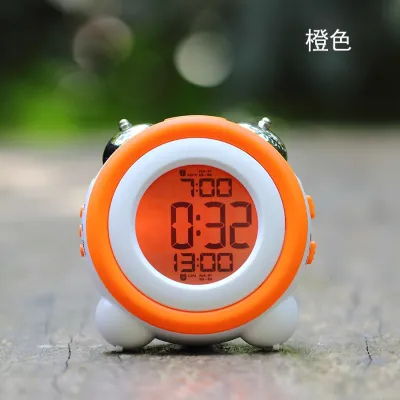
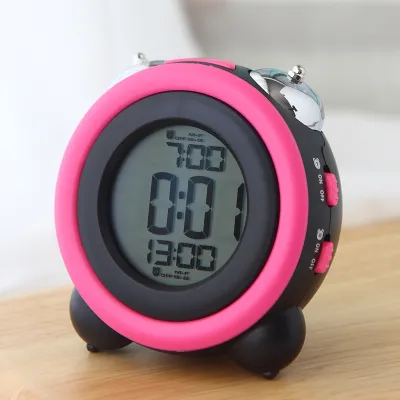
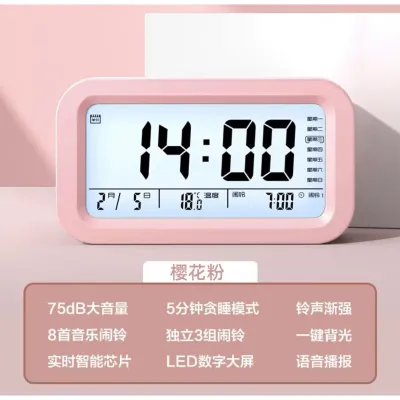
![UnihomSG [ReadyStock] Alarm Clock snooze light gradual loudness pleasant tone (Unique Function)](https://img.lazcdn.com/g/p/35b08b0b7b66eb0decc7299fd08d1c3d.png_400x400q80.png_.webp)
Prices are valid at publication and may change. Please refer to the product page for the latest price.
When browsing online marketplaces or local electronics shops in Singapore, you will frequently encounter vague marketing terms such as “super loud” or “heavy-duty.” These descriptors are subjective and carry no technical guarantee. Instead of relying on promotional copy, always look for the manufacturer’s official specification sheet to find the rated decibel output. A reputable manufacturer will specify the maximum decibel level measured at a standard distance, usually one meter from the speaker. This objective metric is the only reliable way to compare the acoustic power of different models before making a purchase.
Essential Features for Waking Heavy Sleepers
While sheer volume is a primary factor, relying solely on high-decibel sound can lead to a jarring wake-up experience. The most effective high-volume alarm clocks combine acoustic power with alternative sensory triggers to ensure you wake up reliably.

One of the most successful supplementary features is the bed shaker or vibrating pad. This accessory is a small, flat device connected to the main clock via a cable or wireless connection, designed to be placed under your pillow or mattress. When the alarm triggers, the pad vibrates vigorously, introducing a powerful tactile stimulus. Because physical vibration bypasses the auditory system entirely, it is incredibly effective for deep sleepers who have built up a tolerance to sound, as well as individuals with hearing impairments.
Visual alerts, such as integrated strobe lights or high-intensity LED flashes, offer another layer of sensory intervention. During deep sleep phases, your eyes remain sensitive to changes in ambient light. A flashing light in a dark bedroom can penetrate closed eyelids, signaling the brain to transition into a lighter sleep state before the full volume of the audio alarm kicks in. This combination of visual and auditory cues increases the likelihood of waking up without needing to push the audio volume to unsafe limits.
Additionally, look for clocks that offer a gradual volume increase, often referred to as a progressive crescendo alarm. Instead of blasting at maximum volume instantly—which can cause a sudden spike in heart rate—these devices start with a gentle tone and steadily escalate to their maximum decibel level over several minutes. Customizable tones and adjustable frequencies are also highly beneficial. Some individuals sleep through high-pitched beeps but wake up instantly to low-frequency rumbles, so having the ability to adjust the pitch of the alarm sound allows you to tailor the device to your specific auditory sensitivity.
Types of High-Volume Alarm Clocks to Consider
When exploring the market in Singapore, high-volume alarm clocks generally fall into three distinct categories, each utilizing different technologies to achieve high output.
Dedicated heavy-duty sonic alarms are purpose-built systems designed specifically for the most stubborn sleepers. These devices feature oversized, high-wattage speakers housed in robust casings designed to minimize cabinet rattle at high volumes. They almost always come packaged with a wired bed shaker and feature dedicated dials to adjust both the volume and the tone frequency. Because they are engineered from the ground up for maximum acoustic and tactile output, they represent the most reliable option for those who consistently sleep through standard alarms.
Smart speakers and multifunctional digital clocks represent a more modern, versatile approach. While not always marketed specifically as “extra loud,” many high-quality smart speakers can achieve impressive volume levels when paired with external audio sources or configured via smart home routines. However, if you choose this route, you must carefully verify the maximum volume limits within the device’s software settings. Some smart displays and speakers have built-in safety limiters that cap the alarm volume to prevent speaker damage, which might render them insufficient for heavy sleepers unless paired with an external, powered speaker via an auxiliary output.
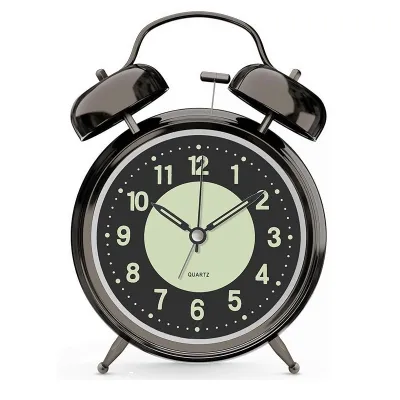
Traditional mechanical twin-bell clocks offer a classic, low-tech alternative that remains highly effective. These clocks do not rely on digital speakers; instead, they use a physical, battery-operated or spring-wound motor to rapidly strike a metal hammer against two hollow metal bells. This mechanical action produces a sharp, high-frequency, metallic ringing sound that is incredibly difficult to ignore. The physical resonance of metal striking metal creates a piercing acoustic profile that many people find far more disruptive and attention-grabbing than synthetic digital beeps, making them an excellent choice for those sensitive to high-frequency sounds.
How to Verify Volume Claims Before Buying
Purchasing an alarm clock online or in-store requires a systematic approach to ensure the device actually delivers the volume you need. Because you cannot always test the clock in your own bedroom before buying, verifying technical specifications and hardware requirements is crucial.
First, look for independent third-party testing data or detailed user reviews rather than relying on promotional images or product titles. Many online marketplaces are flooded with generic clocks claiming extreme decibel levels that are physically impossible for their small speakers to produce. Search for video demonstrations or written reviews where users measure the output using a decibel meter. Pay close attention to reviews written by self-proclaimed “heavy sleepers” or shift workers, as their real-world experiences provide valuable insight into whether the clock’s volume holds up over time.
Second, carefully examine the power requirements of the alarm clock. High-volume audio output requires a significant amount of electrical power to drive the speaker cones and operate accessories like vibrating bed shakers. Clocks that rely solely on standard AA or AAA batteries are rarely capable of sustaining extreme volume levels for more than a few seconds without rapidly draining the batteries or experiencing sound distortion. For reliable, high-decibel performance, prioritize models that plug directly into a wall outlet using an AC adapter, utilizing batteries strictly as a backup power source during electrical outages.
Third, verify the availability of audio output ports and connectivity options. If you have specialized accessibility needs or require an exceptionally loud setup, look for a model that features a standard 3.5mm auxiliary output or Bluetooth transmitter. This allows you to route the alarm audio directly into a larger external speaker system, a dedicated amplifier, or specialized under-pillow speakers, giving you the flexibility to scale the volume up to your exact requirements.
Supplementary Wake-Up Strategies When Volume Is Not Enough
Even the loudest alarm clock has physical and safety limits. If you find yourself still sleeping through high-decibel alerts, or if you want to avoid disturbing other members of your household, combining your loud clock with supplementary wake-up strategies can dramatically improve your morning routine.
One of the simplest and most effective strategies is strategic multiple alarm placement. Instead of keeping your loud alarm clock on your bedside table within arm’s reach, place it across the room on a chest of drawers or a desk. This forces you to physically get out of bed, stand up, and walk across the room to turn it off. The physical movement increases your heart rate and stimulates blood flow, making it much harder to fall back asleep. You can also set a secondary, standard alarm near your bed to start the waking process, followed by the extra-loud alarm across the room a few minutes later.
Integrating smart wearables into your routine is another excellent way to add a highly localized, silent physical cue. Many modern smartwatches and fitness bands feature powerful haptic motors that vibrate directly against your wrist. Because the vibration is in direct contact with your skin, it provides a highly effective wake-up stimulus that does not rely on loud noise, making it a perfect partner to a loud alarm clock placed across the room.
Finally, consider combining your loud audio alarm with light therapy, such as a sunrise alarm clock or smart light bulbs programmed to brighten gradually before your alarm goes off. By simulating a natural sunrise over 30 to 45 minutes, the gradual increase in light signals your brain to reduce the production of melatonin (the sleep hormone) and increase cortisol (the wakefulness hormone). By the time your loud alarm clock sounds, your body will already be in a lighter stage of sleep, making the transition to wakefulness much smoother and less jarring.
Frequently Asked Questions (FAQ)
Can an Extremely Loud Alarm Clock Cause Hearing Damage?
Yes, prolonged exposure to extremely high decibel levels at close range can potentially cause temporary or permanent hearing damage. Sound levels exceeding 85 decibels can be harmful with extended exposure, and levels above 100 decibels can cause damage in a much shorter timeframe if the source is right next to your ear. To protect your hearing, it is highly recommended to place any high-volume alarm clock at least two to three meters away from your head. Placing the clock across the room not only keeps the sound pressure at a safe level for your ears but also serves the dual purpose of forcing you to physically get out of bed to silence the device.
Do Battery-Operated Clocks Get as Loud as Plug-In Models?
Generally, battery-operated alarm clocks cannot match the sustained volume and power output of plug-in models. Standard alkaline or rechargeable batteries have physical limitations regarding the voltage and current they can supply to a speaker driver. Driving a high-wattage speaker or a mechanical bell mechanism at maximum volume requires a steady, robust power flow that quickly drains standard batteries, leading to a rapid drop in volume and sound quality. For consistent, high-volume performance, it is best to choose an alarm clock that plugs directly into a wall outlet via an AC adapter, using batteries only as a fail-safe backup to preserve your time and alarm settings during a power failure.

Community discussion
Share your experience or ask a question. Comments are reviewed before publication.