
Finding a eucalyptus reed diffuser that maintains its crisp, refreshing scent over several months in Singapore can be a challenge. The combination of high ambient humidity and constant indoor air conditioning creates a demanding environment for home fragrances. To find the longest-lasting options, you must look past marketing claims and understand how carrier bases, reed materials, and local environmental factors interact. By focusing on formulation quality and proper maintenance, you can ensure your space remains consistently fragrant without constantly buying replacements.
What Determines the Longevity of a Eucalyptus Reed Diffuser?
The carrier liquid is the unsung hero of any reed diffuser, acting as the vehicle that carries the eucalyptus fragrance up through the reeds and into the air. Cheap diffusers often rely on alcohol-based carriers like ethanol or isopropyl alcohol. While alcohol provides a strong initial scent throw, it evaporates rapidly, leaving you with an empty bottle in a matter of weeks. High-quality, long-lasting diffusers utilize specialty carrier solvents such as dipropylene glycol (DPG), isopropyl myristate (IPM), or bio-based glycerin alternatives. These carriers have much lower vapor pressures, meaning they evaporate at a slow, controlled rate, sustaining the scent for months rather than weeks.
The choice of reed material directly dictates how efficiently the oil is drawn upward and dispersed. Traditional natural rattan reeds contain tiny vascular channels that naturally wick the liquid. However, rattan can be prone to clogging, especially with thicker essential oils like eucalyptus. Synthetic fiber reeds, on the other hand, are engineered with uniform pores designed to pull oil upward at a highly consistent rate. While fiber reeds often provide a stronger, more immediate scent throw, they can also accelerate the consumption of the diffuser oil. Understanding this balance is key to managing longevity.
Products mentioned in this guide
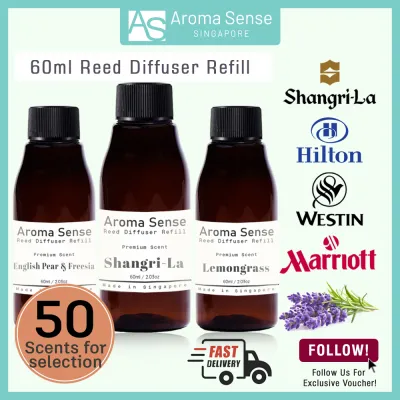
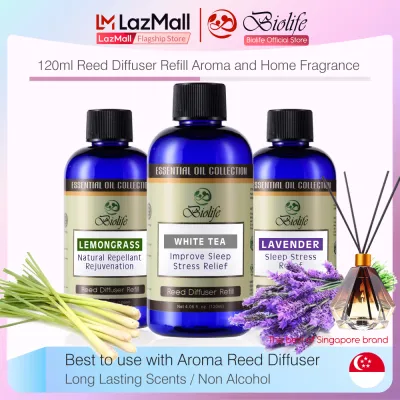
![(100+ Selections) Shangri-La Hotel/ Hilton Hotel/ Marriott Hotel/ Lavender/ Lemongrass/ Jasmine/ Rose/ Eucalyptus/ English Pear Freesia scent Premium Home Fragrance Aromatherapy Reed Diffuser (50ml) / Reed Refill (60ml) Essential Oil Scents [Re.D]](https://img.lazcdn.com/g/p/fb4311dbcd4bb0d3e271e42f184322fd.jpg_400x400q80.jpg_.webp)
![[KIRONA SCENT] Eucalyptus Diffuser Essential Oil (30ml 120ml 250ml) | Alleviate Sinus Respiratory Issues Headache](https://img.lazcdn.com/g/p/2bb15a04fe144df715b3d59cb5f840aa.jpg_400x400q80.jpg_.webp)
![[SG Ready Stock] Bosistos 100% Pure Eucalyptus Essential Oil (50mL / 175mL / 500mL) - Aromatherapy Liquid for Diffuser Sinus Congestion & Natural Cleaning (Made in Australia)](https://img.lazcdn.com/g/p/af4a4845cd4b54fceb54280ddee90876.png_400x400q80.png_.webp)
Prices are valid at publication and may change. Please refer to the product page for the latest price.
Singapore’s tropical climate plays a massive role in how diffuser oils behave. In non-air-conditioned spaces, the high relative humidity—often hovering around 80% or higher—can slow down the evaporation of certain water-soluble carrier oils, but it can also make the air feel heavy, dampening the perceived scent throw. Conversely, in air-conditioned rooms, the air is stripped of moisture. This dry environment accelerates the evaporation rate of the carrier oil, while the constant airflow from air conditioning units carries the scent away rapidly. This means a diffuser that lasts three months in a temperate climate might only last six to eight weeks in a heavily air-conditioned Singapore home.
Eucalyptus essential oil is naturally high in 1,8-cineole (eucalyptol), a highly volatile compound classified as a top note in perfumery. Top notes evaporate very quickly when exposed to air. To make a eucalyptus scent last, manufacturers must blend the pure essential oil with heavier, slower-evaporating synthetic fragrance compounds or natural base notes (like cedarwood, pine, or patchouli) that anchor the volatile eucalyptus molecules. A diffuser utilizing a pure, unblended eucalyptus essential oil will naturally have a shorter lifespan than one formulated with a stabilized fragrance blend designed for sustained release.
How To Evaluate Brand Claims for Scent Longevity
When shopping for a long-lasting eucalyptus diffuser, the ingredient list is your most reliable guide. Look for brands that explicitly state they are alcohol-free or use eco-friendly, low-evaporation carrier bases. If a brand does not disclose its carrier base or lists alcohol as the primary ingredient, it is highly likely the product will deplete quickly. High-quality brands are transparent about their formulations, often highlighting the use of natural essential oils blended with stable, non-toxic synthetic carriers.

Manufacturer labels often boast longevity claims such as “lasts up to 12 weeks” or “up to 3 months.” It is crucial to understand that these estimates are typically based on testing conducted in highly controlled laboratory environments—usually at a constant temperature of 20°C to 22°C, moderate humidity, and zero drafts. In Singapore’s typical indoor conditions, you should expect the actual lifespan to be roughly 20% to 30% shorter than the maximum claimed duration, especially if the diffuser is placed in a well-ventilated area or a room with active air conditioning.
Before committing your S$ to a specific brand, cross-reference user reviews on local e-commerce platforms and home decor forums. Look past the initial “smells great out of the box” reviews and search for feedback from users who have had the product for at least a month. Pay close attention to complaints about the scent fading entirely after two weeks, or the oil level remaining high while the scent disappears—a classic sign of clogged reeds or a poorly formulated carrier that cannot lift the fragrance.
Be wary of extreme longevity claims paired with unusually low prices. A large 200ml diffuser selling for under S$15 that promises to last six months is a major red flag. High-quality carrier oils and pure eucalyptus essential oils are costly raw materials. Cheap alternatives almost always rely on industrial solvents and highly diluted synthetic fragrances that either evaporate overnight or fail to throw any scent beyond a few inches from the bottle. Vague ingredient disclosures, such as simply listing “fragrance and solvent” without further detail, should also prompt caution.
Navigating Eucalyptus Diffuser Options in Singapore
Deciding between pure essential oils and synthetic fragrance blends depends on your priorities. Pure eucalyptus essential oil offers genuine aromatherapeutic benefits, such as clearing airways and promoting mental clarity, but its high volatility means it dissipates quickly. Synthetic or blended fragrance oils are chemically engineered to mimic the scent of eucalyptus while incorporating heavy fixatives that slow down evaporation. If your primary goal is therapeutic wellness, choose pure essential oil formulations and accept a slightly shorter lifespan; if your goal is consistent, long-lasting home styling, a high-quality synthetic or hybrid blend is often the better choice.
Singapore has a growing market of local artisanal home fragrance brands alongside established international commercial names. Local brands often formulate their products with the tropical climate in mind, sometimes utilizing heavier carrier bases that resist rapid evaporation in high humidity. They also tend to offer greater transparency regarding sourcing and ingredients. International commercial brands offer highly standardized quality and rigorous safety testing, but their formulations may be optimized for drier, cooler temperate climates, requiring you to adjust your reed usage to compensate.
When purchasing diffusers online or from physical boutiques in Singapore, always verify the seller’s authenticity. Look for brands that comply with international safety standards, such as those set by the International Fragrance Association (IFRA). Reliable brands will readily provide safety data sheets (SDS) or clear usage instructions. Avoid buying unbranded or extremely cheap imports from unverified online sellers, as these products may contain harmful phthalates or volatile organic compounds (VOCs) that can compromise indoor air quality.
To achieve optimal scent longevity, you must match the size of the diffuser to the dimensions of your room. A standard 100ml diffuser is generally suitable for small to medium spaces, such as a bathroom, study, or small bedroom. For larger living rooms or open-plan dining areas, a 200ml or larger bottle is necessary. Placing a small diffuser in a large, drafty room will force you to use more reeds to get any scent throw, which rapidly drains the oil without effectively fragrancing the space. Conversely, a large diffuser in a tiny room can be overwhelming and wasteful.
Maintenance Tips to Extend Your Diffuser's Lifespan
Flipping your reeds is the easiest way to refresh the eucalyptus scent, but doing it too often will shorten the diffuser’s lifespan. Every time you flip the reeds, you expose wet oil directly to the air, accelerating evaporation. For a steady scent throw, flip the reeds once every one to two weeks. Always perform this task over a paper towel or sink to prevent oil droplets from damaging your wooden furniture or countertops, as concentrated oils can strip paint and varnish.
Over time, airborne dust, pet hair, and lint will settle on the exposed portions of your reeds. In Singapore’s humid environment, this dust can mix with the oil to form a sticky barrier that clogs the microscopic pores of both rattan and fiber reeds. Once clogged, the reeds can no longer draw oil upward, causing the scent to fade even if the bottle is full. To prevent this, gently wipe the reeds with a dry cloth occasionally, and plan to replace them entirely every two to three months, or whenever you open a new refill bottle.
Where you place your diffuser has a massive impact on how long it lasts. Avoid placing it in direct sunlight, such as on a sunny windowsill, as UV light degrades the fragrance compounds and heats the oil, causing rapid evaporation. Keep it away from direct heat sources, open windows, and the direct path of air conditioning drafts or fan blades. The ideal spot is a high-traffic area with gentle, natural air movement—such as a hallway table or a shelf near the entrance of a room—where passing foot traffic naturally helps disperse the scent without forcing the oil to evaporate prematurely.
Eventually, you may notice that the liquid in your diffuser has turned thick, dark, or cloudy, and no longer throws a scent despite some oil remaining. This indicates that the volatile fragrance compounds have fully evaporated, leaving behind only the heavy, degraded carrier base. At this point, do not simply pour fresh oil on top of the old residue. Empty the vessel, wash it thoroughly with warm soapy water, let it dry completely, and then add your fresh refill oil along with a brand-new set of reeds to ensure optimal performance.
Frequently Asked Questions (FAQ)
Are fiber reeds better than rattan for eucalyptus scents?
Fiber reeds are generally superior for eucalyptus scents due to their engineered, highly porous structure. Eucalyptus oil, even when diluted in a carrier, tends to be relatively viscous compared to lighter citrus or floral fragrances. Natural rattan reeds contain irregular vascular channels that can easily become clogged by these heavier oil molecules, leading to a rapid decline in scent throw. Synthetic fiber reeds are manufactured with uniform, open pores that pull the viscous eucalyptus oil upward consistently, providing a stronger and more reliable scent throw over a longer period without clogging as easily.
Why does my eucalyptus diffuser stop smelling after a few weeks?
If your diffuser still has plenty of oil but no longer smells, the most common culprit is either reed clogging or olfactory fatigue. Over time, dust settles on the reeds, blocking the oil’s path to the air. Alternatively, your brain may have simply become accustomed to the constant presence of eucalyptus—a phenomenon known as olfactory fatigue. To test this, step out of the room or your home for a few hours; if the scent is noticeable when you return, your nose has simply adapted. If there is still no scent, try flipping the reeds or replacing them entirely.
Is it safe to use eucalyptus diffusers around pets?
No, eucalyptus essential oil is highly toxic to both cats and dogs. Concentrated eucalyptus oil contains compounds that pets cannot metabolize efficiently, and exposure can lead to respiratory distress, drooling, vomiting, or neurological issues. If you choose to use a eucalyptus diffuser, always keep it completely out of reach of your pets to prevent accidental tipping or ingestion. Ensure the room is well-ventilated, never use diffusers in confined spaces where pets cannot escape the scent, and consult your veterinarian immediately if you notice any signs of discomfort in your animals.

Community discussion
Share your experience or ask a question. Comments are reviewed before publication.