
Natural amethyst is a variety of quartz prized for its purple hue, but the decor market is flooded with clever imitations. To distinguish a genuine amethyst sculpture from a fake, you must evaluate its internal structure, thermal properties, weight, and color distribution. While some synthetic alternatives share chemical properties with natural quartz, they lack the unique geological markers left by millions of years of natural growth. By learning how to spot common imitation materials and perform non-destructive visual and tactile checks, you can confidently select authentic pieces for your home decor.
Common Imitations in the Decor Market
Mass-produced decorative items often rely on glass or molded resin to mimic the striking appearance of natural amethyst. Glass is easily tinted to match the signature purple shade, while resin can be poured into complex molds to replicate intricate sculptural details at a fraction of the cost of genuine stone. These materials are highly prevalent in budget-friendly home decor shops and online marketplaces.
Another common deceptive practice involves using low-grade, pale, or completely clear quartz and treating it with artificial dyes. Sellers inject purple dye into the natural fractures of these inexpensive stones to simulate the rich, deep violet hues of premium amethyst. This process creates a temporary aesthetic that can fade over time when exposed to sunlight or household cleaning agents.
Products mentioned in this guide
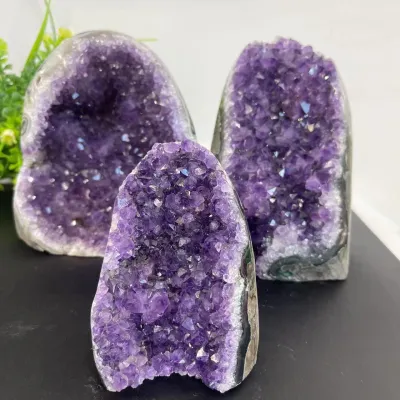
Prices are valid at publication and may change. Please refer to the product page for the latest price.
Additionally, the market contains lab-grown synthetic crystals that possess the exact chemical composition and crystalline structure of natural quartz. Because these synthetic stones are grown in controlled laboratory environments, they lack the natural imperfections, mineral inclusions, and unique growth patterns that define mined amethyst. Distinguishing these high-tech replicas requires a keen eye and an understanding of natural formation markers.
Visual Checks: Color Zoning and Inclusions
One of the most reliable ways to verify a genuine amethyst stone sculpture is to examine its color distribution under a strong, direct light source. Natural amethyst rarely exhibits a perfectly uniform purple hue throughout its entire structure. Instead, it displays what gemologists call color zoning, where you will observe distinct angular bands, patches of lighter and darker purple, or even sections of clear quartz. These color variations follow the crystal’s natural growth planes and are incredibly difficult to replicate in glass or synthetic materials.

To inspect the sculpture further, hold it up to a bright window or use a penlight to illuminate the interior of the stone. Look closely for natural inclusions, which are tiny imperfections trapped inside the crystal during its formation deep underground. Genuine amethyst often contains microscopic mineral needles, liquid-filled cavities, or subtle internal fractures that catch the light.
Conversely, if the sculpture appears completely flawless, with uniform transparency and a perfectly consistent purple shade from top to bottom, you should proceed with caution. While exceptionally high-grade natural amethyst does exist, it is rarely used for large decorative sculptures due to its extreme scarcity and high cost. A large, perfectly clear, and evenly colored purple piece is highly likely to be made of glass or synthetic crystal.
Tactile Checks: Temperature and Surface Texture
Your sense of touch can provide immediate clues about the authenticity of an amethyst sculpture. When you first pick up a genuine crystal, it should feel noticeably cold to the touch, even in a warm room. This is because natural quartz has high thermal conductivity, allowing it to draw heat away from your skin much faster than glass or plastic. If the sculpture warms up almost instantly in your hand or feels neutral from the start, it may be composed of resin or glass.
Next, run your fingers carefully along the surface, crevices, and carved edges of the sculpture. Natural stone sculptures are hand-carved or polished, resulting in subtle variations in texture, minor surface irregularities, and unique polishing marks. In contrast, molded resin or glass imitations often feature perfectly smooth surfaces, unnaturally uniform curves, or faint, raised seam lines left behind by the manufacturing molds.
Weight is another critical physical indicator to evaluate. Natural amethyst is a dense, heavy material. If you lift a large sculpture and it feels surprisingly light or hollow, it is likely made of resin or a lightweight plastic composite. For genuine, heavy stone sculptures, always ensure proper installation on a stable surface that can support the weight. If you plan to mount a heavy piece on a wall or display it on an elevated shelf, consult a qualified professional to ensure secure anchoring and prevent structural damage or injury.
Red Flags in Dyed and Synthetic Stones
Artificially dyed stones and synthetic replicas often leave behind specific structural clues that reveal their true nature. When inspecting a suspected dyed stone, pay close attention to any surface cracks, natural crevices, or drilled holes within the sculpture. Because dye is introduced after the stone is formed or carved, it tends to pool and concentrate in these recessed areas. If you notice deep, dark purple lines running through pale cracks, or a heavy concentration of color around the base of the sculpture, the piece has likely undergone artificial color enhancement.
Another major red flag is the presence of perfectly spherical air bubbles trapped inside the material. Natural geological processes do not produce round air bubbles in quartz; any gas or liquid inclusions in genuine amethyst will have irregular, angular, or elongated shapes. If you spot tiny, perfectly round bubbles under magnification or even with the naked eye, you are looking at molded glass or resin rather than natural stone.
Furthermore, be skeptical of large sculptures that display an overly perfect, saturated violet color without any transition to lighter quartz or white matrix stone. Natural amethyst grows in geodes and veins, meaning the base of the crystal cluster or carved sculpture almost always retains some of the host rock or lighter quartz layers. A massive, solid purple sculpture with zero color variation is a strong indicator of a synthetic lab-grown crystal or a high-quality glass replica.
When to Seek Professional Gemological Verification
While basic visual and tactile checks can help you weed out cheap glass and resin imitations, they have their limits. High-quality synthetic amethyst grown via the hydrothermal method shares the exact chemical, physical, and optical properties of natural quartz. These sophisticated lab-grown stones can easily pass temperature and basic weight tests, and they may even feature artificial inclusions designed to mimic natural formations, making them incredibly difficult to identify at home.
Definitive identification of these advanced synthetics requires specialized gemological equipment. Professional gemologists use tools such as refractometers to measure the refractive index, polariscopes to analyze optical character, and high-powered microscopes to detect subtle growth lines that are invisible to the naked eye.
If you are considering purchasing a high-value amethyst sculpture, or if your at-home checks leave you feeling uncertain, investing in professional verification is highly recommended. Consulting a certified gemologist or sending the piece to a recognized gemological laboratory ensures you protect your investment and gain peace of mind regarding the sculpture’s true origin and value.
Choosing Reputable Sellers and Documentation
Navigating the decor market successfully requires choosing trustworthy vendors who prioritize transparency. When shopping for amethyst sculptures, always request detailed product descriptions and invoices that explicitly state the material’s origin. Reputable sellers should clearly disclose whether the amethyst stone is natural, dyed, heat-treated, or synthetic, rather than using vague marketing terms like “natural-style” or “amethyst-colored.”
For significant investments, such as large-scale statement sculptures or intricate collector’s pieces, ask the seller to provide an independent gemological certificate. This documentation should come from a recognized, third-party laboratory rather than being an in-house certificate printed by the seller. A genuine certificate verifies the stone’s mineral identity and confirms that it has not undergone artificial dye treatments.
Finally, always review the seller’s return policy and authenticity guarantees before finalizing your purchase, especially when buying from online marketplaces or independent decor shops. A confident, honest seller will offer a reasonable return window that allows you sufficient time to inspect the sculpture or have it professionally evaluated. Avoid vendors who refuse returns or offer no clear recourse if the item is later found to be an imitation.
Frequently Asked Questions (FAQ)
Can I use a scratch test to verify amethyst stone?
While natural amethyst has a Mohs hardness rating of 7, meaning it can scratch glass and copper, performing a scratch test on a finished sculpture is highly discouraged. Attempting to scratch the surface of a decorative piece can cause permanent, unsightly damage and significantly reduce its aesthetic and monetary value. Instead of risking damage to your decor, rely on non-destructive visual inspections, thermal checks, and professional gemological testing to verify the stone’s authenticity safely.
Does the price of the sculpture guarantee its authenticity?
Price alone is never a reliable guarantee of authenticity. While an unusually low price for a large, deeply colored amethyst sculpture is a major red flag—as genuine natural amethyst of that scale is costly to mine and carve—a high price tag does not automatically ensure the piece is real. Unscrupulous sellers can easily mark up cheap glass, resin, or synthetic replicas to match the pricing of genuine stones. Always prioritize physical inspection, seller reputation, and official documentation over the retail price when making your decision.

Community discussion
Share your experience or ask a question. Comments are reviewed before publication.