
To match an LED light controller to your LED strips or bulbs, you must ensure that the operating voltage of all components is identical (strictly 12V or 24V) and that the controller’s maximum wattage rating exceeds the total power draw of your lights by at least 20%. Mismatching these specifications can lead to permanent component damage, flickering, or serious electrical hazards.
Failing to align these ratings is one of the most common mistakes in DIY lighting projects. Understanding how voltage and wattage interact allows you to build a reliable, safe, and dimmable lighting system that performs consistently over time.
Understanding Voltage Compatibility: 12V vs 24V Systems
Low-voltage LED systems typically operate on either 12V or 24V direct current (DC). These systems are designed for safety and efficiency, but they require precise voltage matching across every component in the circuit to function correctly.
Products mentioned in this guide
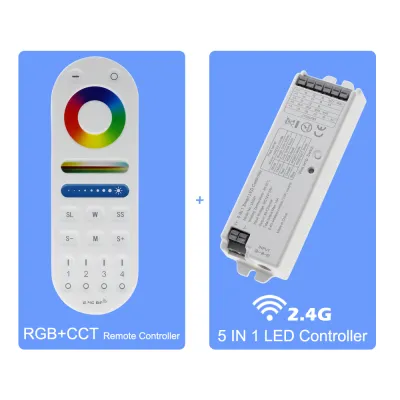
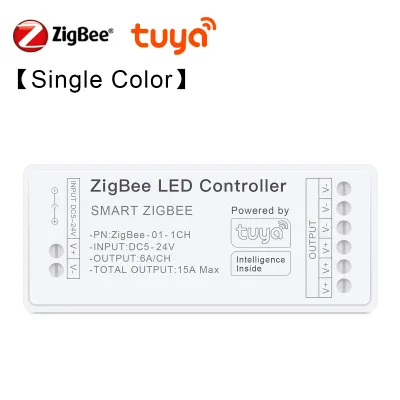
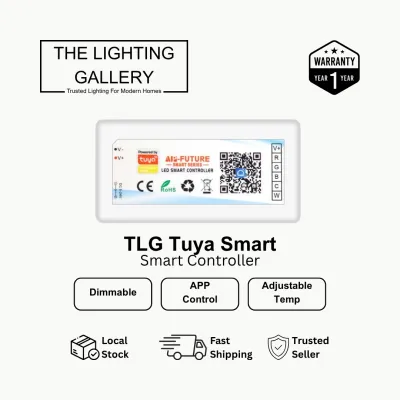
Prices are valid at publication and may change. Please refer to the product page for the latest price.
Before you buy or connect an led light controller, locate the specification labels printed on your LED strips, bulbs, and the controller itself. These labels clearly state the required operating voltage and must be verified prior to installation.
Connecting a 12V LED strip to a 24V controller or power supply delivers double the intended voltage. This excess voltage will rapidly burn out the LEDs, melt the strip’s backing, and create a serious fire risk. Conversely, connecting a 24V strip to a 12V system results in severely underpowered lights that flicker, remain extremely dim, or fail to turn on entirely.
Voltage is a fixed physical requirement and is not flexible. Every single DC component—including the power supply, the controller, and the light source—must share the exact same voltage rating to function safely.
Calculating the Correct Wattage Capacity for Your Setup
Determining the correct wattage capacity requires calculating the total power consumption of your lighting load. For LED strips, this rating is usually printed on the packaging or the product label as watts per meter (W/m).

To find the total wattage of an LED strip, multiply the rated wattage per meter by the total length of the strip in meters. If you are using individual LED bulbs, simply add up the individual wattage ratings of all bulbs connected to that specific controller.
Never run an led light controller at its maximum capacity. Applying the 20% safety margin rule—often called headroom—ensures the controller’s maximum wattage rating is at least 20% higher than your calculated total load, which prevents overheating, minimizes electrical noise, and extends the lifespan of the device.
For example, if you install a 5-meter LED strip that draws 10W per meter, your total lighting load is 50W. Adding a 20% safety margin (50W x 1.2) means your controller must be rated for at least 60W of power handling.
The Role of the Power Supply in Singapore's 230V Mains
It is vital to distinguish between the led light controller and the AC/DC power supply, as they perform entirely different roles. The controller manages colors, dimming, and dynamic effects on the low-voltage DC side, whereas the power supply (or driver) converts high-voltage household electricity into low-voltage DC.
In Singapore, the standard mains electricity is delivered at 230V AC. Your power supply must be specifically designed to accept a 230V AC input and step it down to the exact 12V or 24V DC required by your controller and lights.
Just like the controller, the power supply’s wattage capacity must meet or exceed the total load plus the 20% safety margin. If your lights draw 50W, both your controller and your power supply should be rated for at least 60W to maintain system stability.
When sourcing a power supply in Singapore, always look for local electrical safety certifications, such as the Enterprise Singapore SAFETY Mark. This certification ensures the device has been tested and approved for safe operation on the local grid.
Safety Boundaries and Wiring Best Practices
Working with electricity requires strict adherence to safety protocols. Always isolate the power by turning off the main circuit breaker at your distribution board before wiring or modifying any connections that interface with the 230V AC side of the power supply.
Long runs of LED strips are prone to voltage drop, where resistance in the copper tracks causes the voltage to decrease over distance. To prevent the end of a long strip from dimming or shifting color, avoid daisy-chaining multiple strips end-to-end; instead, use parallel wiring or run separate power injection lines directly from the controller to different sections of the strip.
Plugging a pre-assembled DC adapter into a wall socket is a safe, low-risk DIY task. However, any installation that involves hardwiring 230V AC mains electricity into a concealed LED driver, ceiling cavity, or smart switch must be performed by a licensed electrician in Singapore to comply with local safety regulations and preserve your home insurance coverage.
Heat dissipation is another critical factor for longevity. Install your controllers and power supplies in well-ventilated areas with adequate airflow, keeping them clear of thermal insulation, enclosed ceiling voids, or tight spaces where heat can build up.
Frequently Asked Questions (FAQ)
Can I use a 24V controller on a 12V LED strip?
Some modern controllers are dual-voltage and can accept both 12V and 24V inputs, which will be clearly indicated on their label. However, the power supply and the LED strip must still match each other; if you use a 12V strip, you must use a 12V power supply. If the controller is strictly rated for 24V, connecting it to a 12V strip is unsafe and will not work.
What happens if the controller's wattage is lower than the LED strip's requirement?
Underpowering a controller by overloading it with a high-wattage strip forces the controller to run beyond its safe limits. This causes severe overheating, triggers automatic thermal shutdowns, and can permanently melt internal components or cause an electrical fire. It will not dim the lights safely; it will simply destroy the controller.
How do I prevent voltage drop in long LED strip runs?
Voltage drop causes the far end of an LED strip to look noticeably dimmer or show incorrect colors. You can prevent this by feeding power to both ends of the strip simultaneously (dual-end feed) or by using thicker gauge wiring (such as 18 AWG or 16 AWG) to run power from the controller to the start of each strip section.
Community discussion
Share your experience or ask a question. Comments are reviewed before publication.