
Setting up an altar cabinet for the Hungry Ghost Festival (Zhong Yuan Jie) is a deeply meaningful practice that combines cultural devotion with mindful home organization. To observe these rituals appropriately, your setup must balance traditional spatial hierarchy with modern home safety. Whether you are using a classic floor-standing wooden cabinet or a compact wall-mounted unit, preparing the space requires careful planning. By systematically organizing your deities, managing incense placement, and selecting safe lighting options, you can create a respectful and secure environment for worship throughout the seventh lunar month.
Preparing and Cleaning the Altar Cabinet Space
Start by completely clearing the altar cabinet. Remove all existing items, including older incense holders, decorative plates, and daily offering vessels. This allows you to inspect the entire surface of the cabinet. Use a dry or slightly damp microfiber cloth to dust the surfaces. Avoid harsh chemical solvents or abrasive scrubbing pads, which can strip the protective lacquer, varnish, or veneer of traditional wooden cabinets. If the cabinet has intricate gold-leaf carvings or delicate relief work, use a soft-bristled brush to gently dislodge dust from the crevices without applying pressure.
Next, perform a thorough structural check of the cabinet. Altar cabinets often support significant weight, especially when loaded with heavy brass incense burners, ceramic deity statues, and multiple tiers of fresh fruit or food offerings. Inspect the joints, shelf supports, and wall brackets (for wall-mounted models) to ensure there is no sagging, warping, or loosening of screws. If you notice any instability, reinforce the shelves or tighten the mounting hardware before placing any items back onto the cabinet.
Products mentioned in this guide
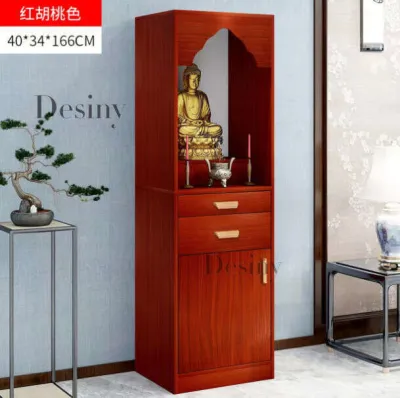
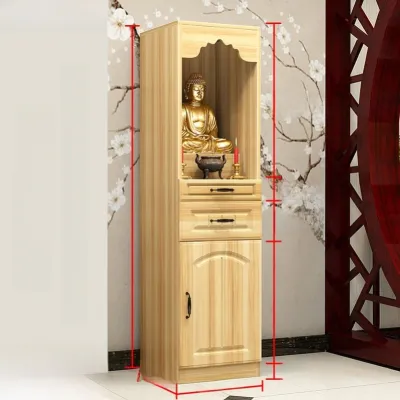
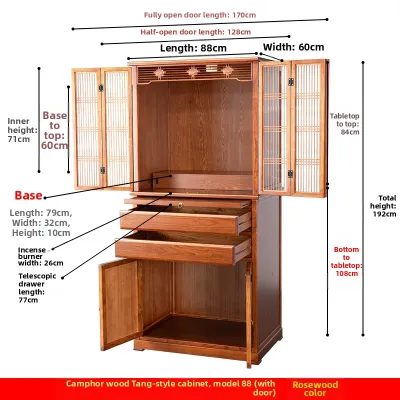
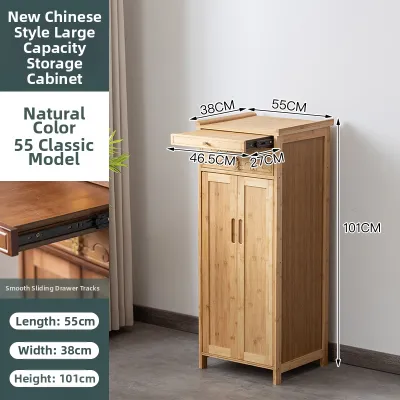
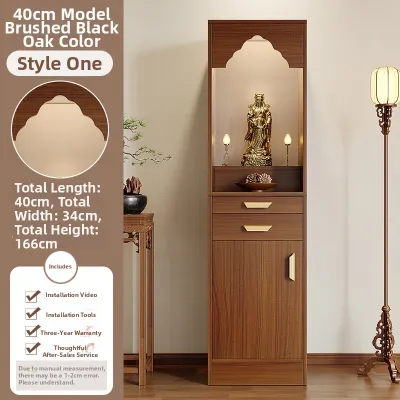
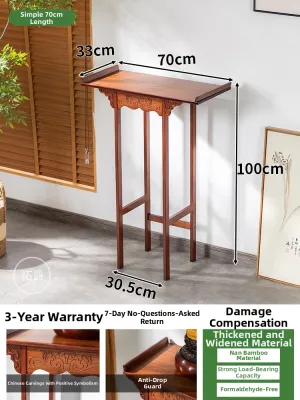
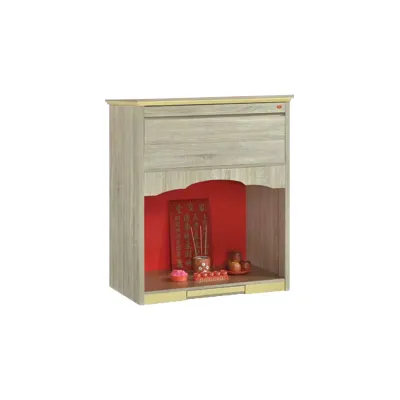
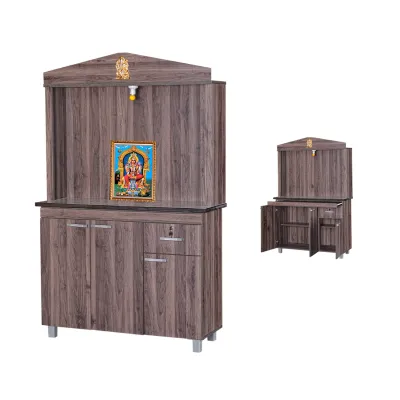
Prices are valid at publication and may change. Please refer to the product page for the latest price.
Finally, evaluate the immediate environment surrounding the altar cabinet. The area must be entirely free of clutter, overhead obstructions, and highly flammable materials. Ensure that window curtains, blinds, or hanging fabric decorations cannot drift near the cabinet when a breeze passes through. There should be ample clearance above the cabinet to prevent heat and smoke from accumulating near the ceiling or triggering home smoke detectors prematurely.
Arranging Deities, Incense, and Offerings
The spatial arrangement within your altar cabinet should follow a clear, respectful hierarchy. Position the main focal points—such as deity statues or ancestral tablets—on the highest or central tier of the cabinet. Ensure these sacred items are placed securely on a flat, level surface. Avoid overcrowding this primary tier; leaving open space around each figure not only presents a clean appearance but also prevents accidental tipping when you reach into the cabinet to light incense or clean the area.

Place the primary incense burner and candle holders directly in front of the main tier, centered and stable. It is critical to position these heat sources away from the front edge of the cabinet shelf to prevent them from being knocked over by passing family members or pets. If your cabinet has a pull-out drawer or an extended tray designed specifically for incense burners, verify that the sliding mechanism is fully extended and locked in place before lighting any incense.
Organize daily offerings, such as fresh fruits, tea cups, and bowls of rice, on the lower tiers or on dedicated serving trays. Because the Hungry Ghost Festival occurs during the humid tropical months, fresh food offerings can quickly attract pests like ants, fruit flies, and cockroaches. Establish a strict daily routine to inspect these offerings. Remove perishable items before they begin to spoil, and wipe down the trays immediately to eliminate sweet residues or moisture that might damage the cabinet’s finish.
Always adapt your layout to the specific physical dimensions and weight limits of your altar cabinet. If your cabinet has low vertical clearance between shelves, avoid using tall candles or high-piled offering plates. Measure the height of your incense sticks relative to the shelf above; there must be sufficient clearance to prevent the rising heat and smoke from scorching the underside of the upper wooden panels.
Adding Festival Decorations and Lighting Safely
Decorating the altar cabinet for the festival often involves hanging traditional paper lanterns, red cloths, or symbolic banners. When installing these items, ensure they are securely fastened and positioned well away from the path of incense smoke and open flames. Fabric and paper decorations must never touch or hang directly above candles or burning incense. Ensure that these decorative elements do not block the natural ventilation of the cabinet or cover any built-in air vents.
When setting up altar lamps or electric LED candles, safety must be your primary concern. Verify that all electrical lighting products match the local household voltage (typically 230V) and carry recognized electrical safety certifications. Inspect all power cords, plugs, and sockets for signs of wear, fraying, or exposed wiring. Avoid daisy-chaining multiple power strips or overloading a single wall outlet, as this poses a significant fire hazard in enclosed wooden cabinets.
For tight spaces, lower shelves, or areas close to flammable materials, battery-operated LED candles and lamps are highly recommended alternatives to traditional wax candles. These modern options mimic the warm flicker of real flames without generating heat or posing a fire risk. Ensure that the battery compartments are securely closed and that you use high-quality batteries to prevent leakage that could corrode the lamp terminals or damage the cabinet shelves.
If your festival setup requires installing new fixed wiring, adding high-wattage decorative lighting, or modifying the cabinet’s internal electrical system, stop immediately. Do not attempt to splice wires or install custom light fixtures yourself. Consult a qualified, licensed electrician to handle these modifications safely, ensuring that all wiring is properly insulated, fused, and routed away from heat-generating areas.
Managing Daily Upkeep and Fire Safety
Maintaining a safe worship environment requires continuous vigilance throughout the festival month. Never leave burning incense, coils, or wax candles unattended. Establish a strict routine where the last person to leave the room or go to sleep double-checks that all open flames are completely extinguished. If you must leave the home while rituals are active, transition to battery-operated LED alternatives for peace of mind.
Safely manage ash accumulation by cleaning the incense burner regularly. Use a non-combustible metal spoon to remove excess ash, and dispose of it only after ensuring it is completely cold. Store discarded ash in a metal or ceramic container rather than a plastic bin or paper bag. Promptly wipe up any spilled oil, water, or tea from the cabinet surfaces using a soft cloth to prevent permanent staining, wood warping, or finish degradation.
Once the seventh lunar month concludes, plan a respectful dismantling of the festival-specific decorations. Carefully remove temporary lanterns, banners, and extra lighting fixtures. Clean each item to remove dust and soot before packing them away in sealed storage containers. This transition restores the altar cabinet to its regular daily state while preserving your decorative items for future use.
Frequently Asked Questions (FAQ)
Can I place an altar cabinet in a bedroom or kitchen?
It is generally recommended to avoid placing an altar cabinet in a bedroom or kitchen. Traditional practices favor quiet, clean, and respectful areas of the home, such as the living room or a dedicated prayer room. Placing an altar in a bedroom can disrupt sleep due to incense smoke and light, while kitchens present challenges with grease, cooking heat, and high humidity. Ensure the chosen location is well-ventilated, away from direct alignment with toilets, beds, or high-traffic corridors where the cabinet might be bumped.
How do I prevent heat damage to the cabinet wood from incense and lamps?
To protect your altar cabinet’s wooden surfaces from thermal damage, always place heat-resistant mats, ceramic tiles, or metal trays beneath incense burners and candle holders. These barriers absorb and dissipate heat, preventing the wood finish from bubbling, cracking, or discoloring. Maintain a safe vertical clearance of at least 30 to 50 centimeters between the top of burning incense or candles and any wooden shelf above. Additionally, monitor the heat output of continuous-use LED lamps; choose low-wattage, cool-running fixtures to prevent localized heat buildup within enclosed cabinet spaces.
Community discussion
Share your experience or ask a question. Comments are reviewed before publication.