
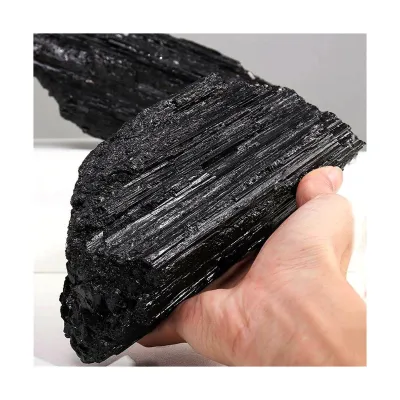
To determine if a black tourmaline sculpture is genuine, look for natural vertical striations along the stone’s surface, a cool initial temperature, and a substantial, dense weight. Authentic black tourmaline, scientifically known as schorl, rarely exhibits flawless perfection. Instead, it features minor internal fractures, subtle color variations, and a vitreous to slightly resinous luster. While these visual and tactile indicators provide excellent initial clues, no single home test offers absolute certainty. For high-value decorative acquisitions, a professional gemological appraisal remains the only definitive method of verification.
Visual and Tactile Checks You Can Do at Home
Evaluating a sculpture at home requires a systematic, non-destructive approach. By examining the piece under the right conditions, you can gather significant clues about its origin without risking damage to the artwork.
Always conduct your inspection in a well-lit environment, preferably under a bright, neutral-white light source. Use a jeweler’s loupe or a high-magnification magnifying glass to inspect the fine details of the carving. It is crucial to avoid relying on a single physical trait, as natural minerals vary widely in their crystalline formations and structural integrity.
Products mentioned in this guide
Prices are valid at publication and may change. Please refer to the product page for the latest price.
Examining Color, Luster, and Inclusions
One of the most telling features of genuine black tourmaline is the presence of vertical striations. These natural growth lines run parallel to the length of the crystal and often remain visible even after the stone has been carved or partially polished. If the sculpture features unpolished or semi-polished sections, these ridges should feel distinct and look highly structured.
Pay close attention to how the surface reflects light. Genuine black tourmaline possesses a vitreous (glass-like) to slightly resinous luster, giving it a deep, rich sheen that is reflective but not overly glossy. In contrast, cheap plastic or resin imitations often exhibit a dull, plasticky surface or an unnaturally uniform, high-gloss finish.
Natural stones are inherently imperfect. When inspecting the sculpture, look for minor internal fractures, tiny cracks, and subtle color zoning where the black hue might transition slightly in density. A perfectly uniform, flawless black stone with absolutely no surface variations or internal characteristics is highly suspicious and often points to synthetic manufacturing.
Assessing Weight, Temperature, and Texture
The physical sensation of holding a sculpture provides immediate clues about its material composition. Natural minerals possess a high thermal conductivity compared to synthetic polymers, meaning a genuine black tourmaline sculpture will feel noticeably cool to the touch when you first pick it up, slowly absorbing your body heat over time. Resin, plastic, or glass imitations will feel relatively warm or quickly match your skin temperature.
Weight is another critical indicator of authenticity. Tourmaline is a dense mineral with a relatively high specific gravity. When you lift a genuine sculpture, it should feel surprisingly heavy and substantial for its size. If a large decorative piece feels unusually light or hollow, it is highly likely made of molded resin or lightweight plastic.
The texture of a carved natural stone also differs significantly from molded replicas. A genuine carved sculpture will show subtle variations in texture, with tiny tool marks or natural mineral planes detectable under close inspection. Molded fakes, on the other hand, often feel unnaturally smooth, or they may feature artificial textures that repeat in a mechanical, non-random pattern across the surface.
Common Imitations and How They Differ
Because of its popularity in modern interior decor, black tourmaline is frequently replicated using cheaper materials. Understanding the common substitutes allows you to spot discrepancies quickly.

Imitations generally fall into two categories: completely synthetic materials molded to look like stone, and cheaper natural minerals that have been treated or dyed to mimic the appearance of high-quality tourmaline.
Glass and Resin Replicas
Resin and plastic are the easiest imitations to produce on a mass scale, but they are also the easiest to detect. When inspecting a suspected resin piece, look closely for mold lines or faint seam marks along the sides or base, which indicate the liquid material was poured into a mold rather than carved from a solid block. Resin pieces also lack the cold feel and dense weight of genuine stone.
Glass imitations present a slightly different challenge because they can mimic the weight and coldness of stone more closely than plastic. However, glass fakes often contain perfectly round air bubbles trapped inside during the melting process—something that never occurs in natural tourmaline. Additionally, if a glass piece is chipped or damaged, it will exhibit a highly characteristic conchoidal (curved, shell-like) fracture pattern that looks distinctly glassy rather than the irregular, fibrous fractures typical of tourmaline.
Dyed or Treated Look-Alike Stones
Some sellers use cheaper, abundant natural stones like agate, howlite, chalcedony, or quartz, dyeing them a deep black to pass them off as tourmaline. While these are real stones, they lack the mineral properties and value of genuine tourmaline.
To spot dyed imitations, inspect the deep crevices, cracks, and carved details of the sculpture under magnification. Dye tends to pool and concentrate in these recessed areas, appearing as unnaturally dark lines or spots where the pigment settled. Furthermore, these dyed stones will completely lack the characteristic vertical striations and specific crystal habits that define genuine tourmaline.
Red Flags When Shopping for Black Tourmaline Decor
Navigating online marketplaces and physical decor shops requires a healthy dose of skepticism. Recognizing common sales tactics and listing anomalies can protect you from making a costly mistake.
Pricing is often the most immediate red flag. Large, intricately carved sculptures made of genuine black tourmaline require significant raw material and skilled craftsmanship, commanding premium prices in the decor market. If you encounter a substantial, highly detailed sculpture priced unusually low—such as S$20 to S$50—it is almost certainly a fake made of molded resin or cheap dyed stone. Genuine mineral specimens of that size carry a much higher baseline cost before carving labor is even factored in.
Examine the product descriptions carefully. Vague, non-scientific terminology is a common tactic used to bypass legal definitions of minerals. Watch out for terms like “black crystal,” “dark healing stone,” “obsidian-tourmaline blend,” or “composite tourmaline.” These phrases often mask synthetic mixtures, reconstituted stone powder bound with resin, or entirely different materials.
Evaluate the seller’s credibility and transparency. A reputable dealer specializing in mineral decor will provide clear, unedited, high-resolution photographs of the sculpture from multiple angles, including the base. They should be willing to answer detailed questions about the stone’s origin and offer a clear return policy. Be wary of sellers who use high-pressure sales tactics, rely heavily on unverified metaphysical claims, or refuse to provide clear details about the mineral’s provenance.
When to Seek Professional Gemological Verification
While home checks are valuable for preliminary screening, they have clear limitations. Knowing when to transition from casual observation to professional testing is essential for safeguarding your investment.
Professional appraisal is highly recommended if the sculpture represents a significant financial investment, is being purchased for a curated collection, or if you maintain persistent doubts after performing home checks. Attempting advanced chemical or physical tests at home can easily ruin a valuable piece of art.
A certified gemologist or mineralogist possesses specialized, non-destructive equipment to analyze the stone precisely. They can measure the specimen’s specific gravity, determine its refractive index using specialized liquids, and use spectroscopy to analyze how light interacts with the mineral’s internal structure. These tests provide definitive proof of the mineral’s identity without causing any physical alteration to the sculpture.
When seeking verification, always choose an independent, third-party gemological laboratory rather than relying on in-house certificates provided directly by the seller. Independent labs have no financial stake in the sale and provide unbiased scientific reports.
Before transporting your sculpture to a laboratory, ensure it is safely packaged. Wrap the piece securely in multiple layers of acid-free tissue paper, followed by thick bubble wrap, and place it in a sturdy, well-padded box to prevent any movement or impact during transit, as natural tourmaline can be brittle and prone to chipping along its natural fracture lines.
Frequently Asked Questions (FAQ)
Can I use a scratch test to verify black tourmaline?
Using a scratch test (such as testing the stone’s hardness on the Mohs scale) is highly discouraged for finished decorative sculptures. While genuine tourmaline is relatively hard—ranking 7 to 7.5 on the Mohs scale—attempting to scratch the piece can cause permanent, irreversible cosmetic damage, severely reducing its aesthetic and monetary value. Furthermore, many common imitation materials, such as certain types of glass, also possess a high hardness level and can resist scratching, making this an unreliable and unnecessarily destructive test for home use.
Does genuine black tourmaline attract magnets?
Natural black tourmaline, primarily the iron-rich variety known as schorl, contains significant amounts of iron in its chemical structure. Because of this, some specimens may exhibit a very weak attraction to a strong neodymium magnet. However, this reaction is not universal and depends entirely on the specific iron concentration of the individual stone. A lack of magnetic attraction does not prove a sculpture is fake, nor does a slight pull guarantee it is genuine tourmaline, as other black minerals or synthetic materials containing iron fillings can mimic this effect. Magnet testing should only be treated as a minor, supplementary observation.
Community discussion
Share your experience or ask a question. Comments are reviewed before publication.