
Identifying a genuine citrine crystal requires looking closely at its color distribution, clarity, and price point. While natural citrine is a rare, pale yellow to smoky honey-colored quartz, the vast majority of citrine sold in the decor and crystal market is actually heat-treated amethyst. You can spot these heat-treated alternatives by their bright, burnt-orange tips and stark white bases. While these visual checks offer strong clues, they indicate probability rather than absolute scientific certainty.
Quick Guide to Identifying Citrine
To quickly evaluate a citrine crystal before making a purchase, focus on three primary visual markers. First, look at the base of the crystal; if it features a stark, opaque white quartz base that transitions abruptly to color, it is almost certainly heat-treated amethyst. Second, examine the color saturation at the tips. Unnaturally uniform, dark orange, or reddish-brown tips are classic indicators of baked amethyst, whereas natural citrine displays a consistent, gentle golden-yellow or smoky-champagne hue throughout its body. Third, observe the overall color tone. Natural citrine rarely exhibits bright orange or neon yellow shades, leaning instead toward earthy, muted tones. Keep in mind that while these visual guidelines are highly reliable indicators for everyday buyers, they represent strong probabilities rather than laboratory-grade proof.
Understanding Natural and Heat-Treated Citrine
To appreciate why these differences exist, it helps to understand the geological origins of these stones. Natural citrine is incredibly rare, requiring specific geothermal conditions where natural radiation and heat deep within the earth slowly colorize quartz over millions of years. Because natural deposits are scarce, the global crystal market relies heavily on heat treatment to meet consumer demand.
Products mentioned in this guide
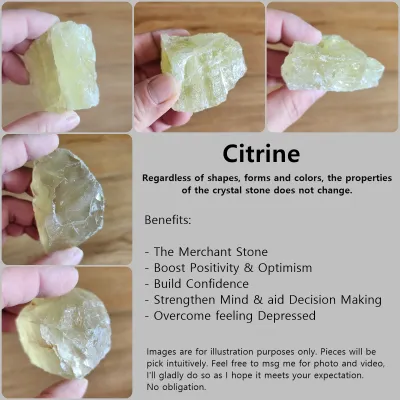
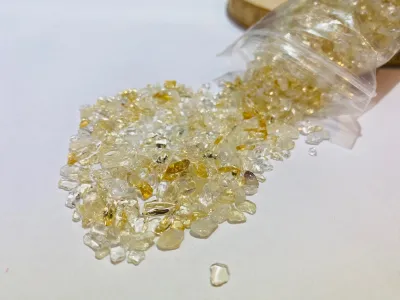
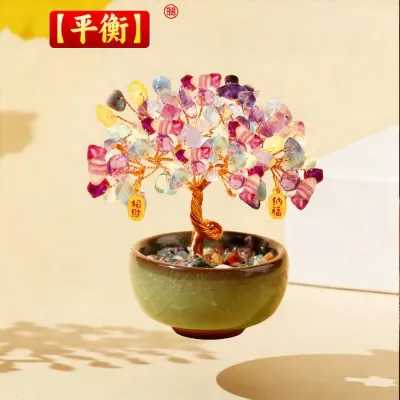
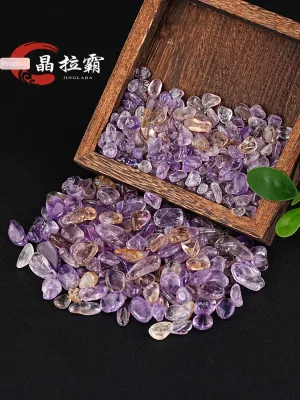
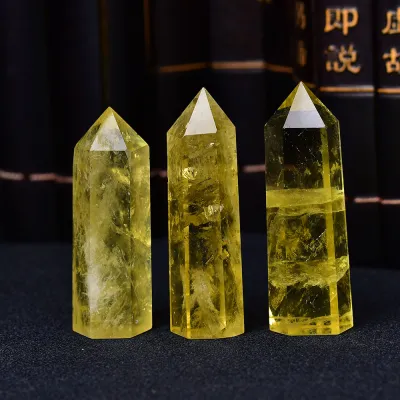
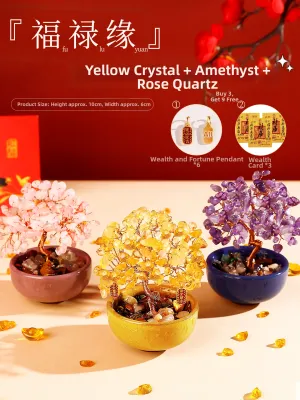
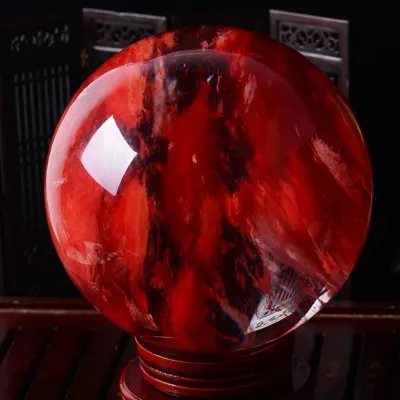
Prices are valid at publication and may change. Please refer to the product page for the latest price.

In commercial processing, manufacturers place low-grade amethyst or smoky quartz into high-temperature industrial kilns. Heating amethyst to high temperatures alters the iron impurities within the crystal lattice, shifting the purple hue to a bright yellow, orange, or deep amber. It is important to clarify that heat-treated citrine is still genuine quartz. The chemical composition and crystalline structure remain intact, meaning the stone is not a synthetic imitation or glass fake; rather, it is an artificially color-enhanced version of a different quartz variety.
Visual Indicators: Color, Clarity, and Patterns
When shopping for crystal decor, sculptures, or cabinet specimens, physical observation remains your first line of defense. Evaluating a stone’s visual characteristics allows you to assess its likely origin before committing to a purchase. While natural variations always exist in geological specimens, analyzing specific dimensions of color, clarity, and texture will help you make an informed decision.
Color Distribution and Zoning
Color zoning is one of the most telling features of any quartz specimen. In heat-treated amethyst geode pieces, the color is highly concentrated at the tips of the crystals, while the lower portions remain a chalky, opaque white. This occurs because amethyst naturally grows with its color concentrated at the terminations, and the heat treatment simply bakes this existing pattern into an orange hue.
In contrast, natural citrine displays a much more uniform color distribution. The yellow, honey, or smoky-amber tint runs consistently through the entire crystal point, without a stark white base. If there is color zoning in natural citrine, it typically presents as subtle, soft bands of pale yellow and clear quartz, rather than a harsh, high-contrast split. To evaluate these colors accurately, always examine the stone under natural, neutral daylight, as warm showroom lighting can make heat-treated stones appear softer and more natural than they actually are.
Clarity, Inclusions, and Surface Texture
Internal characteristics, known as inclusions, provide a window into how a crystal formed. Natural citrine often contains organic internal features such as wispy veils, tiny negative crystals, and phantom growth lines that reflect its slow, millions-of-years growth process. While high-grade natural citrine can be exceptionally clear and “eye-clean,” completely flawless, large specimens are exceedingly rare and highly valuable.
Conversely, mass-produced heat-treated stones, especially tumbled pocket stones or beads, often display a glassy, high-clarity appearance with few internal features, or they may contain heavy internal fracturing caused by the thermal shock of rapid industrial heating. Additionally, pay attention to the surface texture. Natural crystal points feature distinct growth striations—fine, horizontal lines running across the crystal faces—and a slightly cool, glassy texture. Heavily processed or tumbled stones may feel unnaturally smooth, lacking these characteristic growth lines.
Price Signals and Market Realities
The laws of supply and demand are highly visible in the crystal market. Because genuine, untreated citrine is a scarce collector’s item, it commands a significant price premium. If you encounter a large, deeply colored, or perfectly clear crystal cluster priced at a surprisingly low rate in S$, you should approach the transaction with skepticism.
In retail shops and home decor boutiques, bulk availability is a major indicator of a stone’s origin. If a seller displays dozens of virtually identical, vibrant orange crystal clusters or geodes of uniform size and color, they are almost certainly heat-treated amethyst. Natural citrine is rarely found in large, uniform batches; each natural specimen tends to have a unique shape, a distinct shade of pale yellow or smoky honey, and individual structural variations. Genuine natural clusters are highly sought after, and reputable dealers will price them accordingly, reflecting their geological rarity.
Where to Buy and How to Verify
Navigating the crystal market requires choosing your purchasing venues carefully. While general online marketplaces, ecommerce platforms, and tourist souvenir shops often sell mass-produced, heat-treated stones under the generic label of “citrine,” specialized gem and mineral dealers are more likely to offer authentic, untreated specimens. When shopping, do not hesitate to ask the seller direct questions about the stone’s geographic origin—such as Madagascar, Brazil, or Zambia—and whether it has undergone any thermal enhancement.
A reputable dealer who values transparency will readily disclose whether a stone is natural or heat-treated. If you purchase a piece that is explicitly guaranteed as natural, ensure you receive a detailed receipt or invoice stating this claim; this documentation is essential if you need to initiate a return or dispute after a professional evaluation. For high-value, investment-grade specimens or expensive jewelry pieces, relying on visual checks alone is insufficient. In these cases, you should seek independent certification from a recognized gemological laboratory, which can use advanced spectroscopic testing to definitively verify the stone’s origin and treatment status.
Frequently Asked Questions (FAQ)
Does heat-treated citrine have the same physical durability as natural citrine?
Yes, both natural and heat-treated citrine share the same baseline physical durability because they are both varieties of quartz. On the Mohs hardness scale, both types rate at a solid 7, making them highly resistant to scratching and suitable for daily wear or display in home decor. However, both varieties share the same vulnerability to environmental factors; prolonged exposure to direct sunlight or intense UV light can cause the yellow and orange coloration of both natural and heat-treated stones to fade over time. To preserve their color, display your crystals away from bright windows.
Can I test citrine authenticity at home using UV light or water?
Home testing methods popularized on social media are generally unreliable and can sometimes damage your specimens. UV light testing is inconsistent because the fluorescence of quartz varies widely based on localized trace minerals, meaning it cannot reliably distinguish natural citrine from heat-treated amethyst. Furthermore, you should avoid aggressive DIY tests such as scratch tests, extreme temperature exposure, or prolonged water soaking. These methods can permanently scratch the polished surface, cause thermal shock fractures in the crystal structure, or damage delicate jewelry settings and mineral backings.
Community discussion
Share your experience or ask a question. Comments are reviewed before publication.